
This post may contain affiliate links. If you buy through links on this page, we may earn a commission at no extra cost to you.
As an Amazon Associate I earn from qualifying purchases.
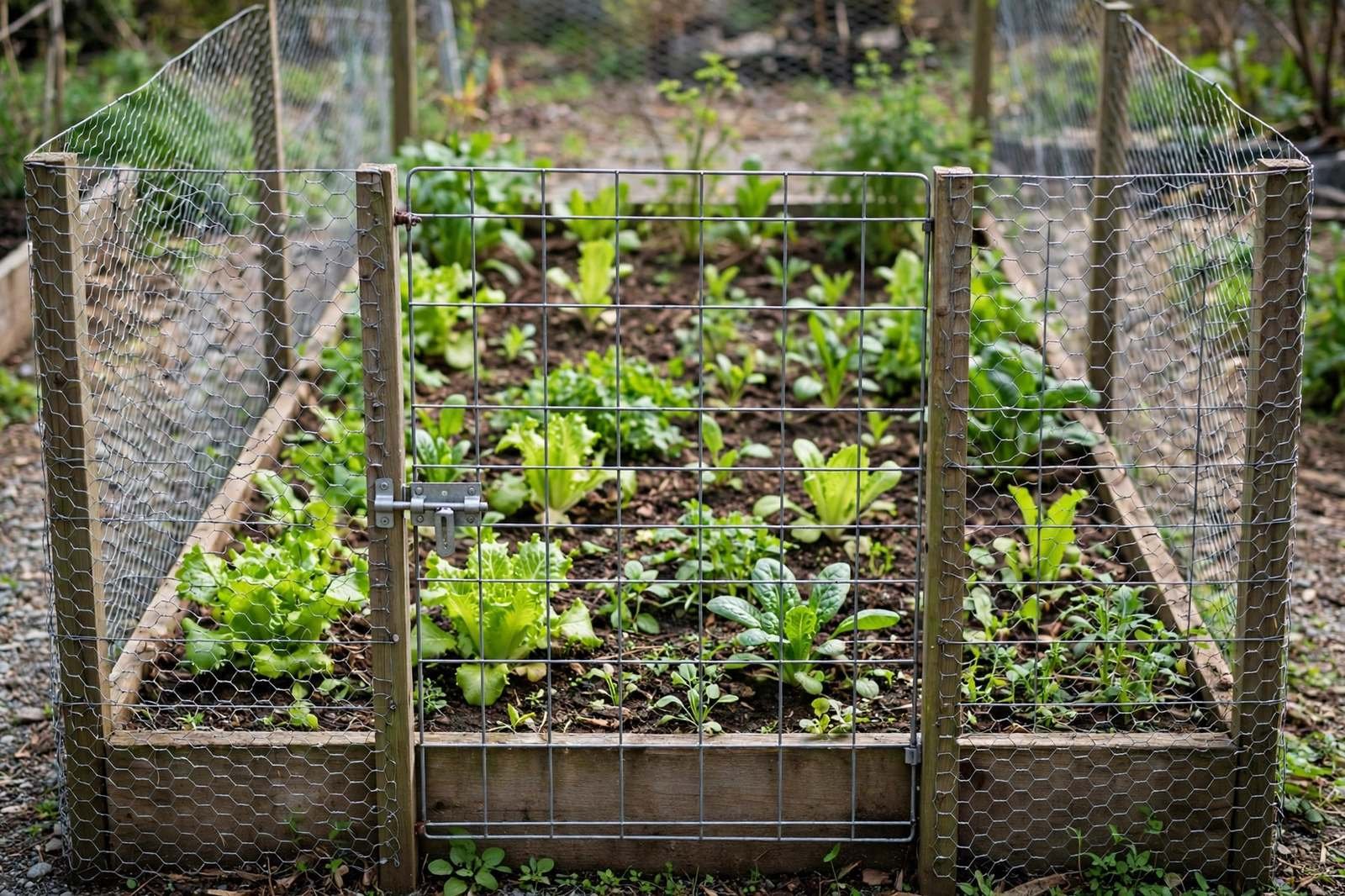
A raised bed without fencing is an open table. Rabbits eat lettuce to the stem, deer take whole bean plants in one night, and dogs dig where the soil is loose. Fencing does not need to look like a fortress to work. It needs the right height for the animal you actually have, mesh small enough to stop it, and a bottom edge that cannot be pushed under.
We have not tested the products linked here, and we give no current store prices. The links below go to search pages for fencing types, so you can compare current options, sizes, and prices at the time you shop.
Match the fence to the animal
Rabbits are the most common raised-bed pest in towns and suburbs. A fence 2 feet tall stops most rabbits, but only if the mesh is 1 inch or smaller and the bottom edge sits tight to the soil or is buried 4 to 6 inches deep. Rabbits dig under a fence that just rests on the surface, and they slip through 2-inch mesh with ease.
Deer need a different answer. A fence under 7 feet tall slows deer but does not stop a determined animal, and most raised-bed fences are not built that tall. For deer, the practical options are a tall fence around the whole garden, a shorter fence plus netting over the top of the bed, or choosing crops deer tend to skip. A 3-foot bed fence will not keep deer out on its own, and claiming otherwise would mislead a reader.
Dogs and foot traffic need a low, visible barrier more than a tall one. A fence 2 to 3 feet tall with a gate that latches keeps dogs out of loose soil and keeps paths clear. The gate matters as much as the fence: a fence with a gap at the gate is a fence with a door left open.

Fencing types for raised beds
Welded wire fencing is stiff wire in a grid, usually 2 by 4 inch mesh, sold in rolls. It is cheap per foot, easy to cut, and strong enough to hold its shape between posts. The drawback is mesh size: 2 by 4 inch openings stop deer and dogs but not rabbits. For rabbits, add a 2-foot band of 1-inch hardware cloth along the bottom.
Hardware cloth is stiff welded mesh with 1/2 inch or 1 inch openings. It stops rabbits, chipmunks, and most burrowing pests, and it lasts for years. It costs more per foot than welded wire, and it is heavier to handle, but for a single raised bed the total cost stays modest because the fence run is short.
Picket or slat fencing is wood or vinyl slats with gaps between them. It looks neat, it marks the bed clearly, and it stops dogs and foot traffic. It does not stop rabbits unless the gaps are under 1 inch, and it needs a buried bottom board or mesh skirt to stop digging.
Plastic mesh or netting is light and cheap, and it works as a seasonal cover over a bed. It stops birds and slows rabbits, but it tears, sags, and needs replacing every season or two. Use it as a cover, not as a permanent fence.
A worked example: fencing one 4 by 8 foot bed
Take a single bed 4 feet wide and 8 feet long. The perimeter is 24 feet: 4 plus 8, doubled. Plan posts every 4 feet, which gives 7 posts around the bed including the gate posts, with a gate 3 feet wide on one long side. A roll of fencing 3 feet tall and 25 feet long covers the run with a little spare for the gate frame.
Now add rabbit-proofing numbers, with assumptions stated plainly. Suppose you add a hardware cloth band 2 feet tall around the same 24-foot perimeter. That is 48 square feet of hardware cloth. Bury the bottom 6 inches in a shallow trench, which leaves 18 inches above ground, enough to stop rabbits that do not jump a low band. The trench takes about an hour to dig around one bed, and it is the step most often skipped. A fence without a buried or weighted bottom edge is a suggestion, not a barrier.
For bed size and layout basics, see raised bed gardening for beginners. For fencing that also has to handle wind on exposed sites, our post on how to protect balcony plants from strong wind covers anchoring and grouping, and metal vs wood raised garden beds covers frame strength for attaching fence posts.

How to build a fence that lasts
Set posts into firm ground. Posts set only in bed mix lean within a season. Drive posts 12 inches deep beside the bed, or bolt them to the bed frame with brackets. Keep the fence line straight and taut: sagging mesh invites animals to push under it, and a sagging gate drags and stops latching.
Leave access in the plan. A bed you cannot reach from both sides will not get weeded, and a fence with no gate will get climbed over, which breaks the fence faster than any animal. Put the gate on the side you approach from most often, make it at least 3 feet wide for a wheelbarrow, and fit a latch that closes on its own.

What to check before you buy
Check mesh size against your pest first, then height, then the bottom edge plan. A tall fence with wide mesh fails against rabbits, and a rabbit-proof fence with no buried edge fails against diggers. Check the roll length against your perimeter plus 10 percent for the gate and corners. Short rolls lead to joins mid-run, and joins are weak points.
To compare current options, search for welded wire fencing for raised beds, 1-inch hardware cloth, and garden fence gate kits. Compare mesh size first, then roll length, then whether posts and a gate frame are included.

Questions
Does fencing shade the bed? A solid fence on the south side can shade low crops in winter, when the sun is low. Wire mesh fences cast little shade, while solid wood fences on the south side can cut light. Put solid fencing on the north side when you can.
Can fencing stay up in winter? Welded wire and hardware cloth can, and they handle snow load if the posts are firm. Plastic netting should come down before heavy snow, since it sags and tears under weight.