
This post may contain affiliate links. If you buy through links on this page, we may earn a commission at no extra cost to you.
As an Amazon Associate I earn from qualifying purchases.
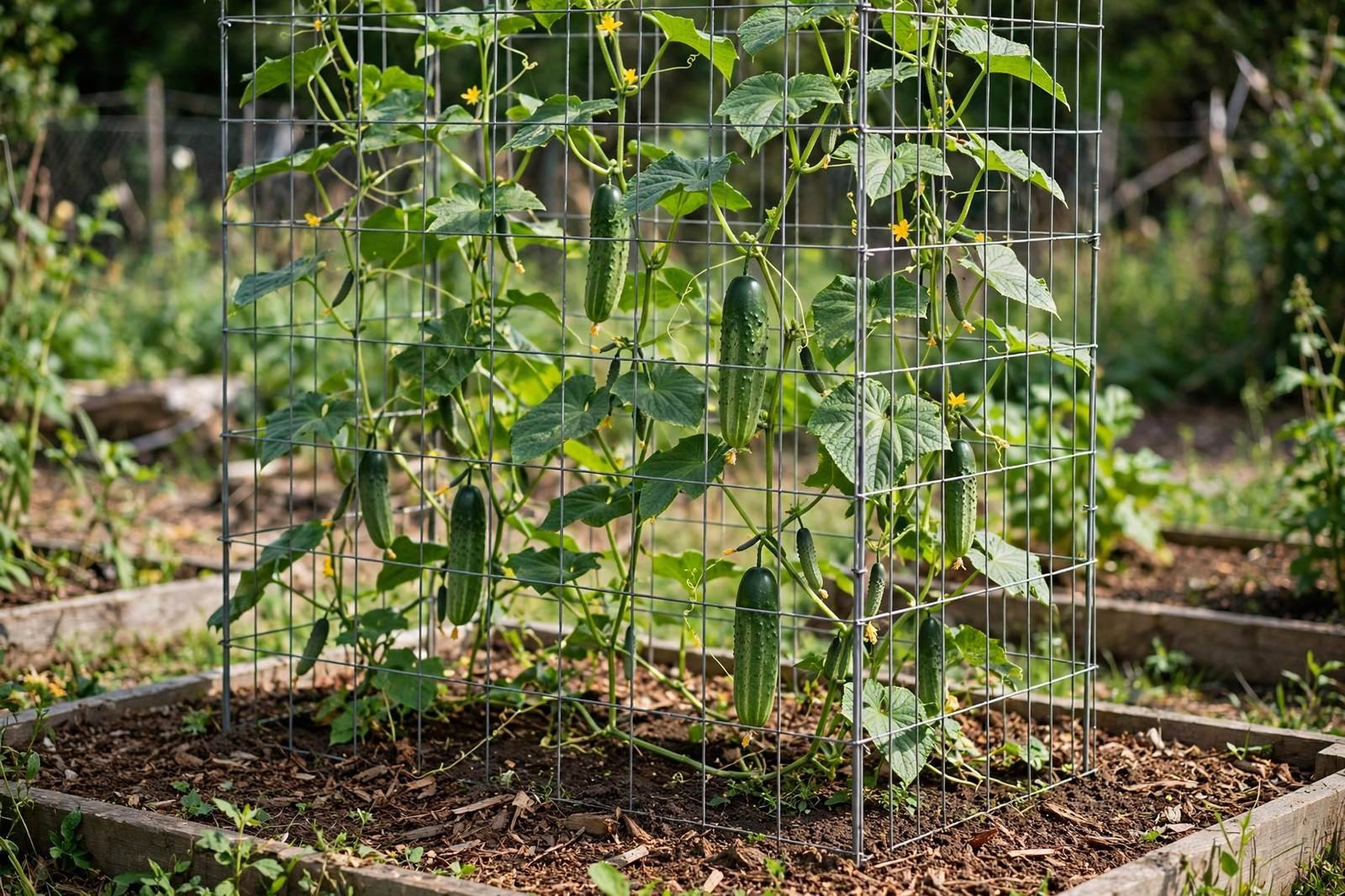
Cucumbers sprawl. Given flat ground, one plant can cover 6 feet in every direction, smothering lettuce and blocking paths. Grown up a trellis, the same plant takes a strip 18 inches wide, fruit hangs straight and clean, and picking takes minutes instead of a hunt through leaves. For a small garden, a trellis is not an extra. It is the difference between cucumbers and a cucumber takeover.
We have not tested the products linked here, and we give no current store prices. The links below go to search pages for trellis types, so you can compare current options, sizes, and prices at the time you shop.
What a cucumber trellis has to do
A cucumber trellis must hold vines that grow fast in warm weather, carry fruit that can weigh a pound each, and let air move through the leaves. Powdery mildew spreads fast on crowded, damp leaves, so airflow is a health issue, not a tidiness issue. The trellis also needs openings large enough for a hand and a cucumber to pass through, and it needs to stand firm when a row of vines catches wind like a sail.
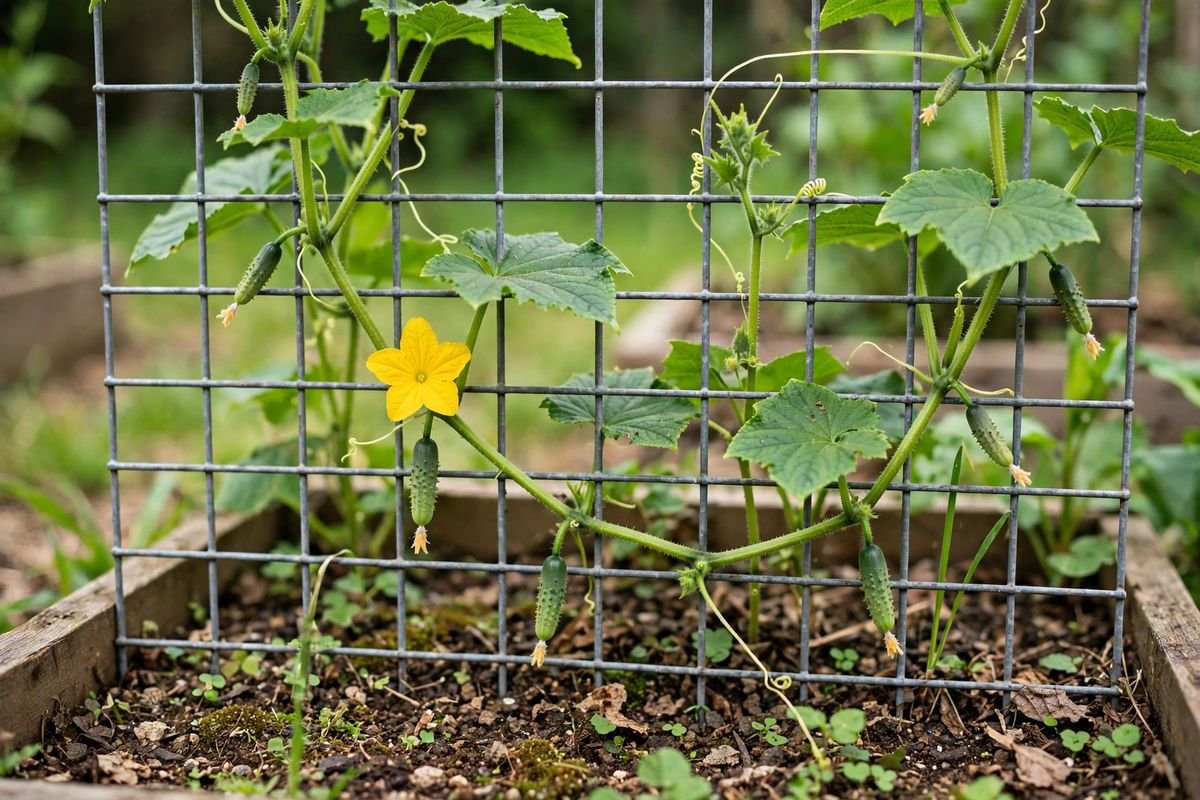
Cucumbers climb with tendrils, so they need something thin to grip. Wire grids, netting with 4 to 6 inch mesh, and twine all work. Smooth wide boards do not, since tendrils cannot wrap them. If a trellis looks solid and flat, check whether vines can actually grip it before you buy. Our guide to how to grow cucumbers covers spacing, water, and harvest timing.
Trellis types for small gardens
An A-frame trellis is two panels leaned together like a tent. Vines climb both sides, and the space under the frame stays shaded and usable for lettuce or herbs. It fits a bed 2 to 3 feet wide, and it folds flat for winter storage. The drawback is height: most A-frames top out near 5 feet, and vigorous vines will grow past the top and hang down the far side.
A flat vertical panel, fixed to posts at one end or one side of a bed, gives the most growing area per foot of bed. A panel 8 feet long and 6 feet tall holds a full row of plants, and fruit hangs on one face where it is easy to see and pick. It needs solid posts, since a loaded panel catches wind. Set the panel on the north side of the bed when you can, so it does not shade shorter crops.
An arch trellis spans a path, with vines climbing both sides and meeting overhead. It looks good, it shades a walkway, and it keeps fruit hanging where you can see it. The drawback is size: an arch needs a path at least 3 feet wide and firm footing on both sides, which is more space than a small patio garden may have.
A fence panel or cattle panel trellis, fixed flat to an existing fence, costs almost nothing in bed space. Vines use the fence as support, and fruit hangs on the garden side. Check the fence first: a weak fence will lean under a loaded vine row, and a shared fence may not be yours to drill into.
A worked example: one 2 by 8 foot bed, four plants
Take a bed 2 feet wide and 8 feet long, with a flat panel trellis 8 feet long and 6 feet tall along the north side. Plant four cucumbers 2 feet apart along the panel. The panel face is 48 square feet, which gives each plant about 12 square feet of climbing area. That is enough for a vining variety through a normal summer, with room for leaves to dry between waterings.
Now add fruit numbers, with assumptions stated plainly. Suppose each plant yields 20 cucumbers in a season, each about 8 ounces. That is 10 pounds per plant, or 40 pounds across four plants. A trellis that holds 40 pounds of fruit plus vines and leaves needs posts, not stakes pushed a few inches into loose mix. Drive posts 12 inches deep, or bolt the panel to the bed frame, and check the ties after storms.
Compare that with flat growing. The same four plants sprawling on the ground would cover roughly 96 square feet, which is three times the bed area. A trellis turns that sprawl into a 16-square-foot strip, freeing the rest of the garden for other crops. For bed layout basics, see raised bed gardening for beginners and container gardening for beginners for small-space setups.

How to match the trellis to the garden
For a balcony or a patio bed, an A-frame or a small flat panel suits best, since both stay within the bed footprint and store flat in winter. For a long narrow bed, a flat panel along one side gives the most fruit per foot. For a garden path that needs shade, an arch earns its space, but only if the path is wide enough to walk under when vines fill in.
Spacing decides disease pressure. Plants 2 feet apart with good airflow stay drier than plants 12 inches apart in a solid wall of leaves. Water at the base, not over the leaves, and pick fruit often. A cucumber left to grow large and yellow tells the plant to slow down, while regular picking keeps new fruit coming.
What to check before you buy
Check mesh size first. Netting with 2-inch mesh tangles vines and traps fruit, while 6-inch mesh lets hands pass and gives tendrils room to grip. Check height next: a panel shorter than 5 feet will be outgrown by most vining varieties. Check the anchor plan last, since a panel that cannot be fixed to posts or a frame will lean once it carries fruit.
To compare current options, search for A-frame cucumber trellises, cucumber trellis netting panels, and garden arch trellises. Compare height and mesh size first, then the anchor plan, then how the trellis stores in winter.

Questions
Do cucumbers need help to start climbing? Often yes. Guide young vines onto the trellis by hand for the first two weeks, and tendrils will take over after that. A vine left on the ground rarely finds the trellis on its own.
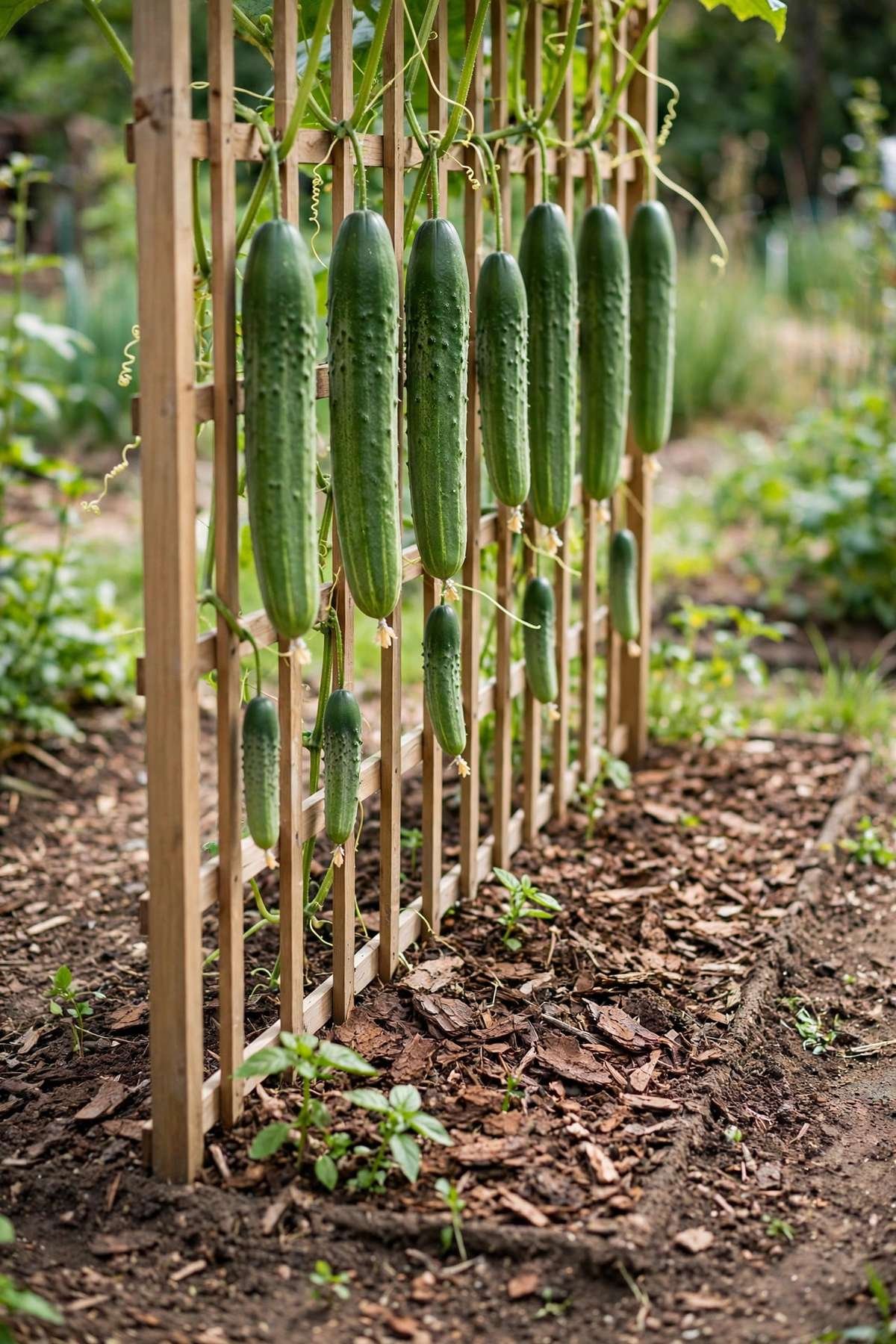
Will a trellis change fruit shape? Yes, in a good way. Fruit hanging free grows straighter than fruit resting on soil, where one side flattens and slugs can reach it. Hanging fruit also stays cleaner after rain.