
This post may contain affiliate links. If you buy through links on this page, we may earn a commission at no extra cost to you.
As an Amazon Associate I earn from qualifying purchases.
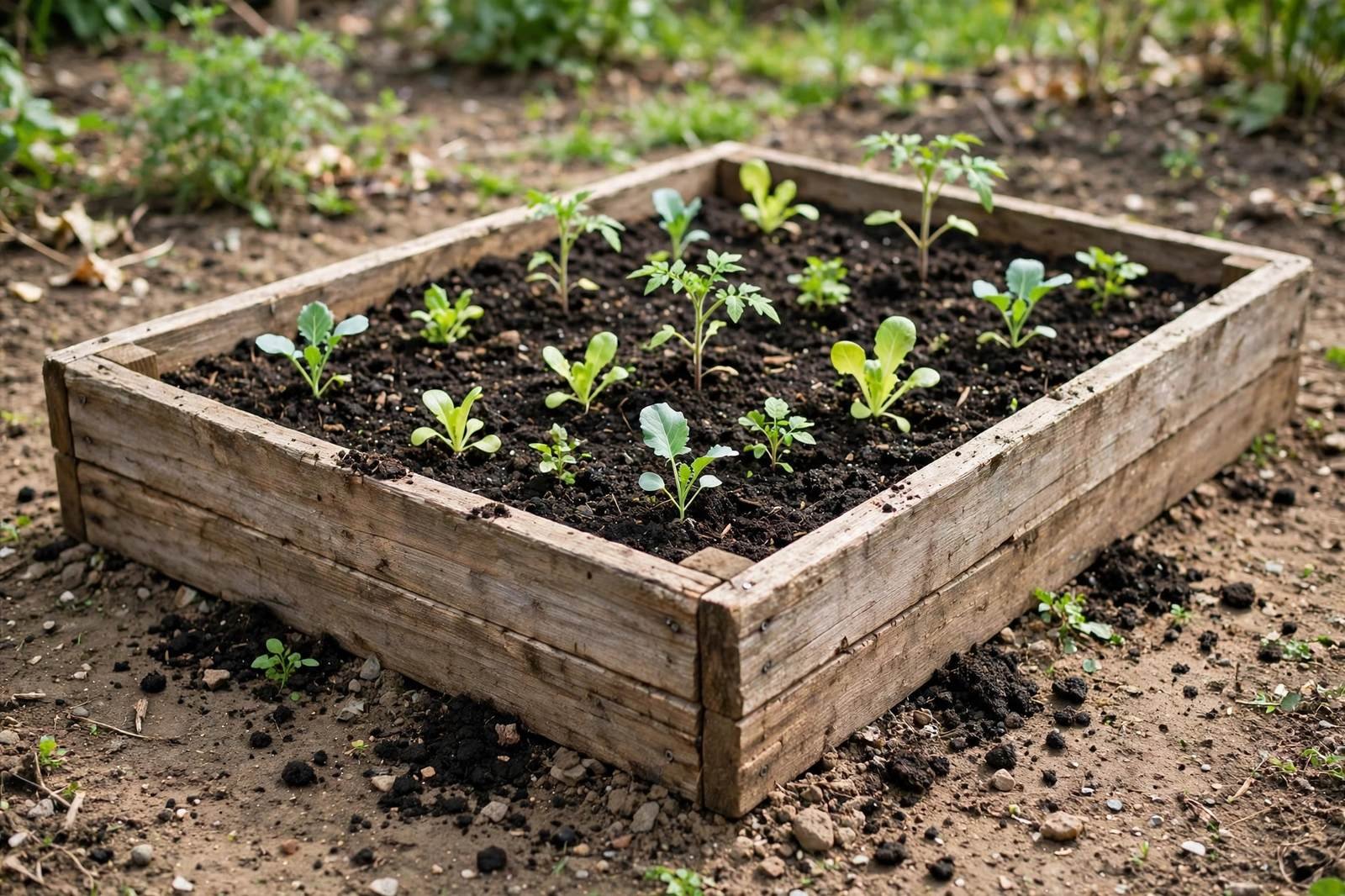
A raised bed can sit open on the soil, or it can sit on a closed bottom with drainage holes. The choice sounds minor, but it decides whether roots reach the ground below, whether worms move in, and whether the bed works on a patio at all. Open bottoms suit gardens with decent soil. Closed bottoms suit patios, decks, and soil you do not trust.
We have not tested the products linked here, and we give no current store prices. The links below go to search pages for bed types, so you can compare current options, sizes, and prices at the time you shop.
Open and closed bottoms at a glance
| Feature | Open-bottom bed | Closed-bottom bed |
|---|---|---|
| Where it sits | On soil, lawn, or gravel | On patios, decks, or any flat base |
| Root depth | Roots grow into the ground below | Roots stay within the bed depth |
| Drainage | Drains into the ground | Drains through holes or a tray |
| Worms and soil life | Move in freely from below | Arrive only with added compost |
| Main drawback | Weeds and roots from below | Shallow depth, faster drying |
Open-bottom beds: pros and cons
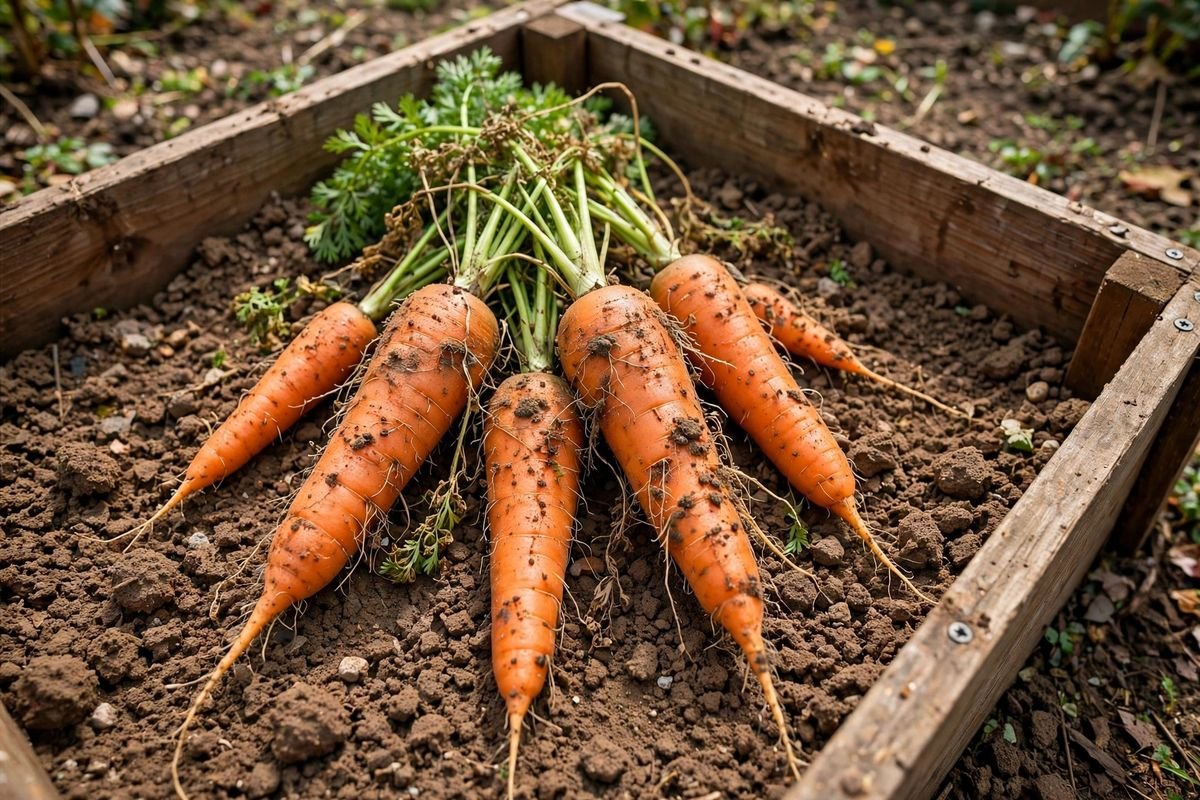
- Pros: deep-rooted crops get extra depth from the ground below, which helps carrots, parsnips, and tomatoes in dry spells.
- Pros: worms and soil life move in on their own, improving the mix over time.
- Pros: drainage is simple, since excess water just moves down into the ground.
- Cons: grass, tree roots, and perennial weeds can grow up into the bed from below.
- Cons: an open bottom cannot sit on a patio, since soil and water would spill onto the paving.
- Cons: on contaminated or very poor soil, roots reach exactly the soil you wanted to avoid.
Closed-bottom beds: pros and cons
- Pros: the bed works on a patio, deck, or balcony, where an open bottom is impossible.
- Pros: soil stays contained, so no mix washes onto paving after heavy rain.
- Pros: a closed bottom blocks tree roots and weeds from below.
- Cons: root depth is limited to the bed depth, so deep crops need a tall closed bed.
- Cons: drainage depends on holes and a tray, and blocked holes turn the bed into a pond.
- Cons: the bed dries faster in summer, since no moisture rises from the ground below.

A worked example: drainage for a 4 by 4 foot bed
Take a bed 4 feet wide and 4 feet long, 12 inches deep, holding about 16 cubic feet of mix. In a heavy rain, suppose 1 inch of rain falls on the bed. The bed area is 16 square feet, so 1 inch of rain is 16 times 1/12 cubic feet, which is about 1.33 cubic feet of water, or roughly 10 gallons. An open-bottom bed passes that water into the ground below within hours, as long as the native soil drains at all.
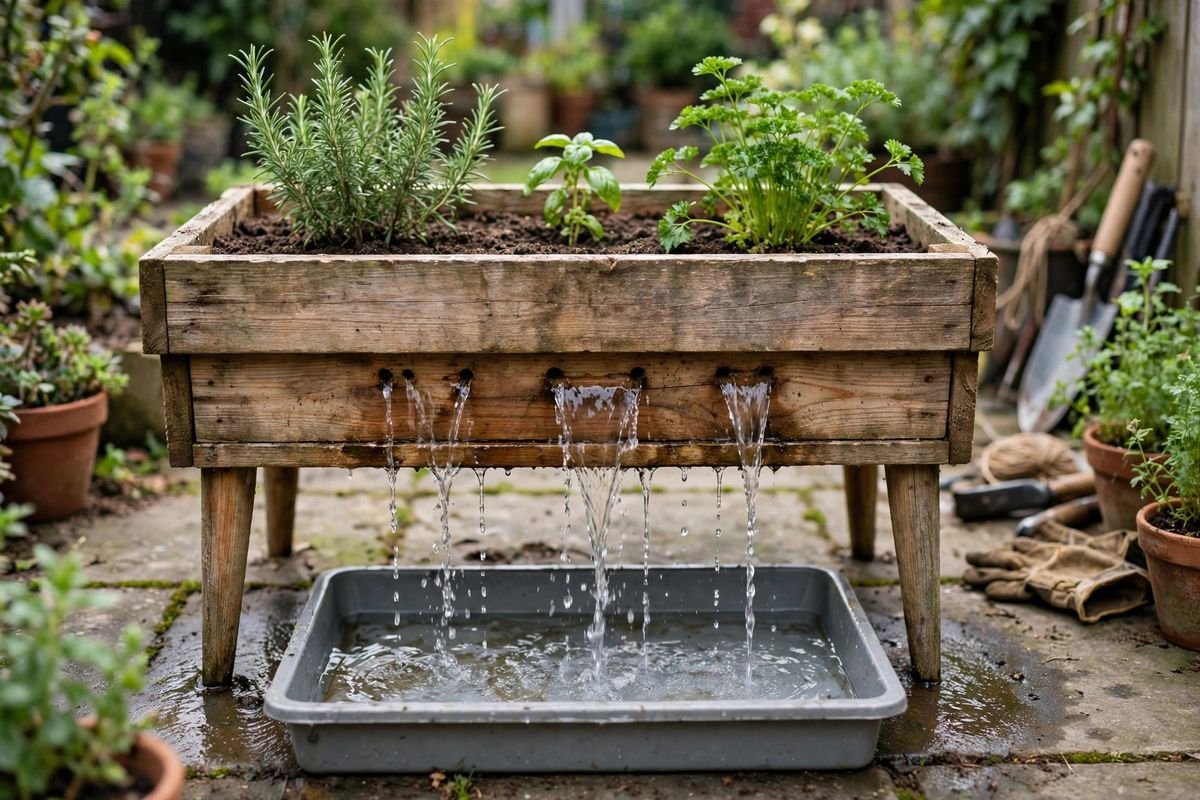
A closed-bottom bed must pass the same 10 gallons through its drainage holes. Suppose the bed has eight holes, each 1/2 inch across. The total hole area is 8 times 0.20 square inches, which is about 1.6 square inches. That is a small exit for 10 gallons, so a closed-bottom bed needs a tray or a gap under it, and the holes need checking each spring, since soil crumbs and roots block them. A closed bed on a flat patio with no drainage gap will hold water against the paving and stain it, which is why a tray and pot feet matter.
For frame and soil basics, see raised bed gardening for beginners and metal vs wood raised garden beds. For patio drainage problems, our post on how to prevent patio pots from staining concrete covers trays and feet in detail.
How to choose for your site
Choose an open bottom if the bed sits on soil that drains reasonably well, if you grow deep-rooted crops, or if you want worms and soil life to move in on their own. Lay cardboard or newspaper on the grass first to smother it, then fill the bed. The cardboard breaks down within a season and lets roots through.
Choose a closed bottom if the bed sits on a patio or deck, if the native soil may be contaminated, or if tree roots invade every bed you build. Pick a bed at least 12 inches deep for vegetables, and deeper for carrots and parsnips. Check the drainage holes before every season, and lift the bed on feet or a tray so water has somewhere to go.

Verdict
Choose an open-bottom bed if you garden on soil, grow deep-rooted crops, or want the simplest drainage and the most soil life for the least effort.
Choose a closed-bottom bed if you garden on a patio or deck, need to block tree roots or poor soil, or want a tidy bed that keeps soil off the paving.
To compare current options, search for open-bottom raised garden beds and raised beds on legs with drainage. Compare depth first, then drainage hole count and tray size, then whether the frame suits your base. Our post on raised garden beds for small backyards covers footprint for tight yards.
Questions
Does an open bottom let weeds in? Yes, some. Cardboard under the bed smothers grass, but persistent weeds like bindweed can still push through. A closed bottom blocks them, at the cost of depth.
Can a closed-bottom bed grow tomatoes? Yes, if the bed is deep enough. A closed bed 12 inches deep suits lettuce, herbs, and peppers, but tomatoes do better in 18 inches or more, since their roots need room and steady moisture.