
This post may contain affiliate links. If you buy through links on this page, we may earn a commission at no extra cost to you.
As an Amazon Associate I earn from qualifying purchases.
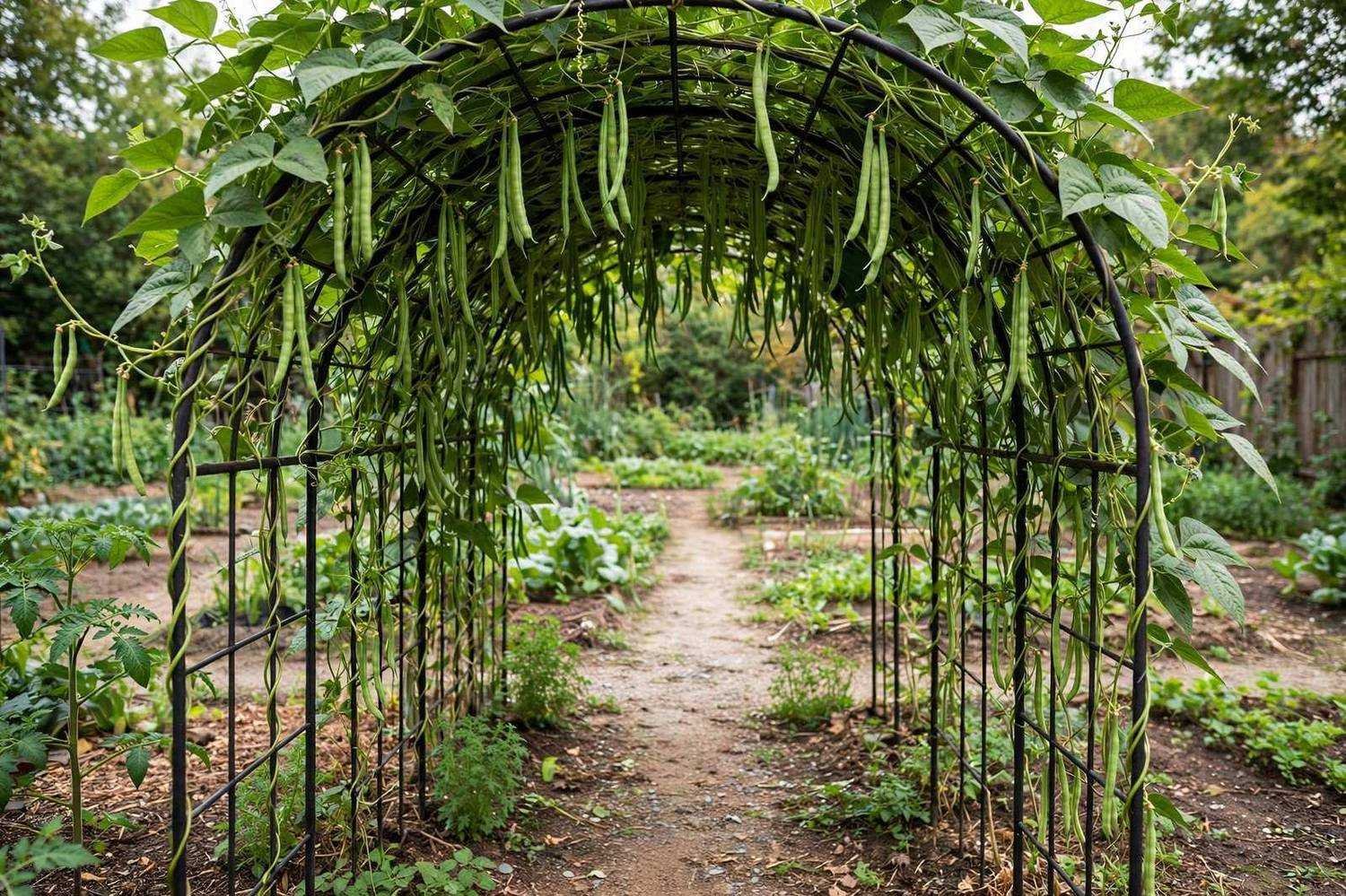
Climbing plants need support, and two shapes dominate small gardens: a flat trellis panel and a garden arch. A flat panel gives the most growing area for the least space. An arch gives a walkway, shade, and a harvest tunnel, but it takes a path and firm footing on both sides. Both grow good beans, peas, and cucumbers. The right pick depends on how much space you have and whether you need a path or a wall.
We have not tested the products linked here, and we give no current store prices. The links below go to search pages for trellis types, so you can compare current options, sizes, and prices at the time you shop.
Arch and flat trellis at a glance
| Feature | Flat trellis panel | Garden arch |
|---|---|---|
| Growing area | One face, full height | Two faces plus overhead |
| Bed space used | A strip at the bed edge | A path at least 3 feet wide |
| Picking | One face, easy to reach | Both sides plus overhead fruit |
| Shade created | Shades the bed behind it | Shades the path below it |
| Main drawback | Needs solid posts | Needs two firm footings |
Flat trellis panels: pros and cons
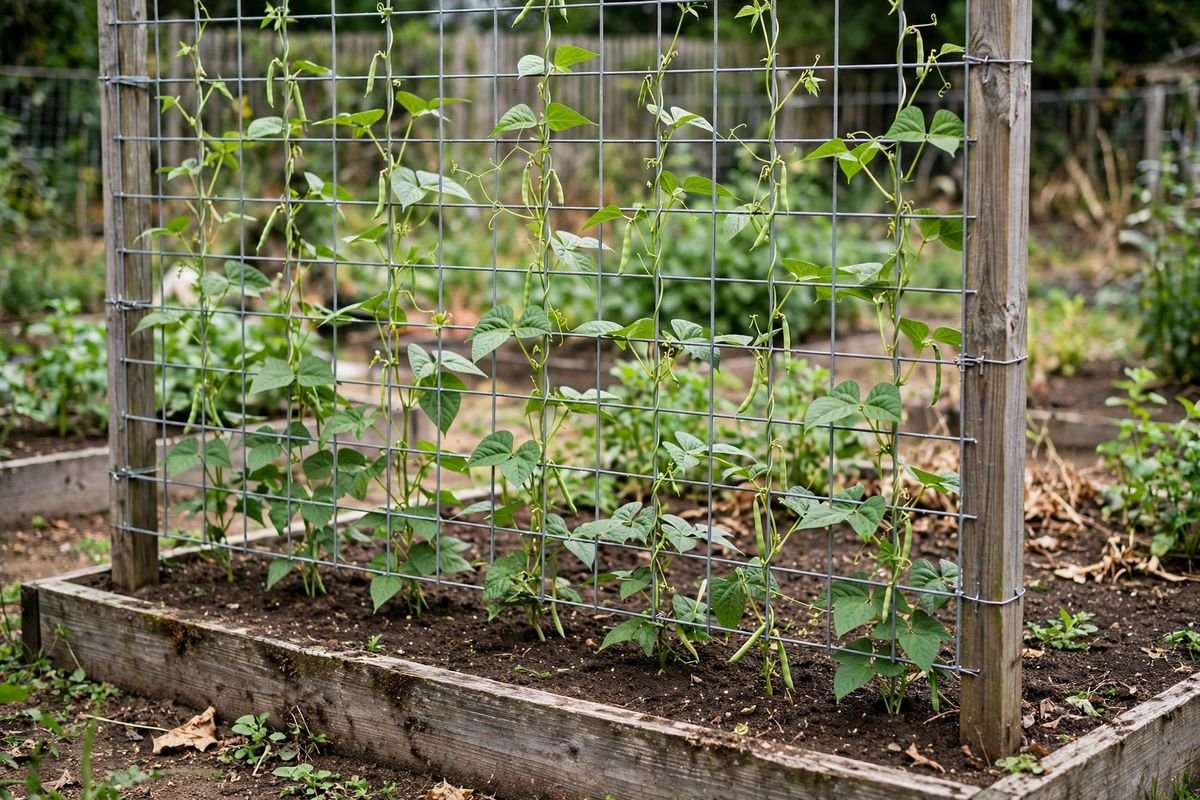
- Pros: a panel 8 feet long and 6 feet tall gives 48 square feet of growing area in a strip only a few inches deep.
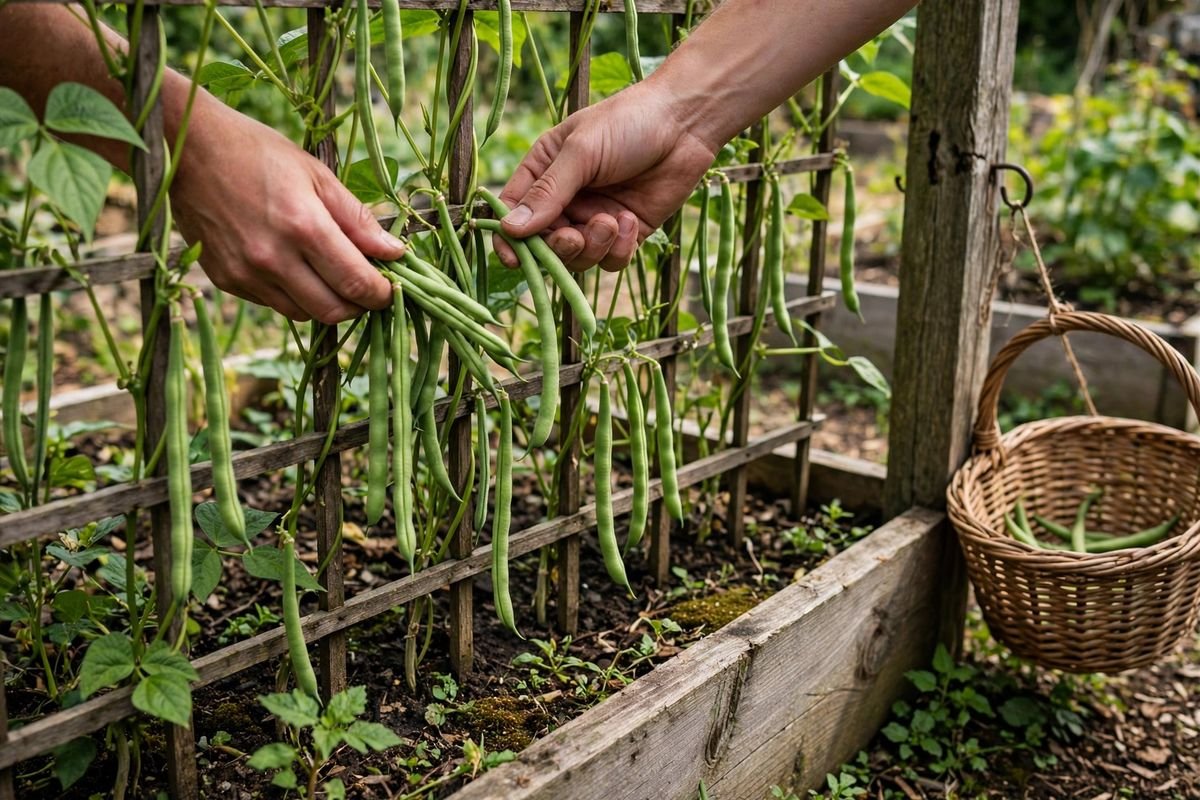
- Pros: all fruit hangs on one face, so picking and checking for pests is fast.
- Pros: a panel fixes to posts, a fence, or a bed frame, so it fits almost any garden layout.
- Cons: a loaded panel catches wind like a sail, so posts must be firm.
- Cons: a tall panel shades whatever grows behind it, which matters on the south side of a bed.
- Cons: a flat panel gives no shade for paths or seating areas.
Garden arches: pros and cons
- Pros: vines cover two sides and the top, giving more growing area than a flat panel of the same footprint.
- Pros: fruit hangs overhead where it is easy to see, and the shaded path below stays cooler in summer.
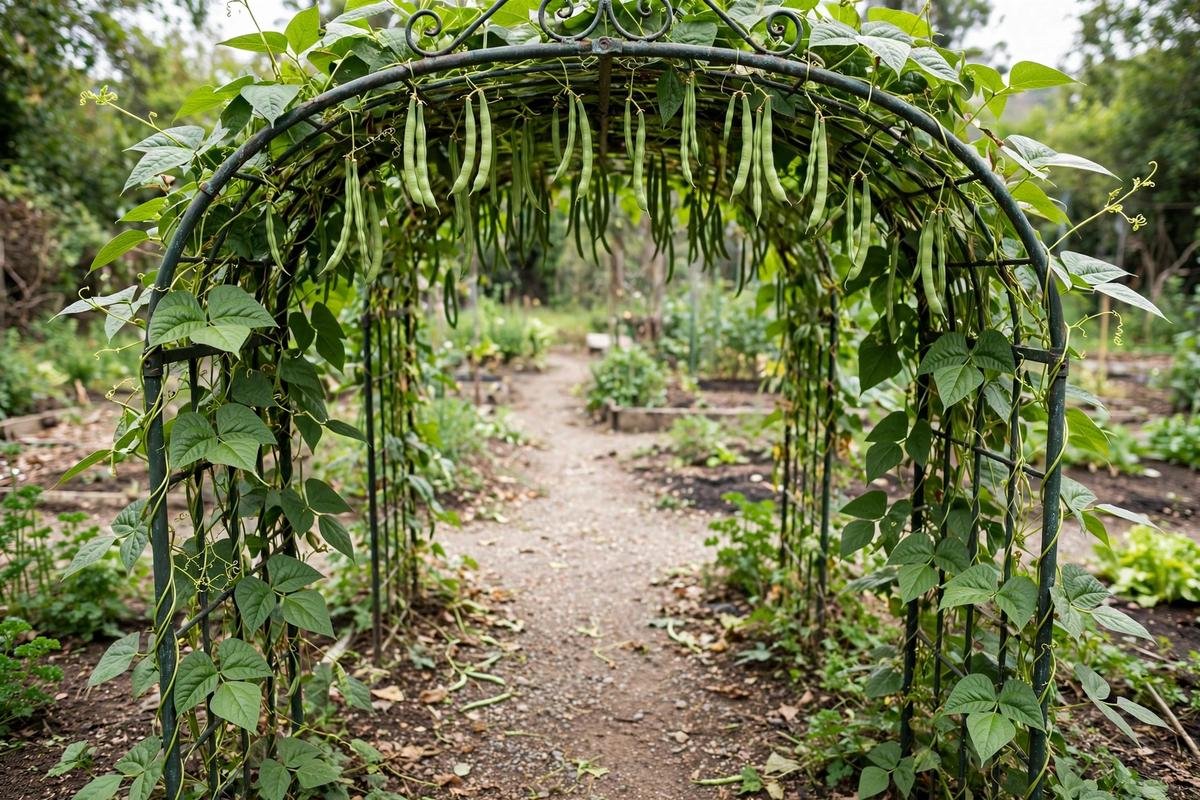
- Pros: an arch marks a garden entrance or divides two areas without a solid wall.
- Cons: an arch needs a path at least 3 feet wide, plus room to walk under loaded vines.
- Cons: overhead fruit needs reaching or a step stool, which is harder for some gardeners.
- Cons: both feet must be firm, or the arch leans as vines load one side more than the other.
A worked example: growing area for one 8-foot run
Take a flat panel 8 feet long and 6 feet tall. Its growing face is 48 square feet. Now take an arch over a 3-foot path, with two sides each 8 feet long and 6 feet tall, plus a top about 3 feet wide and 8 feet long. The two sides give 96 square feet, and the top adds 24 square feet, for 120 square feet in total. The arch gives about two and a half times the growing area of the flat panel, but it uses a 3-foot path plus two beds or borders to hold it, while the flat panel uses only a strip at one bed edge.
Now add plant numbers, with assumptions stated plainly. Suppose pole beans yield about 1 pound of beans per square foot of trellis in a good season. The flat panel would give about 48 pounds, and the arch about 120 pounds, which is far more beans than most households can pick and eat fresh. In practice, a small household may need only half a flat panel of beans, and an arch may suit a household that freezes or shares the harvest. Grow the area you can actually pick, not the area that looks impressive in a photo.
For crop and spacing basics, see how to grow green beans and how to grow cucumbers. For bed layout, raised bed gardening for beginners covers paths and access.
How to choose for your garden
Choose a flat trellis if space is tight, if you want the simplest picking, or if the trellis must fit along one bed edge or an existing fence. A flat panel also suits a rental garden, since it comes down at season end with little trace.
Choose an arch if you have a path to shade, if you want a garden entrance, or if you grow enough climbing crops to fill two sides and a top. Anchor both feet well, and plan for overhead picking: keep a stable step stool nearby, and grow the heaviest fruit, like large cucumbers, on the sides rather than overhead, where they are easier to reach.
Verdict
Choose a flat trellis if you want the most fruit per foot of bed, the simplest picking, or a trellis that fits a fence line or a single bed edge.
Choose a garden arch if you want shade over a path, a garden entrance, or the largest growing area from one structure, and you have the path width and firm footings to hold it.
To compare current options, search for flat trellis panels and metal garden arch trellises. Compare height and width first, then footing and anchor style, then whether the structure folds or comes apart for winter storage. Our post on how to keep pots from blowing over in wind covers anchoring in exposed spots.

Questions
Can an arch sit over a raised bed instead of a path? Yes, if the bed is wide enough to walk beside it, but an arch over a narrow bed shades the whole bed and makes weeding awkward. An arch over a path keeps the bed open.
Do arches need winter care? In snowy regions, take netting down before heavy snow, and check that the arch frame can handle snow load if vines and covers stay up. A metal arch usually handles winter fine, while a light wooden arch may need bracing.