
This post may contain affiliate links. If you buy through links on this page, we may earn a commission at no extra cost to you.
As an Amazon Associate I earn from qualifying purchases.
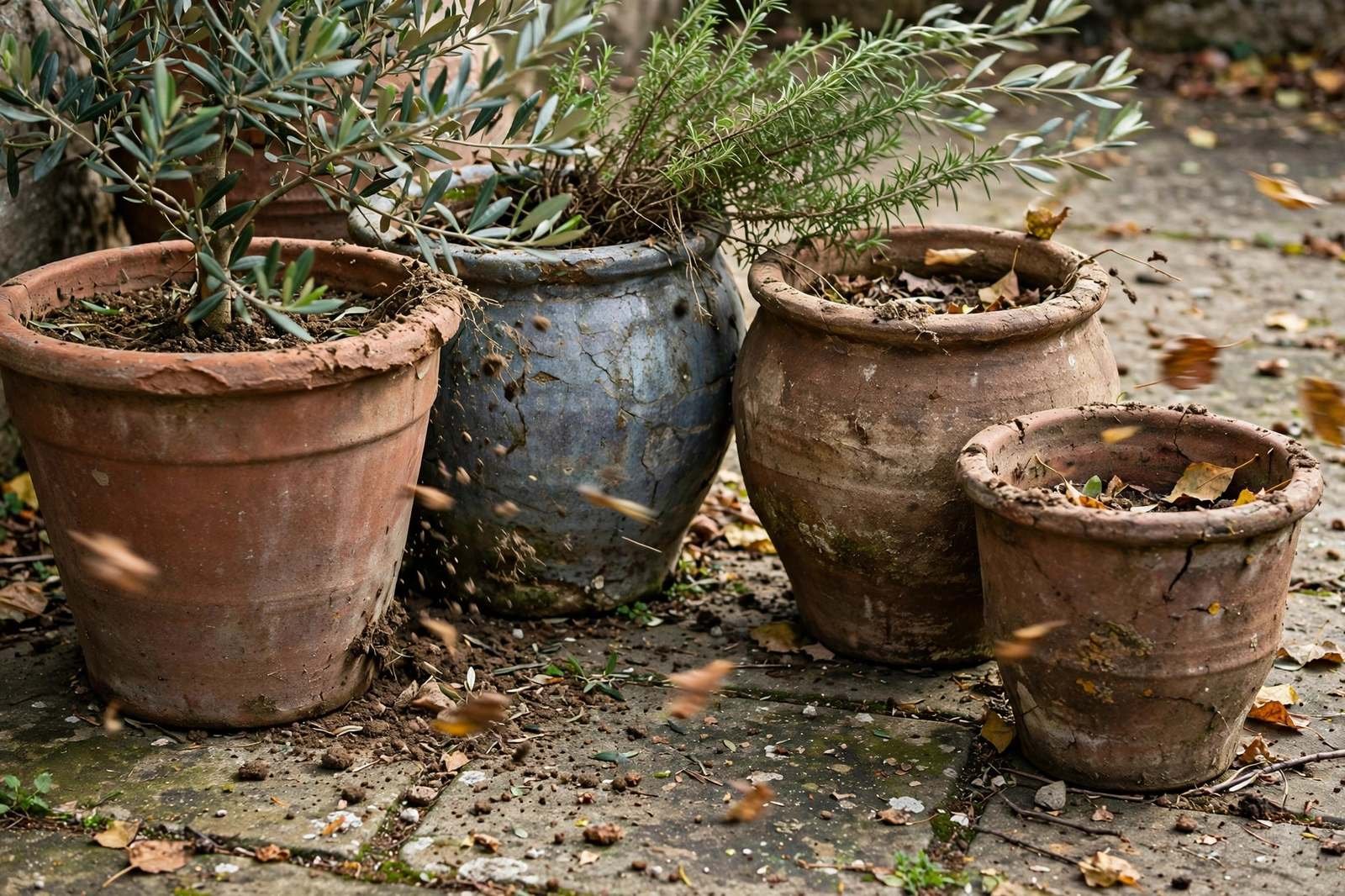
A pot that tips in wind can break a plant, crack a pot, and scatter soil across a patio in seconds. The fix is rarely one trick. Pots stay put when they are heavy enough, low enough, grouped together, and tied or braced to something solid. Start with the pots most at risk: tall, light, top-heavy pots on an open balcony or an exposed patio corner.
We have not tested the products linked here, and we give no current store prices. The links below go to search pages for pot types and supplies, so you can compare current options, sizes, and prices at the time you shop. This guide covers weight, grouping, tying, pot choice, and storm checks, with numbers you can check against your own pots.
Why pots tip over in wind
Wind pushes on the plant and the pot together, and the push acts high up when a plant is tall or leafy. A light pot with a tall plant has a high center of gravity and a narrow base, so a strong gust can lever it over the edge of the base. A short, wide pot with a compact plant resists the same gust better, since the push has less leverage and the weight sits lower.
Location adds to the problem. Wind speeds up around building corners, through gaps between houses, and across open balconies with no windbreak. A pot that sits fine in a sheltered corner can tip on the windward side of the same patio. Move the most exposed pots first, and treat corners and railings as high-risk spots.
A worked example: how much heavier a pot can get
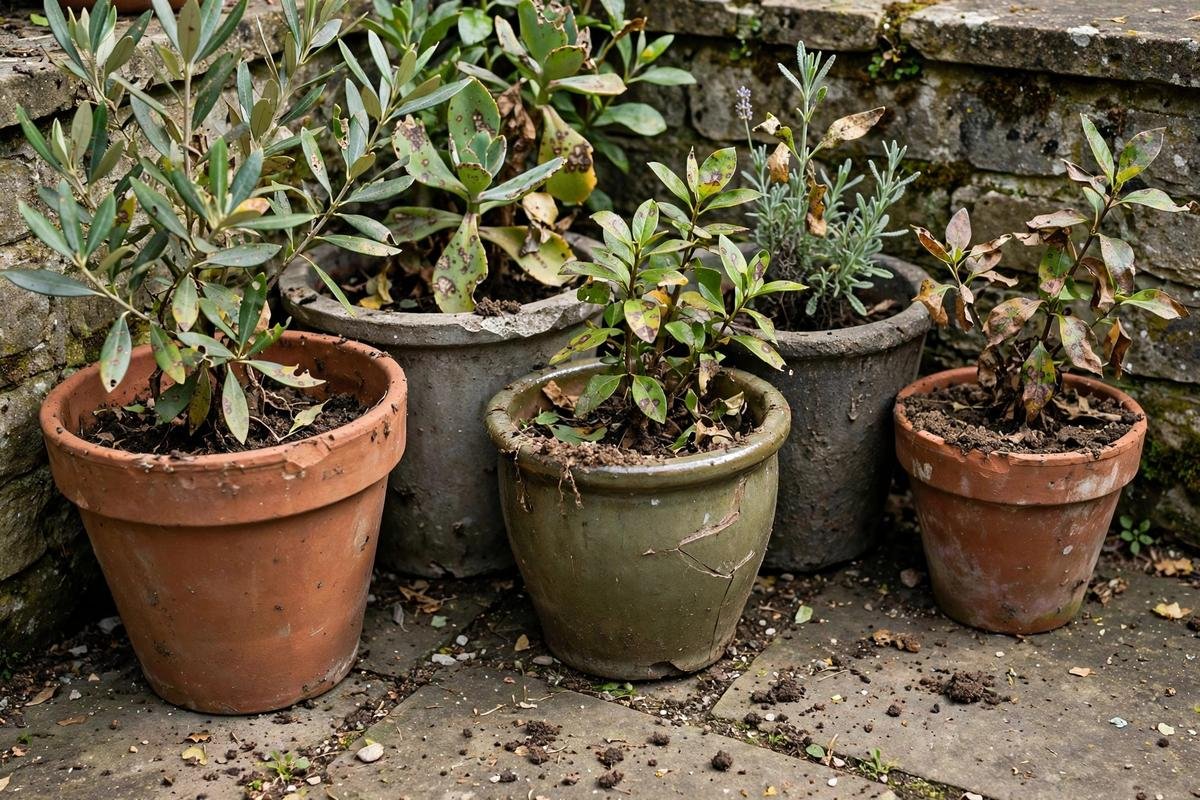
Take a pot 14 inches across and 12 inches tall. Treat it as a cylinder with a radius of 7 inches. The volume is 3.14 times 49 times 12, which gives about 1,847 cubic inches. Divide by 1,728 cubic inches per cubic foot and the pot holds about 1.07 cubic feet of mix before you allow for the space roots and drainage material take up.
Assume wet potting mix weighs about 40 pounds per cubic foot. That pot then holds about 43 pounds of wet mix. A light plastic pot of that size might weigh 3 pounds empty, so the filled pot weighs about 46 pounds. A terracotta pot of the same size might weigh 18 pounds empty, so the filled pot weighs about 61 pounds, roughly one-third heavier than the plastic version.
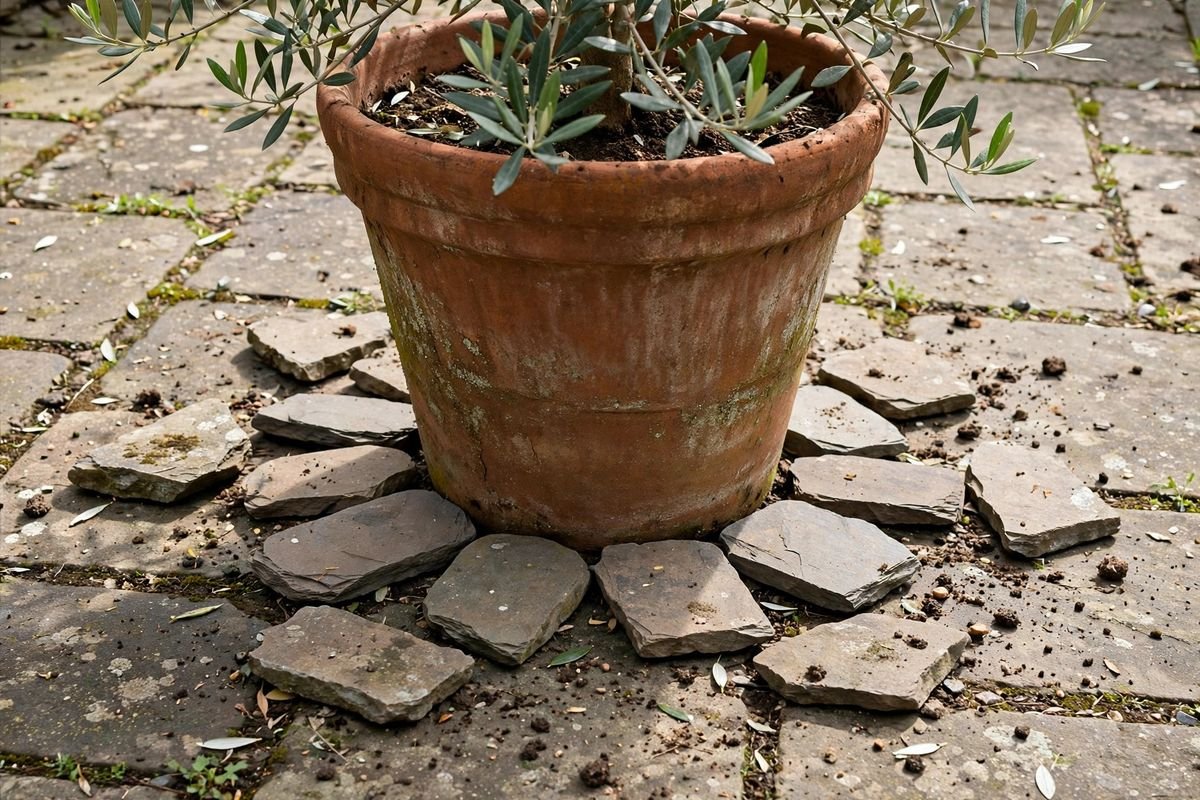
Now add a 15-pound concrete paver under the terracotta pot, strapped or set so the pot sits flat on it. The total rises to about 76 pounds, which is about 65 percent heavier than the filled plastic pot alone. Those numbers are estimates from stated weights, not measurements from a wind test, so weigh your own pot on a bathroom scale for a firmer number. The point holds on plain arithmetic: a heavier pot material plus a flat base weight changes the total by a large margin, while a decorative stone or two on the soil surface does not.
Use the same math for your own pots. Measure the diameter and height, work out the volume, multiply by 40 pounds per cubic foot for wet mix, and add the empty pot weight. If the total comes out under 20 pounds for a tall plant in an exposed spot, that pot needs grouping, tying, or a heavier base.
Group pots and use walls and corners
Grouping is the fastest fix for light pots. Push three or more pots together so their rims nearly touch, with the tallest plant in the middle and shorter plants around it. The group acts as one wider base, and one pot braces the next. A single pot on an open stretch of paving tips far more easily than the same pot tucked into a group.
Set the group against a wall or in a corner on the sheltered side of the patio, not on the windward edge. Leave a small gap behind the pots so air can pass and leaves do not stay wet against the wall. On a balcony, the wall side near the door is often calmer than the railing edge, so move the tallest pots back from the rail on windy days.
Tie, weigh, and brace pots without harming plants
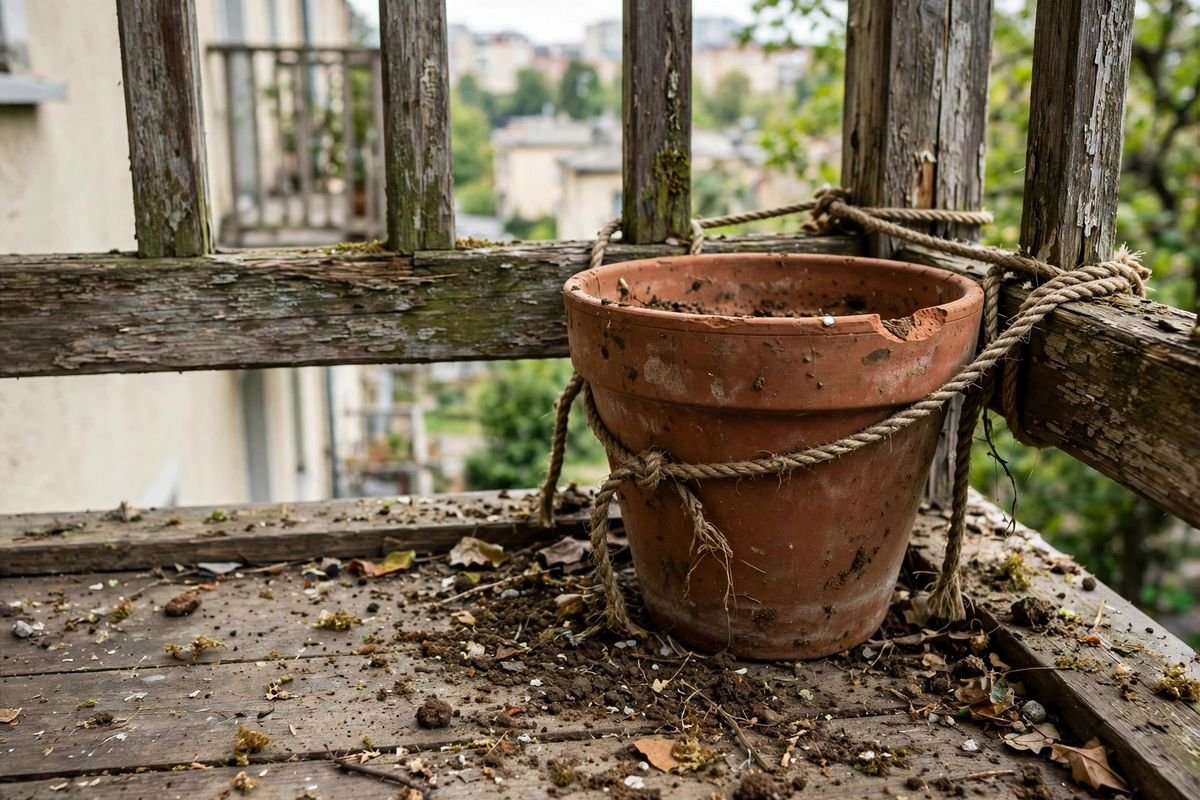
Tying works well on balconies. Run a soft rope or a wide plant tie from the pot, or from a stake in the pot, to the railing or a fixed hook. Keep the tie snug but not tight enough to cut into stems, and tie at two points when the plant is tall so it cannot swing in a circle. Check ties each month, since sun and rain wear rope down over a season.
For pots on paving, a flat concrete paver or a paving slab under the pot adds weight low down, where it helps most. Set the pot flat on the slab and make sure water can still drain from the pot holes. Do not block drainage holes with a slab that sits flush and seals them, or roots will sit in water after rain. A slab with a slight gap, or a pot with feet, keeps drainage open.
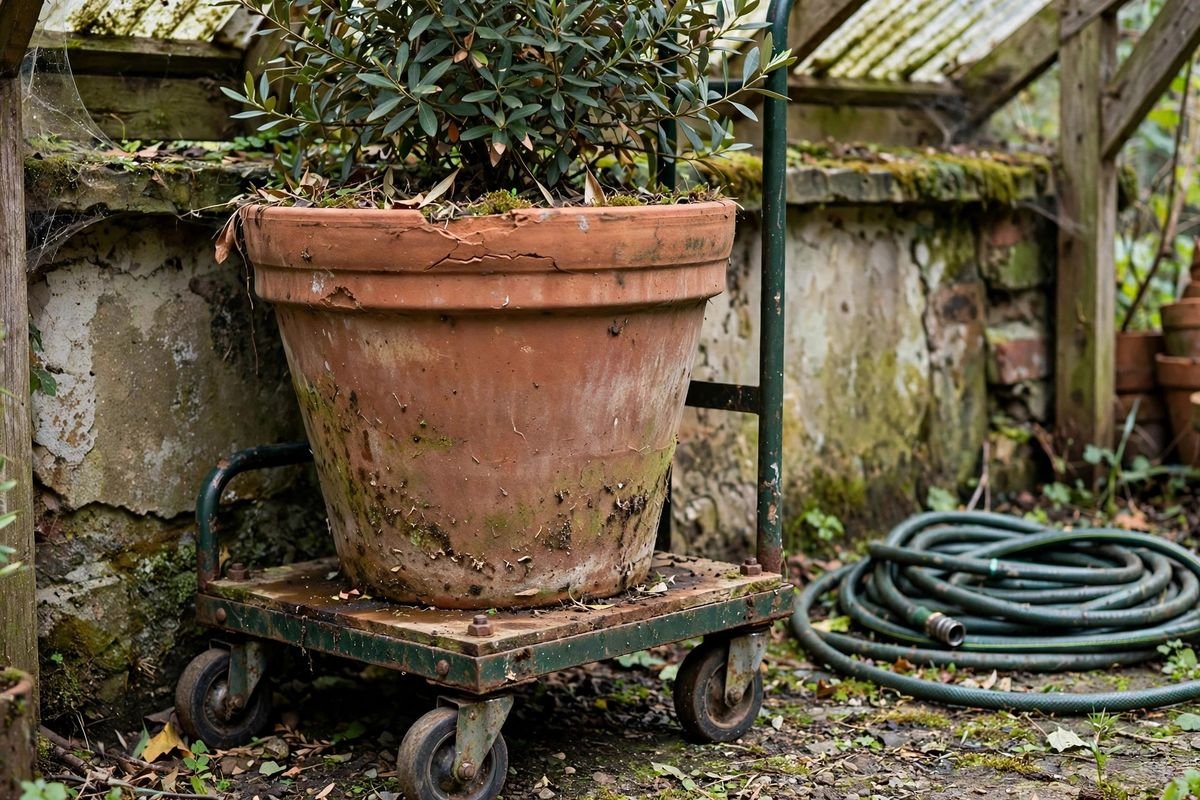
Pot caddies with wheels need care in wind. Wheels make a pot easy to move to shelter, which is a real benefit before a storm. On a windy day, lock the wheels or wedge the caddy against a wall, since a wheeled pot can roll and tip where a pot sitting flat would stay put. Move wheeled pots to shelter before strong wind arrives, rather than trusting the wheel locks alone.
To compare current options, search for heavy terracotta planters, plant pot caddies with wheels, and soft plant ties. Compare pot weight empty, base width, and drainage first, and treat claimed wind ratings with care unless the seller states how the rating was measured.
Choose pots and plants for windy spots
Wide, heavy pots suit windy spots better than tall, narrow ones. A pot that is nearly as wide as it is tall gives wind less leverage. Terracotta and concrete weigh more than plastic of the same size, and that extra weight is a benefit in wind, even though it makes the pot harder to move. Our comparison of terracotta versus plastic pots covers weight, drying, and breakage in more depth.
Plant choice matters as much as pot choice. Compact herbs, trailing plants, and short vegetables catch less wind than tall, leafy plants. A tall plant in a windy spot will always need more help, so pair tall plants with the heaviest pots you have and keep them grouped. For a balcony, how to start a balcony garden covers railings, weight limits, and wind, and how to arrange pots on a small balcony shows groupings that leave room to walk.
Check pots after wind and before storms
Before a forecast storm, move the lightest and tallest pots to shelter, lock caddy wheels, and tighten ties. Bring small pots indoors or into a garage when a severe wind warning is in effect, since no tie will hold a small pot in a true storm. After wind, check each pot for cracks, loose ties, and soil that has pulled away from the pot wall, and water any plant whose roots were exposed.
Questions
Pots tip most often when they are tall, light, and alone in an exposed spot. Grouping, a heavier pot, a flat base weight, and a tie to a fixed point each lower the risk, and together they cover most home patios and balconies. Start with the tallest pot you own, work out its filled weight with the math above, and fix that pot first.
For general pot setup, container gardening for beginners covers soil mixes, drainage, and pot sizes, and large planters for outdoor vegetables covers wide, steady pots for bigger plants.