
This post may contain affiliate links. If you buy through links on this page, we may earn a commission at no extra cost to you.
As an Amazon Associate I earn from qualifying purchases.
A planter left outdoors faces sun, rain, frost, and wind all year. Resin and ceramic handle those forces in different ways. Resin is light, resists frost cracks, and shrugs off a drop. Ceramic is heavy, holds steady in wind, and keeps soil cooler in summer heat. The right pick depends on where the planter sits, how often you move it, and how cold your winters get.
We have not tested the products linked here, and we give no current store prices. The links below go to search pages for planter types, so you can compare current options, sizes, and prices at the time you shop. This guide compares weight, frost, sun, upkeep, and cost over time, with worked numbers you can check against your own planters.
Resin and ceramic planters at a glance
| Feature | Resin planter | Ceramic planter |
|---|---|---|
| Empty weight | Light, easy for one person to move | Heavy, often needs two hands even when empty |
| Frost | Flexes instead of cracking in most freezes | Can crack when wet soil freezes inside |
| Summer sun | Dark colors heat up and can fade over time | Thick walls keep soil cooler and steadier |
| Wind | Can tip in a gust when the soil is dry | Stays put, thanks to its own weight |
| Breakage | Bounces or dents when dropped | Chips or shatters when dropped |
How resin planters hold up outdoors
Resin planters are molded plastic, often with a textured surface that mimics stone, wood, or clay. The material does not absorb water, so a freeze rarely cracks it. That trait makes resin a safe pick for a porch or patio in a cold climate, where a planter stays out through winter. Resin also resists rot and rust, so it needs little care beyond a wash.
Sun is the weak point. Dark resin absorbs heat, and a planter in full afternoon sun can warm the soil more than a light ceramic pot in the same spot. Ultraviolet light also fades bright colors over a few seasons and can make thin resin brittle with age. One person can lift most resin planters when empty, which helps when you rearrange a patio or bring pots under cover. See container gardening for beginners for pot size and soil basics.
How ceramic planters hold up outdoors
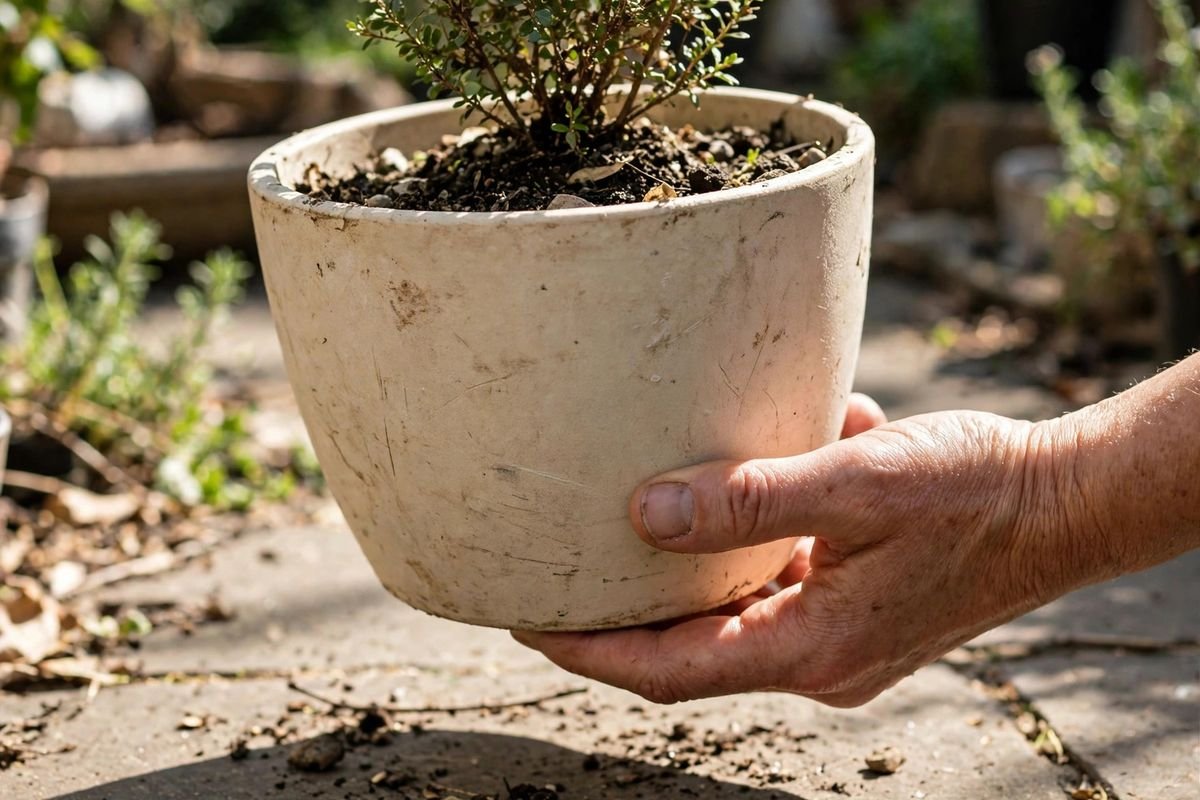
Ceramic planters are fired clay with a glaze or a natural finish. The thick walls insulate roots against a hot afternoon and hold moisture longer than thin resin, which helps plants in a sunny doorway or on a south-facing patio. Glazed ceramic also resists stains and wipes clean, and the weight keeps a tall shrub from tipping in wind.
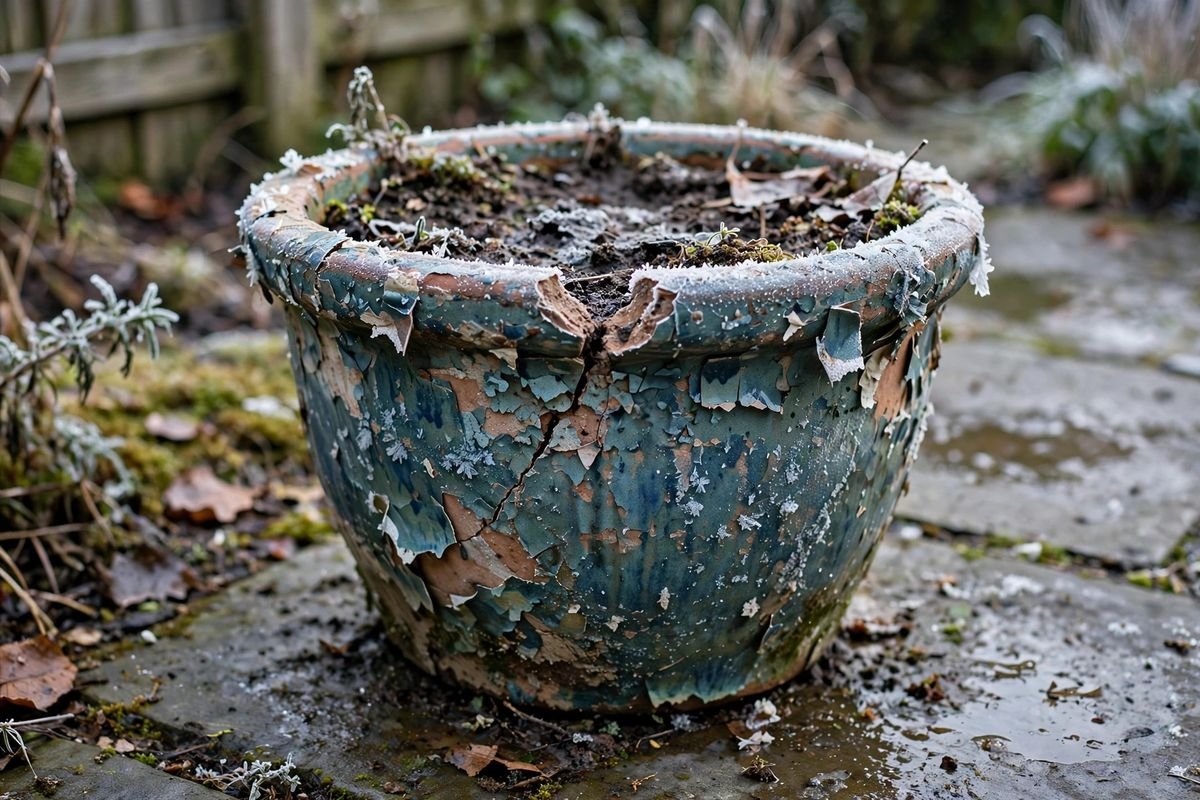
Frost is the weak point. Glazed ceramic absorbs little water through the glaze, but water in the soil still freezes and expands inside the pot. That expansion can crack the wall or pop the glaze off in flakes. In a cold climate, empty a ceramic planter before winter or move it under cover, and never leave it sitting in a full saucer through a freeze. A dropped ceramic planter usually chips or breaks, so place it where foot traffic and pets will not knock it over. For planters near a door, our guide to how to arrange pots on a small balcony covers spacing and traffic flow, and terracotta vs plastic pots compares clay with a lighter material in more depth.

Resin: pros and cons
- Pros: light to move, resists frost cracks, will not rot or rust, and survives a drop that would shatter ceramic.
- Pros: low upkeep, with a simple wash each season and no sealing.
- Cons: can tip in wind when dry, dark colors heat soil in full sun, and bright colors fade over time.
- Cons: thin walls offer little insulation, so soil temperature swings faster than in thick ceramic.
Ceramic: pros and cons
- Pros: heavy and steady in wind, thick walls keep soil cooler in summer, and glazed surfaces clean easily.
- Pros: a solid, finished look that suits a front door or a formal patio.
- Cons: heavy to move, chips or shatters when dropped, and can crack when wet soil freezes.
- Cons: needs winter care in cold climates, such as emptying or moving under cover before a hard freeze.
A worked example: weight for a 14-inch planter
Take a 14-inch planter, 12 inches deep, filled to 11 inches with mix. Treat the planter as a cylinder for this estimate. The radius is 7 inches, so the soil volume is 3.14 times 49 times 11, which is about 1,692 cubic inches. Divide by 1,728 cubic inches per cubic foot and the result is about 0.98 cubic feet of mix. Wet potting mix weighs roughly 40 pounds per cubic foot, so the soil alone weighs about 39 pounds when wet.
Now add assumed empty weights, stated plainly as planning inputs, not product specs. Suppose the resin planter weighs 6 pounds empty and the ceramic planter weighs 22 pounds empty. Add the 39 pounds of wet soil and the resin planter totals about 45 pounds, while the ceramic planter totals about 61 pounds, before the plant itself. The 16-pound gap decides who moves the planter. One adult can shift the resin planter across a patio with care, while the ceramic planter suits a spot where it stays put all season. For large outdoor vegetables, best large planters for outdoor vegetables covers size choices that pair with either material.
Upkeep and cost over time
Resin needs a wash and a check for sun fading each spring. Ceramic needs a glaze check for chips, since a chip lets water into the clay body and raises the frost risk. Both materials last longer with drainage holes kept clear and saucers emptied after rain. A saucer left full in winter harms both styles, and it harms ceramic most.
Cost over time favors the material that survives your climate. A resin planter that lasts five winters without a crack costs less per year than a ceramic planter replaced after one hard freeze. A ceramic planter kept under cover each winter can serve for a decade.

Verdict
Choose a resin planter if you move pots often, if winters are cold and planters stay out, if the spot is windy and you need to bring pots under cover, or if a drop or a knock is likely.
Choose a ceramic planter if the planter stays in one spot all season, if wind tips light pots at your door, if summer sun bakes a patio, or if you want a heavier, steadier look at an entry.
Many growers mix the two. Resin holds seasonal vegetables that move with the sun, while ceramic anchors shrubs and small trees by a door. To compare current options, search for resin outdoor planters and ceramic outdoor planters. Compare wall thickness and drainage design first, then check the stated size against the space you have.
Questions
Ceramic planters can stay out in a mild winter when the soil drains well and the saucer stays empty. In a climate with repeated hard freezes, moving the planter under cover or emptying it before winter gives the glaze a far better chance.
Resin planters can fade in strong sun, and the fade shows first on the side that faces south or west. Turning the planter a quarter turn each month evens the exposure, and a light color fades less visibly than a dark one.