
This post may contain affiliate links. If you buy through links on this page, we may earn a commission at no extra cost to you.
As an Amazon Associate I earn from qualifying purchases.
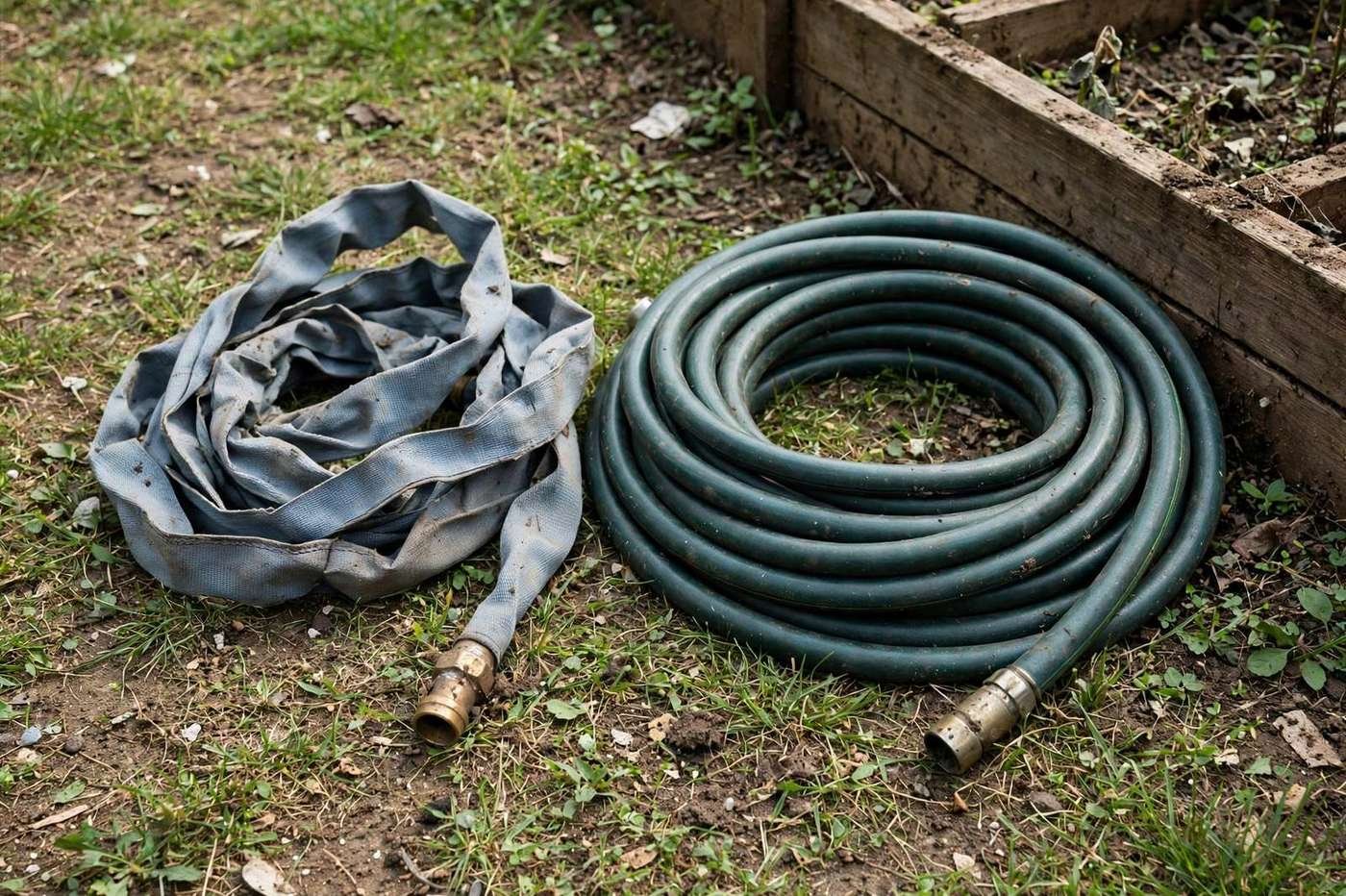
An expandable hose wins on weight and storage, and a traditional hose wins on steady flow and long-term toughness. If you water a small yard from one tap and hate wrestling a heavy coil, the expandable hose is the easier daily tool. If you run a sprinkler for an hour, drag a hose around corners and rough paths, or water a large garden, a traditional rubber or reinforced vinyl hose holds up better. This head-to-head covers weight, flow, durability, and cost per season, so you can pick the type that fits your yard rather than the one with the loudest packaging.
We have not tested the products linked here, and we give no current store prices. The links below go to search pages for hose types, so you can compare current options, sizes, and prices at the time you shop. Our companion buying guide, best expandable garden hoses, compares expandable models side by side if you decide that type suits you.
Expandable vs traditional at a glance
| Expandable hose | Traditional hose | |
|---|---|---|
| Weight (50 feet) | About 3 pounds dry | About 12 pounds for rubber |
| Storage size | Small coil, fits a small hook or bucket | Large coil, needs a reel or large hook |
| Water flow | Lower, and it drops when the hose is not fully stretched | Steady, even over a long run |
| Kinking | Less likely to kink when stretched straight | Kinks at bends unless it is a kink-resistant build |
| Sun and abrasion wear | Fabric outer layer wears faster on rough ground | Rubber handles sun and dragging better |
| Repairs | Hard to repair; a split inner tube often ends the hose | Fittings and sections can be cut out and replaced |
| Best for | Small yards, patios, pots, light daily watering | Large gardens, sprinklers, rough use |
The table sums up the trade: the expandable hose trades toughness for lightness, and the traditional hose trades lightness for steady performance. The rest of this post puts numbers on that trade so the choice is concrete, not a guess.
Weight and storage: a worked example
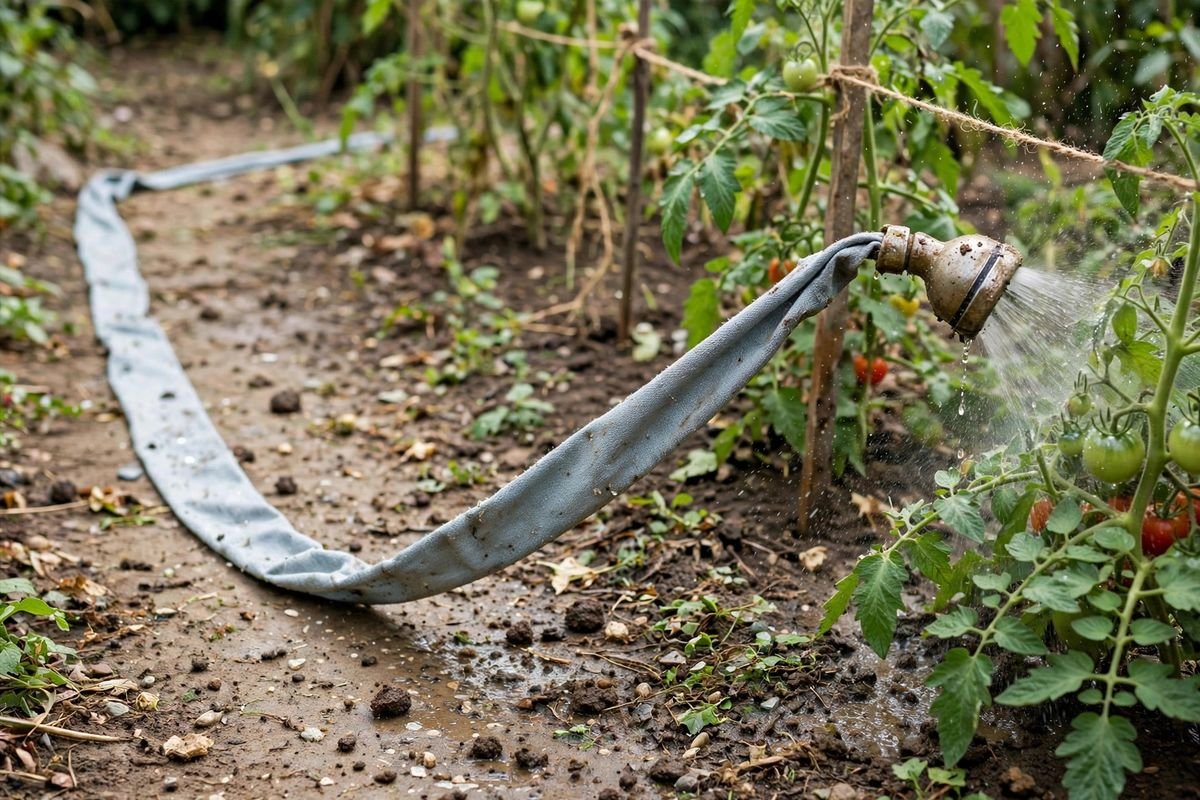
Take a 50-foot hose as the example, with weights taken from typical product listings rather than our own scale: a 50-foot rubber hose weighs about 12 pounds, and a 50-foot expandable hose weighs about 3 pounds. That 9-pound gap matters every time you carry the hose to the far end of the yard, and it matters more on stairs or across a slope. For a gardener who waters daily, the lighter hose saves roughly the effort of carrying a gallon of water on every trip, minus the water itself.
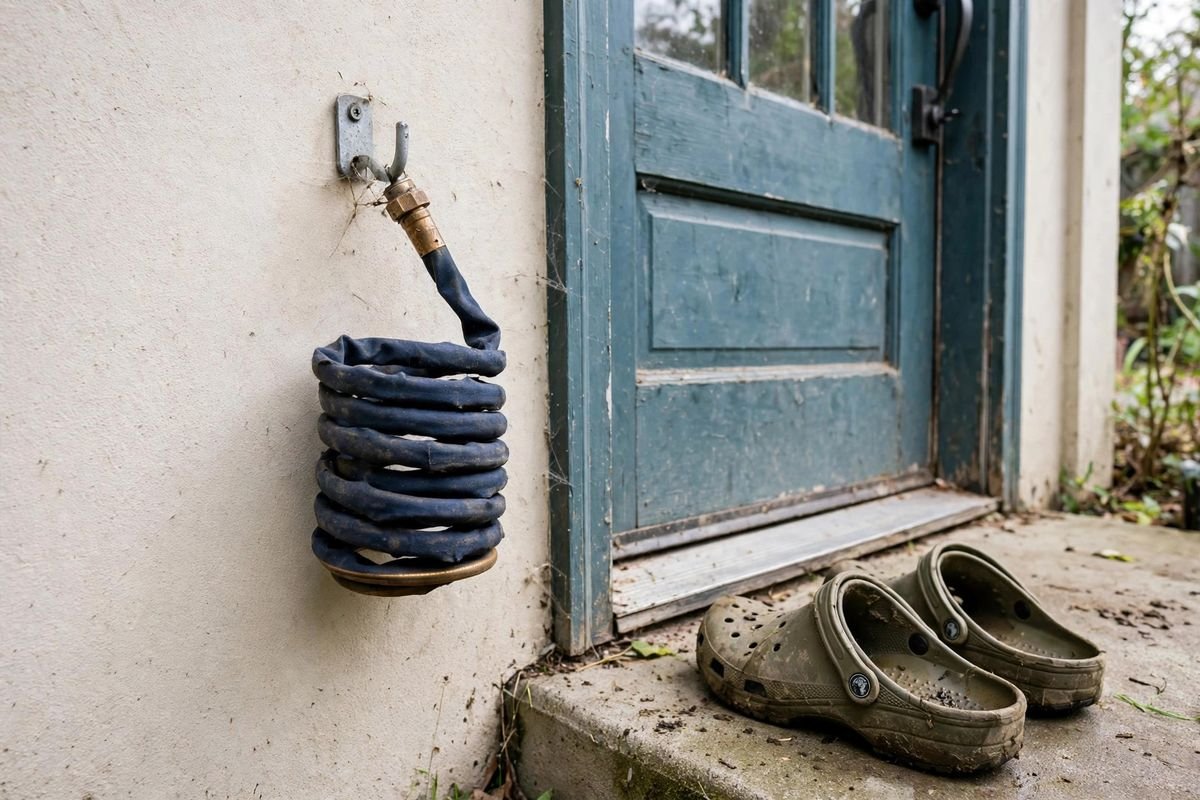
Storage shows the same gap in a different unit. A drained expandable hose shrinks back to a coil roughly the size of a dinner plate, about 10 to 12 inches across, which hangs on a small hook by the door. A 50-foot rubber hose coils to roughly 18 to 22 inches across and needs a large hook or a reel. In a small yard, that difference decides whether the hose lives by the tap or takes up a corner of the shed. If storage space is tight, see best hose reels for small yards for ways to keep either type tidy.
Cost per season follows from expected life, stated here as an assumption, not a tested result. Suppose an expandable hose lasts 3 seasons of regular use and a traditional rubber hose lasts 8 seasons. If both cost the same amount at purchase, the traditional hose costs about one-third as much per season, since its price spreads over more than twice as many seasons. If the expandable hose costs half as much, the per-season costs come out close. The honest way to compare them is to divide the price you actually pay by the seasons you expect from each type, using 3 and 8 as starting assumptions and adjusting for how hard you are on hoses.
Durability and repairs
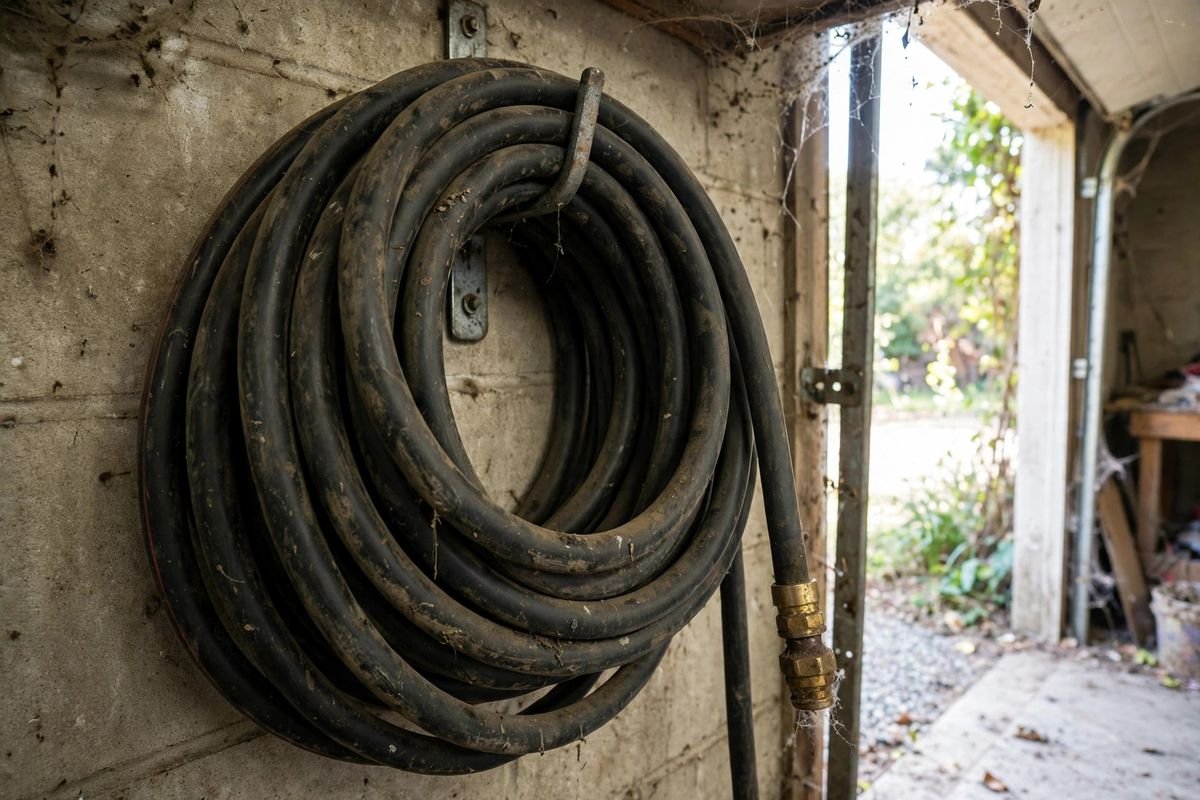
A traditional hose fails in ways you can fix. A cracked fitting unscrews and a new one clamps on. A split section cuts out, and a repair coupling joins the two ends. A rubber hose left in the sun will age, and the outer layer will crack after years, but that decline is slow and visible, so you can plan a replacement before it bursts.
An expandable hose fails in ways you usually cannot fix. The inner tube stretches each time the water runs, and the fabric sleeve protects it from scuffs. A puncture from a rose thorn, a sharp stone, or a dragged corner can split the inner tube, and once it splits, the hose rarely holds pressure again. Drain it after every use, keep it off rough concrete and gravel paths, and never leave it pressurized in the sun between waterings. Those three habits stretch its life more than any feature on the box.
Fittings deserve a check on either type. Brass fittings last longer than thin plastic ones, and they seal better after many connect and disconnect cycles. If a fitting leaks at the tap, try a fresh rubber washer first. A washer costs little and fixes the most common drip, on either hose type.
Water flow and everyday use
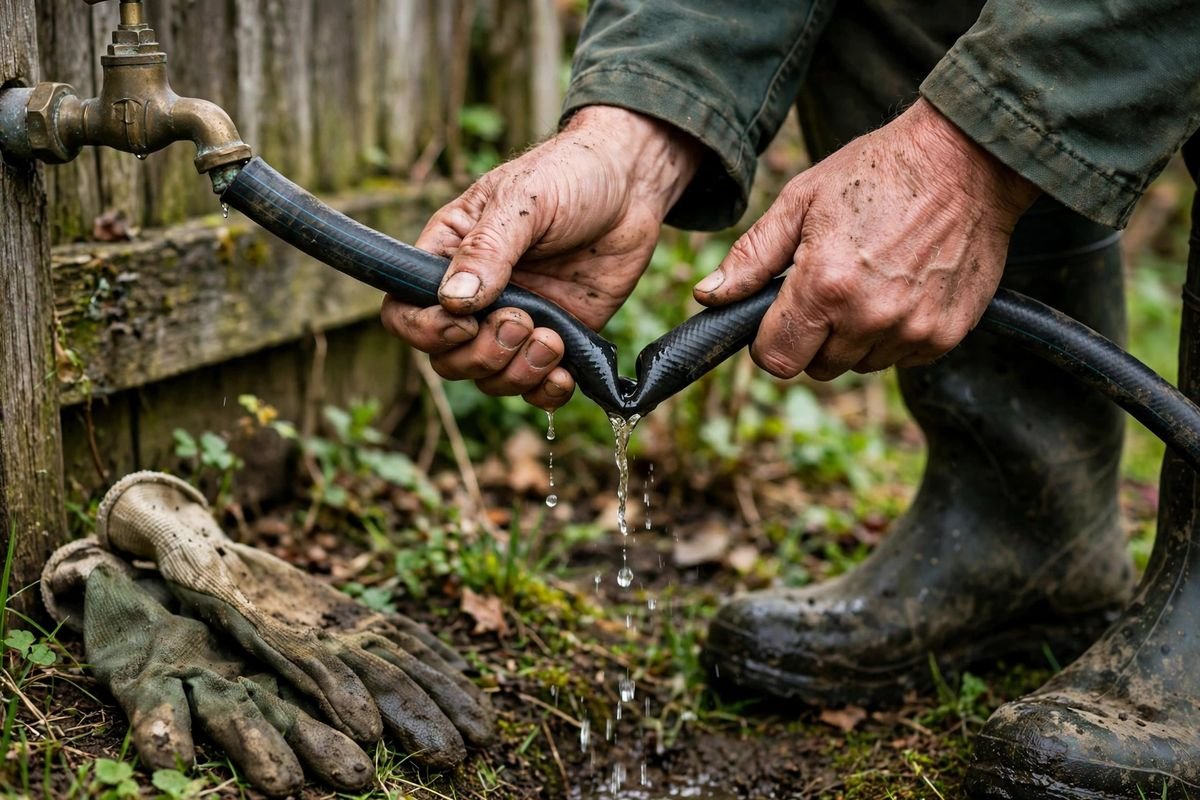
Flow is where a traditional hose earns its keep. A standard 5/8-inch rubber hose delivers a full stream to a sprinkler at the far end of a 50-foot run, and it keeps delivering it for an hour. An expandable hose has a narrower inner tube, and its flow drops when the hose is only partly stretched, since the tube has not opened fully. For hand watering pots and beds, that lower flow is fine, and it can even help, since it is harder to blast soil out of a pot. For a sprinkler or a long soaker run, the lower flow shows up as weak coverage at the far end.
Pressure changes also treat the two types differently. An expandable hose needs full pressure to stretch to its stated length, so a 50-foot hose on a low-pressure tap may only reach 35 or 40 feet in practice. A traditional hose reaches its full length regardless of pressure, since it does not stretch. If your tap pressure is low, measure the distance from tap to the farthest bed before you buy, and leave slack in that number.
For keeping beds evenly moist between waterings, a hose of either type pairs with mulch and a steady routine. See how to keep raised bed soil from drying out and how often should you water a raised bed. If you water beds through a soaker line instead of a spray nozzle, read drip irrigation vs soaker hose before you choose.
The verdict
Choose an expandable hose if you water a small yard or patio, you carry the hose up steps or across a lawn daily, storage space is tight, and you mostly hand water pots and beds. Choose an expandable hose if a heavy coil has kept you from watering as often as your plants need.
Choose a traditional hose if you run a sprinkler, water a large garden, drag the hose over rough ground, or leave a hose out through the season. Choose a traditional hose if you want a hose you can repair and keep for many seasons rather than replace every few years.
Choose both if your yard has two jobs: keep a light expandable hose by the back door for pots and quick jobs, and a traditional hose on a reel for sprinklers and the far beds. That split costs more up front, and it saves daily effort while keeping a tough hose ready for heavy work.
To compare current options, search for expandable garden hoses and rubber garden hoses. Compare weight, fitting material, and stated length first, then check whether the length is measured stretched or coiled. If you water on a schedule, a timer helps either hose type: see best garden hose timers.
Questions
Can an expandable hose run a sprinkler? It can, but coverage may be weaker than with a traditional hose, since flow drops when the hose is not fully stretched. Try it on a short run first and check the far edge of the spray pattern before you rely on it.
Why did an expandable hose burst? The usual causes are a puncture in the inner tube, leaving the hose pressurized in hot sun, or dragging it over a sharp edge. Drain it after use and store it out of direct sun to give it the longest life.
Does a traditional hose always kink? No, but most standard rubber hoses kink at sharp bends. A kink-resistant build and wide, gentle turns around corners cut kinking down, and a reel keeps the coil from tangling.
Sources & Further Reading
- University of California Agriculture and Natural Resources, home garden watering guidance
- Clemson Cooperative Extension, garden hose and irrigation guidance
- University of Minnesota Extension, watering garden plants guidance