
This post may contain affiliate links. If you buy through links on this page, we may earn a commission at no extra cost to you.
As an Amazon Associate I earn from qualifying purchases.
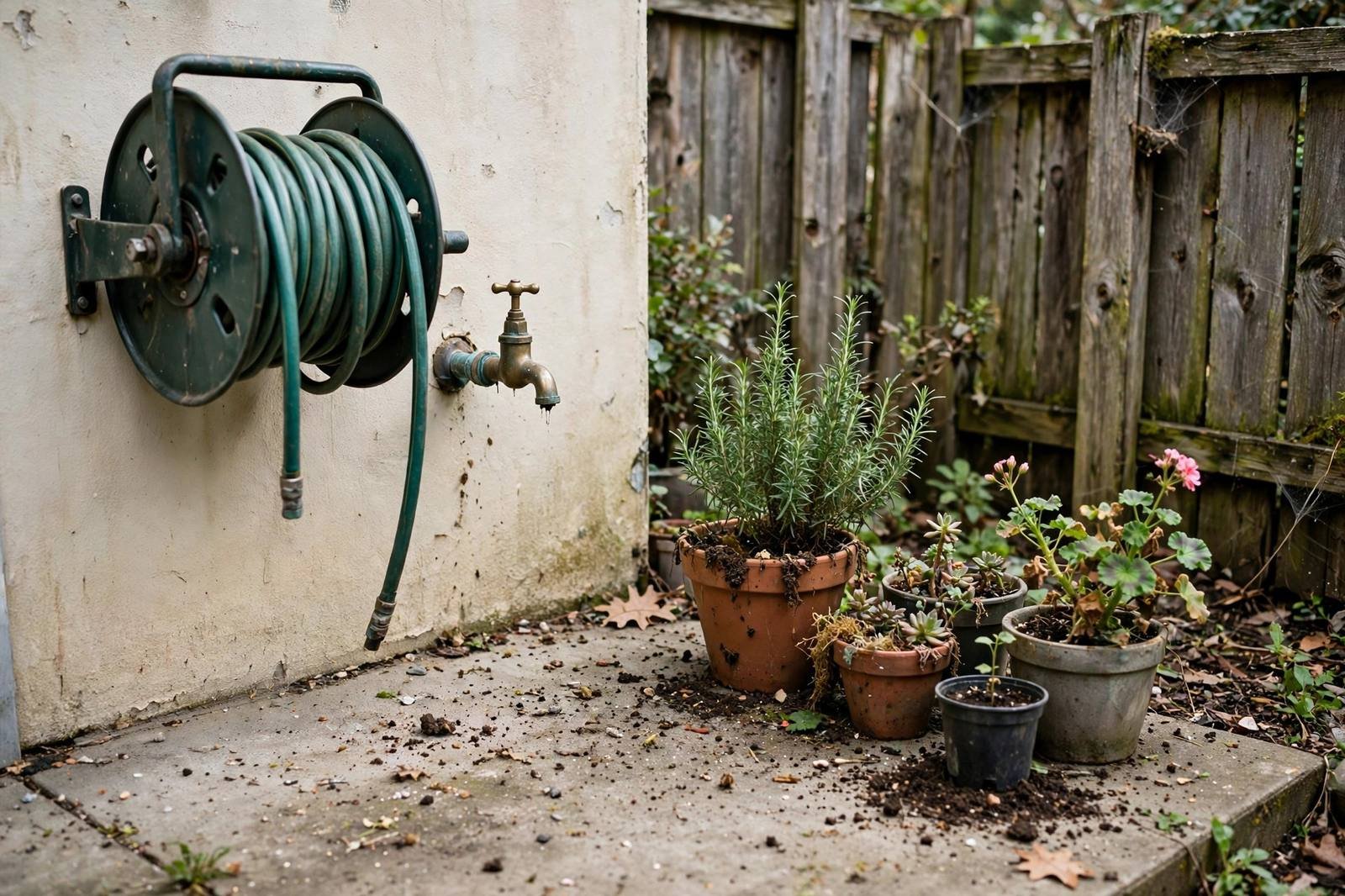
A hose reel keeps a garden hose off the ground, off the path, and ready to unwind without tangles. In a small yard that matters more than it sounds. A loose hose across a patio trips people, kinks where it bends around a pot, and takes up the one corner where you wanted a chair. A reel gives the hose a home, and winding it back takes a minute once the habit is set.
We have not tested the products linked here, and we give no current store prices. The links below go to search pages for hose reels, so you can compare current options, sizes, and prices at the time you shop.
Wall-mount, freestanding, and cart reels
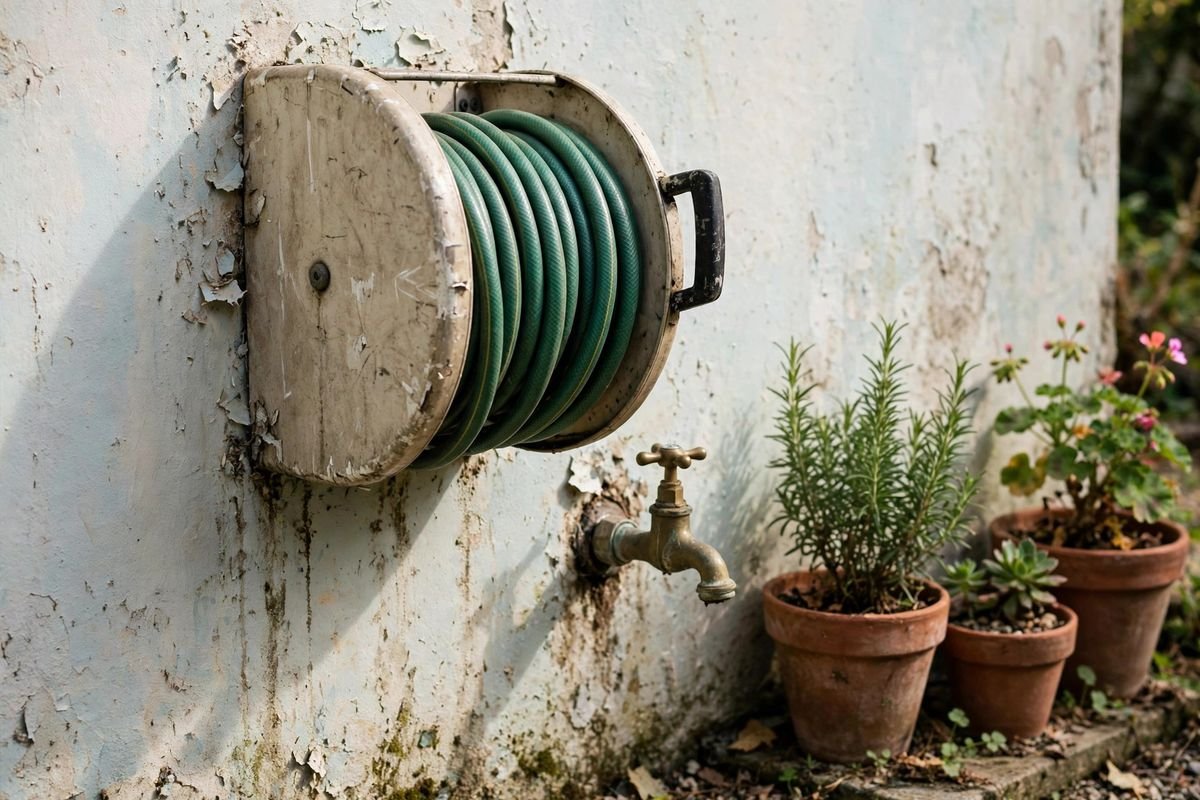
A wall-mount reel bolts to a house wall or a fence post near the tap. It keeps the hose off the ground and out of the walkway, and many models swing out so you can pull the hose toward different parts of the yard. It needs a solid surface to bolt into, and once it is up, it stays where it is. That is a good fit for a yard with one tap and beds in every direction from it.
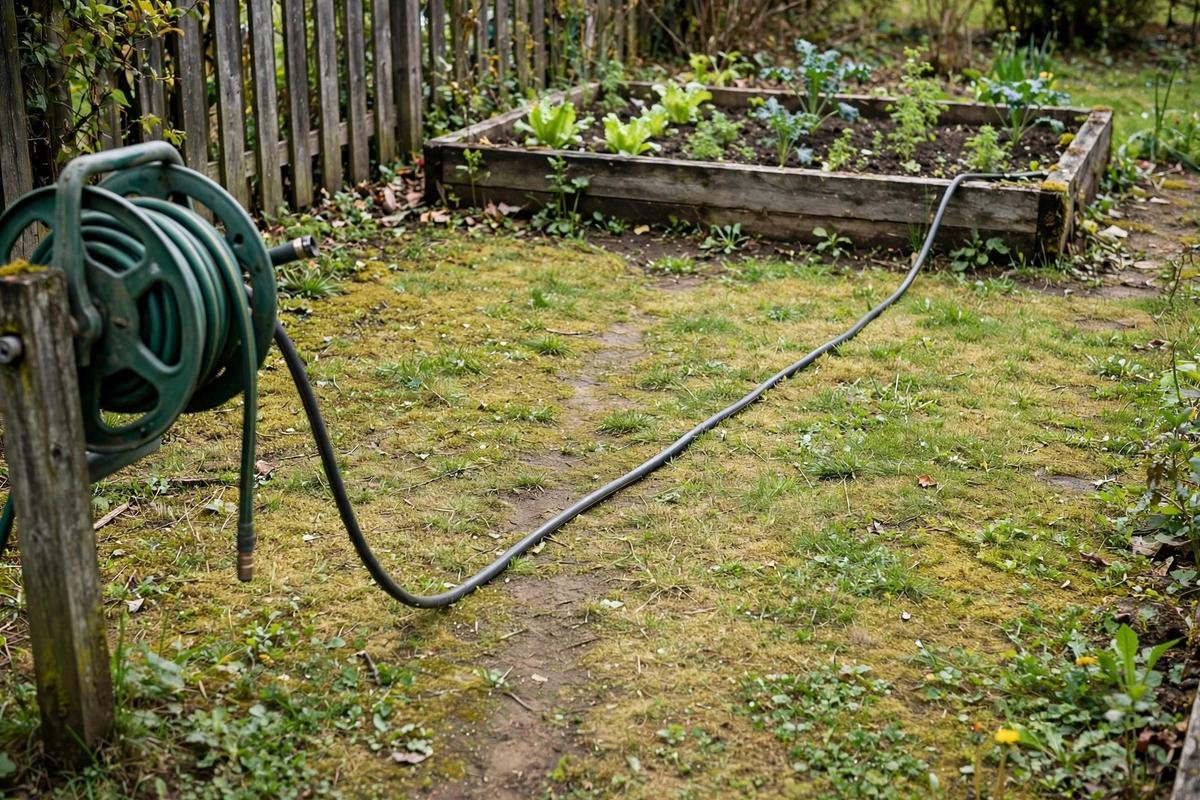
A freestanding reel sits on the ground, often as a box or a drum on feet. It needs no drilling, so it suits renters and yards where the wall near the tap is weak or crowded with pipes. It takes up floor space, and a light one can tip if you pull hard, so set it where the hose pulls straight out rather than sideways.
A cart reel adds wheels and a handle, so you can roll the hose to the far bed and back. It helps when the tap sits at one end of a long yard and the beds sit at the other. It costs more floor space in storage, and the wheels need a clear path, so it fits yards with a straight, level run better than yards cut up by steps and tight corners.
A worked example: a 20 by 30 foot yard
Take a yard 20 feet wide and 30 feet long, with the tap at one corner by the house and the far bed at the opposite corner. The straight-line distance from tap to far corner is the diagonal of the yard. By the rule for a right triangle, that distance is the square root of 20 squared plus 30 squared, which is the square root of 400 plus 900, or the square root of 1,300, about 36 feet.
A hose that runs straight across the lawn would need at least 36 feet to reach that corner, and a straight run is rare in a real yard. Beds, pots, a path, and a fence force the hose around corners, so add slack for the route it truly takes. Routing along two sides of the yard, 20 feet plus 30 feet, needs 50 feet before any slack at all. For this yard, a reel that holds a 50-foot hose is the sensible size, with a little slack left for pulling around a pot or a bed edge.
That math also settles the reel type. A wall-mount reel by the tap holding 50 feet covers the whole yard, since the hose unwinds toward any corner. A freestanding reel set mid-yard could hold a shorter hose, but it then sits in the middle of the space you wanted to keep clear. For a yard this size, mount the reel near the tap, buy the 50-foot hose, and keep the reel out of the walkway. If you pair the reel with a timer, see best garden hose timers, and if you water with an expandable hose instead, see best expandable garden hoses.
What to check before you buy
Check the hose capacity first, in feet and in hose width. A reel rated for 50 feet of half-inch hose may hold less of a thicker hose, so match the rating to the hose you own or plan to buy. Check the mount next. A wall-mount reel needs brick, studs, or a solid post, not thin siding alone, and the screws and wall plugs that come with it may not suit your wall, so check what your wall needs before you drill.
Check how the reel winds. A hand crank is simple and cheap to fix, and it works in any weather. An auto-rewind reel pulls the hose back with a spring, which is easier on the arms but adds parts that can wear. Try to picture winding a wet, muddy hose in winter gloves, since that is when a fiddly crank or a stiff rewind shows its flaws. To compare current options, search for wall mount hose reels and freestanding garden hose reels.

Small-yard placement tips
Mount or set the reel within arm’s reach of the tap, so the short leader hose from tap to reel does not drape across a path. Leave room to swing: a wall-mount reel that swings needs clear space on both sides, and a cart reel needs a parking spot where it does not block a gate. Keep the reel where you can reach it with wet hands and muddy shoes, since that is when you will use it.
Keep the hose path clear of the spots where soil dries fastest. A hose dragged over a bed edge crushes plants and compacts soil, so run it along paths and let a wand reach into the bed instead. For that, see best watering wands for gardeners and how to keep raised bed soil from drying out. On a balcony, where space is tighter still, see how to start a balcony garden. Before freezing weather, drain the hose, wind it back, and store a cart or freestanding reel under cover, since water left in a wound hose can freeze and split it.

Questions
Does a wall-mount reel work on a fence? It can, if the fence post is solid and set deep, and the reel bolts through the post rather than through a thin fence board. A board alone will flex and pull loose when you tug the hose. When in doubt, add a stout post by the tap and mount the reel to that.
Can a reel hold a hose that is longer than its rating? A longer hose may fit if it is thin, but it will wind tight, kink at the drum, and jam the crank or the rewind. Buy the reel for the hose length you will use, not the length you hope to squeeze on.
Is an auto-rewind reel worth it in a small yard? It is worth it if winding by hand is hard on your hands or back, since it removes the chore that makes people leave the hose out. If you are happy with a crank and want fewer parts to wear, a hand-crank reel does the same job for less.
Sources & Further Reading
- University of Minnesota Extension, Yard and Garden watering guides
- Clemson Cooperative Extension, Home and Garden Information Center watering guides
- University of California Agriculture and Natural Resources, UC Master Gardener Program watering guidance