
This post may contain affiliate links. If you buy through links on this page, we may earn a commission at no extra cost to you.
As an Amazon Associate I earn from qualifying purchases.
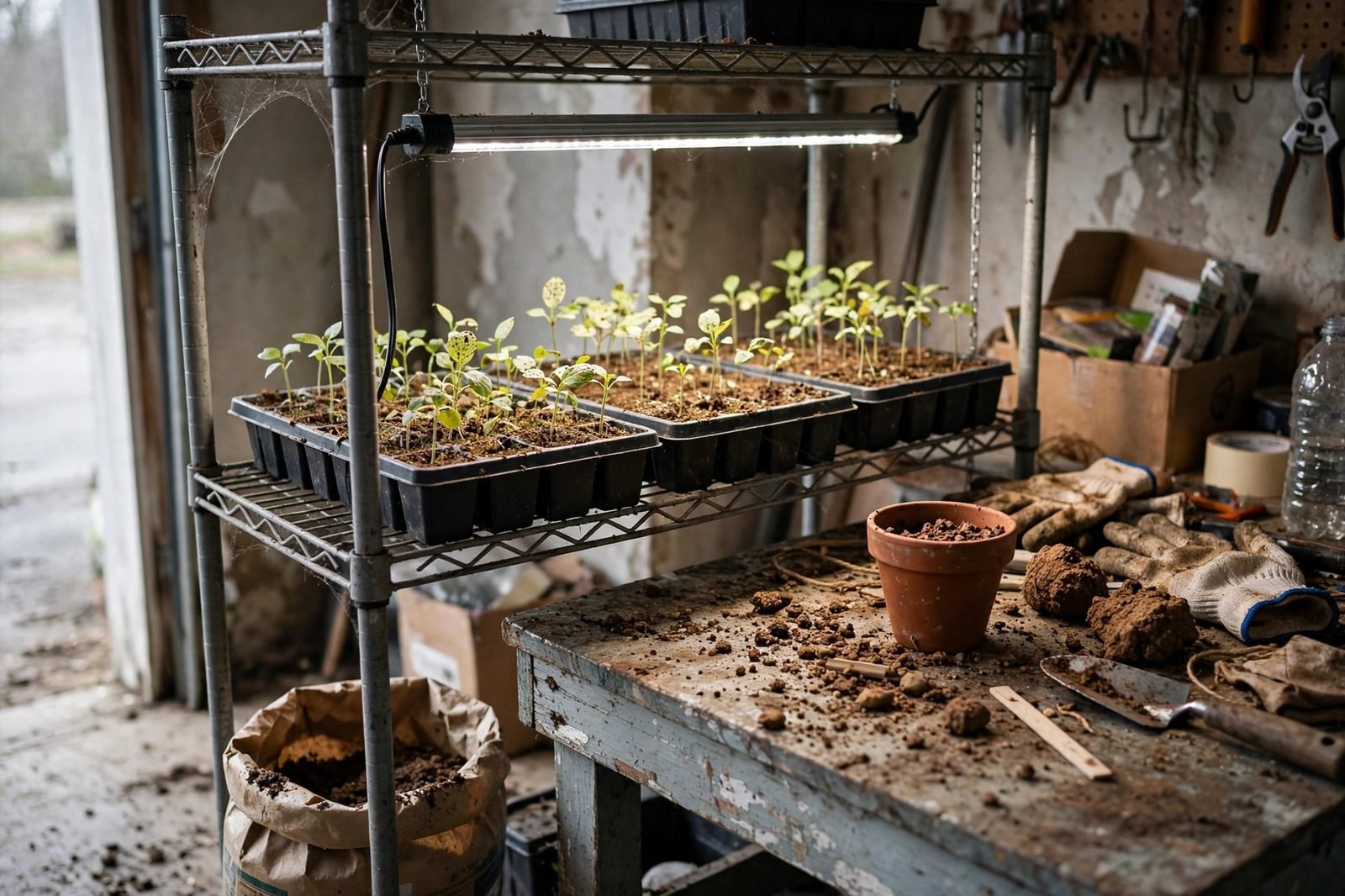
For a seed shelf, T5 tubes suit a narrow shelf or a tight space, while T8 tubes suit a grower who already owns a shop-light fixture and wants to keep using it. The names describe tube diameter in eighths of an inch. A T5 tube measures 5 eighths of an inch across, which is a slim tube about the width of a pencil. A T8 tube measures 8 eighths of an inch across, which is one full inch, a noticeably thicker tube. The number after the T is the count of eighths, so the larger number means the thicker tube. Both types have served seed starting for years, and either type can grow sturdy seedlings if the fixture gives enough light at plant level and runs long enough each day.
We have not tested the products linked here, and we do not present any price below as a current store price. Where we give numbers, we state the assumptions in plain text so readers can redo the math with their own shelf size and electricity rate.
T5 and T8 at a glance
| Feature | T5 | T8 |
|---|---|---|
| Tube diameter | 5 eighths of an inch | 1 inch |
| Fixture depth | Slim, fits a low shelf gap | Deeper, needs more headroom |
| Best fit | Narrow shelves and tight shelf stacks | Wide shelves and existing shop-light fixtures |
| Tube choice | Slim tubes sold for grow fixtures | Common tubes sold for shop lights |
| Reuse of an old fixture | Needs a T5 fixture or a full swap | Often fits a T8 shop-light fixture already on hand |
| Coverage per tube | One slim tube per light strip | One thicker tube per light strip |
Tube size alone does not decide seedling growth. What matters is how many tubes cover the shelf, how far the fixture sits above the plants, and how many hours the light runs each day. A slim tube set close to the plants can beat a thick tube hung too high, and a well-placed pair of tubes can beat a single tube of either size.
T5 lights
A T5 fixture earns its place on a narrow shelf. The slim tube and slim housing take less vertical space than a T8 housing, which leaves more room for pots and plant growth between shelves. That matters on a shelf stack where each shelf holds trays and the gap between shelves is tight. With a T5 fixture, we can fit one more shelf level in the same stack height, or give tall seedlings more headroom on each level.
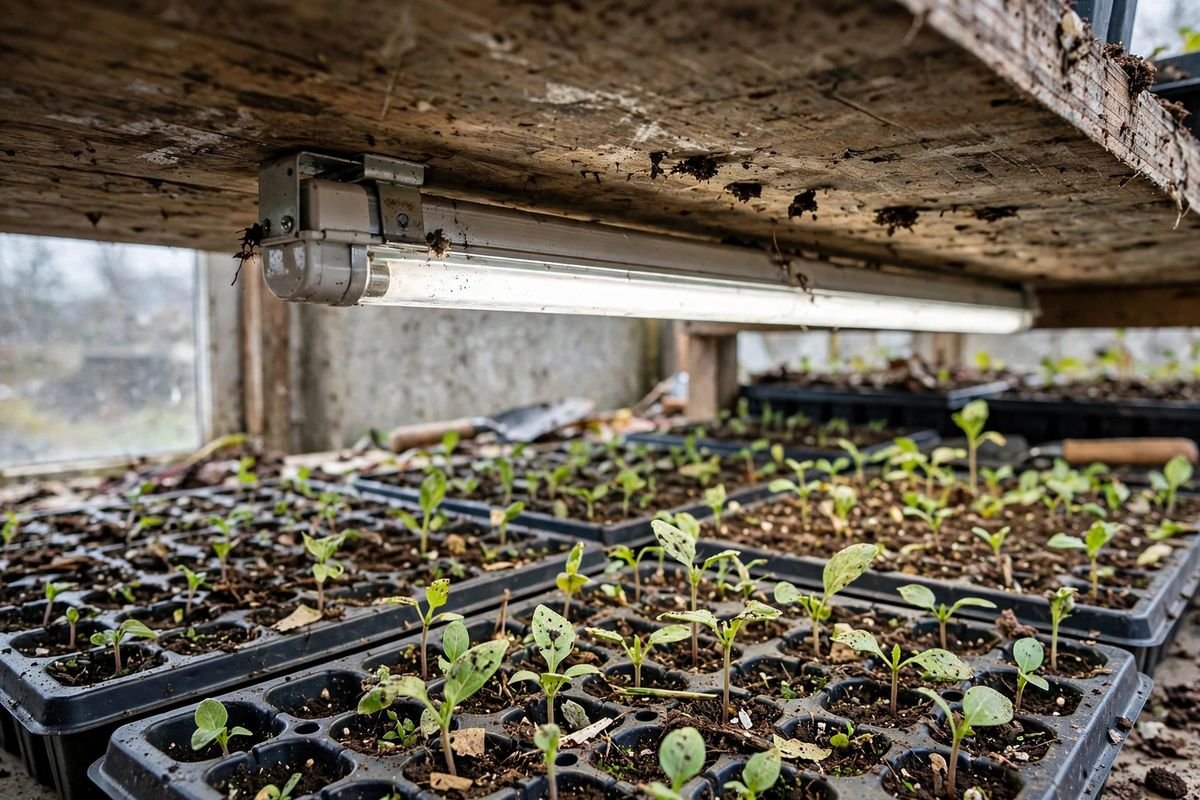
T5 fixtures also suit a shelf where we want two tubes side by side in a narrow width. Two slim tubes fit where two thick tubes would crowd the space or push the housing wider than the shelf. Our guide to best seed starting shelves for small spaces covers narrow shelves that pair well with slim fixtures.
The tradeoff is fixture cost and tube supply. A T5 fixture is a purpose-built grow fixture in most listings, and its slim tubes are less common in ordinary hardware aisles than T8 shop-light tubes. If a tube fails mid-season, a replacement may need an online order rather than a quick store trip. Search listings for a T5 grow light fixture and confirm tube length, housing width, and whether tubes are included.
T8 lights
A T8 fixture earns its place where a shop light already hangs. Many garages, basements, and workrooms already hold a T8 shop-light fixture, and a grower can put daylight tubes in that fixture and start seeds under it without buying a new housing. T8 tubes are also easy to find, since hardware stores stock them for shop lighting.
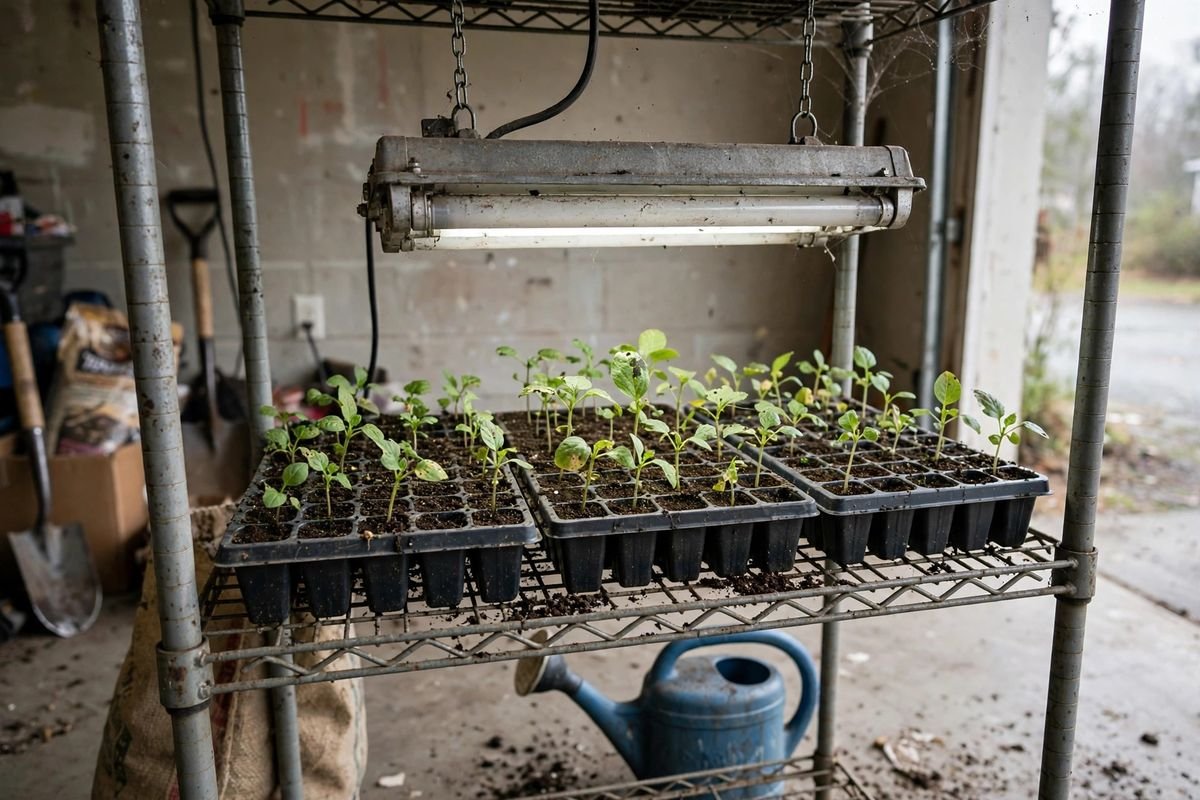
The tradeoff is size. A T8 housing runs deeper than a T5 housing, and the thicker tubes need more clearance, so the fixture eats more of the gap between shelves. On a tight shelf stack, that lost space can force us to drop a shelf level or start seeds later, when plants are shorter.
Another point to check is the fixture type. A T8 tube fits a T8 fixture, not a T5 fixture, and the two types do not swap between housings. Check the label on the old fixture before ordering tubes, and confirm the tube length matches the housing length. Our guide to LED grow lights vs fluorescent lights for seedlings places tube fixtures beside LED options for a first indoor setup.
Fixture-count math for a 2-foot by 4-foot shelf
Fixture count starts from shelf area and a simple coverage assumption. A shelf 2 feet by 4 feet equals 8 square feet. Assume each tube gives useful light over a strip about 12 inches wide along its length. A shelf 2 feet wide needs 2 such strips across its width, so it needs 2 tubes, each 4 feet long to span the shelf length. That means one two-tube fixture covers the whole 2-foot by 4-foot shelf under these assumptions.
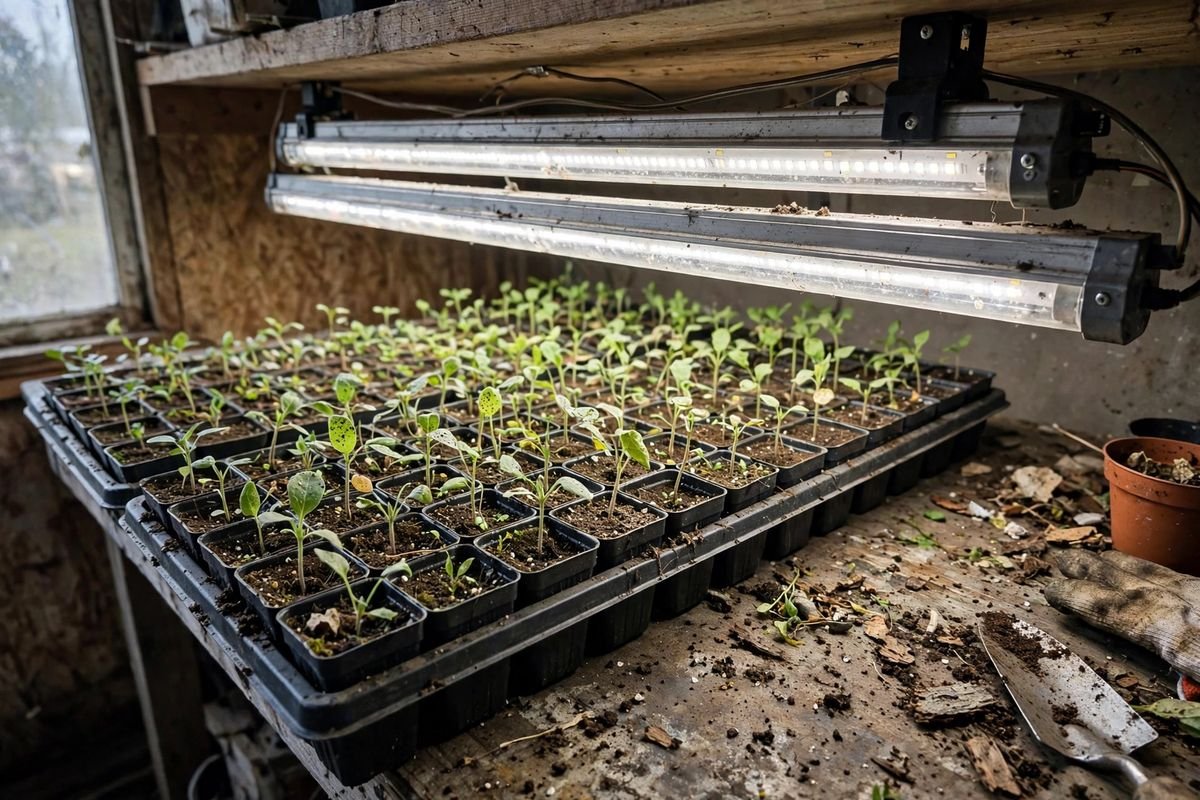
The same rule scales to other shelf sizes. A narrow shelf 1 foot wide and 4 feet long needs 1 strip across its width, so it needs 1 tube, or one single-tube fixture. A shelf 2 feet wide and 2 feet long needs 2 strips of 2-foot tubes, so it needs one two-tube fixture with shorter tubes. Measure the shelf before ordering, since a fixture longer than the shelf wastes light past the edges and a fixture shorter than the shelf leaves dim ends.
Electricity for a two-tube setup follows the same steps as any fixture math. Take two 24-watt tubes that run 16 hours a day for 90 days, at $0.17 per kilowatt-hour. Add the tubes to get 48 watts. Divide 48 by 1,000 to get 0.048 kilowatts. Multiply 0.048 by 16 hours and 90 days to get 69.12 kilowatt-hours for the season. Multiply 69.12 by $0.17 to get $11.75 in electricity per shelf per season under these assumptions, before any fixture price. Our guide to how long grow lights should stay on for seedlings covers daily run times and timer use for a shelf with more than one fixture.
Height, hours, and daily checks
Tube fixtures work best set close to the plants, with the gap checked each time we water. Start with the fixture a few inches above the seedlings, and raise it as plants grow so the gap stays steady. A fixture set too high gives dim light at plant level, and seedlings stretch toward it with long, pale stems. A fixture set too low can touch leaves as plants grow, so check the gap before leaves reach the tubes. Our guide to how high grow lights should be above seedlings covers starting gaps and how to adjust them.
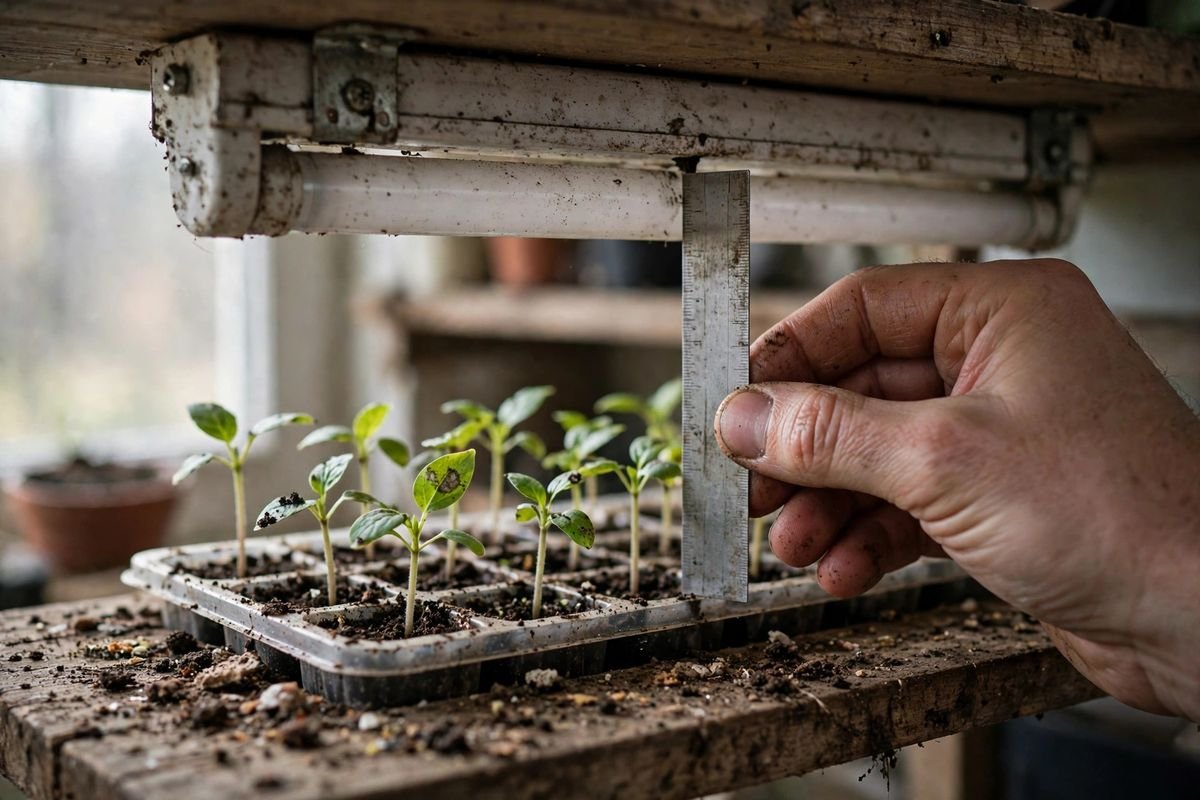
Run the lights about 16 hours a day for most seedlings, with a timer to keep the schedule steady. Check trays at two weeks for short, sturdy stems and tight spacing between leaves. If stems look long and pale, move the fixture closer before buying more tubes. If stems look short and sturdy, keep the same setup through transplant time.
How to choose
Choose T5 if we use a narrow shelf, since slim tubes and slim housings fit a tight gap and leave more room for plant growth between shelves. Choose T8 if we use a narrow shelf and already own a T8 fixture that fits it, since reuse beats a new purchase, but check that the housing does not crowd the shelf gap.
Choose T5 if we use a wide shelf in a tight shelf stack, since slim housings stack better and leave headroom on each level. Choose T8 if we use a wide shelf with open headroom above it, since the deeper housing causes no trouble and the tubes are easy to find.
Choose T5 if we plan a new fixture purchase for seed starting and want the slimmest housing for the shelf. Choose T8 if we reuse an old shop-light fixture, since a T8 tube fits the housing we already own and keeps the setup cost low. Start with the shelf width and the fixture on hand, then pick the tube size that fits both.
Sources & Further Reading
University of Minnesota Extension, Starting seeds indoors: https://extension.umn.edu/planting-and-growing-guides/starting-seeds-indoors
North Carolina State Extension, Extension Gardener Handbook Chapter 13 Propagation: https://content.ces.ncsu.edu/extension-gardener-handbook/13-propagation