
This post may contain affiliate links. If you buy through links on this page, we may earn a commission at no extra cost to you.
As an Amazon Associate I earn from qualifying purchases.
A shelf turns seed starting from a windowsill gamble into a system. Trays stack vertically, lights hang at the right height, and a 6-square-foot corner can hold more seedlings than most gardens need. But not every shelf works for the job: some tiers sit too close together for lights, some bow under wet trays, and some eat half a garage. The picks below are research-based, drawn from comparing specs and reading gardener reviews on current listings. We did not hands-on test these shelves, so dimensions and capacities are representative ranges we saw listed. Always confirm on the listing page before buying, because models change.
The best seed starting shelves for small spaces, at a glance
| Shelf style | Footprint | Tiers | 1020 trays per tier | Height adjustable | Best for |
|---|---|---|---|---|---|
| 48-inch 5-tier wire shelving | 48 x 18 in | 5 | 4 | Yes | High-volume starters with a spare corner |
| 36-inch 4-tier plastic utility shelf | 36 x 18 in | 4 | 3 | Yes | Humid rooms like laundry areas |
| 24-inch 4-tier narrow wire unit | 24 x 18 in | 4 | 2 | Yes | Closets and hallway nooks |
| 2-tier tabletop grow stand | ~24 x 14 in | 2 | 2 | Sometimes | Zero floor space, a few dozen seedlings |
What matters most in a seed-starting shelf
Footprint comes first in a small space. A 48 x 18 inch unit covers 6 square feet, roughly the footprint of a small armchair. A 36 x 18 inch unit covers 4.5 square feet, and a 24 x 18 inch unit covers 3. Measure your corner, then leave yourself a couple of feet of working room in front for watering and moving trays.
Tier spacing is the spec most listings underplay. A tray with a humidity dome needs about 8 inches of clearance, and seedlings plus a hanging light need 12 to 18 inches once plants are up. Adjustable tiers, the kind that clip at 1-inch increments on wire shelving posts, let you start tight for germination and raise the spacing as plants grow. Fixed-shelf units lock you into whatever the maker chose.
Weight capacity matters more than it looks. Our estimate: one wet 1020 tray with mix and seedlings weighs about 12 pounds, a middle assumption that varies with mix and watering. Four trays plus a shop light put roughly 60 pounds on a tier, which is far below the 150 to 350 pound per-shelf ratings common on wire units. The weak point is usually the casters, not the shelves, so keep a fully loaded unit stationary or buy one with locking wheels rated for the load.
Finally, check that the depth fits standard gear. Most seed trays, heat mats, and shop lights are sized for 18-inch-deep shelving, which is why the picks below all use that depth.
Our 1020 tray math: how many trays each tier holds
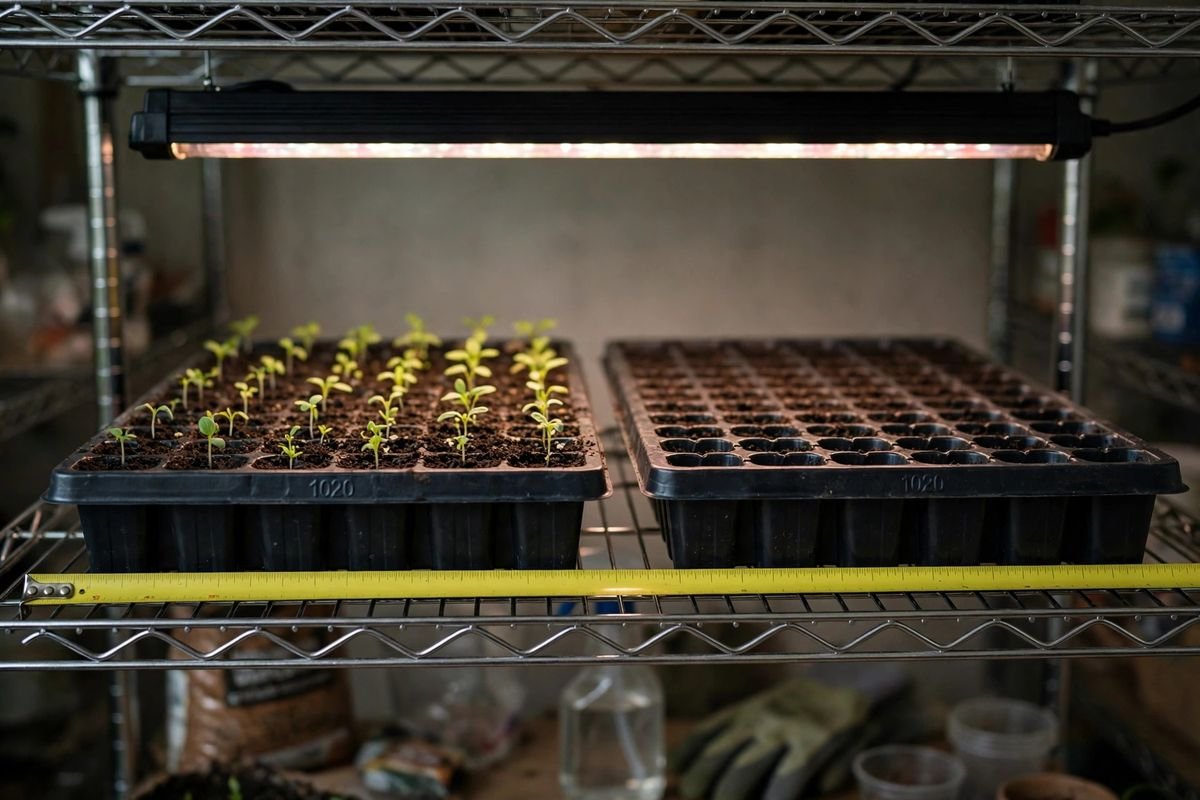
A standard 1020 tray measures 10 x 20 inches, or 200 square inches. A 48 x 18 inch tier has 864 square inches. Two trays laid side by side cover 20 x 20 inches (400 square inches), and two such rows cover 40 x 20 inches (800 square inches), leaving only about 7 percent of the tier unused. So a 48-inch tier holds 4 trays with almost no wasted space.
The same math for smaller tiers: a 36 x 18 inch tier (648 square inches) fits three trays (600 square inches), and a 24 x 18 inch tier (432 square inches) fits two (400 square inches). One 48-inch, 5-tier unit with four growing tiers therefore holds 16 trays. At 72 cells per tray, that is 1,152 seedlings in 6 square feet of floor space.
48-inch 5-tier wire shelving
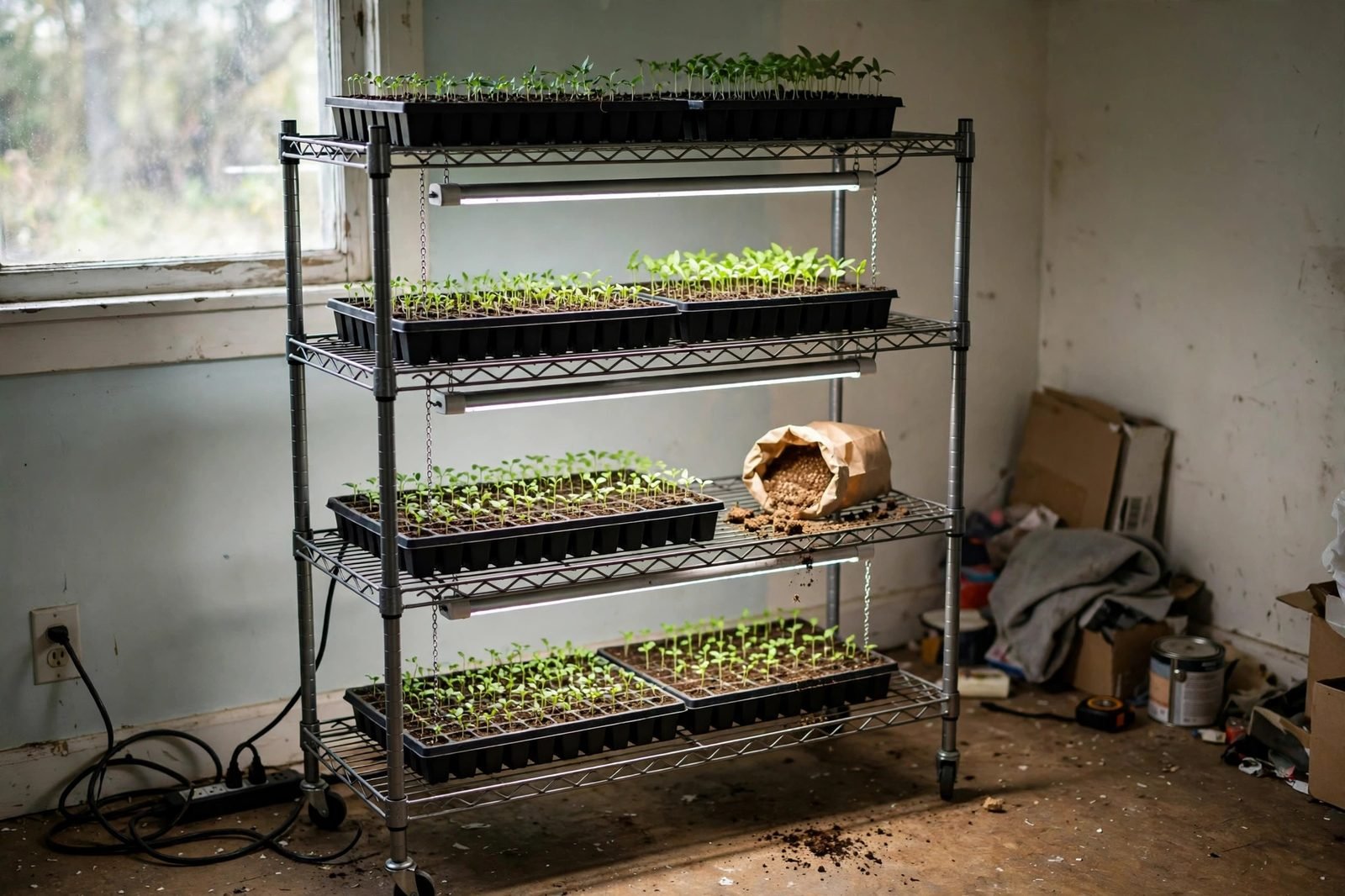
This is the restaurant-kitchen style wire shelf, typically around 48 inches wide, 18 inches deep, and 72 inches tall, often sold with casters. It is the highest-capacity option here: four growing tiers times four trays per tier gives 16 trays of seedlings. The open wire design lets light and air reach every tier, and the shelf clips adjust in 1-inch steps, so you can hang lights exactly where seedlings need them. Per-shelf ratings on current listings commonly run 150 to 350 pounds depending on the model, which is far more than wet trays and lights will ever ask of it.
The tradeoffs are size and assembly. At 6 feet tall it needs a real corner, and it looks like garage equipment, which it is. Lights, chains, and timers are separate purchases. Some owners report wobble when the unit rolls fully loaded, so plan to park it in place once it is stocked. Shop 48-inch wire shelving units and check the listed per-shelf rating before choosing a model.
Choose this if you start more than a hundred seedlings each spring and can give the setup a permanent corner from February through May. Our full walkthrough of a complete setup lives in how to set up a seed-starting station.

36-inch 4-tier plastic utility shelf
A composite or heavy-duty plastic utility shelf, usually around 36 inches wide and 18 inches deep, is the rust-proof alternative. It suits laundry rooms, basements, and garages where a chrome wire unit would eventually spot with rust. Three trays per tier across three or four growing tiers gives 9 to 12 trays, plenty for a typical home vegetable garden. The solid plastic shelves also catch drips, which saves the floor below.
The tradeoffs: per-shelf weight ratings run lower than wire units on most models, and the fixed or limited-adjustment tiers on cheaper versions can leave awkward gaps. Solid shelves block light from reaching lower tiers, so each tier needs its own light fixture. Shop 36-inch plastic utility shelves, and favor models whose shelves can be repositioned.
Choose this if your seed-starting spot is damp, or if you want the most forgiving option for spills.
24-inch 4-tier narrow wire unit
When the only free space is a closet, a hallway nook, or the side of a laundry machine, a narrow 24 x 18 inch wire unit fits where nothing else will. Two trays per tier across three growing tiers gives 6 trays, or 432 cells, which covers tomatoes, peppers, and herbs for most households. It keeps the adjustability and open-wire advantages of its bigger sibling at about half the footprint.
The tradeoff is simply scale: 6 trays is the ceiling, and a single wide shop light may overhang the 24-inch width, so look for narrower fixtures or bar lights. Shop narrow 24-inch wire shelving units and match the light width to the shelf before buying.
Choose this if you are starting a modest number of seedlings and the shelf must disappear into an existing room. For pairing the right fixtures with a small unit, see our guide to the best grow lights for seedlings.

2-tier tabletop grow stand
A tabletop grow stand sits on a counter, desk, or sturdy table and holds two trays per tier across two tiers: 4 trays total, or 288 cells. Some models include built-in light fixtures, which removes the hanging-light puzzle entirely. For apartment gardeners with literally no free floor space, this is the only shelf on this list that works.
The tradeoff is cost per tray. These stands often cost as much as a full-size wire unit while holding a quarter of the seedlings, and the fixed heights on some models cannot accommodate taller transplants. Shop tabletop grow stands and check whether lights are included or separate.
Choose this if you need seedlings on a kitchen counter or home-office desk and 4 trays is enough. If you do hang your own fixtures instead, our guide to setting up grow lights on a shelving unit covers chains, heights, and timers.
Mounting lights on your shelf
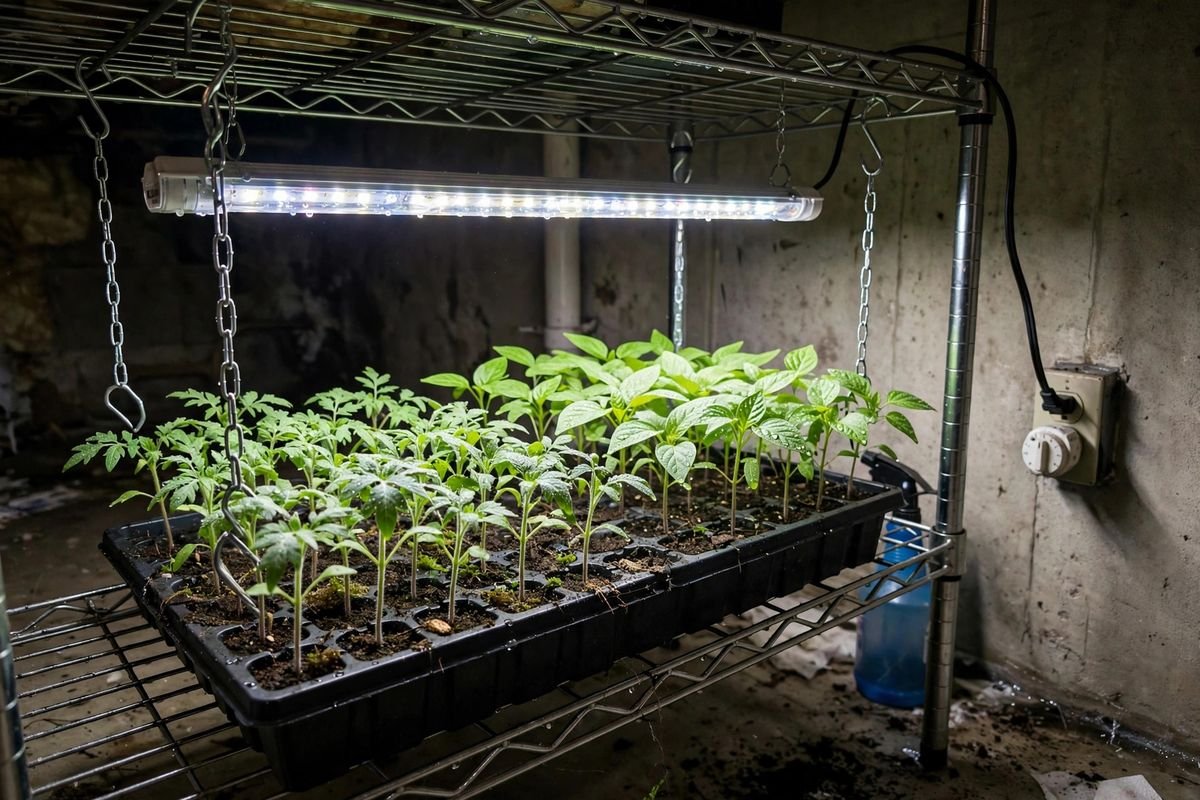
Lights make or break a shelf setup. Hang fixtures on short chains with S-hooks so you can raise them as seedlings grow, and keep the tubes 2 to 4 inches above the tops of the plants. Seedlings need 12 to 16 hours of light a day, and a simple outlet timer handles the schedule without any thought. University of Minnesota Extension notes that lack of light is the main cause of tall, skinny stems, and that artificial light kept close beats a windowsill even in a greenhouse. Start most warm-season vegetables indoors 6 to 8 weeks before your last spring frost. Use your local frost dates and regional planting guidance — not your USDA hardiness zone alone — to choose planting dates.
Sources & further reading
- University of Minnesota Extension, “Starting seeds indoors”: light height and duration, tray and container guidance, and timing tables referenced in this article. https://extension.umn.edu/planting-and-growing-guides/starting-seeds-indoors