
This post may contain affiliate links. If you buy through links on this page, we may earn a commission at no extra cost to you.
As an Amazon Associate I earn from qualifying purchases.
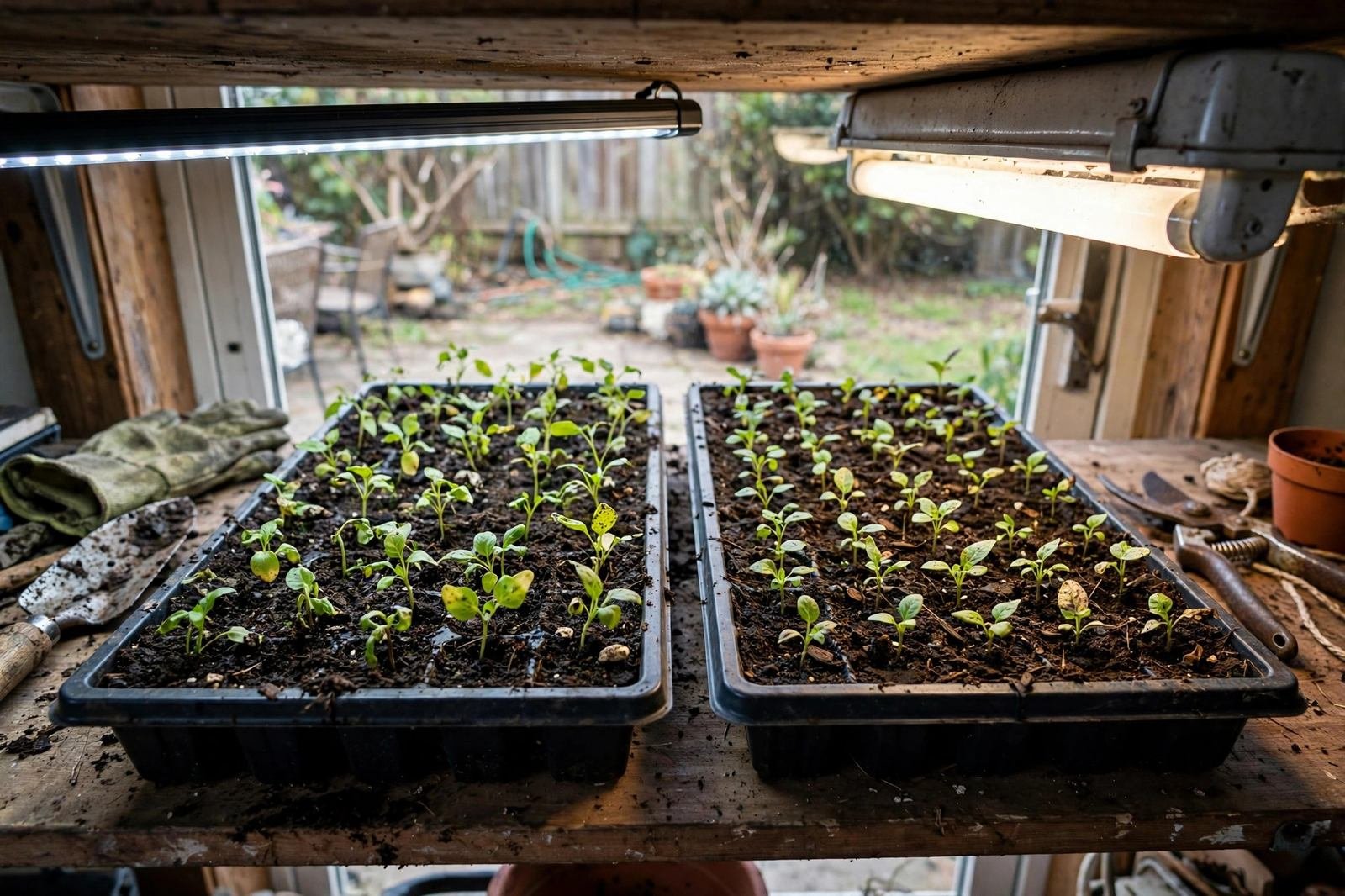
Every spring the same question lands on our seed-starting shelf: do we hang the newer LED bars, or keep the fluorescent shop fixture that has started trays for years? Both grow good seedlings. The real differences show up in electricity use, heat near the leaves, how long the setup lasts, and how much control we get over the light itself.
This comparison keeps things practical. We put the two side by side, run an honest cost example for a typical 10-week seed-starting season, and end with clear choose-if verdicts. If we are setting up from scratch, our roundup of the best grow lights for seedlings covers what to look for across both types.
| Factor | LED Bars | Fluorescent Tubes |
|---|---|---|
| Energy use | Lower wattage for similar usable light over a tray | Higher wattage for the same shelf coverage |
| Heat at the canopy | Low; fixtures stay warm, not hot, near leaves | Moderate; tubes and ballasts add noticeable warmth |
| Lifespan approach | Long rated life; output fades slowly over many seasons | Shorter tube life; output dims well before tubes burn out |
| Spectrum control | Often sold in seedling-friendly full-spectrum or adjustable versions | Fixed by the tube we choose; cool-white tubes are the common pick |
| Upfront cost pattern | Higher per fixture in most cases; check current prices | Lower entry cost, especially if we already own shop fixtures |
| Disposal | Electronic waste rules apply when a bar finally fails | Tubes contain small amounts of mercury and need proper recycling |
How the Two Lights Actually Differ Over a Tray
Seedlings want bright light close overhead for long days, and both technologies deliver that. LEDs turn a larger share of their electricity into light and a smaller share into heat, so a slimmer fixture can cover a tray at lower wattage. Fluorescent tubes spread light along the full length of the tube, which suits the classic four-foot shop fixture over two trays, but part of their energy leaves as warmth from the tube and ballast.
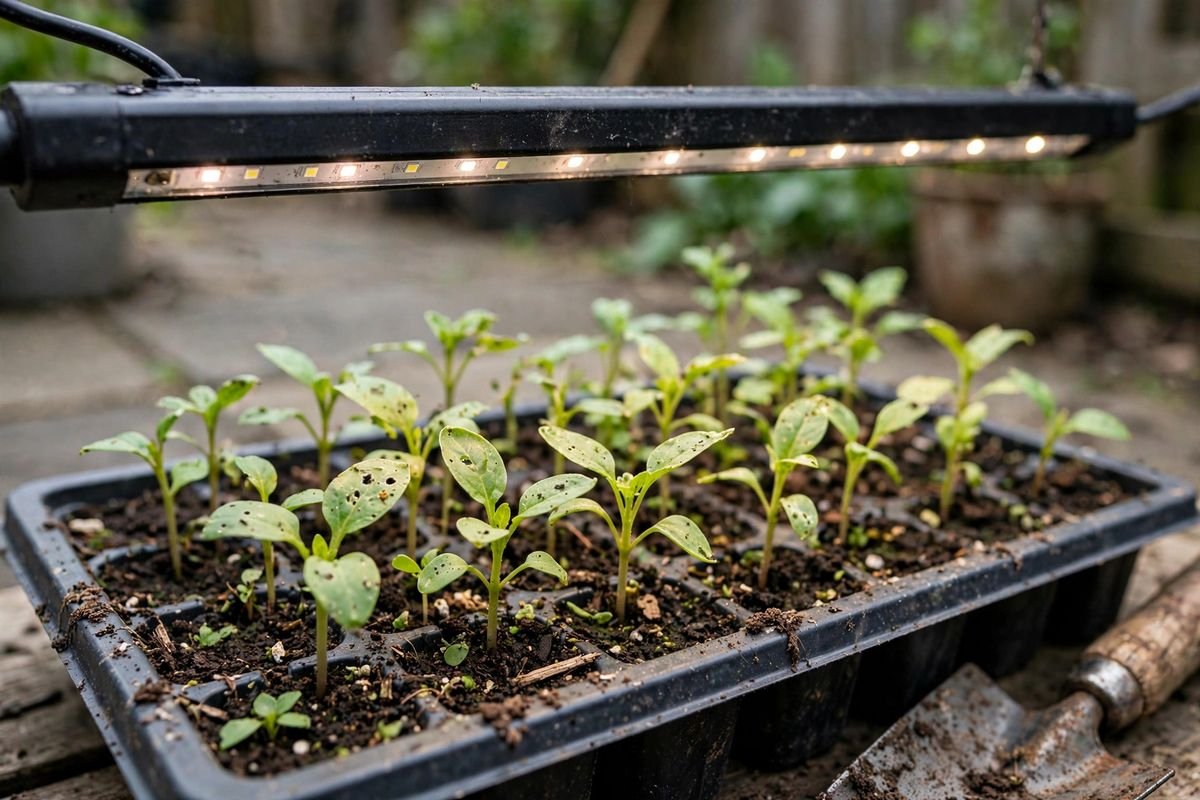
Spectrum is the second real difference. Many LED bars for seed starting are built around a broad, daylight-like output meant to keep seedlings compact, and some let us shift the balance as plants grow. With fluorescent, the spectrum is whatever tube we install, and cool-white tubes have been the steady, widely used choice for seedlings for a long time. Fixture shape matters too, and our comparison of grow light bars vs bulbs explains why long, even coverage usually beats a few bright points over a flat tray.
Heat: The Difference Seedlings Feel First
Heat is where the two feel most different in daily use. LED bars run cool enough that we can keep them just a few inches above the leaves, which helps prevent the stretched, pale growth that comes from lights hung too high. Fluorescent tubes also work close to the canopy, but the fixture adds gentle warmth to the shelf. In a cool basement that warmth can be mildly helpful; in an already warm room it can push tray temperatures up and dry the mix faster.
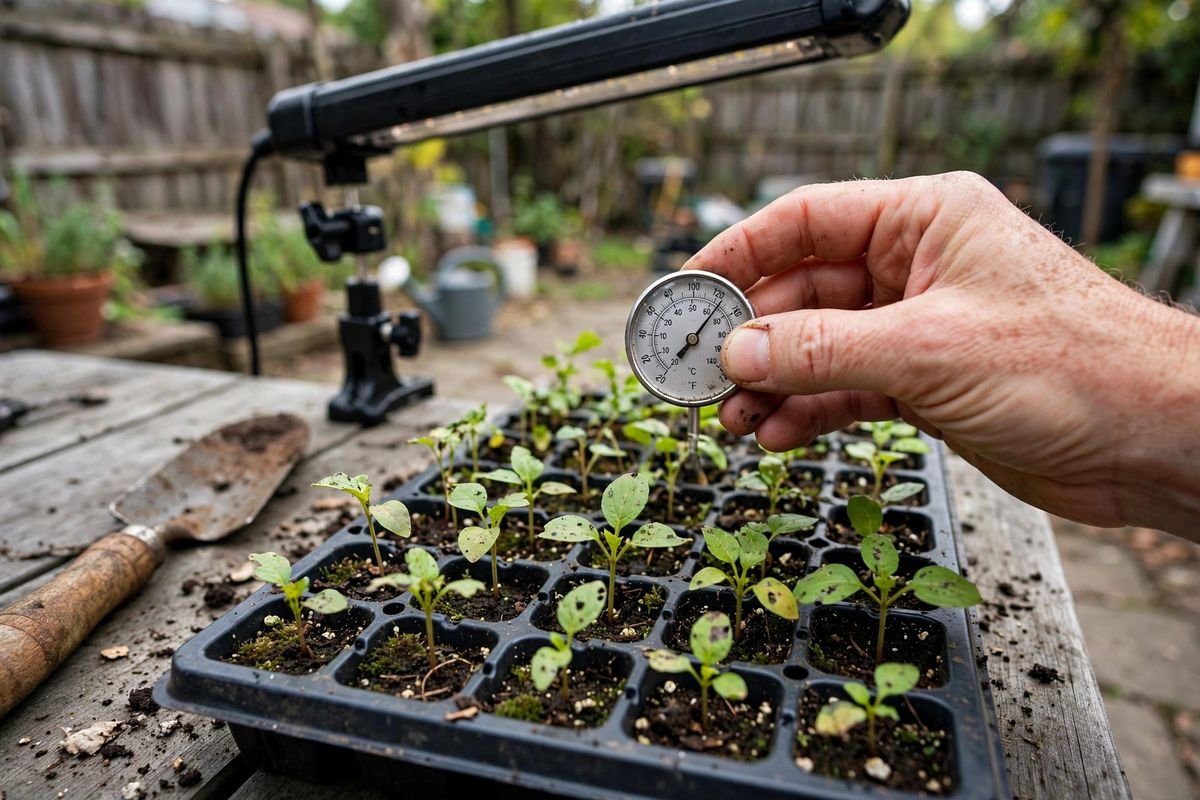
Our habit either way is simple: keep a small thermometer at leaf height, check it at midday, and raise the fixture or improve air movement if the canopy runs hot. Seedlings that stay compact, deep green, and evenly sized are telling us the distance and temperature are right, no matter which fixture hangs above them. Gardeners weighing lights against a bright sill entirely will find our piece on LED grow light vs sunny window light useful context.
Our Worked Example: One 10-Week Seed-Starting Season
Here is the math we run before buying anything, with every assumption stated so we can swap in our own numbers. Assumptions: one shelf lit by either two 24-watt LED bars (48 watts total) or two 32-watt fluorescent tubes (64 watts total); lights on 16 hours per day; a 10-week season, which is 70 days; electricity at $0.17 per kilowatt-hour, a middle-of-the-road residential rate.
Season hours: 16 hours a day times 70 days is 1,120 hours of run time. LED energy: 48 watts times 1,120 hours is 53.76 kilowatt-hours, which costs about $9.14 for the season. Fluorescent energy: 64 watts times 1,120 hours is 71.68 kilowatt-hours, which costs about $12.19 for the season.
The gap: the fluorescent setup uses about 17.9 more kilowatt-hours and costs about $3.05 more per season on the same shelf. That is real money over several shelves and several years, but it is not a fortune on one shelf, and it should not be the only reason we choose. Two honest caveats: actual draw varies by fixture, so the nameplate wattage on our own units always wins over these example numbers, and fluorescent tubes also dim with age, so a replacement tube partway through their service life is a real cost to factor in. Tube prices move around, so check current prices rather than trusting any number printed here.
Pros and Cons of Each Side
LED bars
Pros: lower electricity use for the same shelf; low heat, so fixtures can hang close; long rated life with slow fading; slim shapes that fit tight shelving; broad seedling-friendly spectrums are common. Cons: higher upfront cost in most cases; quality varies a lot between brands; when a sealed bar fails, we usually replace the whole unit; disposal follows electronic waste rules. Browsing LED grow light bars on Amazon shows the range of sizes for standard seed trays.
Fluorescent tubes
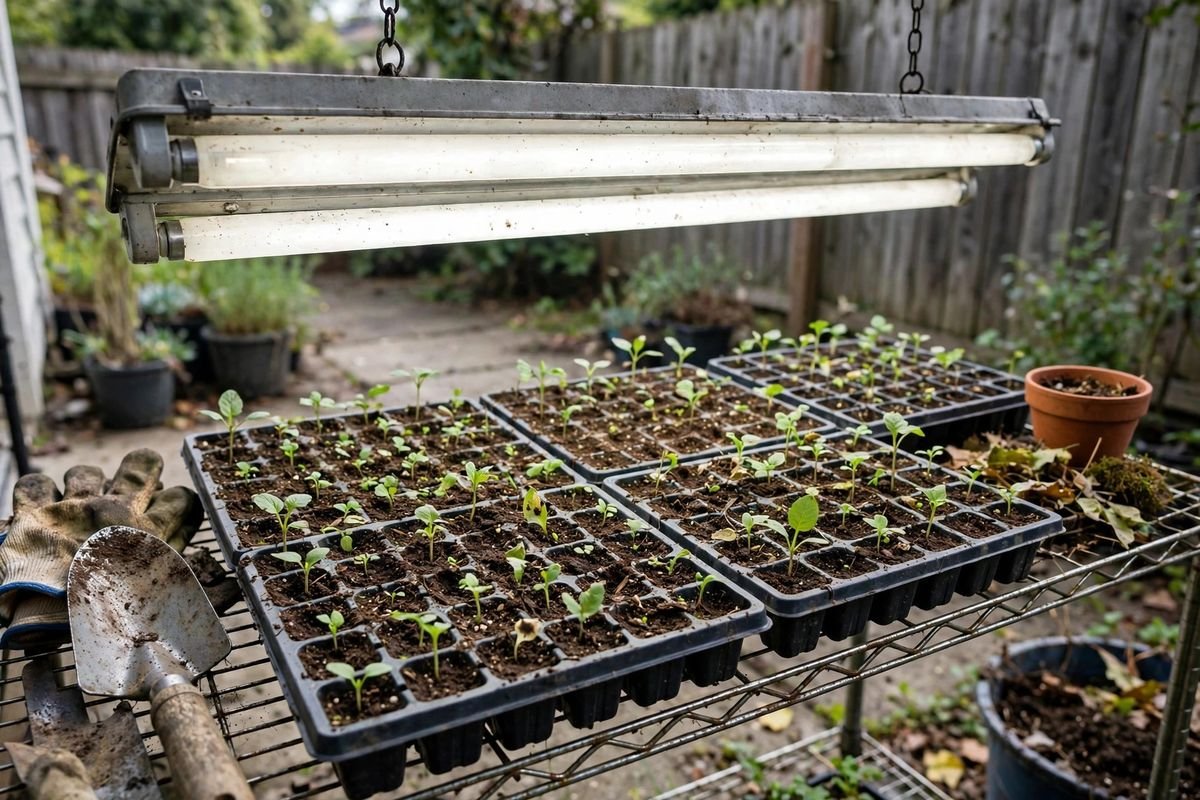
Pros: low entry cost, especially when we already own shop fixtures; even light along the full tube length; replacement tubes are widely available; the setup is simple and well understood. Cons: higher electricity use; more heat at the shelf; tubes dim with age and need periodic replacement; spent tubes contain small amounts of mercury and belong in proper recycling, not household trash. A look at fluorescent shop light fixtures on Amazon shows common sizes for shelf setups, and our guide on how to set up grow lights on a shelving unit covers hanging heights and spacing for either type.
Verdict: Which Should We Choose?
Choose LED if we start seeds every year and want the lowest running cost, the coolest canopy, and fixtures that stay put for many seasons. Choose LED if our shelf sits in a warm room where extra heat works against us. Choose LED if we are buying new today and the price gap fits the budget, since the season math above slowly pays the difference back.
Choose fluorescent if we already own working shop fixtures and good tubes, because the cheapest light is the one hanging in the garage right now. Choose fluorescent if we are starting seeds for the first time and want the lowest possible entry cost while we learn. Choose fluorescent if our starting space runs cool and a little gentle warmth at the shelf is welcome rather than a problem.
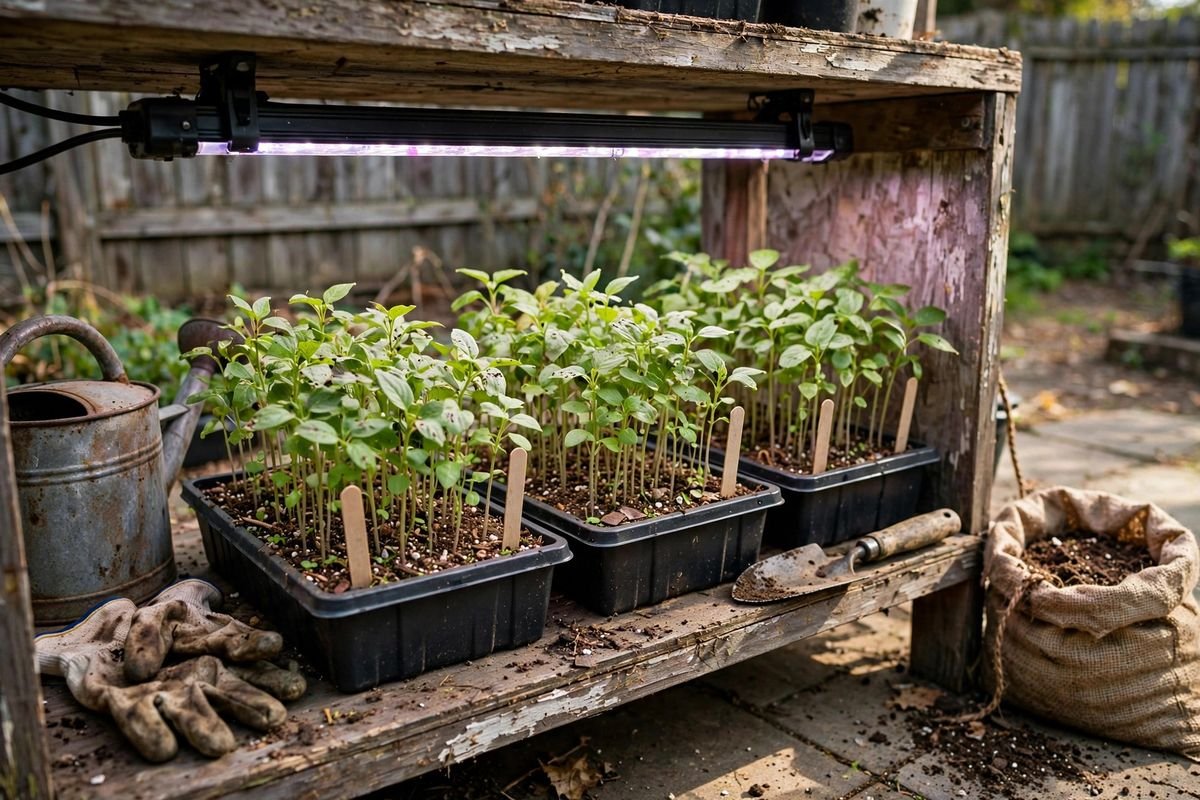
Either way, the habits matter more than the fixture: lights close overhead, 14 to 16 hours a day on a timer, steady air movement, and labels in every tray. Do our seedlings stay short and stocky, or are they stretching toward the light? That answer tells us more than any label on a box.
Sources & Further Reading
- University of Minnesota Extension — lighting guidance for starting seeds and growing plants indoors (extension.umn.edu).
- University of Georgia Extension — indoor lighting, fixture types, and plant light requirements (extension.uga.edu).
- Iowa State University Extension and Outreach — starting seeds indoors, light distance, and duration guidance (extension.iastate.edu).
- U.S. Department of Energy — LED lighting efficiency and lifetime basics (energy.gov).
- U.S. Environmental Protection Agency — proper recycling and disposal of fluorescent tubes (epa.gov).