
This post may contain affiliate links. If you buy through links on this page, we may earn a commission at no extra cost to you.
As an Amazon Associate I earn from qualifying purchases.
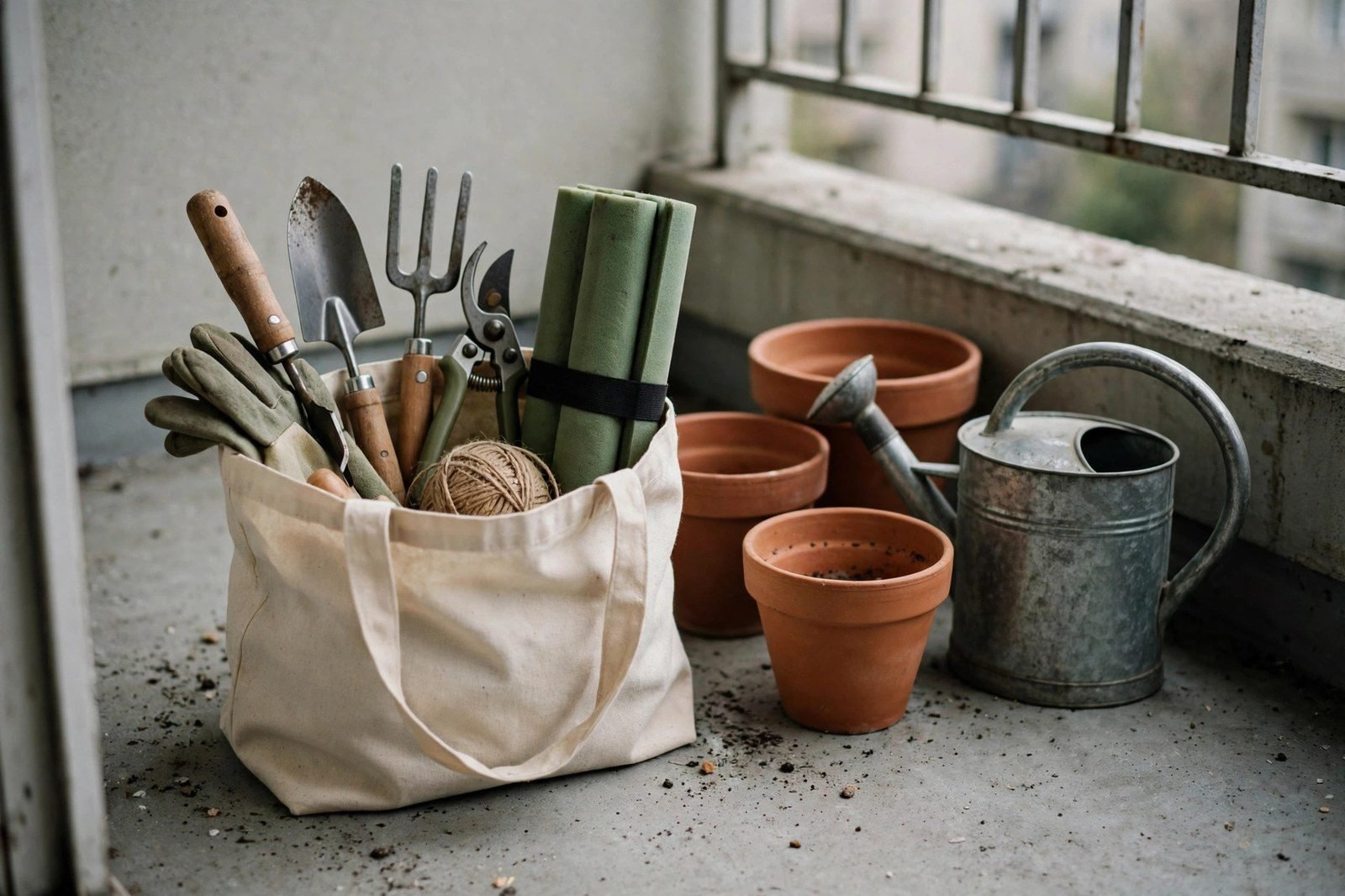
A small garden does not need a shed full of tools. A balcony or patio garden runs on a handful of hand tools, and all of them can live in one tote that fits beside a chair. The trick is picking tools that each earn their space: one tool per job, no duplicates, and nothing sized for a job a small garden never has.
The kit below has 10 tools. It covers potting, planting, weeding, cutting, and tying up plants, and it packs into a single tote you can carry with one hand. If you are starting from nothing, pair this list with what garden tools a beginner actually needs, which covers the same ground from the skill side.
We have not tested the products linked here, and we give no current store prices. The links go to search pages so you can compare current options at the time you shop.
The 10 tools in the kit
Here is the kit, job by job. A hand trowel digs planting holes and moves potting mix. A hand fork loosens soil and lifts small weeds with their roots. Small snips cut stems, deadhead blooms, and snip herbs. A weeding knife gets dandelion-type roots out of tight spots between pots. A soil scoop fills pots fast without spilling mix across the balcony. Gloves guard hands during weeding and potting. Twine and plant ties hold stems to small supports. A spray bottle mists seedlings and dampens mix. A folding kneeling pad saves knees on a hard balcony floor.
That is 10 items, and each one replaces a bigger tool a small garden has no room for. The trowel replaces a spade. The hand fork replaces a garden fork. The snips replace pruners for soft stems. Nothing in the list needs a second copy, and nothing here digs a bed, because a balcony garden has no beds to dig.
A worked example: one tote, under one square foot
Take a canvas tote that measures 14 inches long, 8 inches wide, and 10 inches tall. Its footprint is 14 times 8, or 112 square inches, which is 0.78 square feet, under one square foot. Its volume is 14 times 8 times 10, or 1,120 cubic inches, which is about 0.65 cubic feet, or about 4.9 gallons. All 10 tools in the kit fit inside it standing upright, with the kneeling pad folded on top.
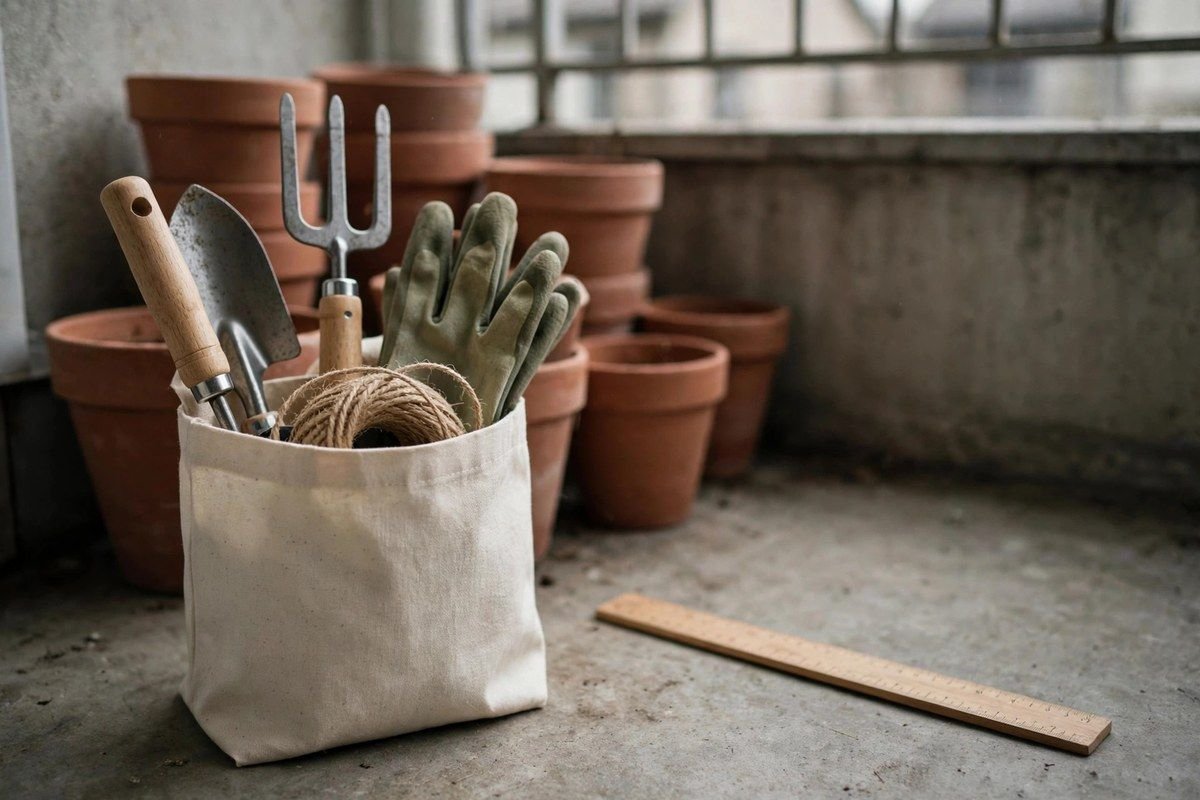
Now set that tote on a balcony that measures 4 feet by 6 feet, or 24 square feet. The tote takes 0.78 of those 24 square feet, which is about 3 percent of the floor. A second tote for pots and mix would double that to about 6 percent, still leaving most of the floor for plants and a chair. The math shows why a tote beats a shelf or a rack on a balcony: the kit costs almost no floor, and it moves in one trip when the balcony needs cleaning or the weather turns.
Cutting and deadheading in small pots
Most of the cutting in a small garden is small work: snipping herbs for cooking, deadheading spent blooms, and trimming soft stems. Small snips do this better than pruners, because their narrow blades fit between crowded stems without bending the neighbors. For a closer look at snip styles, see best garden scissors for flowers and herbs.

Weeding in pots is small work too, and it rewards a light touch. A hand fork lifts a weed with its roots from a pot without dumping the whole pot, and a weeding knife gets roots out of the gap between a pot and a wall. For weeding tools sized for tight spaces, see best weeding tools for small gardens and best hand cultivators for raised beds.
Where the kit lives between jobs
Between jobs, the tote lives where it stays dry and close at hand: beside the balcony door, under a bench, or in a hall closet near the door. Tools left out in rain rust, and tools stored far from the plants do not get used, so the tote should sit within a few steps of the pots. A tote with an open top dries faster than a lidded box, but if rain blows onto the balcony, a lidded box or a spot indoors is the better pick.
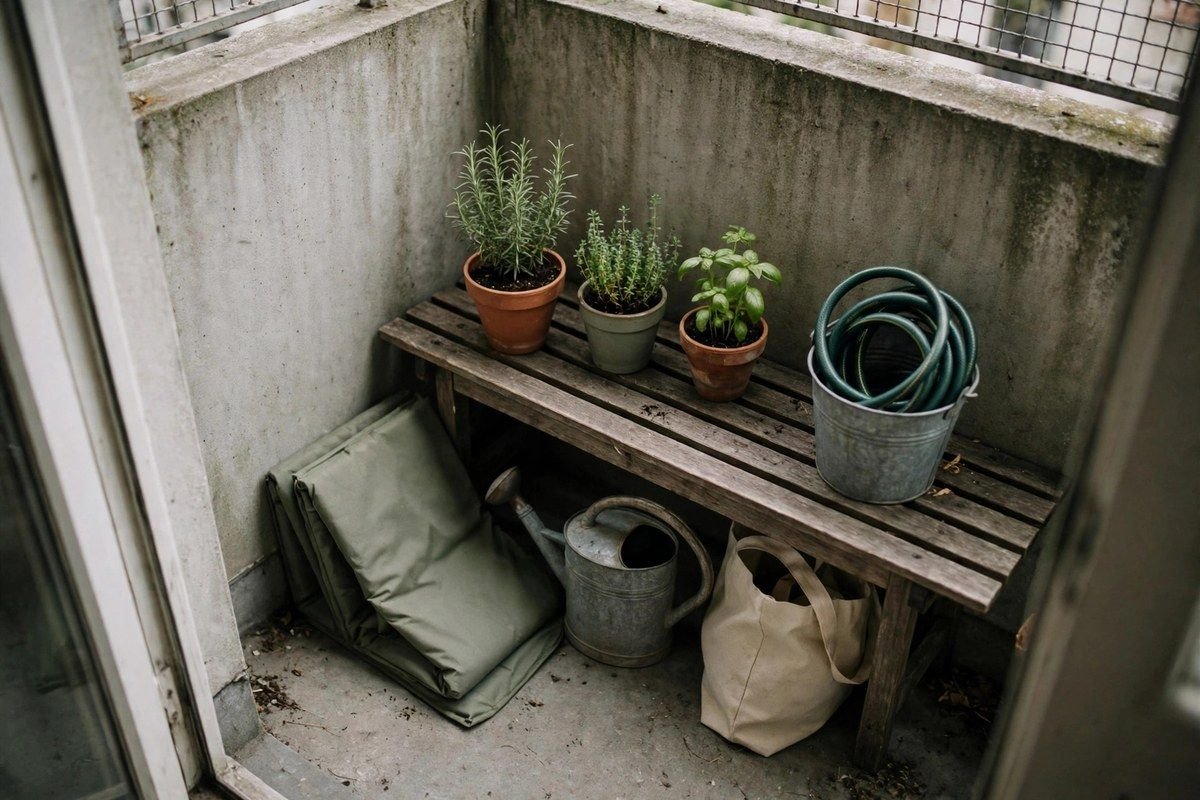
Keep the tote packed the same way each time, with blades pointing down or sheathed, so you can grab it and go. A kit that takes five minutes to assemble before each job will sit unused. A kit that is already packed gets used, and used tools stay in better shape than tools left to rust in a corner. For storage ideas when a tote is not enough, see garden tool storage ideas for renters.
What to leave out
Leaving tools out is as useful as picking the right ones. A full-size spade, a rake, a hoe, and a wheelbarrow have no job on a balcony, and each one costs floor space the plants need. A long-handled tool also will not fit in the tote, so it ends up leaning in a corner, where it falls over and blocks the door.
If a rare job needs a bigger tool, borrow one or buy it for that job and pass it on. The kit stays small because the garden stays small, and the money saved on tools you never use buys better versions of the 10 you reach for every week.
Search current options: small garden tool tote sets and hand trowel and fork sets.
Sources & Further Reading
- Clemson Cooperative Extension, Home and Garden Information Center tool guides
- University of Minnesota Extension, Yard and Garden container gardening guides
- Iowa State University Extension and Outreach, horticulture container gardening publications