

This post may contain affiliate links. If you buy through links on this page, we may earn a commission at no extra cost to you.
As an Amazon Associate I earn from qualifying purchases.
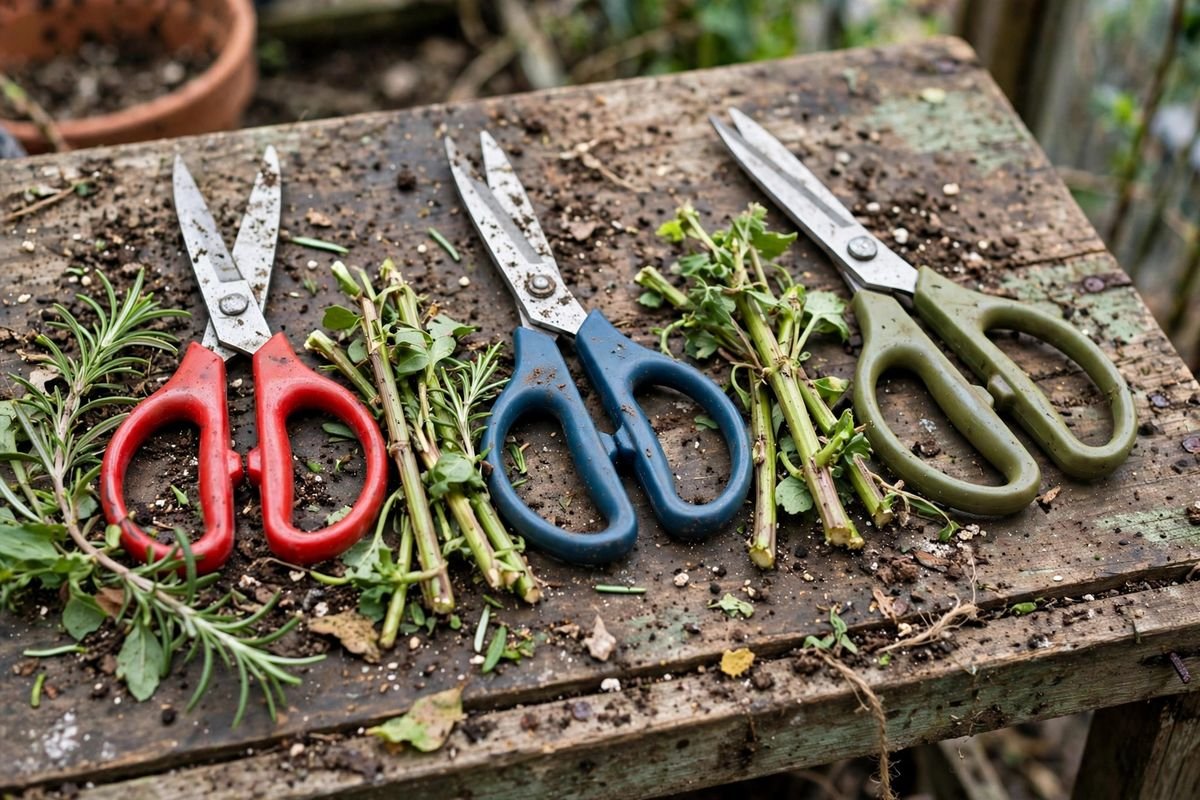
Garden scissors for flowers and herbs are small, sharp snips made for soft stems. They cut cleanly where a big pruner would crush, and they fit between crowded stems without bending the neighbors. If you cut flowers for the table, snip herbs for cooking, or deadhead spent blooms, a pair of flower scissors will do most of that work better than any other cutting tool you own.
We have not tested the products linked here, and we give no current store prices. The links below go to search pages for garden scissors, so you can compare current options, blade styles, and prices at the time you shop.
What sets flower scissors apart from pruners
Flower scissors have short, narrow blades, often about 2 inches long, with fine pointed tips. That shape lets you reach one stem inside a bunch without cutting the ones beside it. Pruners have longer, thicker blades built for woody stems, and their wider jaws push soft stems aside before they cut. For a side-by-side look at the two tools, see garden scissors vs pruning shears and bypass pruners vs anvil pruners.
Most flower scissors use a spring that pushes the blades open after each cut. A coil spring sits between the handles and gives a light, even push. A wire spring is flatter and often feels softer on small hands. Neither type is better in every case. What matters is whether the spring opens the blades fully without you forcing them, and whether the handles fit your hand when the blades are closed.

Blade shape matters as much as blade length. Straight blades suit most flower and herb stems. Slightly curved blades hold a stem in place while you cut, which helps with slippery stems like basil and mint. Serrated edges grip stems but leave a rougher cut face, so plain edges are the safer pick for flowers you plan to keep in a vase.
A worked example: one week of cutting in a small bed
Take a small cutting patch: six flower plants and one herb bed. In a typical summer week, assume you cut 24 flower stems, 30 herb stems, and deadhead 40 spent blooms. That is 94 cuts in the week.
At about 4 seconds per cut, counting the time to reach the next stem, 94 cuts take about 376 seconds, or just over 6 minutes of cutting. Across a 20-week season, that pace gives about 1,880 cuts and roughly 2 hours of cutting time. The point of the math is simple: flower scissors earn their keep through a high count of small cuts, not through a few big ones. A tool that opens easily and weighs little matters more here than one built for thick wood.

The same example shows where scissors stop being the right tool. Stems thicker than about one quarter inch, woody rose canes, and dead stems that have gone hard belong to pruners. If you force scissors through wood, the blades twist out of line and start folding soft stems instead of cutting them. Keep both tools on the bench and switch when the stem changes.
What to look for when you shop
Start with hand fit. Hold the scissors closed and check that your fingers do not overlap the blade joint. If you have small hands, look for a compact pair with a shorter handle span. Left-handed gardeners should look for a true left-handed pair, since a right-handed pair turned over still puts the top blade on the wrong side of the cut.
Next, check the lock and the spring. A simple wire catch or sliding lock keeps the blades shut in a pocket or tote. Test whether you can open and close the lock with one hand. A spring that is easy to replace matters too, since springs wear out before blades do on well-kept scissors.
Blade steel is listed in many product descriptions, but the listing alone tells you little about how long an edge holds. Read buyer reviews for reports of blades going dull fast or rusting after rain, and treat any single review as one report, not a verdict. For the rest of a beginner kit, see what garden tools a beginner actually needs.
Care that keeps the edge
Wipe the blades after each cutting session, especially after herbs with sticky sap. A damp cloth takes off most sap. For dried sap, a cloth with a little rubbing alcohol works, followed by a dry wipe. Oil the joint now and then with one drop of light machine oil, and work the blades open and shut a few times to spread it.
Store scissors dry, with the blades closed and locked. A damp tote or a pocket full of soil speeds rust on carbon steel blades. Stainless blades resist rust better but still dull when they cut grit or wire, so keep scissors away from soil and fencing jobs. Full cleaning steps are in how to clean and disinfect garden tools, and rust repair steps are in how to remove rust from garden tools.
Questions
Can flower scissors cut rose stems? They can cut soft new rose stems and spent blooms, but woody canes belong to pruners. If a stem resists and you have to squeeze hard, switch tools.
Do you need a separate pair for herbs? One clean pair covers both flowers and herbs for most home gardens. A second pair helps if you cut herbs for cooking daily and want one pair kept food-clean while the other handles deadheading.
How do you know the blades are dull? A dull pair folds the stem or leaves a crushed, wet cut face instead of a clean slice. Sharpening small scissor blades is fiddly work, so many gardeners replace a cheap pair and sharpen a good pair with a fine stone.
Sources & Further Reading
- Clemson Cooperative Extension, Home and Garden Information Center tool care guides
- University of Minnesota Extension, Yard and Garden tool maintenance guides
- Iowa State University Extension and Outreach, horticulture tool care publications
Search current options: garden scissors for flowers and herbs and fine-tip flower snips.