

This post may contain affiliate links. If you buy through links on this page, we may earn a commission at no extra cost to you.
As an Amazon Associate I earn from qualifying purchases.
Rust on garden tools is surface damage, not a death sentence, as long as it has not eaten deep into the metal. Light rust comes off with a brush and some patience. Heavy rust takes a soak and more scrubbing. Deep pitting, where the metal is eaten into holes or thin spots, means the tool is done for cutting work, even if it still looks whole.
This guide covers hand tools: trowels, forks, hoes, pruners, and scissors. It does not cover powered tools or engines, which need their own manuals and safety steps.
How bad is the rust
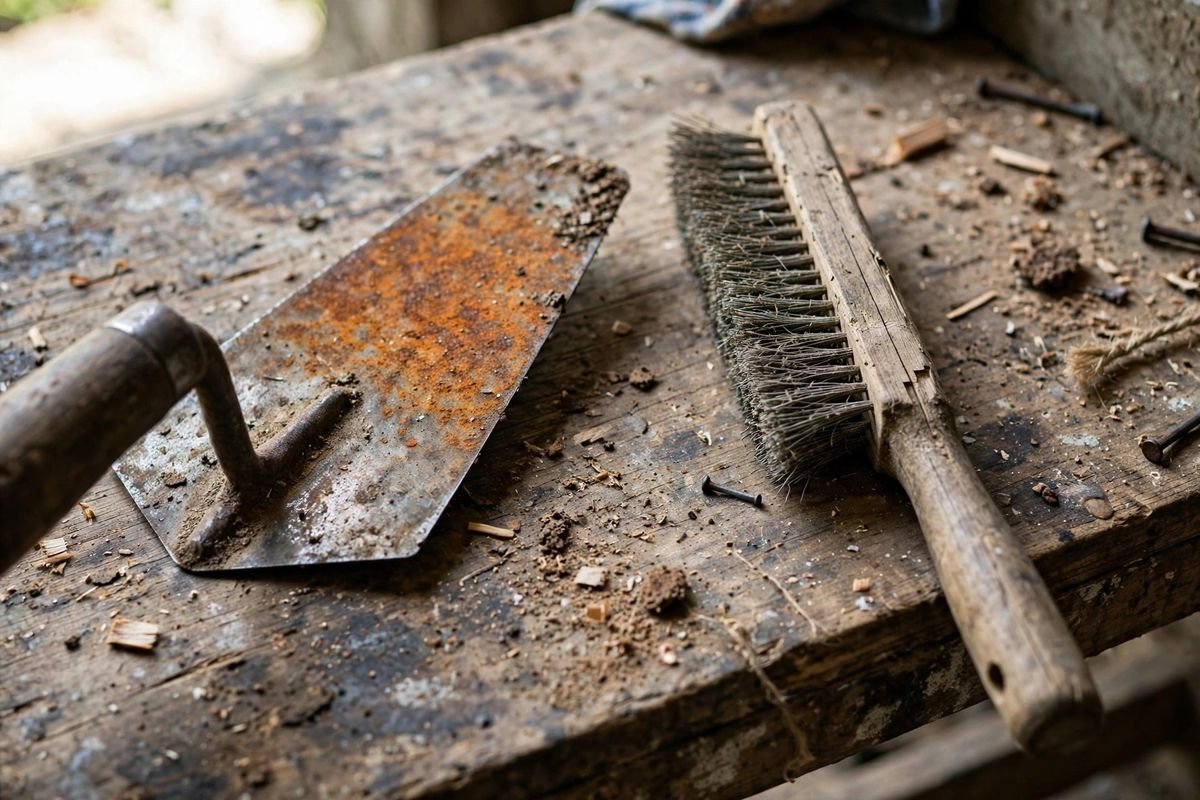
Start by looking and feeling. Light rust is an orange dust on the surface that wipes off on a rag. The metal under it is still smooth. Medium rust is a rough, scaly layer that catches a fingernail. The metal under it is pitted but still thick. Heavy rust is flaking scale with deep pits, and thin edges, such as a trowel edge or a pruner blade, may feel thin or wavy.
Light and medium rust are worth cleaning on any tool you still use. Heavy rust is worth cleaning on a sturdy tool, such as a forged fork or a heavy hoe head, where the metal is thick. On a thin, cheap blade with deep pits, cleaning takes longer than the tool is worth, and the edge will never hold again. Retire that tool and put the time into a better one. For a full maintenance routine, see garden tool maintenance checklist.
Method one: brush and sandpaper for light rust
For light rust, a stiff wire brush does most of the work. Brush along the blade, not across it, so you do not scratch deep lines into the metal. Wipe the dust off with a dry rag, then sand the remaining spots with 80-grit sandpaper, followed by 150-grit to smooth the surface. The two grits matter: the coarse grit takes the rust off, and the fine grit leaves a surface that a protective oil coat can cover evenly.
Wear gloves and eye protection for this step. Wire brush bristles snap off and fly, and rust dust irritates eyes and lungs. Work outside or in a ventilated shed, and keep the dust out of garden beds you plan to plant right away.
Method two: vinegar soak for medium rust
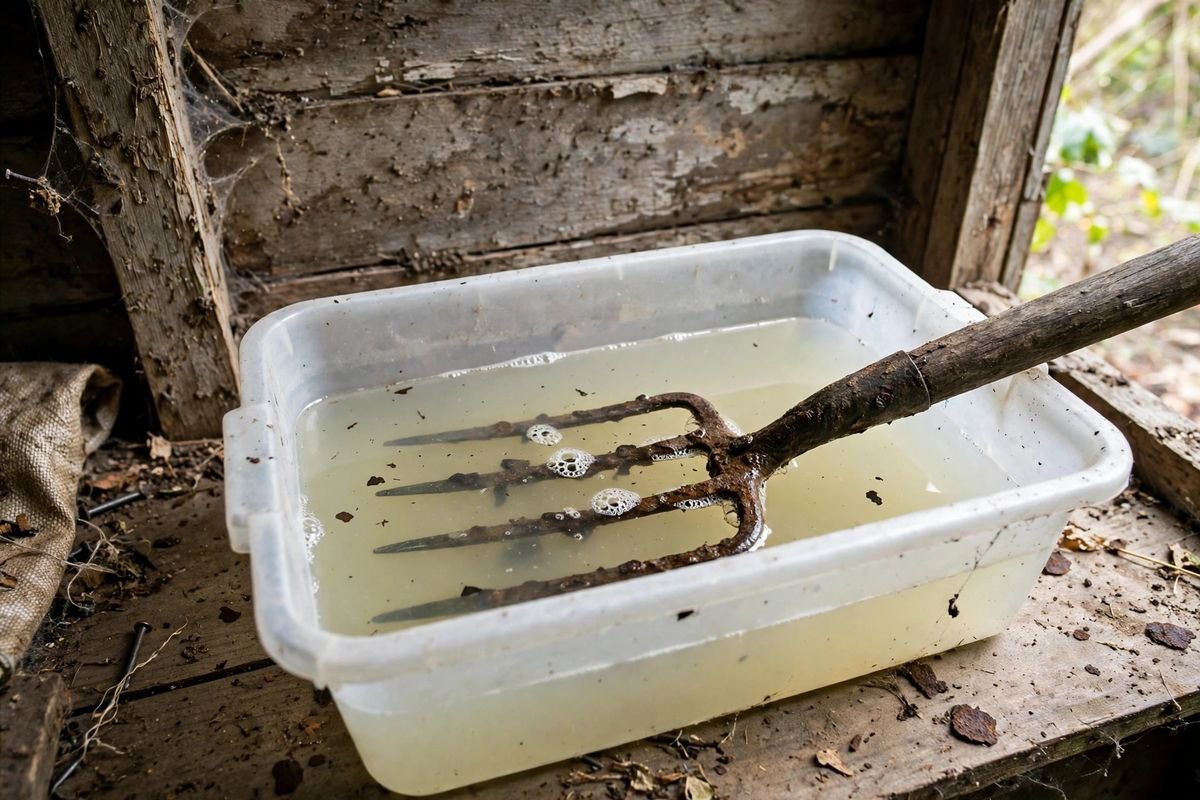
For medium rust, soak the metal parts in plain white vinegar. Use enough vinegar to cover the rusted area, in a plastic container, not a metal one. Leave the tool for 12 to 24 hours. Check it after 12 hours: the rust should look soft and dark, and a wire brush should take it off easily. If rust still grips, give it the full 24 hours.
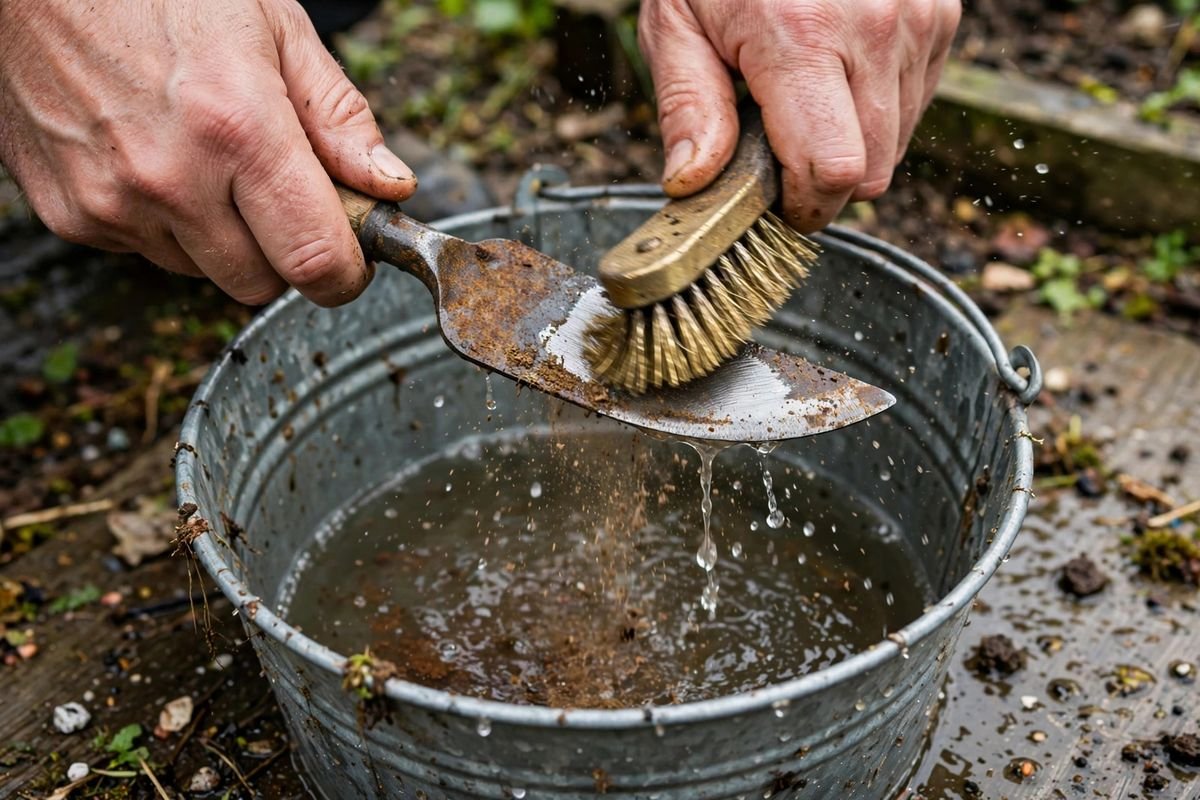
After the soak, brush the loosened rust off under running water, then dry the tool at once. Vinegar left on steel starts new rust within hours, so drying is part of the job, not an afterthought. A wipe with a cloth dampened with a little baking soda in water neutralizes leftover vinegar, followed by a dry wipe. Do not soak wooden handles: vinegar and water swell wood and loosen the head. If a tool has a wooden handle, soak only the metal end, propped so the handle stays dry.
A worked example: six rusted tools in one afternoon
Take six tools left damp in a tote over winter: two trowels, one hand fork, one hoe head, one pair of pruners, and one pair of scissors. Assume two have light rust and four have medium rust.
Put the four medium-rust tools in a vinegar soak in the morning. That takes about 10 minutes of setup. While they soak, brush and sand the two light-rust tools, about 10 minutes each, or 20 minutes total. After lunch, brush the soaked tools clean, about 10 minutes each, or 40 minutes total. Dry all six, oil the metal, and wipe the handles: about 2 minutes per tool, or 12 minutes. The full job runs about 1 hour and 20 minutes of hands-on work, plus the soak time in between. That is a fair budget for a Saturday afternoon, and it beats buying six replacements.
After cleaning: oil and storage
Oil the clean metal lightly. A teaspoon of light machine oil or food-grade mineral oil per tool is plenty: put a few drops on a rag, wipe the whole blade, and wipe off the excess. A thick coat attracts dust and turns gummy, so thin is better. Work the oil into joints and springs on pruners and scissors, then open and shut them a few times.
Store tools dry, off the floor, with air around them. A wall hook or a rack beats a damp tote or a pile on a shed floor. Sharpen edges after rust removal, since rust leaves a rough edge even when the surface looks clean. A file for a hoe head and a stone for a pruner blade are enough for most hand tools. Storage and seasonal steps are in garden tool maintenance checklist, and cleaning steps are in how to clean and disinfect garden tools.
Questions
Does vinegar damage good steel? A 12 to 24 hour soak in plain vinegar removes rust without harming sound steel, as long as you rinse, neutralize, and dry the tool right after. Longer soaks, over several days, can etch the surface, so do not leave tools soaking for a week.
Can you use a power drill brush on rusted tools? A wire cup brush on a drill works on thick heads, such as hoes and forks, but it is too harsh for thin blades and pruner edges. Use it on heavy tools only, with eye protection and gloves.
When is a rusted tool beyond saving? When pits go deep enough to thin the edge, when a blade bends at a pit, or when a joint is rusted solid and will not move after soaking. A tool that breaks under normal use is a safety risk, not a project.
Sources & Further Reading
- Iowa State University Extension and Outreach, horticulture tool care publications
- Clemson Cooperative Extension, Home and Garden Information Center tool care guides
- University of Minnesota Extension, Yard and Garden tool maintenance guides