

This post may contain affiliate links. If you buy through links on this page, we may earn a commission at no extra cost to you.
As an Amazon Associate I earn from qualifying purchases.
Garden tools last longer when they get a little care on a schedule, not a big rescue once a year. This checklist gives that schedule: quick jobs after each use, a longer session each season, and a full winterizing pass in fall. Work through it with the tools you actually own, and skip the lines that do not apply to your kit.
Use this checklist with two companion guides: how to clean and disinfect garden tools for washing and disinfecting steps, and how to remove rust from garden tools for rust repair.
After each use: 3 minutes per tool
Knock soil off the head and handle. Wipe the blade with a dry rag, or a damp rag for sticky sap, followed by a dry wipe. Check the edge for nicks and the handle for cracks. Hang the tool up instead of dropping it in a pile. Three minutes per tool sounds slow, but it is the habit that prevents most rust, since rust starts where soil and water sit on steel overnight.
For pruners and scissors, add one step: wipe the blades and close the lock before storage. Sap left on a blade dries into a film that glues the blades and dulls the cut. A quick wipe now saves a scraping job later. For a starter kit to build this habit around, see what garden tools a beginner actually needs.

Each season: a 30-minute session
Once a season, go through the whole kit at once. Wash every tool with soap and water, dry each one fully, and oil the metal lightly. Tighten loose handles and screws. Sand small rust spots before they grow. Sharpen hoe heads, pruner blades, and mower-free cutting edges that have gone dull.
Check handles as carefully as blades. A cracked wooden handle splinters under load, and a loose head flies off mid-swing. Sand a rough handle smooth, and replace a handle that is cracked through. A replacement handle costs far less than the tool, and it keeps a good head in service.
Fall winterizing: the full pass
Fall is the main maintenance session, since tools sit unused for months after it. Wash and dry every tool. Remove all rust, using the steps in how to remove rust from garden tools. Oil every metal surface lightly. Sharpen edges now, not in spring, so tools are ready when the season starts.
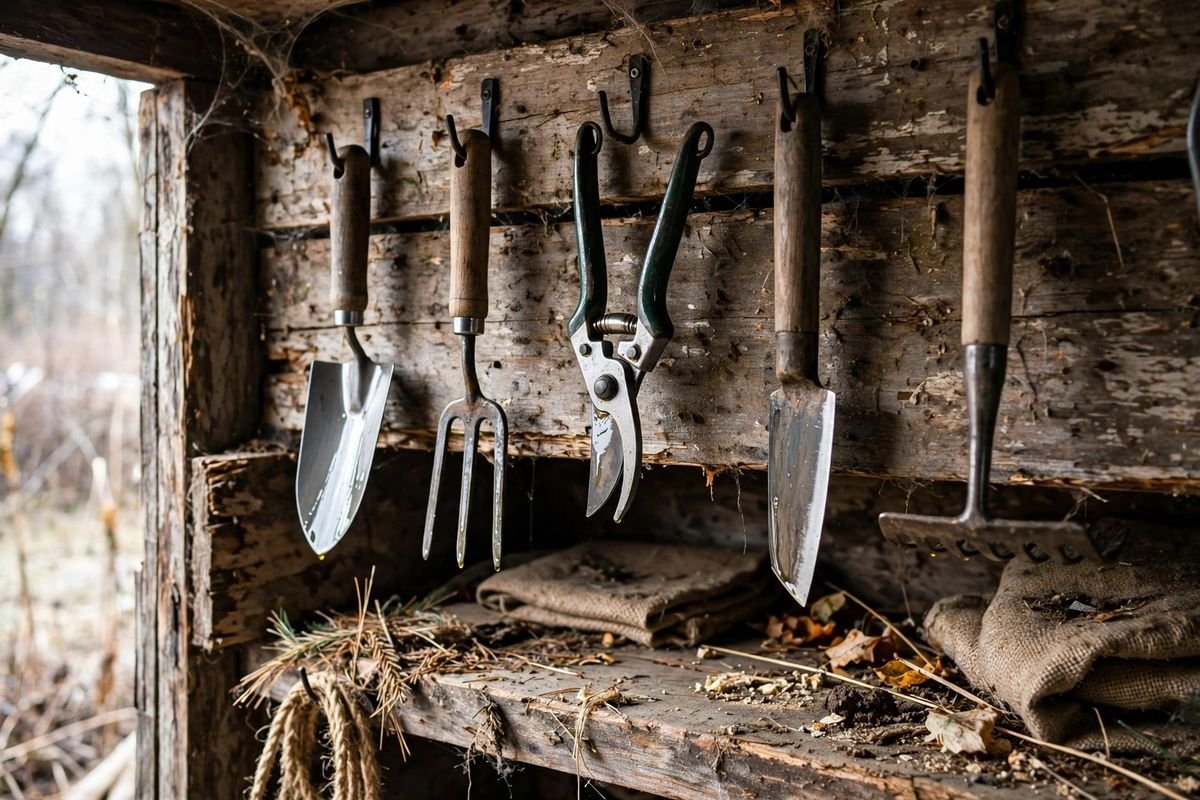
Store tools in a dry place, off the floor, with air around them. Hang long tools on wall hooks. Keep small tools in a tote with a lid, but only after they are fully dry. A damp tool in a closed tote rusts all winter. Drain and store hoses and watering gear with the tools, and bring anything with a battery indoors before freezing weather.
A worked example: a 10-tool kit across the year
Take a 10-tool kit: trowel, hand fork, cultivator, weeding fork, pruners, scissors, hoe, kneeler frame, gloves, and a bucket. Assume after-use care takes 3 minutes per tool, and you garden about 40 weeks a year with one main session per week.
After-use care across the year is not 3 minutes times 10 tools times 40 weeks, since you do not use all 10 tools every session. Assume a typical session uses 4 tools: 4 times 3 minutes is 12 minutes per session, or about 8 hours across 40 sessions. That sounds like a lot until you compare it with the alternative: a yearly rescue of rusted, dull tools, which runs about 1 hour and 20 minutes for six tools alone, plus replacements for the ones beyond saving.
The four seasonal sessions add about 30 minutes each, or 2 hours a year. The fall winterizing pass, done carefully, adds about 1 hour for the full kit. The full yearly budget is roughly 11 hours of care, spread across the year in small pieces, against a kit that would otherwise need replacing tool by tool. The point is not the exact total. The point is that care in small, regular pieces costs less time than rescue work and replacements.
Printable checklist
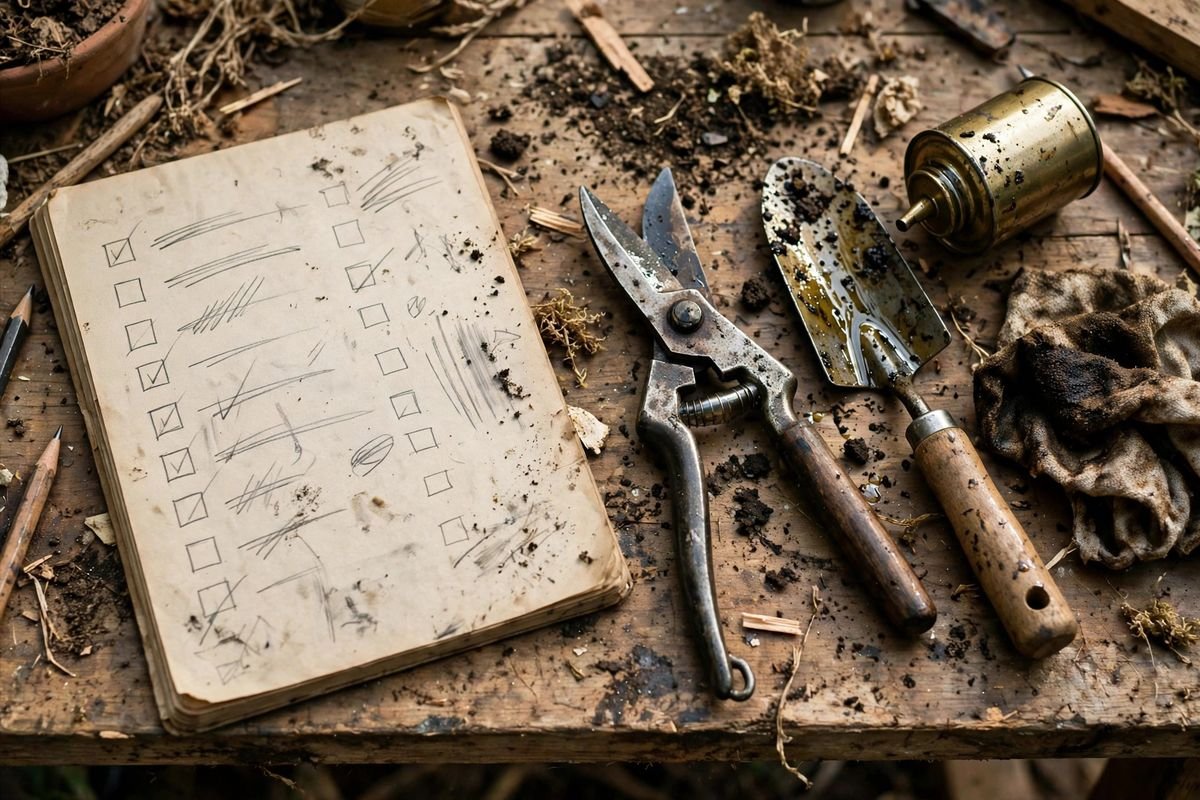
After each use: knock off soil, wipe blades dry, check edges and handles, hang tools up, lock pruners and scissors shut.
Each season: wash and dry all tools, oil metal lightly, tighten handles and screws, sand small rust spots, sharpen dull edges, check handles for cracks.
Each fall: full wash and rust removal, sharpen all edges, oil all metal, store dry and off the floor, bring batteries indoors, drain hoses and watering gear.
Each spring: inspect stored tools before first use, re-oil any dry metal, sharpen edges dulled in storage, replace cracked handles, check pruner springs and locks.
Questions
What is the one habit that matters most? Drying tools before storage. Most rust starts with soil and water left on steel overnight, and a dry wipe after each use prevents more damage than any oil or rust remover.
Should you oil tools after every use? A light oil wipe after each use helps in wet climates, but a dry wipe plus seasonal oiling is enough in dry climates. Over-oiling attracts dust, so keep coats thin either way.
How do you store tools in a small space? Hang long tools on wall hooks, keep small tools in a lidded tote once fully dry, and use a door rack for gloves and small items. The rules stay the same: dry, off the floor, and out of standing water.
Sources & Further Reading
- Iowa State University Extension and Outreach, horticulture tool care publications
- Clemson Cooperative Extension, Home and Garden Information Center tool care guides
- University of Minnesota Extension, Yard and Garden tool maintenance guides