

This post may contain affiliate links. If you buy through links on this page, we may earn a commission at no extra cost to you.
As an Amazon Associate I earn from qualifying purchases.
Garden scissors and pruning shears both cut stems, but they are built for different stems. Scissors suit soft flower and herb stems. Pruners suit woody stems that need more force. Using the wrong one gives crushed cuts, bent blades, and sore hands. This guide compares the two side by side so you can pick the right tool before you cut.
We have not tested the products linked here, and we give no current store prices. The links below go to search pages, so you can compare current options and prices at the time you shop.
Comparison table
| Feature | Garden scissors | Pruning shears |
|---|---|---|
| Best stem type | Soft flower and herb stems | Woody stems and canes |
| Typical blade length | About 2 inches, fine tips | About 3 inches, thicker blades |
| Cut capacity | Stems up to about one quarter inch | Stems up to about three quarters inch |
| Spring action | Light coil or wire spring | Stronger spring or ratchet |
| Hand effort per cut | Low, for many small cuts | Higher, for fewer thick cuts |
| Where it struggles | Woody canes, thick stems | Fine stems in crowded bunches |
The cut capacities above are planning guides, not maker ratings. Check the listing for the pair you buy, since capacities vary by model. For the two pruner blade styles, see bypass pruners vs anvil pruners. For a buying guide to scissors alone, see best garden scissors for flowers and herbs.
Pros and cons: garden scissors
Pros: fine tips reach single stems inside a bunch; light weight suits long sessions of many small cuts; short blades give fine control for deadheading and herb harvests; most pairs cost less than a good pruner.
Cons: blades twist or bend on woody stems; the light spring gives little help on thick cuts; small blades dull fast if they hit soil, grit, or wire; no use for canes, shrubs, or dead wood.

Pros and cons: pruning shears
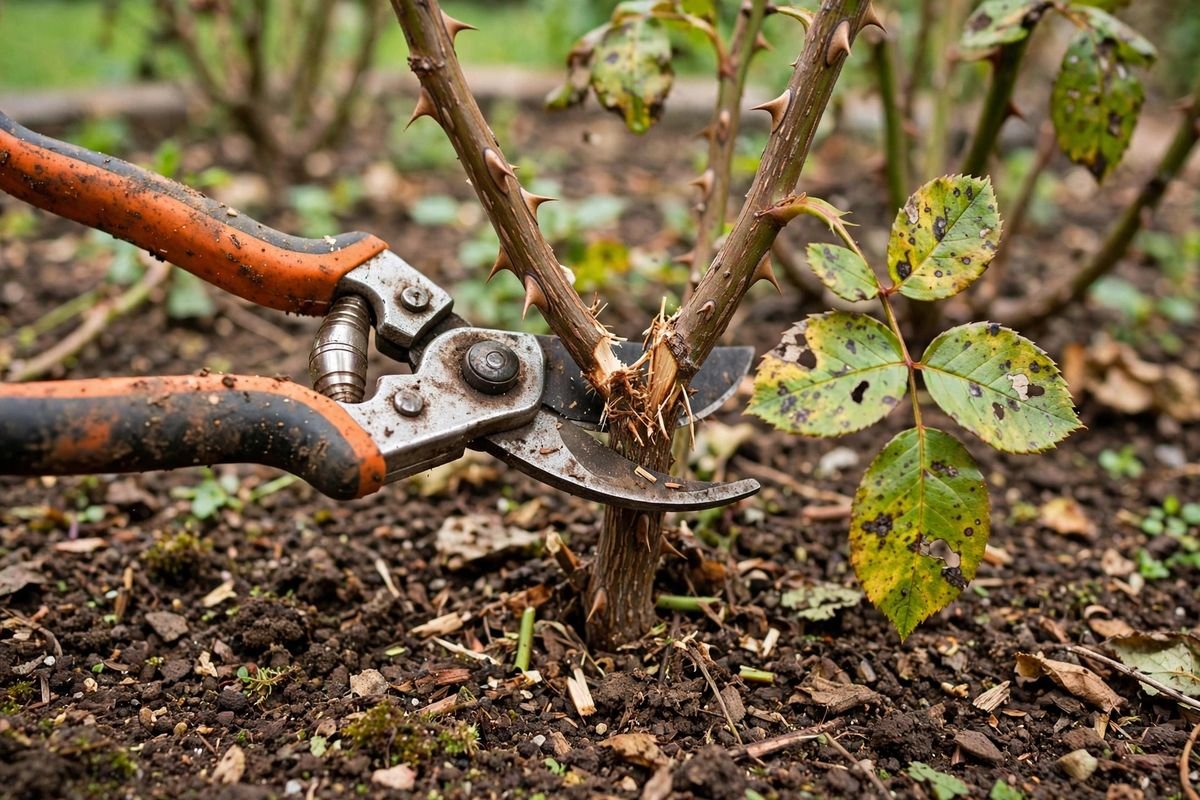
Pros: thick blades and strong springs cut woody stems cleanly; a bypass blade slides past a counter blade for a clean cut on live wood; the grip suits one-handed cutting at arm’s length; a good pair lasts for years with cleaning and sharpening.
Cons: wide jaws push soft stems aside before cutting, which crushes herbs and fine flowers; heavier weight tires the hand over many small cuts; the thicker blade cannot fit between crowded stems; a dull pruner crushes more than it cuts, so it needs regular sharpening.
A worked example: one mixed cutting job
Take a single morning job: cut 30 herb stems for the kitchen, deadhead 20 spent blooms, and prune 12 woody rose canes. Split the job by tool. The 50 soft cuts go to scissors. At about 4 seconds per cut, that is about 200 seconds, or just over 3 minutes. The 12 woody cuts go to pruners. At about 8 seconds per cut, counting positioning and the harder squeeze, that is about 96 seconds, or under 2 minutes.
Done with one tool, the job takes longer and cuts worse. Scissors on the 12 canes would bend or stall, and pruners on the 50 soft stems would crush a share of them. The two-tool total is about 5 minutes of cutting for a job that looks like one task but is really two different kinds of cutting. Keep both tools in the tote and switch when the stem changes.

Verdict: choose scissors if, choose pruners if
Choose garden scissors if you mostly cut flowers for the table, snip herbs for cooking, and deadhead spent blooms. Choose them if you make dozens of small cuts per session and want a light tool that fits between stems.
Choose pruning shears if you mostly cut woody stems, rose canes, shrubs, and dead wood. Choose them if you make fewer, thicker cuts and need blades and springs built for force.
Choose both if your garden mixes flowers, herbs, and shrubs, which most home gardens do. The pair together costs more than either alone, but each tool doing its own job beats one tool doing both badly. Cleaning steps for both are in how to clean and disinfect garden tools, and a starter kit plan is in what garden tools a beginner actually needs.
Questions
Can scissors sharpen like pruners? Small scissor blades are harder to sharpen well, and many gardeners replace a cheap pair instead. Pruner blades are made to be taken apart and sharpened with a stone or file.
Do you need both for a balcony garden? A balcony with herbs and flowers only can run on scissors alone. Add pruners when woody plants, such as roses or shrubs in pots, join the balcony.
Which one should a beginner buy first? Buy the one that matches the plants you already have. Flowers and herbs first means scissors first. Shrubs and roses first means pruners first.
Sources & Further Reading
- Clemson Cooperative Extension, Home and Garden Information Center tool care guides
- University of Minnesota Extension, Yard and Garden pruning tool guides
Search current options: garden scissors and pruning shears.