

This post may contain affiliate links. If you buy through links on this page, we may earn a commission at no extra cost to you.
As an Amazon Associate I earn from qualifying purchases.
Pruning and planting ask different things of a glove. Pruning needs a palm that resists thorns and a cuff that covers the wrist. Planting needs fingers that can feel a seed and grip a small pot. One pair rarely does both well, which is why many gardeners keep two pairs: a tough pair for cutting and a light pair for planting.
We have not tested the products linked here, and we give no current store prices. The links below go to search pages for gardening gloves, so you can compare current options, materials, and prices at the time you shop.
Leather, nitrile, and cloth palms
Leather palms, usually goatskin or cowhide, resist punctures from thorns and rose prickles better than cloth. Goatskin stays soft after it dries, while cowhide starts stiffer and softens with wear. Leather gloves dry slowly, so they need air drying away from heat, and they shrink if they dry on a radiator.
Nitrile-coated gloves have a cloth back with a thin rubber-like coating on the palm and fingers. The coating grips wet pots and muddy tools well, and the cloth back breathes better than full leather in warm weather. The coating wears through at the fingertips with heavy digging, so nitrile pairs are planting gloves first and pruning gloves second. The material notes below cover the main trade-offs between the two.
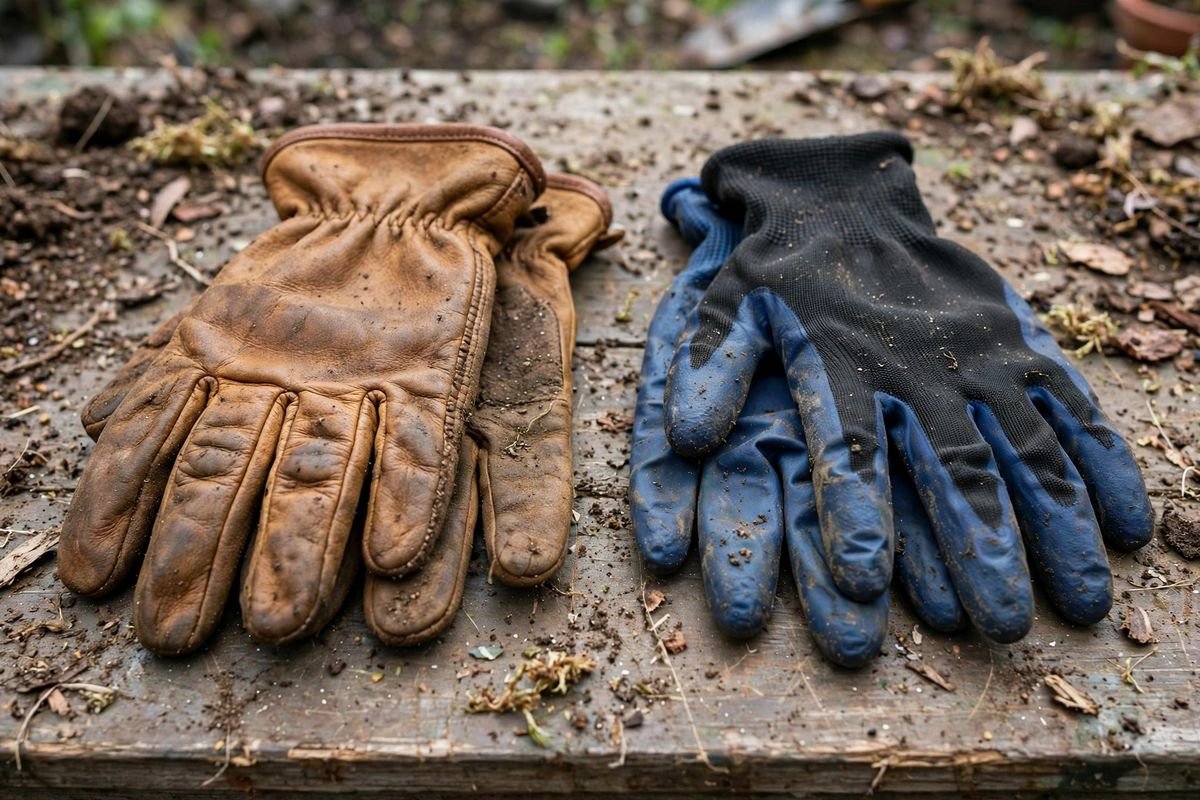
Cloth gloves with dotted grips suit light jobs: sowing seeds, potting seedlings, and handling dry soil. They wash easily and dry fast, but they give little thorn protection and soak through at the first watering. Keep a cloth pair for dry, gentle work and a tougher pair for everything else.
A worked example: sizing and a two-pair season
Start with size. Measure around your dominant hand across the knuckles, not counting the thumb. A hand measuring about 8 inches around fits most makers’ medium, while about 9 inches fits large. A glove that is one size too big costs you grip: a seedling pot slips, and you squeeze harder to hold it, which tires the hand. A glove that is too small splits at the seams and cuts off feeling in the fingertips.
Now count pairs for a season. Assume a 20-week growing season with one planting pair and one pruning pair. If you wash the planting pair weekly, that is 20 washes in the season, and the coating or cloth will show wear by late summer. A second planting pair bought mid-season keeps a dry pair ready while the first dries. Two pairs at the start plus one mid-season replacement is a fair planning budget: three pairs for the season, not one pair expected to do everything.

Pruning gloves last longer in the same season because they are worn for shorter jobs and washed less often. A leather pruning pair worn twice a week for cutting and deadheading, and brushed clean after each use, often lasts the full season and into the next. The cuff is the part to check: a gauntlet cuff that covers the forearm protects against rose thorns, while a short knit cuff leaves the wrist exposed.
What to look for when you shop
Check the cuff first for pruning. A gauntlet cuff should reach past the wrist bone and stay up when you reach into a shrub. Elastic at the cuff keeps soil out, but elastic that is too tight cuts circulation on a long job. For planting, check fingertip fit: you should be able to pick up a single small seed or a plant label without taking the glove off.
Check the seams. Double stitching at the palm and between the fingers holds up to digging, while single stitching splits early under the same work. Touchscreen-compatible fingertips are a convenience, not a gardening feature, and they wear out first, so do not pay extra for them unless you use a phone in the garden.
For the rest of a beginner kit, see what garden tools a beginner actually needs. Pruner choices to pair with a pruning glove are in bypass pruners vs anvil pruners, and cleaning steps are in how to clean and disinfect garden tools.

Care that makes gloves last
Shake soil out after each use and hang gloves to dry, fingers down, so water drains out instead of pooling at the fingertips. Wash cloth and nitrile gloves in cool water with mild soap, and air dry them. Machine drying shrinks leather and cracks nitrile coatings.
Leather gloves need a different routine. Brush off dry soil, wipe with a damp cloth, and let them dry at room temperature away from direct heat. Once dry, a little leather conditioner rubbed into the palm keeps the leather soft. Never soak leather gloves: soaking strips their natural oils and leaves them stiff.
Questions
Can one pair cover both pruning and planting? One pair can, but it will be a compromise: too thick for seeds, too thin for thorns. Two pairs cost more up front and save frustration all season.
How do you wash muddy gloves without ruining them? Rinse cloth and nitrile gloves in cool water, wash with mild soap, and air dry. For leather, brush off dry mud and wipe with a damp cloth instead of soaking.
When should you replace a pair? Replace gloves when the palm wears through, a seam splits open, or thorns start reaching skin. A glove that no longer protects is worse than no glove, because it hides the damage until a thorn gets through.
Sources & Further Reading
- Clemson Cooperative Extension, Home and Garden Information Center gardening guides
- University of Minnesota Extension, Yard and Garden tool and safety guides
Search current options: gardening gloves for pruning and planting and goatskin gauntlet gardening gloves.