

This post may contain affiliate links. If you buy through links on this page, we may earn a commission at no extra cost to you.
As an Amazon Associate I earn from qualifying purchases.
A small garden does not need a shed full of weeding tools, but it does need one or two that match the weeds you actually have. Dandelions with deep taproots, shallow crabgrass, and creeping clover each come out best with a different head shape. Picking the tool for the weed in front of you saves your back and keeps you from tearing up the plants you want to keep.
We have not tested the products linked here, and we give no current store prices. The links below go to search pages for weeding tools, so you can compare current options, head styles, and prices at the time you shop.
The main head shapes and what each one does
A forked dandelion weeder has a V-shaped tip that slides beside a taproot and levers it out. It works best in soft, moist soil, where the root comes up in one piece. A cape cod weeder has a narrow hooked blade for tight spots between plants and along edging. A stirrup hoe, also called a hula hoe, has a loop blade that cuts weeds just under the surface on both the push and the pull stroke.
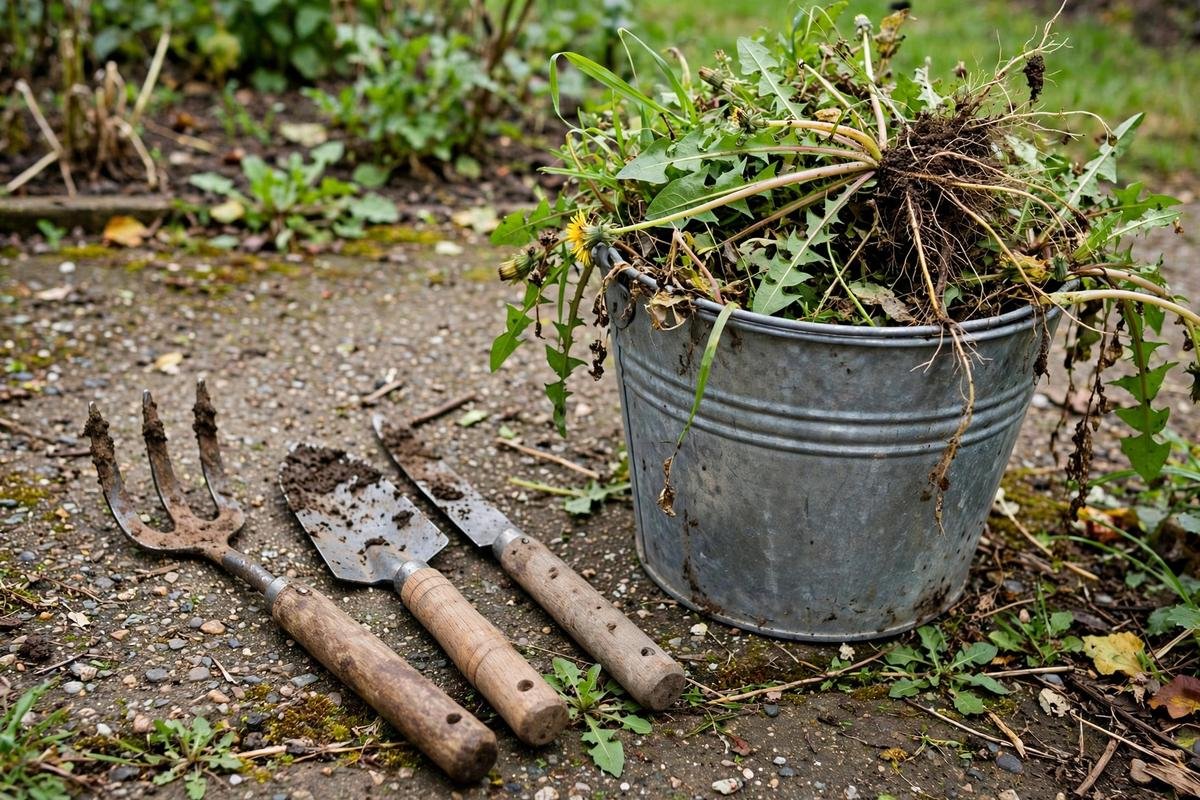
A hand fork with three or four short tines loosens soil around shallow weeds and lifts clumps of grass without digging deep. A long-handled stand-up weeder lets you work without kneeling, using a foot step and a claw or plunger to grab the root. Stand-up weeders suit lawns and open beds, but they are clumsy in a crowded raised bed where the claw can grab a crop root by mistake.
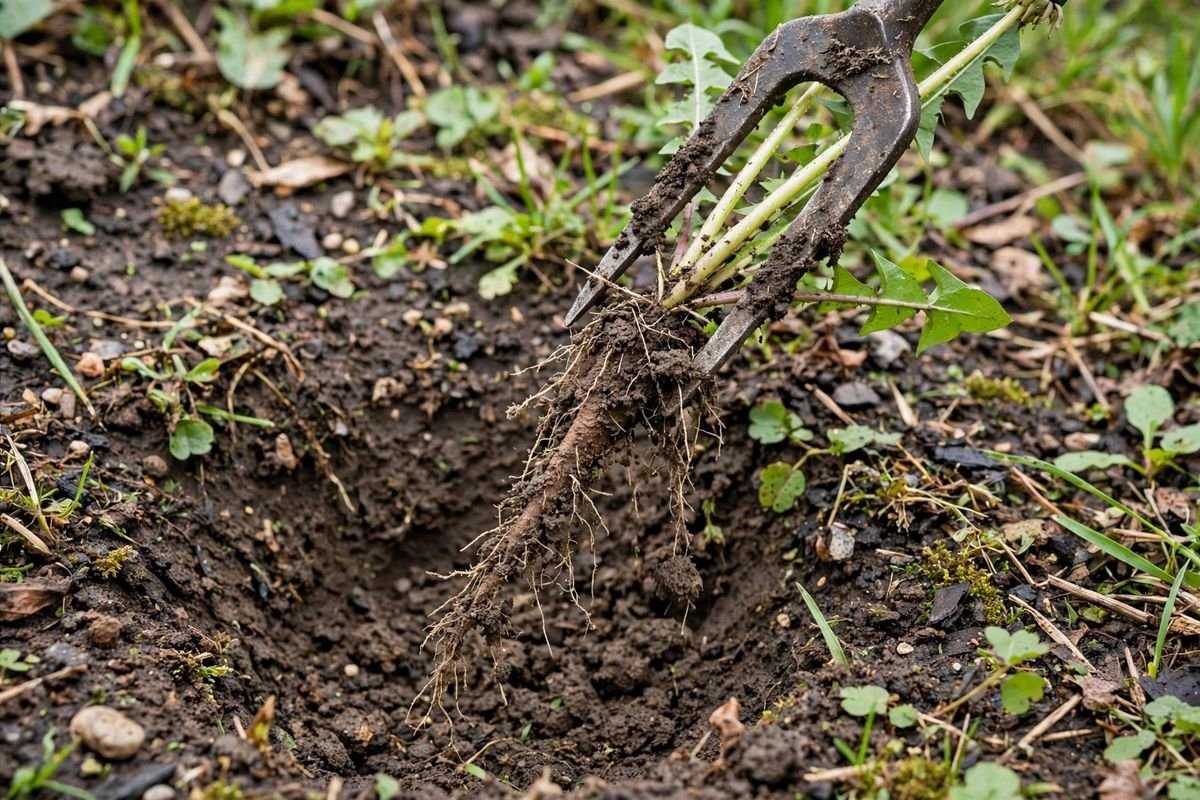
For raised beds, short-handled tools win. A 4 by 8 foot bed is only 4 feet wide, so you can reach the middle from either side, and a long handle just gets in the way. A hand fork and a cape cod weeder cover most raised-bed weeds. For lawn edges and paths, a stirrup hoe covers ground faster than any hand tool. Pair your pick with the bed plans in how to plan plant spacing in a raised bed so you leave room to weed between plants.
A worked example: weeding one 4 by 8 foot bed
Take a 4 by 8 foot bed, which is 32 square feet. Assume a weedy week leaves about 6 weeds per square foot, or about 190 weeds in the bed. The tool you pick changes the time more than the weed count does.
At about 8 seconds per weed with a hand fork, counting loosening, lifting, and dropping the weed in a bucket, 190 weeds take about 1,520 seconds, or roughly 25 minutes. At about 3 seconds per weed with a stirrup hoe on shallow weeds in open rows, the same bed takes about 570 seconds, or roughly 10 minutes. The hoe is faster only where weeds are shallow and rows are open. Where taproots run deep, the hoe cuts the tops and leaves the roots, so the weeds return, and the slower forked weeder is the honest pick.
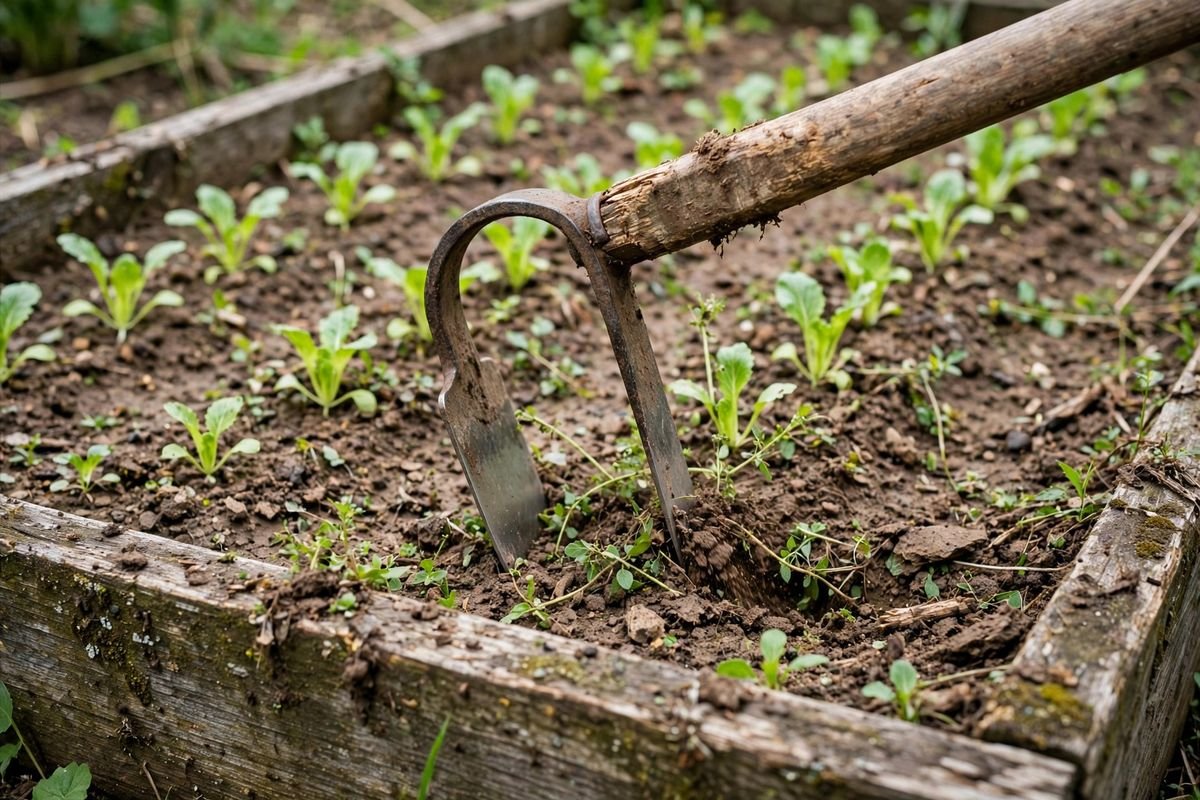
The same math argues for weeding little and often. The same bed weeded twice a week holds perhaps 3 weeds per square foot, or about 95 weeds per session, which is about 13 minutes with a hand fork. Weeds pulled small also leave smaller holes, so nearby crop roots stay put. A bucket at the bedside saves the return trips that stretch a 10-minute job into 20.
What to look for when you shop
Check the handle length against your bed width and your height. A hand tool should let your wrist stay straight while the head sits flat on the soil. A handle that is too short forces a bent wrist, and a handle that is too long bangs into plants. For stand-up weeders, check the foot step size and whether the claw opens wide enough for the taproots in your soil.
Head material matters in stony soil. Forged steel heads hold up better than thin stamped steel when they hit stones, but they weigh more. If your soil is full of stones, a heavier head that you replace less often beats a light head that bends. A comfortable grip matters as much as the head: a worn grip that slips when wet turns a good tool into a blister maker.
For the rest of a small-garden kit, see what garden tools a beginner actually needs and how to plan plant spacing in a raised bed. Clean tools after weeding, since soil left on a head dries into a crust that dulls the edge; steps are in how to clean and disinfect garden tools.
Weeding without wrecking the bed
Weed after watering or rain, when the soil gives up roots whole. Dry soil grips taproots, and the tops snap off while the roots stay behind. Work from the paths inward so you do not step on soil you just loosened. Shake soil off roots over the bed, not over the path, so you keep the soil where it belongs.
Do not compost weeds that have gone to seed or weeds with creeping roots, such as bindweed, in a home pile that never gets hot. Bag those and put them in green waste. If a weed keeps returning from the same spot, dig a little wider and check for a root piece left behind. A root piece the length of your thumb can regrow a dandelion.
Questions
Is one weeding tool enough for a small garden? A hand fork plus a stirrup hoe covers most small gardens. Add a forked dandelion weeder if taproot weeds are your main problem.
When is a stand-up weeder worth it? It is worth it for lawns and open beds worked from a path, and for gardeners who cannot kneel. It is a poor pick for crowded beds where the claw cannot tell a weed root from a crop root.
How often should you weed a raised bed? Once or twice a week in the growing season keeps weeds small and sessions short. A bed weeded weekly takes far less time than the same bed left for a month.
Sources & Further Reading
- University of California Agriculture and Natural Resources, UC Master Gardener Program weed management guidance
- Iowa State University Extension and Outreach, horticulture weed control publications
- University of Minnesota Extension, Yard and Garden weed management guides
Search current options: weeding tools for small gardens and forked dandelion weeders.