
This post may contain affiliate links. If you buy through links on this page, we may earn a commission at no extra cost to you.
As an Amazon Associate I earn from qualifying purchases.
Renters garden under one rule that homeowners do not: the walls must look the same on moving day as they did on move-in day. That rules out wall rails, screwed-in hooks, and pegboards, which are the usual answers for tool storage. The good news is that renter-friendly storage works fine without a single hole. Freestanding racks, rolling carts, over-door hooks, and lidded boxes hold a full hand-tool kit, and all of them leave with you when the lease ends.
This article covers storage that needs no drilling and no permanent fixings. For a care routine that keeps the tools themselves in shape, see how to keep hand tools from rusting and garden tool maintenance checklist.
We have not tested the products linked here, and we give no current store prices. The links go to search pages so you can compare current options at the time you shop.
Start with what needs no holes
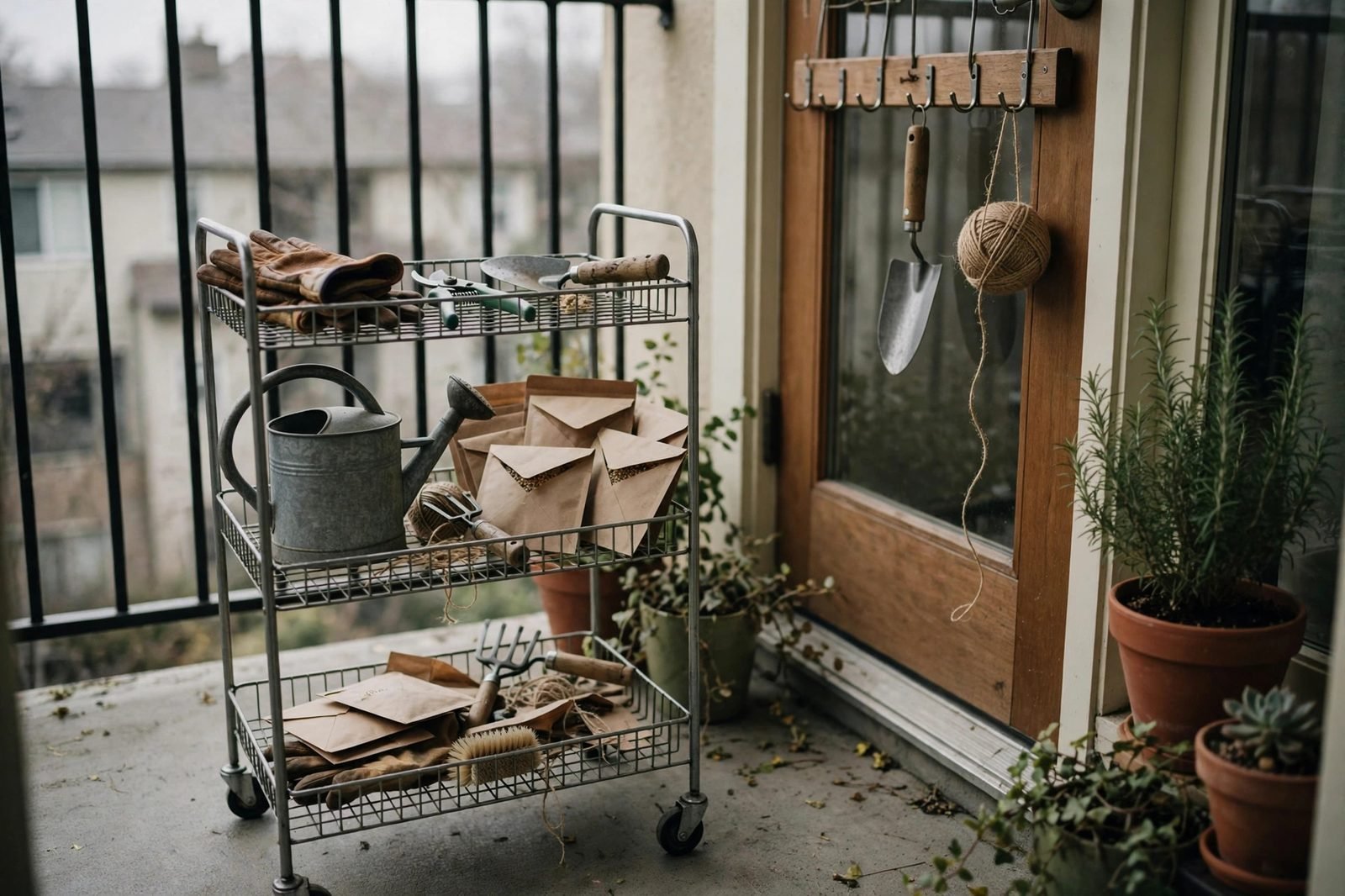
Three types of storage carry most renter gardens. A rolling cart holds tools, pots, and supplies on tiers and moves to where the work is. A freestanding rack or shelf stands against a wall without fixings and holds totes and boxes. An over-door rack hangs on a door and holds light hand tools. Each type works in a rental because it touches the walls lightly or not at all, and each one packs flat or rolls out the door on moving day.
Weight limits matter more than looks here. An over-door rack holds a few pounds of hand tools, not a watering can full of water. A rolling cart holds more, but its top tier should carry the light items so the cart stays stable when it rolls. Check the stated weight limit before loading, and test a removable hook on a hidden spot first to confirm it comes off clean.
A worked example: one rolling cart for a balcony kit
Take a three-tier rolling cart that measures 18 inches long and 12 inches wide. Its footprint is 18 times 12, or 216 square inches, which is 1.5 square feet. With three tiers, it gives 3 times 1.5, or 4.5 square feet of shelf space inside a 1.5 square foot footprint. That is the whole trick: the cart triples the storage without tripling the floor it takes.

Now set that cart on a balcony that measures 4 feet by 6 feet, or 24 square feet. The cart takes 1.5 of those 24 square feet, which is about 6 percent of the floor. The kit it holds is a full balcony set: a trowel, a fork, snips, gloves, twine, a spray bottle, and seed packets on the top tier, a watering can and small pots on the middle tier, and a bag of mix and a kneeling pad on the bottom tier. One cart, one corner, and the rest of the balcony stays open for plants. For the kit itself, see small garden tool kit: 10 essentials.
Doors, rails, and hooks that come off clean
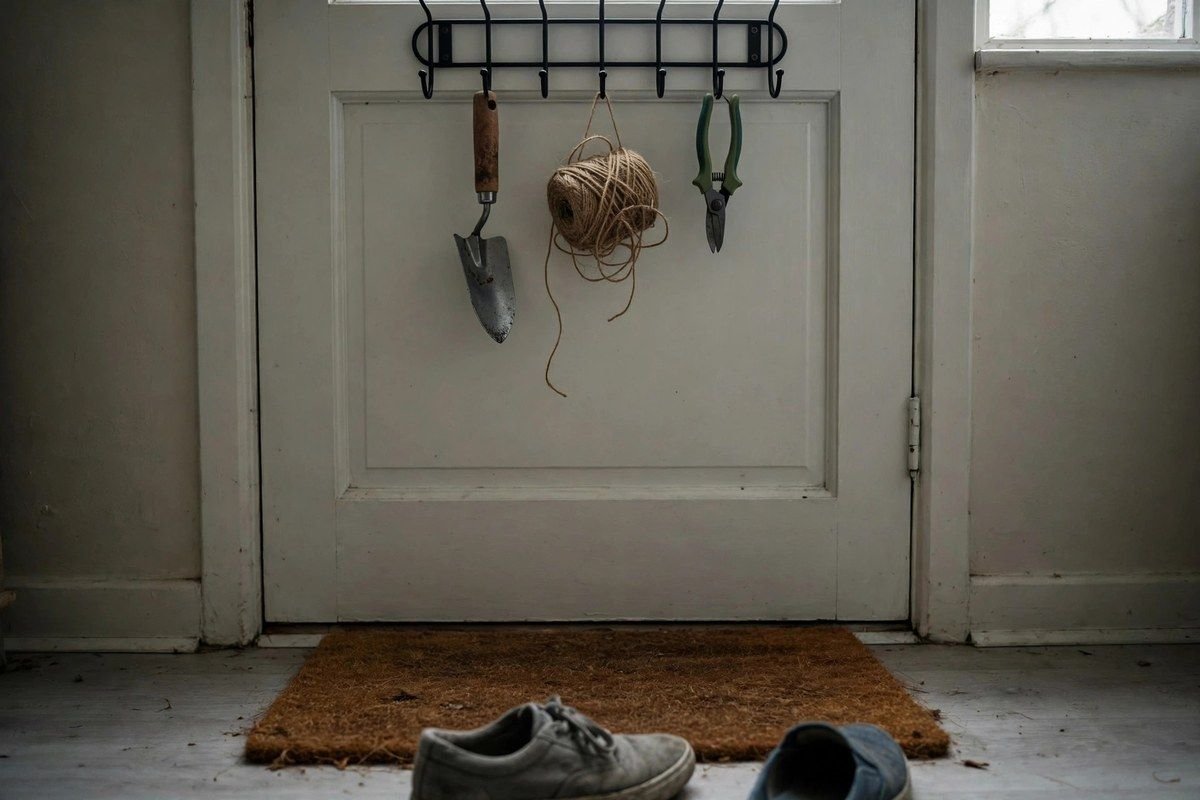
Doors are the best free wall in a rental. An over-door rack turns the back of a door into tool storage, and it lifts off in seconds on moving day. Hang light tools there: a trowel, snips, twine, and gloves. Keep heavy items off the door, since a loaded rack can strain hinges and swing the door shut in a breeze.
Removable adhesive hooks fill the gaps a door rack leaves. Use them for single light items inside a closet door or on a smooth tile wall, and follow the removal steps on the pack: most types need a slow, steady pull along the wall, not a yank outward. Suction hooks work on glass and smooth tile, but they lose grip over time, so check them now and then and keep nothing breakable below them.
Outdoor storage that survives rain and a move
Tools that live outside need a box that keeps rain out. A small weatherproof deck box or a lidded plastic bin works, and both move with you. Put the box where it gets some shelter, such as against a wall under an overhang, and keep the tools inside dry: a damp box grows musty fast, and damp tools rust.
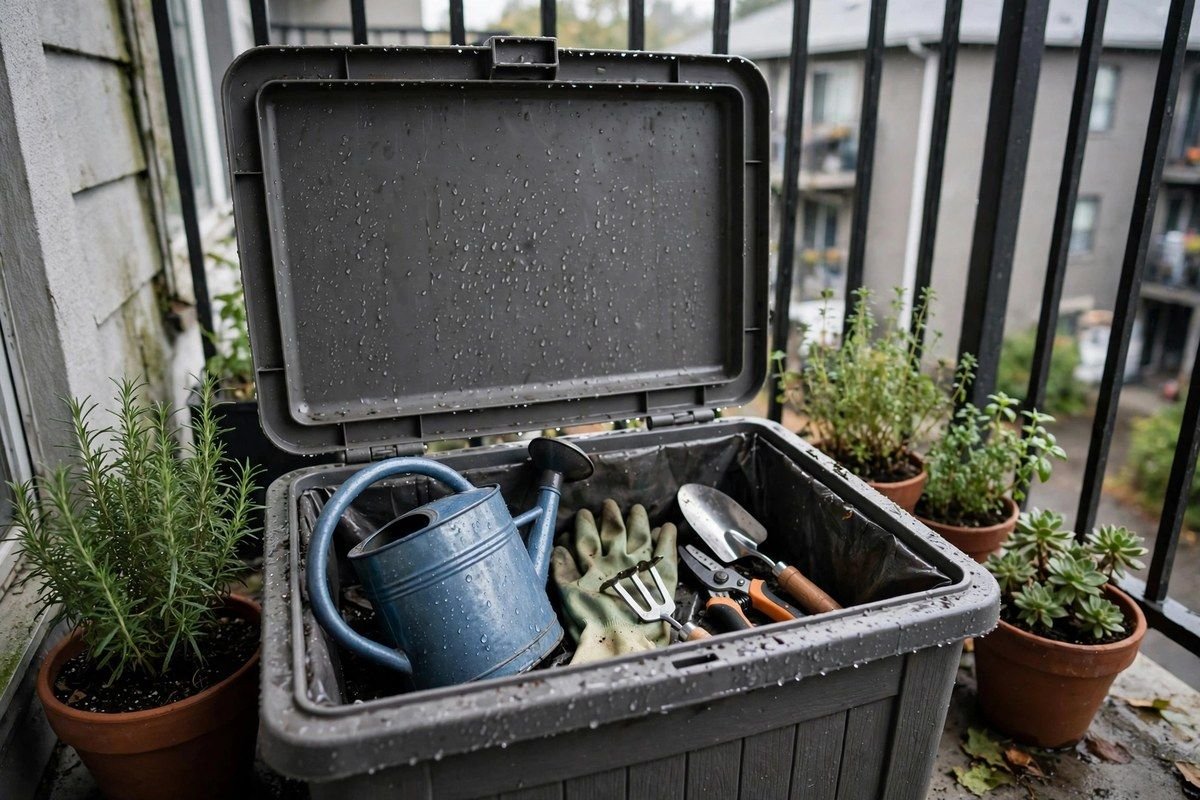
Size the box to the kit, not to the balcony. A box that holds the full kit plus a bag of mix is enough. A bigger box invites clutter, and clutter is what turns a tidy balcony into a storage corner. If the box starts holding items that are not garden tools, it is time to sort it out. A kneeling pad and seat can live on top of the box or beside it; see best garden kneelers and seats for options that fold flat.
Moving day: pack the kit in one trip
Renter storage pays off most on moving day. The cart rolls to the truck as one unit, or its tiers empty into one box. The over-door rack lifts off and goes in a bag. The deck box closes and carries the rest. Label one box “garden tools, open first” so the kit is usable on the first evening in the new place, when the plants arrive before the furniture is sorted.
Before handing back the keys, walk the walls and doors with a damp cloth and check for marks from hooks and racks. Most removable hooks leave nothing, but a quick wipe catches dust lines. A clean handover is part of the deal, and storage that never touched the walls makes it easy.
Search current options: rolling utility carts for garden tools and over-door hooks for garden tools. For weeding tools sized for the small spaces renters usually garden in, see best weeding tools for small gardens.
Sources & Further Reading
- Clemson Cooperative Extension, Home and Garden Information Center tool guides
- University of Minnesota Extension, Yard and Garden container gardening guides