
This post may contain affiliate links. If you buy through links on this page, we may earn a commission at no extra cost to you.
As an Amazon Associate I earn from qualifying purchases.
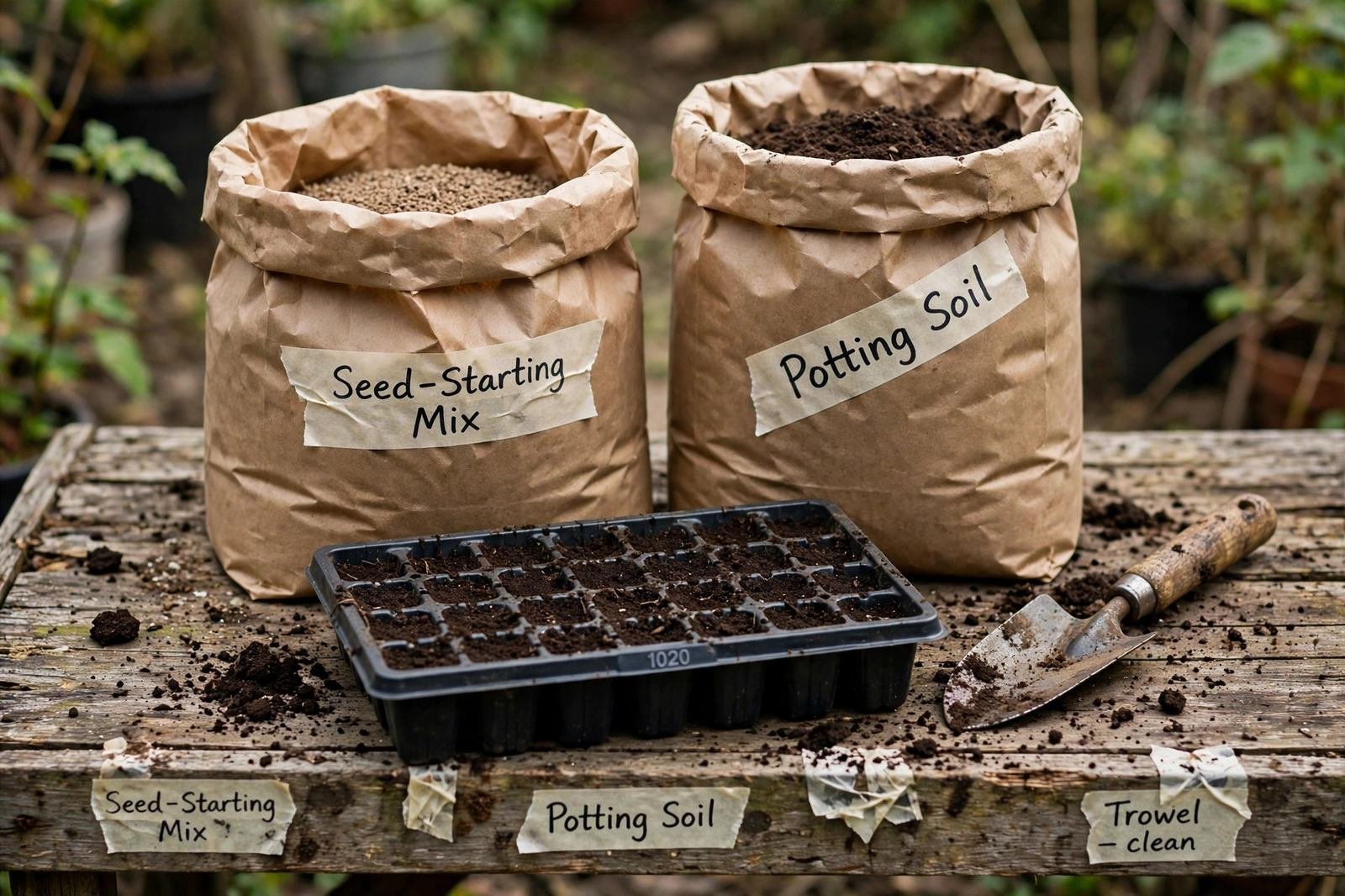
Seed packets say to sow in seed-starting mix, but the garage already holds a bag of potting soil. Both will grow seedlings. They differ in texture, built-in fertilizer, and price per volume, and using the wrong one at the wrong stage costs you germination or weeks of feeding. Here is how they compare, with the cost math worked out and a clear rule for when each one earns its place.
Seed-starting mix vs potting soil at a glance
| Seed-starting mix | Potting soil | |
|---|---|---|
| Texture | Fine and uniform; milled peat or coir plus perlite or vermiculite | Chunkier; bark fines, compost, peat or coir in larger pieces |
| Fertilizer | Little to none; you control feeding | Usually includes starter fertilizer |
| Water behavior | Wets and drains evenly in small cells | Can stay soggy in small cells; made for larger pots |
| Best stage | Sowing through first true leaves | Potting up and growing on |
| Cost per volume | Higher, roughly double per cubic foot | Lower in bulk bags |
What seed-starting mix is
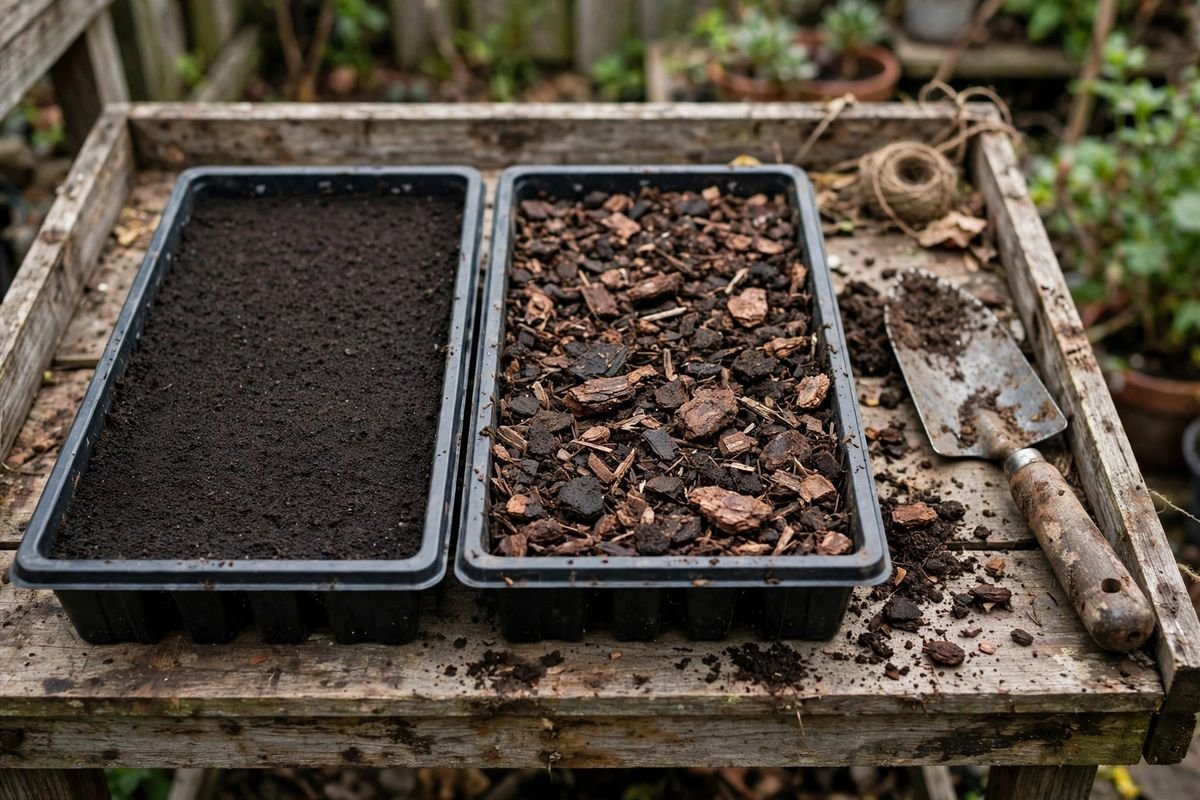
Seed-starting mix is a soilless blend built for germination: finely milled peat moss or coco coir for moisture, perlite or vermiculite for air, and deliberately almost no fertilizer. The fine texture matters because a seed only a millimeter across needs constant contact with damp mix to imbibe water, and a chunk of bark the size of the seed breaks that contact. It is also typically sterile out of the bag, which keeps damping-off pressure low. Our guide to coco coir vs peat moss digs into the two base ingredients if you want to mix your own.
What potting soil is
Potting soil is made for growing plants in containers, not for germination. It runs chunkier, with bark fines and compost for structure, and most bagged blends include a starter charge of fertilizer meant to feed a potted plant for several weeks. That fertilizer is the catch for seedlings: it is formulated for established roots, and in a small cell it can burn tender new roots or push soft, leggy growth. For a closer look at how it differs from what is in the ground, see potting soil vs garden soil.
Pros and cons: seed-starting mix
Seed-starting mix pros
- Fine, even texture gives small seeds the soil contact they need to germinate well.
- No built-in fertilizer, so you decide exactly when feeding starts.
- Drains freely in small cells instead of staying waterlogged.
- Usually sterile from the bag, which lowers early disease pressure.
Seed-starting mix cons
- Costs more per volume, roughly double potting soil in bagged form.
- Seedlings need feeding from the first true leaves; there is no nutrient reserve.
- Dries out faster than chunkier mixes, so trays need checking daily.
- Too fine and low-nutrient for growing plants on long-term; it is a starting medium, not a home.
Pros and cons: potting soil
Potting soil pros
- Cheaper per cubic foot, especially in large bags.
- Starter fertilizer carries seedlings for weeks without you feeding.
- Chunky structure suits larger pots and the potting-up stage.
- One bag covers sowing, potting up, and containers if you had to pick one.
Potting soil cons
- Coarse pieces hurt germination of small seeds and make sowing depth uneven.
- Built-in fertilizer strength varies by brand and can burn delicate new roots.
- Stays too wet in small cells, raising damping-off risk.
- Quality varies bag to bag; some are mostly wood filler with little nutrition.
Cost per cubic foot, worked out
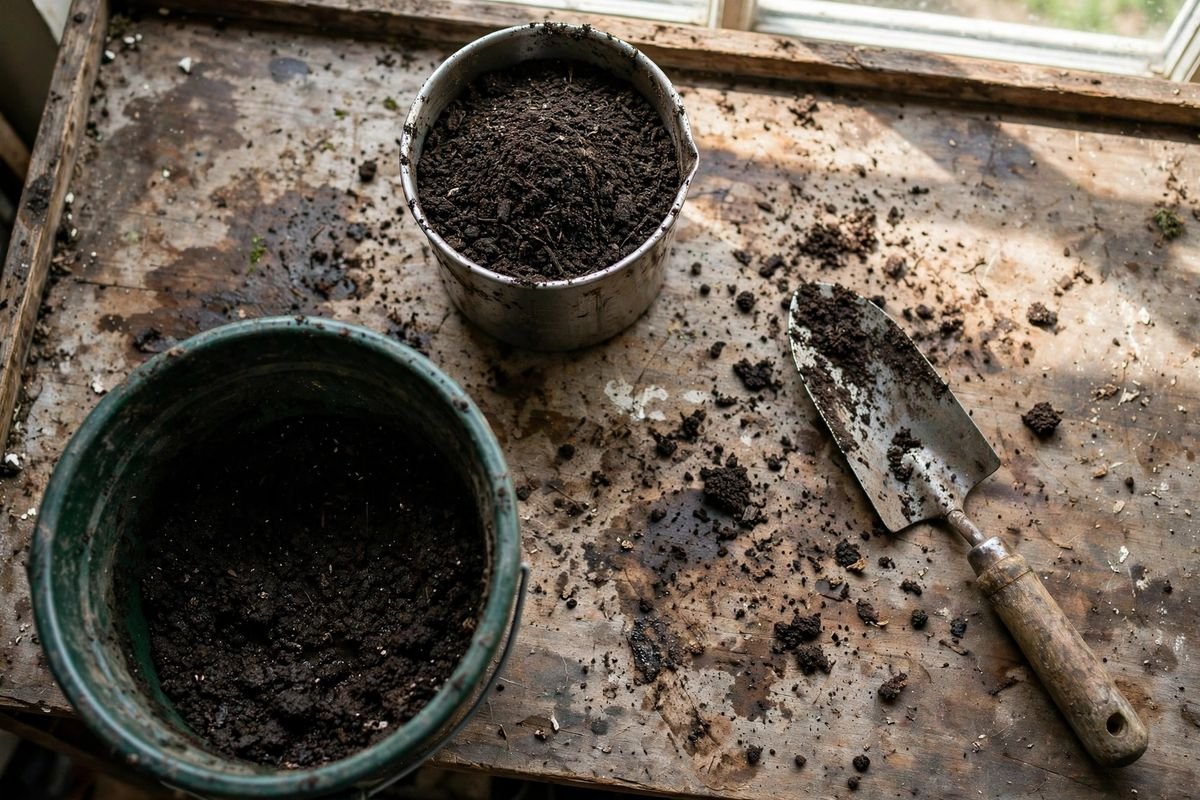
Prices vary by store, so treat this as a worked example and plug in your own receipt numbers. Assumptions: 1 cubic foot equals about 30 dry quarts. A 16-quart bag of seed-starting mix at $9 works out to $0.56 per quart, or about $17 per cubic foot. A 2-cubic-foot bag of potting soil at $15 works out to $7.50 per cubic foot, or $0.25 per quart. So bagged seed-starting mix costs roughly twice as much per volume.
Now put it per tray. Assume a 72-cell insert filled to the top holds about 6 quarts of mix. That fill costs about $3.38 in seed-starting mix against about $1.50 in potting soil. The gap per tray is under two dollars. Buy on texture and fertilizer timing, not on price; the mix is the cheapest part of the seed-starting setup. If you are restocking, our picks for seed-starting mixes for fast, even germination are here, or browse seed-starting mix on Amazon to compare bag sizes.
When to feed seedlings in each
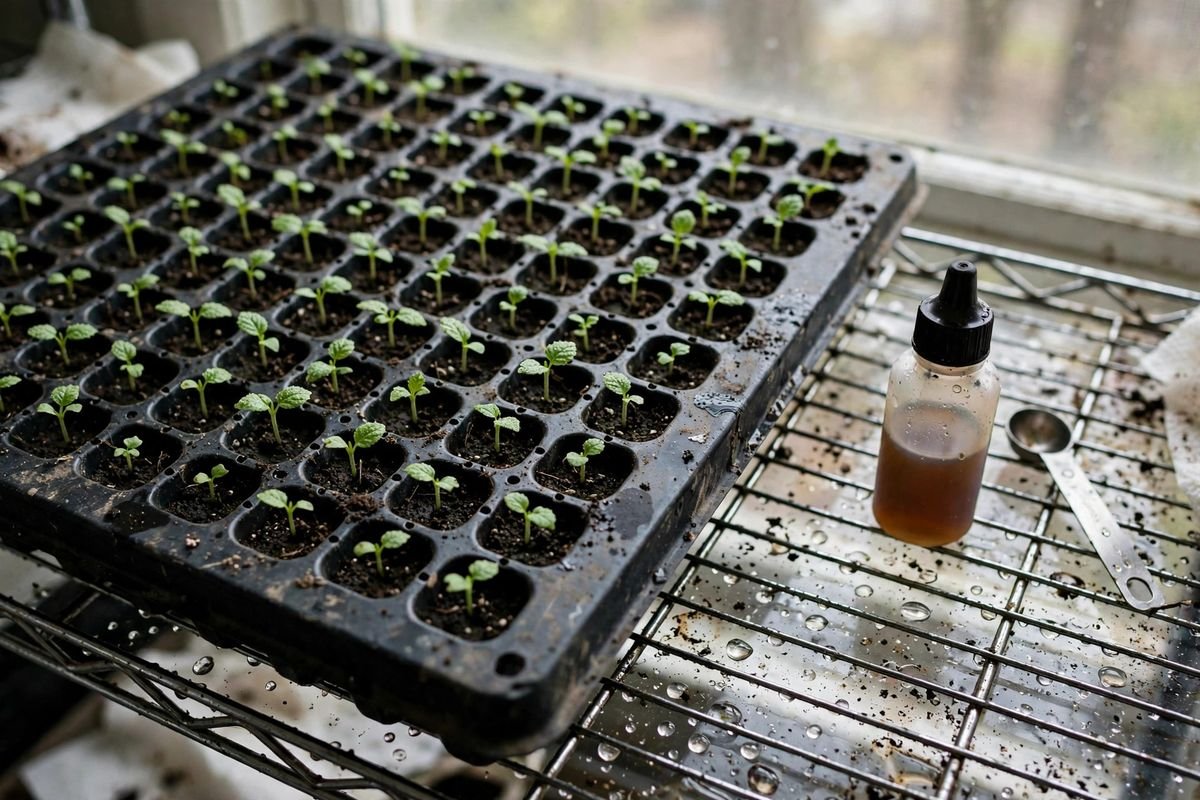
This is where the fertilizer difference bites. In seed-starting mix, begin feeding when the first true leaves appear: a balanced liquid fertilizer at half the label strength, once a week. The seed’s own reserves run out right about then, and the mix has nothing to offer. In potting soil with starter fertilizer, hold off; most blends feed for 3 to 4 weeks, so wait until growth visibly slows or the lower leaves pale before you supplement. Overfeeding young seedlings causes more damage than underfeeding, so when in doubt, wait a week.
Timing your sowing
Most packets give sowing times as weeks before your last frost date, which is why the mix question comes up in late winter. Count back from your transplant date and sow on that schedule. Use your local frost dates and regional planting guidance — not your USDA hardiness zone alone — to choose planting dates.
Our verdict: which bag for which job
Choose seed-starting mix if you are sowing small or expensive seed, filling cell trays or soil blocks, fighting damping off, or you want full control over when feeding starts. It is the right medium for the germination stage, full stop.
Choose potting soil if you are potting up seedlings into 3- or 4-inch pots, growing on starts you bought, or sowing large seeds like beans and squash directly into bigger pots where the chunky texture does not matter. Sift out the largest bark chunks if you sow directly into it. Leftover soil from last season can work too; see whether you can reuse potting soil before you buy a fresh bag.
Mistakes that waste a bag of mix

- Sowing tiny seed into coarse potting soil and blaming the seed for spotty germination.
- Feeding seedlings in pre-fertilized potting soil on day one and burning the roots.
- Never feeding seedlings in seed-starting mix, then wondering why they stall at the first true leaves.
- Using garden soil in trays. It compacts, drains poorly, and carries weed seeds and disease; homemade compost has its own place, but not in a germination tray.
Frequently asked questions
Can I start seeds in potting soil if that is all I have?
Yes. Sift it through a quarter-inch screen to remove the big chunks, sow a little shallower than the packet says, and hold off on fertilizer for the first few weeks. Large seeds will hardly notice the difference.
Is seed-starting mix worth the higher price?
For the germination stage, yes. The per-tray cost difference is under two dollars in our worked example, and even germination of a packet of seed is worth more than that.
Do I need to sterilize bagged mix before sowing?
Bagged seed-starting mix is generally fine straight from the bag. Reused mix is a different story and should be refreshed or replaced.
Sources & further reading
- University of Minnesota Extension, Starting seeds indoors: https://extension.umn.edu/planting-and-growing-guides/starting-seeds-indoors
- Iowa State University Yard and Garden, Starting seeds indoors: https://yardandgarden.extension.iastate.edu/how-to/starting-seeds-indoors
- Clemson Cooperative Extension HGIC, Starting seeds indoors: https://hgic.clemson.edu/factsheet/starting-seeds-indoors/