
This post may contain affiliate links. If you buy through links on this page, we may earn a commission at no extra cost to you.
As an Amazon Associate I earn from qualifying purchases.
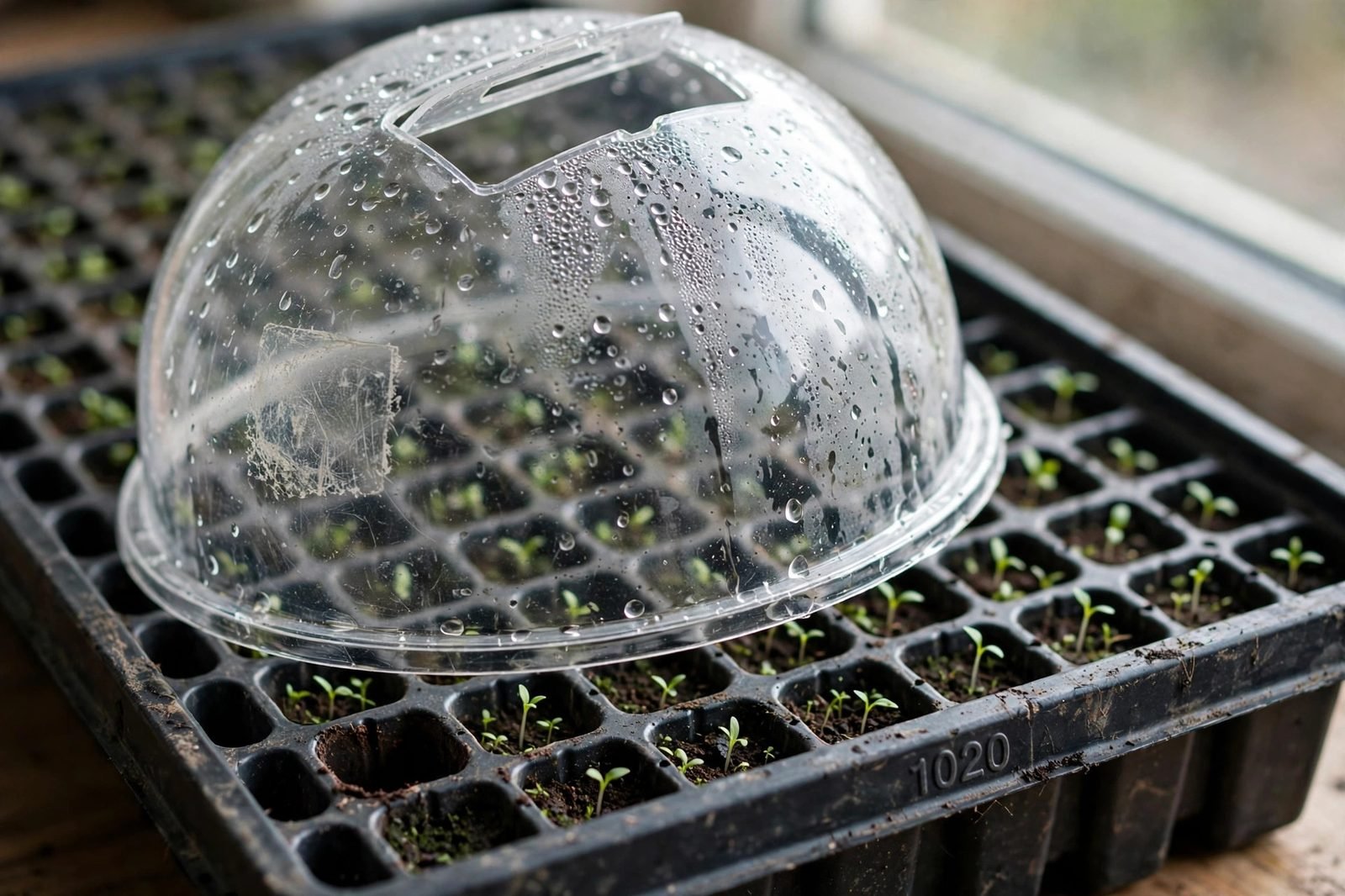
A humidity dome is the clear plastic lid that sits on a seed tray until seeds sprout. Half of all seed-starting advice calls it essential; the other half never uses one. Both camps grow fine seedlings, because a dome does one job and one job only: it holds moisture in. This comparison covers what a dome actually changes, a worked pepper example with stated conditions, and the exact moment to lift the lid so the dome helps instead of harming.
The two approaches side by side
| With a humidity dome | Without a dome | |
|---|---|---|
| What it does | Traps humidity near saturation around the tray | Tray breathes at room humidity, often 30 to 50 percent |
| Germination speed | Same calendar, more even emergence | Same calendar; the surface may dry between waterings |
| Watering chores | Check every two to three days | Check daily; mist or bottom water as the surface pales |
| Disease risk | Higher if left on after sprouting: mold, damping off | Lower, with more air flow from day one |
| Cost | A few dollars for the lid, or a clear storage lid | Nothing |
| Best for | Slow germinators, dry houses, forgetful waterers | Humid climates, attentive waterers, big batches |
What a humidity dome does
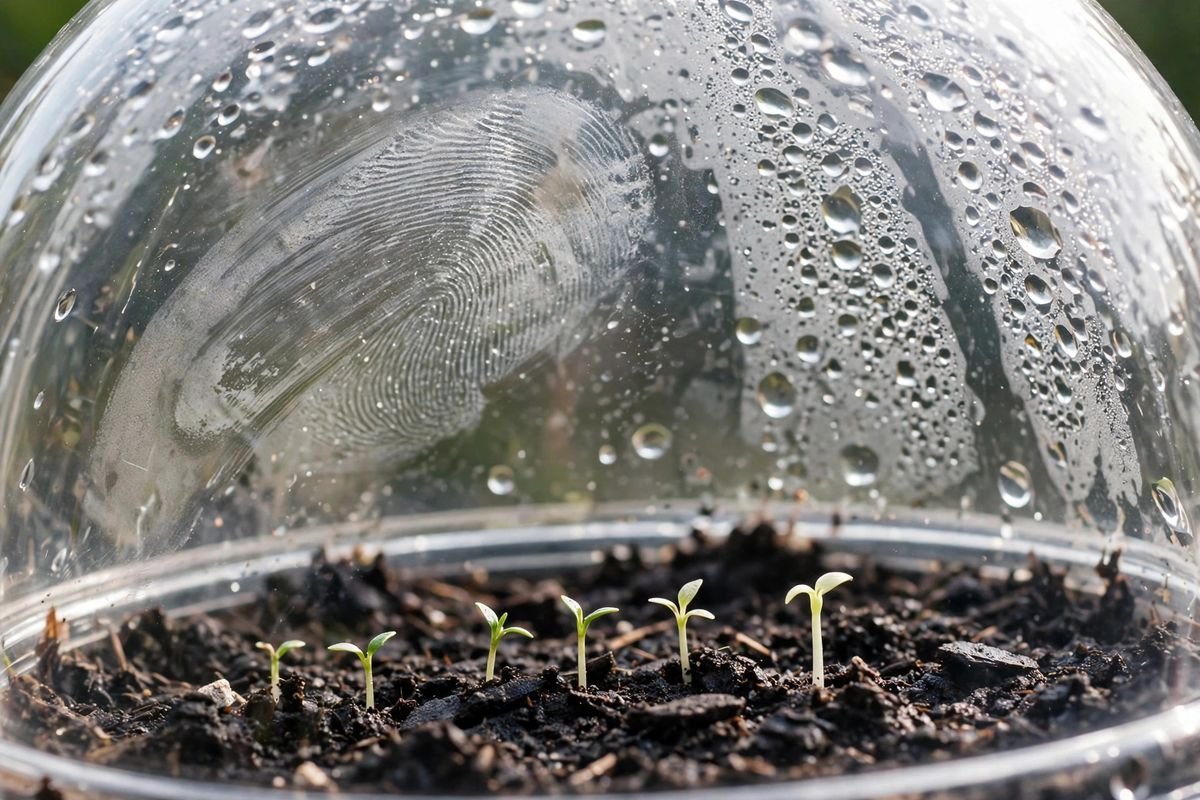
A dome turns the tray into a small greenhouse. Moisture evaporating from the mix condenses on the lid and drips back, so the surface stays dark and damp for days without watering. That matters most for seeds that take two weeks or more to emerge (peppers, parsley, rosemary), because a dry surface during a long wait is the usual cause of spotty germination. It also matters in dry houses in winter, where indoor air can sit near 30 percent humidity. Our roundup of the best humidity domes for seedlings covers vented lids worth buying; a vent you can open matters more than the brand.
Going without: the plain tray method
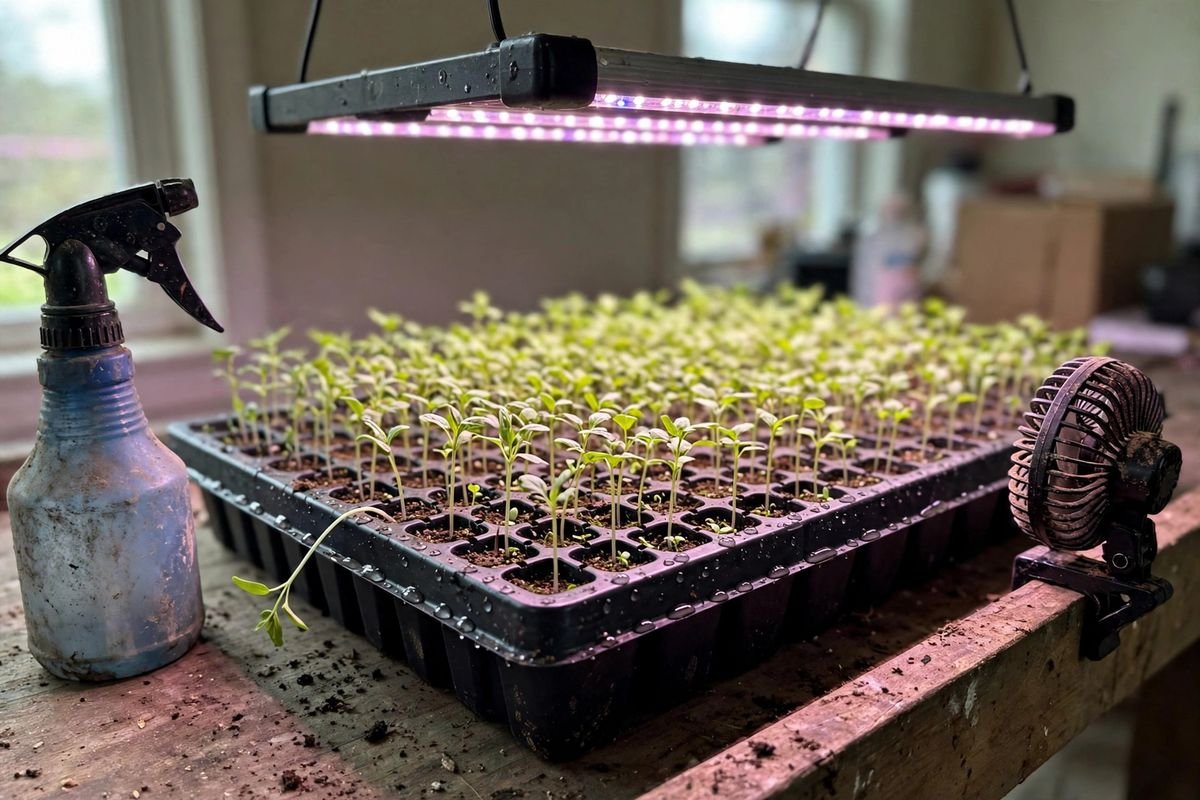
Skipping the dome is the default for many experienced growers, and it works because most vegetable seeds germinate fine at room humidity as long as the mix stays moist. The routine is simple: bottom water the tray, or mist the surface when it turns pale, and check daily. Our guide to bottom watering seedlings shows the daily-check routine that replaces the dome, and a fine-mist spray bottle handles the surface between waterings. Air flow from day one means sturdier stems and less mold, and many growers add a small fan for gentle movement once seedlings are up.
A worked example: peppers, with and without a dome
Take peppers, the classic slow germinator. Stated conditions: seed sown a quarter inch deep in a 72-cell tray, soil held near 80°F with a heat mat, on a bench in a house at about 68°F and 35 percent humidity. Sow peppers 8 to 10 weeks before your last spring frost. Use your local frost dates and regional planting guidance — not your USDA hardiness zone alone — to choose planting dates.
With a dome, the air under the lid sits near saturation, the surface stays damp, and you check every two to three days. First sprouts typically break the surface in 7 to 14 days, the usual extension range for peppers, and you open the vent at the first sprout, then lift the lid fully when about half the cells have emerged. Without a dome, the same tray loses surface moisture to the room air by evening, so you mist or bottom water daily to keep the top quarter inch dark; emergence lands in the same 7 to 14 day window, because temperature drives the calendar more than humidity does. The honest summary: the dome does not buy you days; it buys you forgiveness on watering and more even emergence across the tray. This is a worked example from published germination ranges, not a trial we ran.
Pros and cons
Pros of using a dome
- Even moisture for slow germinators
- Fewer watering chores during the wait
- Useful in dry winter houses
Cons of using a dome
- Mold and damping off if left on after sprouting
- Leggy, soft growth without air flow
- One more thing to wash and store
Pros of going without
- Better air flow from day one, sturdier stems
- Less mold pressure
- Nothing to buy, wash, or store
Cons of going without
- Daily moisture checks are on you
- Slow seeds in dry air emerge unevenly
The verdict

Choose a dome if you start slow germinators like peppers and parsley, if your winter house air is dry, or if you know you will forget to check the tray daily.
Skip the dome if your climate or house is humid, if you enjoy the daily check, or if you run big batches where washing forty lids sounds like a chore. Either way, the lift moment is the same: vent at the first sprout, remove fully when about half the tray has emerged. A dome that stays on past that point becomes a mold farm.
Troubleshooting common problems

White fuzz on the soil: the dome stayed on too long or the tray never dried between waterings. Lift the lid, improve air flow, and let the surface dry out. Leggy, pale sprouts leaning one way: the dome came off late and the light sits too far above. Lower the light to a few inches over the seedlings (our roundup of the best grow lights for seedlings covers simple setups) and add gentle fan air. Damping off at the soil line: thin the tray, water from below, and start fresh cells with new mix; it rarely reverses.
Sources & further reading
- University of Minnesota Extension, “Starting seeds indoors”: https://extension.umn.edu/planting-and-growing-guides/starting-seeds-indoors
- North Carolina State Extension, Extension Gardener Handbook, Chapter 13, Propagation: https://content.ces.ncsu.edu/extension-gardener-handbook/13-propagation
- Penn State Extension, “Seed and seedling biology”: https://extension.psu.edu/seed-and-seedling-biology