
This post may contain affiliate links. If you buy through links on this page, we may earn a commission at no extra cost to you.
As an Amazon Associate I earn from qualifying purchases.
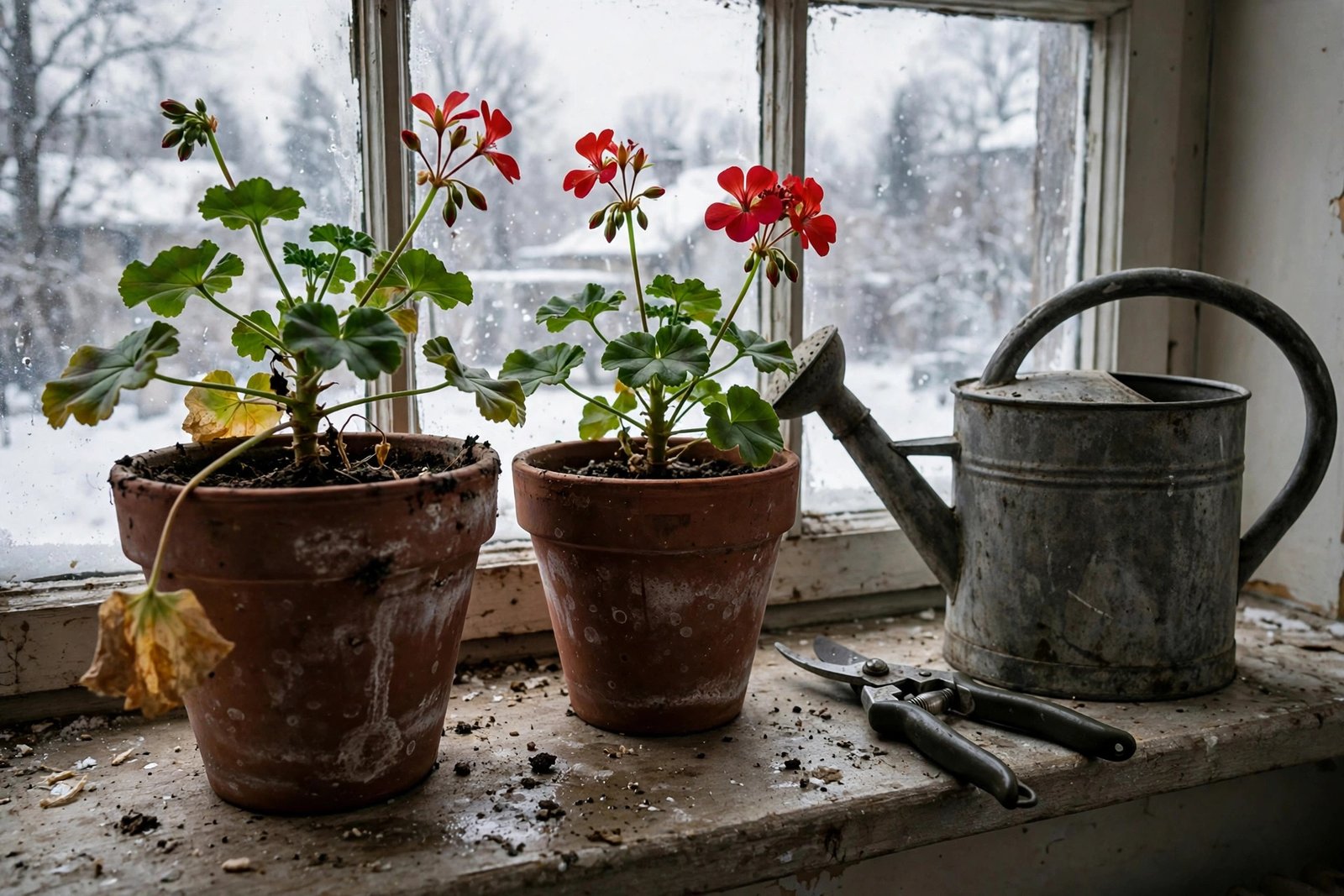
Geraniums are the plants we hate to lose to frost. They bloom all summer on a porch or a patio, they cost little, and they look like they should be easy to keep. Then the first cold night comes, and a plant that gave us months of flowers turns to mush overnight. The good news is that geraniums are easy to carry through winter indoors, and we have three ways to do it, depending on how much space we have and how much work we want to do.
Geraniums are not frost hardy. A light frost will damage the leaves, and a hard freeze will kill the plant to the roots. That is why the move indoors has to happen before the first frost, not after it. Use your local frost dates and regional planting guidance — not your USDA hardiness zone alone — to choose planting dates. We bring our geraniums in when night temperatures start dropping toward 40 degrees, which is usually a week or two before the first frost in our area.
The three methods are potted plants indoors, cuttings, and bare-root storage. Potted plants keep blooming, or at least keep growing, all winter. Cuttings take little space and give us new plants for spring. Bare-root storage takes almost no space at all, and it suits gardeners with a cool basement and a lot of plants. We use all three, and the method we pick for each plant depends on how much we like it and how much windowsill we have left.
Method one: bring potted geraniums indoors
This is the simplest method, and it is the one we use for our favorite plants. Dig the geranium out of the bed or lift the pot off the patio, shake off loose soil, and check the leaves for insects before the plant comes inside. Aphids and whiteflies hide on the undersides of leaves, and they spread fast in a warm house, so we wash the leaves with a strong spray of water and let the plant dry outside for a day before it comes in.
Cut the plant back by about one-third before it comes indoors. Leggy summer growth with long bare stems does not do well in a house, and a shorter plant fits on a windowsill and grows back bushier in spring. Cut just above a leaf joint, and save the cuttings for the cutting method below. Remove yellowed leaves and any flower heads that are past their best, since the plant will drop them indoors anyway.

Pot the plant in fresh potting mix if it came out of the ground, and use a pot with drainage holes. A pot that is too big holds too much wet soil around the roots, and geranium roots rot in wet soil indoors, so we pick a pot that fits the root ball with about an inch of mix around it. Water the plant well once, let it drain, and put it in its winter spot.
For other potted plants facing the same move, our guide to protecting potted plants from frost covers the timing and the wrapping, and our guide to overwintering pepper plants uses the same cutback-and-bring-in routine.
Light, water, and temperature indoors
Geraniums want light, and a winter windowsill is the best spot in most houses. A south-facing window gives the most light, and an east- or west-facing window works too. The plant needs at least six hours of direct sun a day to keep growing, and it will stretch toward the window and grow leggy if the light is weak. Turn the pot a quarter turn each week so the plant grows straight instead of leaning.
If the only windows face north, a small grow light fills the gap. A small grow light for indoor plants hung 6 to 12 inches above the leaves, running 12 to 14 hours a day, keeps geraniums compact and green through the darkest weeks. We run the light on a timer so the plants get a steady day length.
Water is where most indoor geraniums fail. Indoors, in cool light, a geranium uses far less water than it did outside in summer sun. We water only when the top inch of soil feels dry, and we water lightly, letting the pot drain fully. A plant that sits in wet soil all winter will rot at the roots, and the first sign is yellow leaves dropping from the bottom of the plant. When in doubt, wait a day and check again.
Temperature matters less than light and water. Geraniums are happy at normal room temperature, between 60 and 70 degrees, and they do better on the cool side of that range. A cool room with good light beats a warm room with weak light. Keep the plants away from radiators and heating vents, which dry the leaves, and away from cold drafts by a door.
A worked example for six geranium plants
Here is the indoor plan we use for six geranium plants, with the numbers stated so you can scale it to your own collection. Assume six medium plants, each in a 6-inch pot, going onto a south-facing windowsill in a room that stays near 65 degrees.
Space: a 6-inch pot needs about 8 inches of sill width once the leaves spread, so six pots need about 48 inches, or 4 feet, of windowsill. That is more than most sills hold, so we use two shelves: three pots on the sill and three on a shelf above it, or a narrow plant stand by the window. A shelf 4 feet long and 10 inches deep holds three pots with room for air between them, and air between the pots keeps leaves dry and cuts down on mildew.
Light: six hours of direct sun a day, or a grow light running 12 to 14 hours a day over the shelf. If the plants sit more than a foot from the window glass, they get far less light than they need, and they will stretch. Move them closer, or add the light.
Water: about half a cup per pot every 10 to 14 days in winter, poured slowly and left to drain. That is roughly 3 cups of water per watering for all six plants, and about 6 to 9 cups per month. Check the soil with a finger before watering, and skip any pot that still feels damp an inch down.
Feeding: none from November to February. Geraniums rest in winter, and fertilizer pushes soft growth that flops and draws pests. We start feeding again in March, at half strength, when new growth shows.
Spring result: expect two or three of the six plants to look rough by March, with a few bare stems and dropped leaves, and three or four to look tidy. That is normal. The rough ones recover with a spring cutback, and the tidy ones are ready to bloom first.
Method two: store geraniums bare-root
Bare-root storage is the old way to keep geraniums, and it takes almost no space. Dig the plants up before frost, shake the soil off the roots, and cut the stems back to about 6 inches. Tie the plants in small bunches, hang them upside down in a paper bag, and store the bag in a cool, dark place that stays between 45 and 55 degrees, like a basement or an unheated garage that does not freeze.
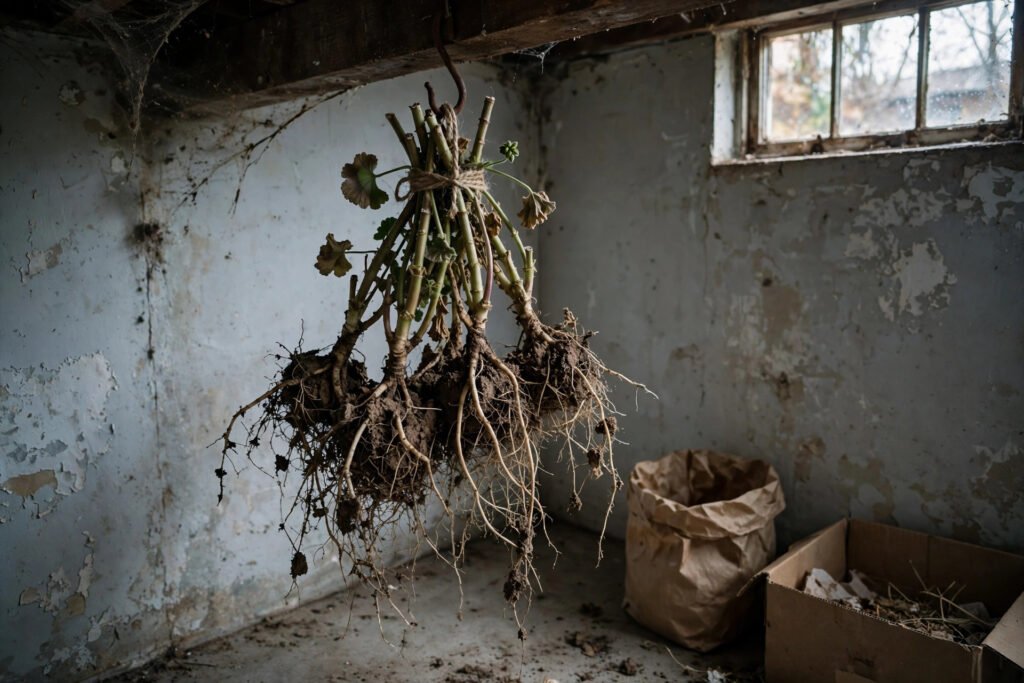
Six bare-root plants fit in one large paper bag or one cardboard box about 18 inches long and 12 inches wide. That is the whole winter footprint for six plants, compared with 4 feet of windowsill for the potted method. Check the bag once a month, and pull out any plant that has gone soft or moldy so it does not spread to the rest. A light mist of water on the roots once a month keeps them from drying out completely, but do not soak them.
In late winter, soak the roots in water for a few hours, pot the plants in fresh mix, and put them in a bright window. New shoots usually show in two to three weeks. Some plants will not wake up, and we expect to lose one or two out of six, which is why we always keep more plants than we need. The ones that do wake up grow fast once spring comes.
This method suits gardeners who grow a lot of geraniums and have a cool storage spot. It does not suit a warm apartment with no basement, since the plants need that cool rest. If the storage spot drops below freezing, the roots will die, so a garage that freezes is not a safe place for the bag.
Method three: take cuttings as a backup
Cuttings are the backup plan that costs nothing. Take 4-inch tip cuttings from healthy stems, strip the lower leaves, and stick the cuttings in damp potting mix or a jar of water. A cutting in mix roots in three to four weeks in a bright window, and a cutting in water shows roots in about two weeks, then goes into mix. We take two cuttings from each favorite plant, so one lost plant still leaves us with a copy.
Cuttings take little space: a dozen cuttings fit in a single tray on a windowsill. They also give us young, vigorous plants for spring, which often bloom earlier than the older plants we carried over whole. The tradeoff is time. Cuttings need attention through winter, with regular watering and pinching to keep them bushy, while bare-root plants sit in a bag and wait.
For herbs that take the same treatment, our guide to growing herbs indoors in winter covers light and watering on a windowsill, and our guide to overwintering rosemary in pots uses the same bring-in-before-frost timing.
Waking geraniums up in spring
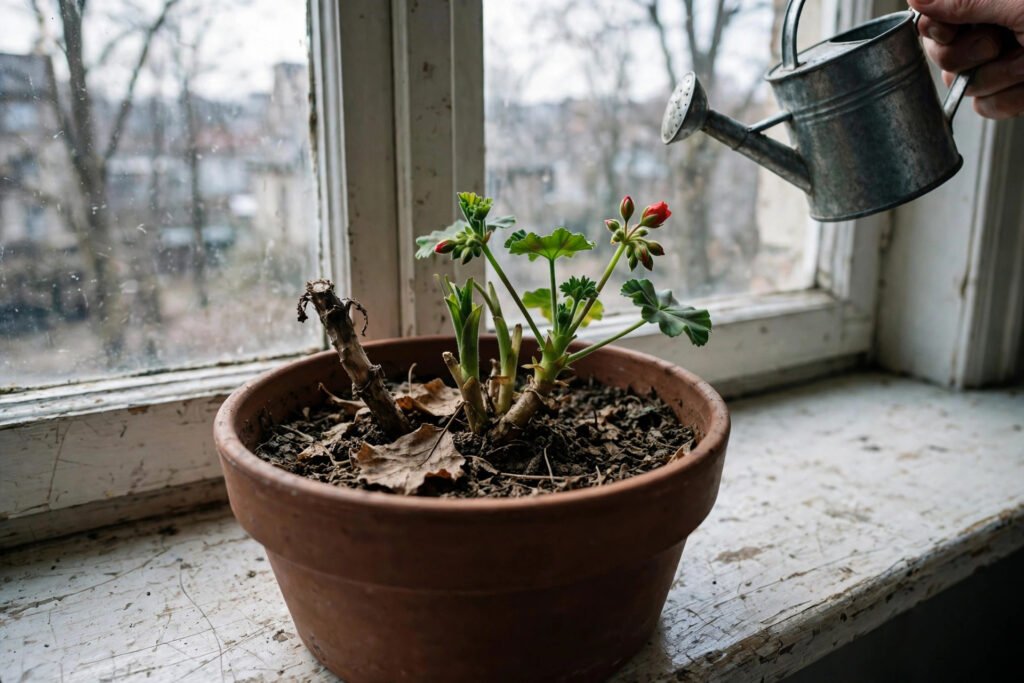
Start waking potted geraniums in March, when the days lengthen. Cut each plant back by about one-third, removing bare stems and any weak growth, and start feeding at half strength every two weeks. Move the plants to the brightest window, and water a little more often as new growth shows. The plants will look bare for a week or two after the cutback, then push out fresh shoots from the leaf joints.
Move the plants outside only after the last frost, and harden them off first. Set them outside in shade for a few hours a day, then bring them back in at night, for about a week. Plants that go straight from a windowsill to full sun will scorch, and plants that go out too early will take a chill that sets them back for weeks. The hardening week is short, and it is worth it.
Bare-root plants need a longer wake-up. Pot them up six to eight weeks before the last frost, keep them warm and bright, and do not move them outside until they have a full set of new leaves. Cuttings that rooted over winter are usually ready to go out with the potted plants, and they often catch up fast once they hit real sun.
Troubleshooting overwintered geraniums
Leaves turn yellow and drop
Yellow leaves in winter usually mean too much water or too little light. Let the soil dry out between waterings, move the plant closer to the window, and remove the yellow leaves so they do not rot on the soil. A few yellow leaves at the bottom of the plant are normal, and they are not a reason to worry.
Stems stretch long and bare
Leggy growth means the plant needs more light. Move it to a brighter window, add a grow light, or cut the long stems back in late winter so the plant branches out. Leggy stems make good cuttings, so nothing is wasted.
Whiteflies or aphids show up indoors
Pests come in on the leaves, so the fix starts before the plant crosses the door. Wash the leaves before bringing plants in, check the undersides once a week, and wash off any pests with a spray of water. A plant that is badly infested indoors is better isolated from the rest, or composted, than treated over and over.
A bare-root plant does not wake up
Soak the roots for a few hours, pot the plant, and give it three weeks in a warm, bright spot. If nothing shows, scratch the stem with a fingernail: green under the bark means the plant is still alive and slow, while brown and dry means it is gone. This is why we keep cuttings as a backup.
Sources & further reading
Geranium care guidance from University of Minnesota Extension covers bringing plants indoors, cutback timing, and bare-root storage for cold climates. Iowa State University Extension publishes overwintering advice for geraniums and other tender plants, and the Royal Horticultural Society offers guidance on overwintering pelargoniums in a frost-free place. Your local cooperative extension office can confirm frost dates and indoor care for your area.