
This post may contain affiliate links. If you buy through links on this page, we may earn a commission at no extra cost to you.
As an Amazon Associate I earn from qualifying purchases.
A panel and a bar both give plants light, but they spread that light in different shapes. A panel is a flat board that lights a square or a rectangle from one unit. A bar is a slim tube that lights a long strip, and bars often run in sets across a shelf. The shape of the shelf decides which form fits better, since a square panel over a long shelf leaves the ends dim, and a long bar over a square tray wastes light past the edges.
We have not tested the products linked here, and we do not present any price as a current store price. Where we give numbers, we state the assumptions in plain text so readers can redo the math with their own shelf size and electricity rate.
Panel vs bar at a glance
| Form | Light shape | Best shelf shape | Units for a 2 ft by 4 ft shelf in our example | Wiring and setup | Limits |
|---|---|---|---|---|---|
| Panel | A square or rectangle of light from one unit | Square tray or short shelf | One panel | One plug and one hang point | Ends of a long shelf sit dim; shape cannot change with the layout |
| Bar | A long strip of light, often in a set | Long shelf or rows of pots | Four 2-foot bars | More mounts and cords than one panel; bars in a set may link together | Gaps between bars can sit dim; one long bar may stretch past a small tray |
Read the unit counts in the table as the result of our stated example, not as a rating from a listing. The coverage section below shows the assumptions behind those counts.
Panel pros and cons
Panel pros start with even light over a square area. One unit covers a tray without dim lines between fixtures, and one plug plus one hang point keeps wiring plain. A panel also suits a grower who wants to hang one fixture, set a timer, and leave the setup alone through the season.
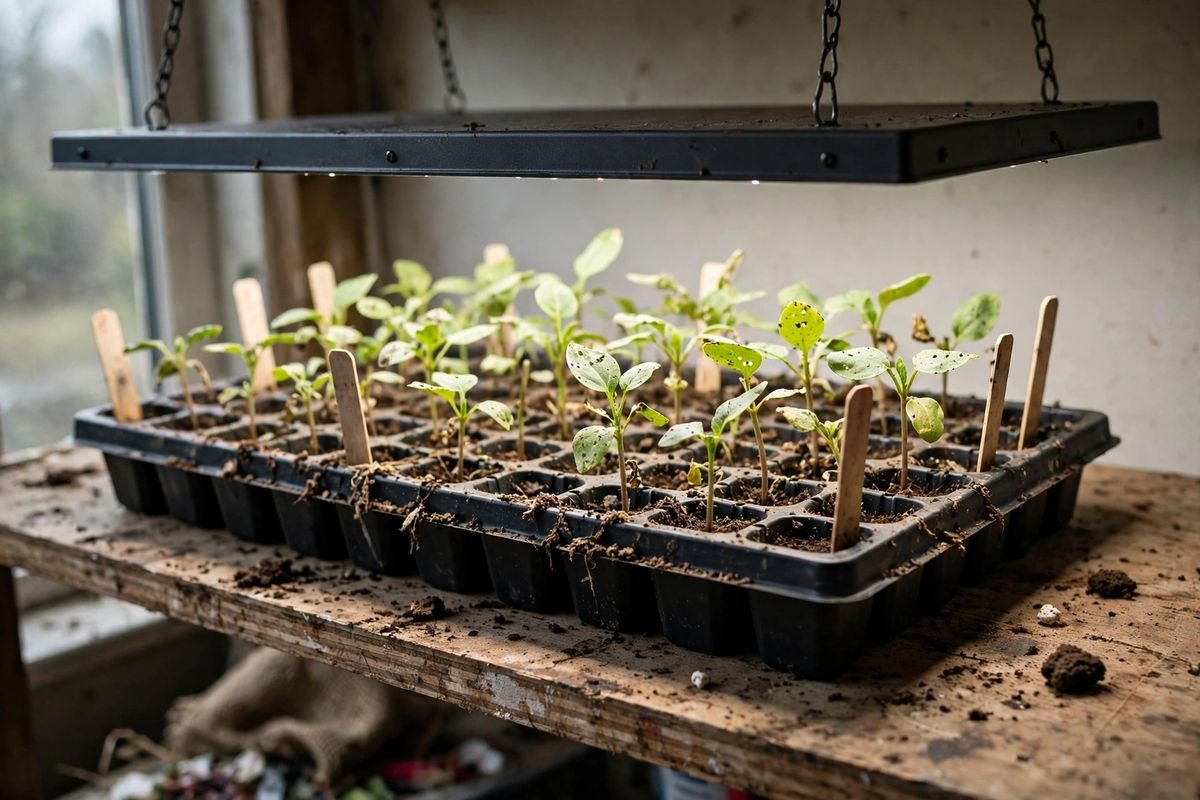
Panel cons show up on long or narrow shelves. A square panel over a 4-foot shelf leaves the ends dim, and a second panel adds cost and a second hang point. A panel also fixes the light shape. If the shelf layout changes from a square tray to a long row, the panel shape no longer matches the plants. Search listings for a grow light panel for seedlings and confirm panel size and hanging method, and whether a timer is included.
Bar pros and cons
Bar pros start with fit. Bars run along a long shelf, and a grower can add or remove a bar as the shelf fills. Bars also spread light in strips that match rows of pots, so a long row gets light along its full length rather than from one center point.
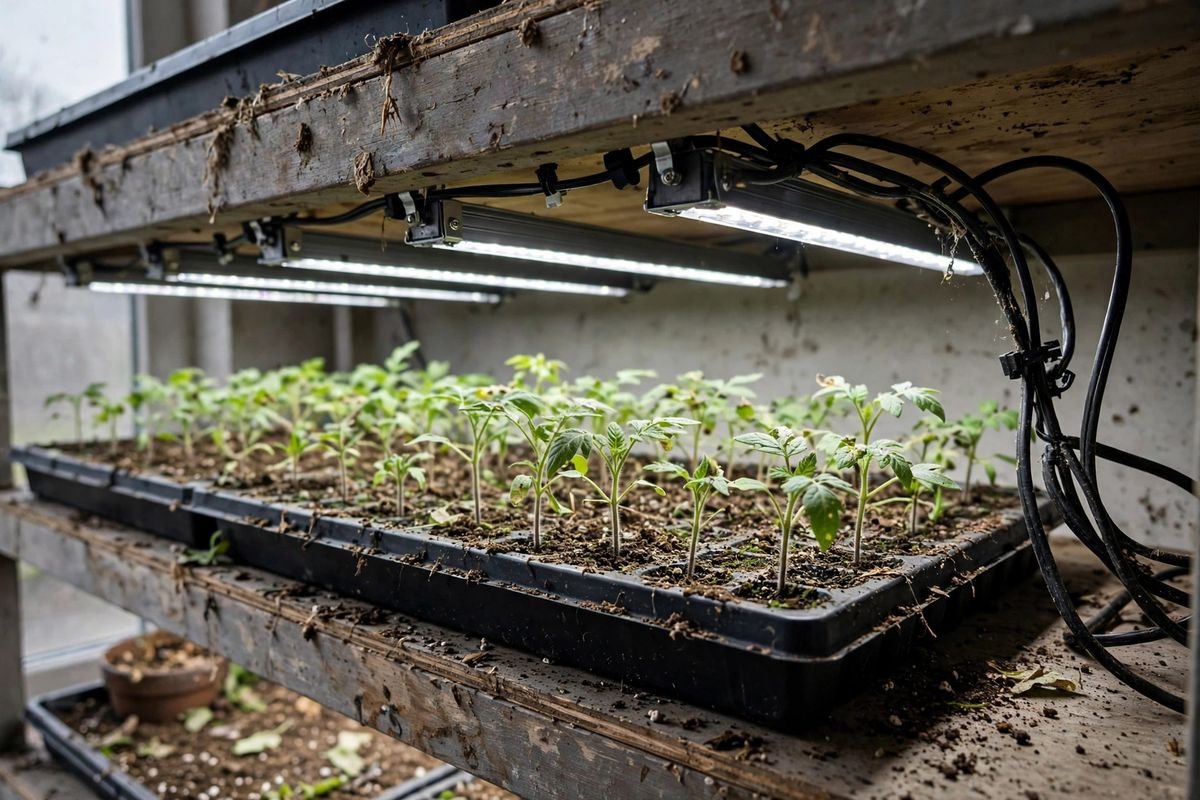
Bar cons show up in wiring and gaps. A set of bars needs more mounts and more cords than one panel, and the space between two bars can sit dimmer than the strip straight below a bar. A single small tray also needs care, since one long bar may stretch past the tray edges and waste light on the shelf around it. Our guide to grow light bars vs bulbs compares bars with bulb forms for a small setup. Search listings for a grow light bar for seedlings and confirm bar length and mounting method, and whether bars in a set link together.
Coverage math for a 2 ft by 4 ft shelf
Take a shelf 2 feet deep and 4 feet long, which gives 8 square feet. Our example uses stated assumptions, not product ratings. Each bar is 2 feet long and lights a strip 2 feet long and 1 foot deep, which gives 2 square feet per bar. The shelf needs two bars along its length and two rows across its depth, which gives four bars in total.
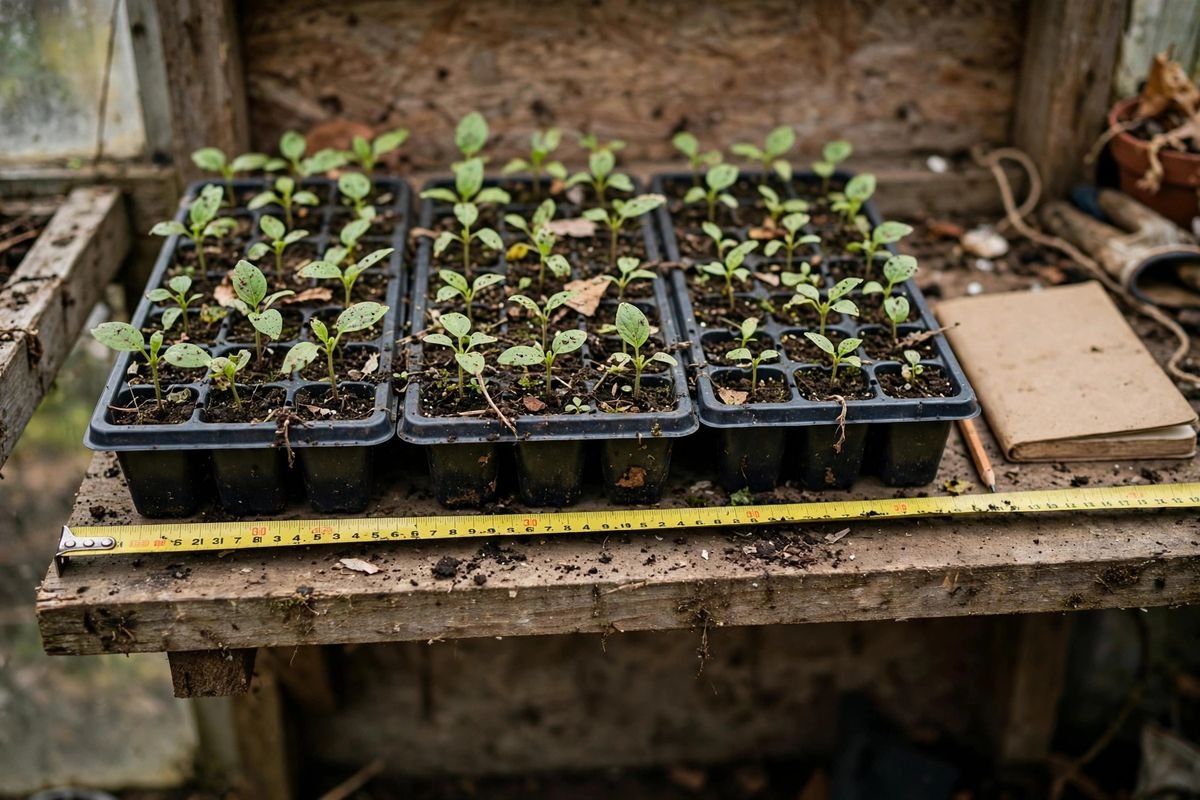
One panel in our example is sized to cover the full 2-foot by 4-foot shelf in one unit. That gives one panel against four bars for the same shelf. The panel wins on unit count and wiring, while the bars win on flexibility, since a grower can start with two bars over half the shelf and add two more when the second half fills. Our guide to how to set up grow lights on a shelving unit covers hanging points and cord routing for a shelf with more than one fixture.
Electricity math for one fixture
Electricity follows the same steps for either form. Take one 40-watt fixture that runs 16 hours a day for 90 days. Divide 40 by 1,000 to get 0.04 kilowatts. Multiply 0.04 by 16 hours and 90 days to get 57.6 kilowatt-hours for the season. At $0.17 per kilowatt-hour, the season costs $9.79 in electricity for one fixture, before any fixture price.
Four bars at 40 watts each would cost four times that amount under the same hours and rate, which gives $39.17 for the season. That comparison only holds if each bar draws 40 watts, so readers should redo the math with the wattage in the listing for the bars they buy. Total wattage, not unit count alone, sets the electricity bill. Our guide to how long grow lights should stay on for seedlings covers daily run times for young plants.
Verdict: panel or bar
Choose a panel if we grow a single tray, want one fixture with one plug, and want even light without dim lines between fixtures. Choose a panel if the shelf is square or close to square, and the tray layout stays put through the season.
Choose a bar if we grow a long shelf, want to add light bar by bar as the shelf fills, and want light that runs along rows of pots. Choose a bar if the shelf holds rows that change through the season, since bars move and regroup better than a fixed panel.

For a corner shelf, choose a panel if the corner holds one square tray and the panel fits the corner without stretching past the edges. Choose a bar if the corner shelf runs long along one wall, since a bar can run along that wall while a square panel leaves one arm of the corner dim. Our guide to best grow lights for seedlings places panels and bars beside bulb forms for a first indoor setup. Our guide to LED grow lights vs fluorescent lights for seedlings covers light types that sit behind either form.
Sources & Further Reading
University of Minnesota Extension, Starting seeds indoors: https://extension.umn.edu/planting-and-growing-guides/starting-seeds-indoors
North Carolina State Extension, Extension Gardener Handbook Chapter 13 Propagation: https://content.ces.ncsu.edu/extension-gardener-handbook/13-propagation