

This post may contain affiliate links. If you buy through links on this page, we may earn a commission at no extra cost to you.
As an Amazon Associate I earn from qualifying purchases.
A raised bed with a cover built in keeps salad greens alive weeks past the first frost, and it starts spring crops weeks before the open beds are ready. The cover is part of the bed: a hinged lid, a set of hoops, or a cold-frame top that comes with the kit and fits the frame it sits on.
That is a different purchase from buying frost covers on their own. Separate covers drape over any bed you already own, and they work well for that job. If you want the separate-cover option, see our roundup of the best frost covers for raised beds and containers. This guide compares beds sold with integrated covers, so you can pick the cover style that fits your crops, your climate, and the way you garden.
The three cover types at a glance
Most beds with covers fall into three styles, plus a fourth that shows up on cheaper kits. A hinged clear lid opens like a car hood and closes in seconds. A hoop house bends plastic over metal or plastic hoops for tall, roomy cover. A cold-frame lid is a low wooden box with a clear top that sits on the bed frame. A fabric cover is a sheet of spun fabric that drapes over the plants and ties to the frame.
| Cover type | Height above the soil | Crops that fit | Frost help | Typical price band for a 4-by-8 bed |
|---|---|---|---|---|
| Hinged clear lid | 8 to 12 inches | Lettuce, spinach, herbs, radishes | Light frosts; needs venting on sunny days | $120 to $250 |
| Hoop house | About 24 inches at the center | Kale, chard, carrots, spring peppers | Several weeks of extra season | $90 to $200 |
| Cold-frame lid | 10 to 14 inches | Lettuce, spinach, herbs, young transplants | Light frosts; holds heat overnight | $150 to $300 |
| Fabric cover | Drapes on the plants | Low greens and herbs | A few degrees on a frosty night | $70 to $150 |
The price bands above are typical listing ranges seen in fall 2026, and prices change, so check the listing before you buy. The bands cover the bed and the cover together, not the cover alone. The rest of this guide takes each type in turn, with its strengths, its limits, and the math that shows what it covers.
Hoop covers: tall and flexible
A hoop house is the tallest cover in this guide. Metal or plastic pipes bend into half circles over the bed, and a sheet of clear plastic stretches over the hoops. On a 4-foot-wide bed, a half-circle hoop rises about 24 inches at the center, which is enough room for kale, chard, and spring peppers. The plastic sides roll up for venting, and the whole cover comes off in minutes when the season turns warm.
Wisconsin Horticulture reports that hoop houses can stretch the growing season by six to eight weeks, which is the longest gain of any cover in this guide. That gain comes with a trade: the plastic wears out. Clear polyethylene lasts about two seasons in full sun before it clouds and tears, so plan on a replacement sheet every couple of years.
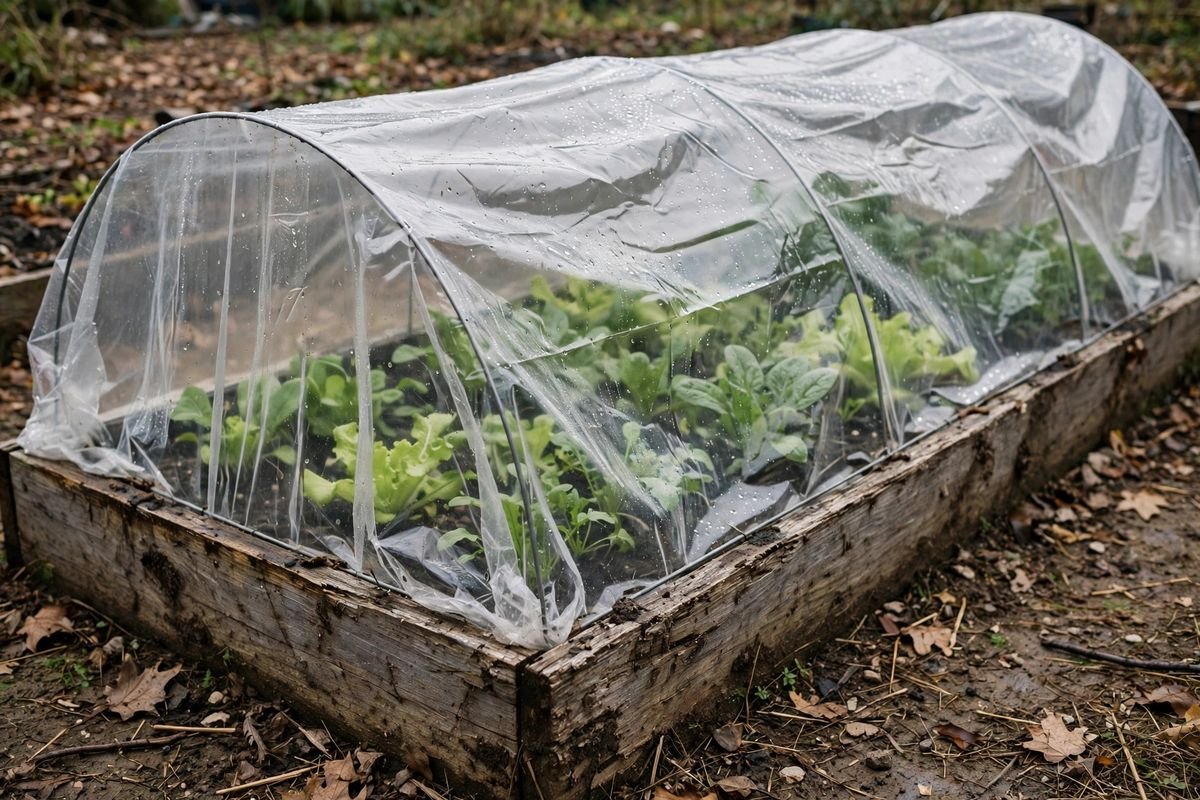
Hoop spacing sets how much wind and snow the cover can take. University of Illinois Extension advises spacing hoops no more than six feet apart, and closer in areas with high wind or heavy snow. On an 8-foot bed, that means at least two hoops, and three is a safer count where snow piles up. Space the hoops closer and the plastic sags less under a wet snow load.
Pros
- Tallest cover here, so it fits the widest range of crops, from low lettuce to knee-high kale.
- Covers the whole bed for the lowest price band, and the plastic is cheap to replace.
- Roll-up sides make venting easy on warm days.
- The cover comes off fast when the bed needs full sun in summer.
Cons
- Plastic tears and clouds after about two seasons, so it needs regular replacement.
- Light hoops can lift in a strong wind unless the plastic is buried or clipped at the base.
- Snow can pool on the plastic between widely spaced hoops.
- The cover has no rigid lid, so it does not hold heat overnight as well as a cold frame.
Hinged lids: open and close in seconds
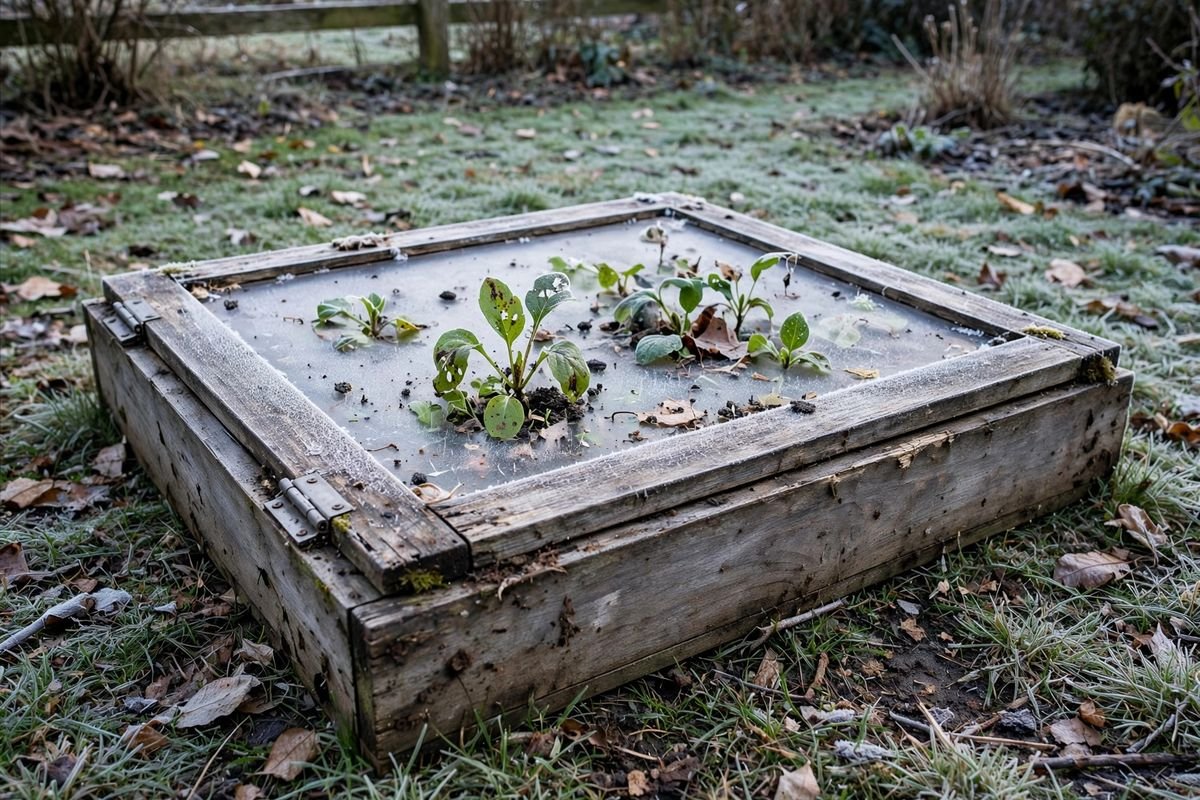
A hinged lid is a clear panel on hinges that opens like a car hood. You lift it to water, weed, or harvest, and you drop it back down before dark. That speed is the whole point. A cover you can open in seconds gets opened every day, and a cover that takes ten minutes to wrestle with stays shut until the plants cook.
The trade is height. A hinged lid sits 8 to 12 inches above the soil, so it fits lettuce, spinach, herbs, and radishes, but not tall kale or peppers. Measure your tallest crop before you buy, and leave an inch or two of spare room for growth.
Heat is the other thing to watch. A closed lid on a sunny day can turn the bed into an oven in an hour. Wisconsin Horticulture notes that cold-frame lids are hinged so they can be propped open for cool air, and that temperatures inside can get hot enough to wilt plants on a sunny day. Prop the lid open a few inches on any morning that promises sun, and close it before the evening chill. If you want a bed with this style of lid, you can browse raised beds with hinged lids on Amazon.
Pros
- Fastest daily use: lift, tend the plants, close, and walk away.
- Rigid lid holds heat overnight better than fabric or loose plastic.
- Clear panel sheds rain and snow, and it keeps cats and birds off the bed.
- No loose parts to store in summer; the lid stays on its hinges.
Cons
- Low height rules out tall crops, so the bed suits salad greens and herbs best.
- A closed lid on a sunny day can overheat plants fast if you forget to vent it.
- The lid adds weight and cost to the bed, and the hinges are the first part to wear out.
- One lid covers one bed, so a garden with four beds needs four lids.
Fabric covers: light and simple
A fabric cover is a sheet of spun polyester or polypropylene that drapes over the plants and ties to the bed frame. It is the lightest cover here, and the cheapest. It also gives the least frost protection, but for a few degrees on a cold night, that is often enough.
Wisconsin Horticulture reports that floating row covers keep the air around plants five to ten degrees warmer than uncovered plants, with frost protection down to about 28 degrees Fahrenheit. North Carolina State Extension puts the frost protection from row covers and low tunnels at four to five degrees. Those numbers fit light frosts and the first cold nights of fall, not a hard freeze.
Fabric covers also block insects while they are on, which is a real bonus for fall greens. The cloth lets light, water, and air through, so you can leave it on for days at a time. The catch is that the fabric rests on the plants, so tender leaves can get crushed where the cloth sags, and a wet fabric can freeze to the leaves on a cold night. Hoops under the fabric fix both problems, and many kits sell the hoops as an add-on.

Pros
- Cheapest cover here, and the lightest to store when the season ends.
- Lets light, water, and air through, so it can stay on for days.
- Blocks insects while it protects from frost.
- Easy to lift and check the plants underneath.
Cons
- Least frost protection of the four types, so it fails in a hard freeze.
- Drapes on the plants, which can crush tender leaves and freeze to them on cold nights.
- Tears and frays after a season or two of outdoor use.
- Needs clips or weights to stay put in wind.
Coverage math for a 4-by-8 bed
A standard 4-by-8-foot bed gives 32 square feet of planting space. The cover you pick has to span that whole bed, and the size of the cover is not the same as the size of the bed. Here is the math, worked out for each type, with the assumptions stated so you can redo it for your own bed size.
A hinged lid or a cold-frame lid covers the bed footprint exactly: 4 feet by 8 feet, or 32 square feet of lid. A hoop house needs more material, because the plastic arcs over the top. On a 4-foot-wide bed, the hoops form a half circle with a radius of 2 feet, and the plastic surface is half the circumference times the length: 3.14 times 2 feet times 8 feet, which is about 50 square feet of plastic. That is half again as much material as a flat lid, and it explains why replacement plastic for a hoop house costs more than a single lid panel.
Height decides which crops fit. The table below lists the height of common crops at full size and the cover that fits them. Crop heights are typical mature heights for garden varieties, and they vary by variety and season.
| Crop | Height at full size | Cover that fits |
|---|---|---|
| Lettuce | 6 to 8 inches | Hinged lid, cold-frame lid, hoop house, fabric |
| Spinach | 6 to 10 inches | Hinged lid, cold-frame lid, hoop house, fabric |
| Radishes | 6 to 8 inches | Hinged lid, cold-frame lid, hoop house, fabric |
| Carrots (tops) | About 12 inches | Cold-frame lid, hoop house |
| Kale | 12 to 18 inches | Hoop house |
| Swiss chard | 12 to 18 inches | Hoop house |
| Peppers | 18 to 24 inches | Hoop house |
| Tomatoes | 36 inches and taller | None of these covers |
That table is the fastest way to pick a cover. If your bed grows salad greens, any of the four types works. If it grows kale and chard through winter, only a hoop house is tall enough. If it grows tomatoes, no bed cover in this guide fits, and a tall tunnel or a greenhouse is the honest answer.
Cost per season
Sticker price hides the real cost, because covers wear out at different speeds. The table below works out the cost per season for each type. It uses the middle of each price band, and the assumptions are stated here: the wood or metal frame lasts five seasons, hoop-house plastic costs about $30 and needs replacing every two seasons, and fabric costs about $25 and needs replacing every two seasons. Prices change, so treat these as planning numbers, not quotes.
| Cover type | Mid-band price | Five-season cost | Cost per season |
|---|---|---|---|
| Hinged clear lid | $185 | $185 | $37 |
| Hoop house | $145 | $205 | $41 |
| Cold-frame lid | $225 | $225 | $45 |
| Fabric cover | $110 | $160 | $32 |
The five-season cost for a hoop house is the $145 frame plus two plastic replacements at $30 each, which is $205, or $41 per season. The fabric cover is the $110 bed plus two fabric replacements at $25 each, which is $160, or $32 per season. The hinged lid and the cold-frame lid need no regular replacement part, so their five-season cost is the purchase price alone.
Fabric wins on cost per season, and the cold-frame lid costs the most. The gap is small, about $13 a season between the cheapest and the priciest, so cost should not drive the choice. Pick by crop height and by how much frost you need to beat, and let the cost table settle a close call. If you want to compare cold-frame kits on their own, you can browse cold frame raised bed kits on Amazon.
What to check before you buy
Bed depth comes first. A bed that is 6 inches deep holds little soil under a low lid, and the soil dries out fast in a covered bed. A depth of 10 to 12 inches gives roots room and holds moisture longer. Check the depth on the listing, because photos make shallow beds look deep.
Lid material comes next. Clear polycarbonate panels last longer than thin plastic film, and they shed snow better. Glass panels give the clearest view and the best heat hold, but they are heavy and they break. If the listing does not name the panel material, ask the seller before you buy.
Venting matters more than most buyers expect. A cover without a vent or a prop-open hinge will cook lettuce on the first sunny day of spring. Look for a lid that props open at two or three heights, or a hoop house with roll-up sides. Automatic vent openers that lift the lid as the air warms exist for cold frames, and they are worth the extra cost if you are away from the garden during the day.
Wind and snow ratings are the last check. A hoop house needs clips or buried plastic at the base, or the first storm will lift it. A hinged lid needs a latch or a prop that holds it shut in wind. In snow country, pick hoops spaced three feet apart and a lid that sheds snow instead of holding it. For more on keeping beds safe in cold weather, see our guide on how to protect raised beds from frost.
How much frost protection to expect
None of these covers makes a bed frost-proof. They buy time, and the amount of time depends on the cover and the cold. University of Illinois Extension reports that cold frames expand the growing season by one to three months. Wisconsin Horticulture puts the hoop-house gain at six to eight weeks. Row covers and fabric give the least, a few degrees on a frosty night.
Those gains assume the cover is closed before dark and vented in the morning. A cover left open overnight gives no protection, and a cover left shut on a sunny day can cook the plants it was meant to protect. The routine is simple: close before the evening chill, open or vent when the sun hits the bed, and close again before dark.
Use your local frost dates and regional planting guidance — not your USDA hardiness zone alone — to choose planting dates. A cover stretches the season around your frost dates, but it does not move them. Plant fall greens so they are near full size by your first frost date, and let the cover carry them through the cold weeks after it. For a closer look at the cold-frame option on its own, see our guide to the best cold frames for small gardens, and for the mini-greenhouse comparison, see our guide on mini greenhouse versus cold frame.
The verdict
Choose a hoop house if you grow tall greens through fall and winter. It is the only cover here that fits kale, chard, and peppers, and it gives the longest season gain for the money. Accept the plastic replacement every two seasons as part of the deal.
Choose a hinged lid if you grow salad greens and you want the fastest daily routine. Lift, tend, close, and the bed looks after itself. Keep the crops low, and vent the lid on sunny mornings.
Choose a cold-frame lid if you want the sturdiest bed and the best overnight heat hold for low crops. It costs the most per season, and it earns that cost in years when the frosts come early and hard.
Choose a fabric cover if your budget is tight and your frosts are light. It is the cheapest way to gain a few degrees and keep insects off fall greens, and it stores in a drawer when the season ends.
Troubleshooting
The plants wilt under a closed lid on a sunny day
Open the lid at once and water the bed if the soil is dry. A closed cover in full sun can heat the air inside past 90 degrees in an hour. After that, prop the lid open a few inches every morning that promises sun, and fit an automatic vent opener if you are away during the day.
The cover blows off in a storm
Anchor the cover at the base. Bury hoop-house plastic under a few inches of soil along the sides, or clip it to the frame with clamps made for the pipe size. Latch hinged lids shut in wind, and weigh fabric covers with boards or sandbags at the edges. A cover that lifts once will lift again until it is anchored.
Snow pools on the cover and sags it
Brush snow off the cover after each snowfall, and space hoops closer together before winter. On a hoop house, three hoops on an 8-foot bed carry snow far better than two. A flat lid sheds snow on its own if the panel slopes, so check the slope on the listing before you buy.
Condensation drips on the plants and mold follows
Vent the cover in the morning so damp air escapes, and water early in the day so the soil surface dries before dark. North Carolina State Extension advises watering cold frames early in the day for the same reason: the near-airtight cover slows evaporation, and wet leaves invite disease. If mold keeps coming back, vent longer each day and thin the plants for airflow.
Slugs gather under a fabric cover
Fabric covers hold damp air at soil level, and slugs like that. Lift the cover in the morning, check under the leaves, and remove slugs by hand. A ring of coarse bark or crushed eggshells around the bed edge helps, and keeping the cover off on dry days breaks the damp cycle slugs need.
Frequently asked questions
Do beds with covers work in a hard freeze?
Only partly. A closed cover with a blanket or straw bales over it can carry hardy greens through a light freeze, but no cover in this guide holds tender crops through a long stretch below 28 degrees. Treat covers as season stretchers, not as heated greenhouses, and harvest tender crops before a hard freeze arrives.
Can I leave the cover on all winter?
A cold-frame lid or a hoop house can stay on all winter over hardy greens, with venting on sunny days. A fabric cover should come off in heavy snow, because wet fabric freezes to the plants and tears when you pull it free. Check the bed after each storm, and clear snow off the cover so it does not sag.
Which cover is best for a first raised bed?
A hinged lid, for most first-time buyers. It is simple to use, it holds heat well, and it teaches the venting habit fast. If your main crop is kale or chard, pick a hoop house instead, because a hinged lid is too low for tall greens.
Do I still need to water a covered bed?
Yes, and more often than you expect. A cover blocks rain, so the bed gets water only from you. Check the soil twice a week and water in the morning so the leaves dry before dark. A covered bed that never gets watered dries out even while it looks damp under the lid.
Sources and further reading
- University of Wisconsin Horticulture, Division of Extension, Extending the Garden Season
- North Carolina State Extension, Appendix E: Season Extenders and Greenhouses
- University of Illinois Extension, Cold Frames Extend the Garden Season
Related reading: Best Frost Covers for Raised Beds and Containers, How to Protect Raised Beds From Frost, Best Cold Frames for Small Gardens, Mini Greenhouse Versus Cold Frame