
This post may contain affiliate links. If you buy through links on this page, we may earn a commission at no extra cost to you.
As an Amazon Associate I earn from qualifying purchases.
A wheelbarrow works until the load gets wide. Bags of leaves, a pile of mulch, and a stack of pavers all sit awkwardly in a narrow barrow, and each trip carries less than the garden needs moved. A garden cart fixes that with a wide, low bed and four wheels, so a full load rolls instead of tipping. For a small yard, the right cart is the one that fits the gate, the garage, and the jobs the garden actually produces.
The wrong cart still makes that work hard. A bed too big for the paths scrapes fences, solid wheels sink in soft soil, and a cart that will not fold eats a whole wall of garage space. This guide compares the five cart types a home gardener is most likely to meet, gives capacity and wheel guidance, and works through cost-per-trip math for one season of hauling.
The five types at a glance
Two bed materials do most of the work in this guide: steel and poly. Steel beds carry heavy, sharp loads such as stone and pavers without flexing. Poly beds resist rust and wash clean after soil and compost. Dump and flatbed designs add a second split: a dump bed tilts to drop its load, while a flatbed carries long or wide loads flat. The table below gives the short version, and the sections after it fill in the tradeoffs.
| Type | Bed and wheels | Load it carries | Best for | Main drawback |
|---|---|---|---|---|
| Steel dump cart | Steel bed that tilts, large pneumatic wheels | About 10 cubic feet, up to 400 pounds | Mulch, soil, and compost on lawns and paths | Heavy to pull when full and can rust if left wet |
| Poly dump cart | Plastic bed that tilts, pneumatic or solid wheels | About 10 cubic feet, up to 300 pounds | Wet soil and compost that would rust steel | Bed can crack under sharp stone loads |
| Flatbed wagon | Flat steel or wood bed, four wheels, fixed sides | About 8 cubic feet, up to 400 pounds | Pots, pavers, and long boards | No dump function, so unloading is by hand |
| Folding flatbed cart | Flat bed that folds down, small solid wheels | About 5 cubic feet, up to 250 pounds | Small yards and garages with little storage | Small wheels struggle on soft lawns |
| Mesh-sided wagon | Steel mesh sides, pneumatic wheels, pull handle | About 7 cubic feet, up to 300 pounds | Leaves, brush, and bulky light loads | Fine soil falls through the mesh sides |
Capacity is the first filter. A cart that cannot finish a mulch delivery in a sensible number of trips is the wrong tool for the yard, and a cart bought for leaves should not be the one asked to carry stone.
Steel vs poly beds
A steel bed is the workhorse choice. It takes sharp loads such as broken pavers and rough stone without denting, and it holds its shape under a heavy load of wet soil. The cost is rust. A steel bed left out in rain or stored damp will spot and then rust through, so it needs to be kept dry and wiped down after wet loads.
A poly bed trades some strength for easy care. It will not rust, it washes clean with a hose, and it suits compost and wet soil that would stain or corrode steel. The cost is strength under sharp loads. A poly bed can crack if a heavy paver is dropped into it, and it flexes more under a full load of wet soil. For a garden that moves mostly soil, mulch, and compost, poly is the lower-care pick. For a garden that moves stone and pavers, steel is the safer pick.
If you need a steel dump cart, you can browse steel garden dump carts on Amazon. If you need a poly dump cart, you can browse poly garden dump carts on Amazon. We have not tested the products linked here, and we give no current store prices. Check each listing for current details before you buy.
Wheels: pneumatic vs solid
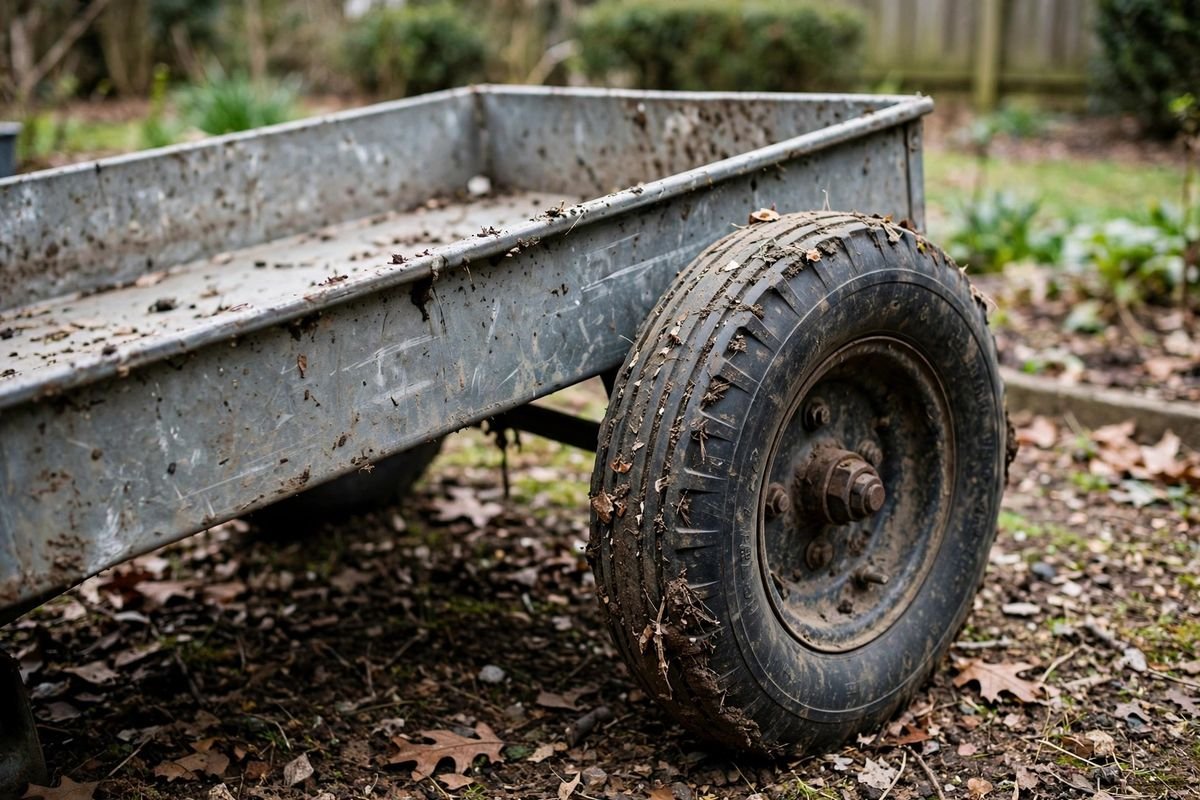
Wheels decide how a loaded cart behaves on grass. Pneumatic tires, the air-filled kind, spread the load over soft ground and roll over roots and bumps without jolting the bed. They suit lawns, bare soil, and uneven paths, which is most of a small yard. The cost is upkeep: a pneumatic tire can go flat, and it needs air now and then. Keep a small pump in the garage if the cart runs on pneumatic tires.
Solid tires never go flat and need no air. They suit paved paths, driveways, and flat yards where the ground is firm. On soft lawns they sink and drag, and on rough ground they pass every bump straight into the load. A cart with small solid wheels is the worst of both, since it sinks and it jolts. If the yard is mostly lawn, pick pneumatic wheels. If the yard is mostly paving, solid wheels are fine.
Wheel size matters as much as wheel type. A wheel of 10 inches or more rolls over roots and edging stones that stop a 6-inch wheel. Wide tires spread weight better than narrow ones on soft soil. When a listing gives no wheel size, treat that as a gap in the listing rather than a sign the wheels are large.
Dump vs flatbed
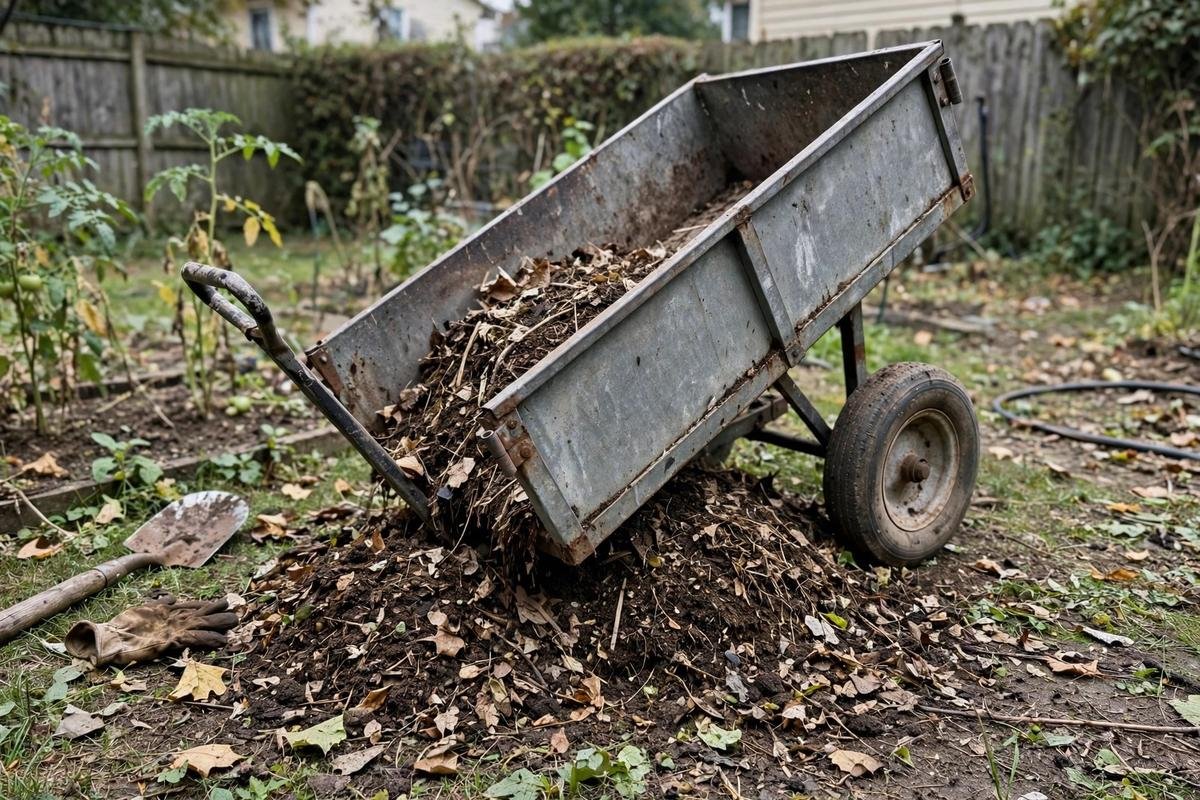
A dump bed tilts on a pivot so the load slides out without lifting. That saves the back on soil, mulch, and compost, where each load is heavy and loose. The pivot is also the weak point: it can wear, and a bed that sticks halfway through a dump needs a shove to finish. Check the listing for a latch that holds the bed flat while hauling and releases cleanly at the pile.
A flatbed has no pivot and no latch. It carries wide, long, or awkward loads that would not sit in a dump bed: potted plants, pavers, boards, and bagged soil stacked flat. Unloading is by hand, which is slower, but nothing can jam and nothing wears at a pivot. A flatbed with removable sides does both jobs halfway, since the sides come off for wide loads and go back on for loose ones.
The choice comes down to what the cart moves most. If most loads are loose material dumped on a pile, a dump bed earns its place. If most loads are pots, pavers, and boards, a flatbed earns its place.
Folding and storage
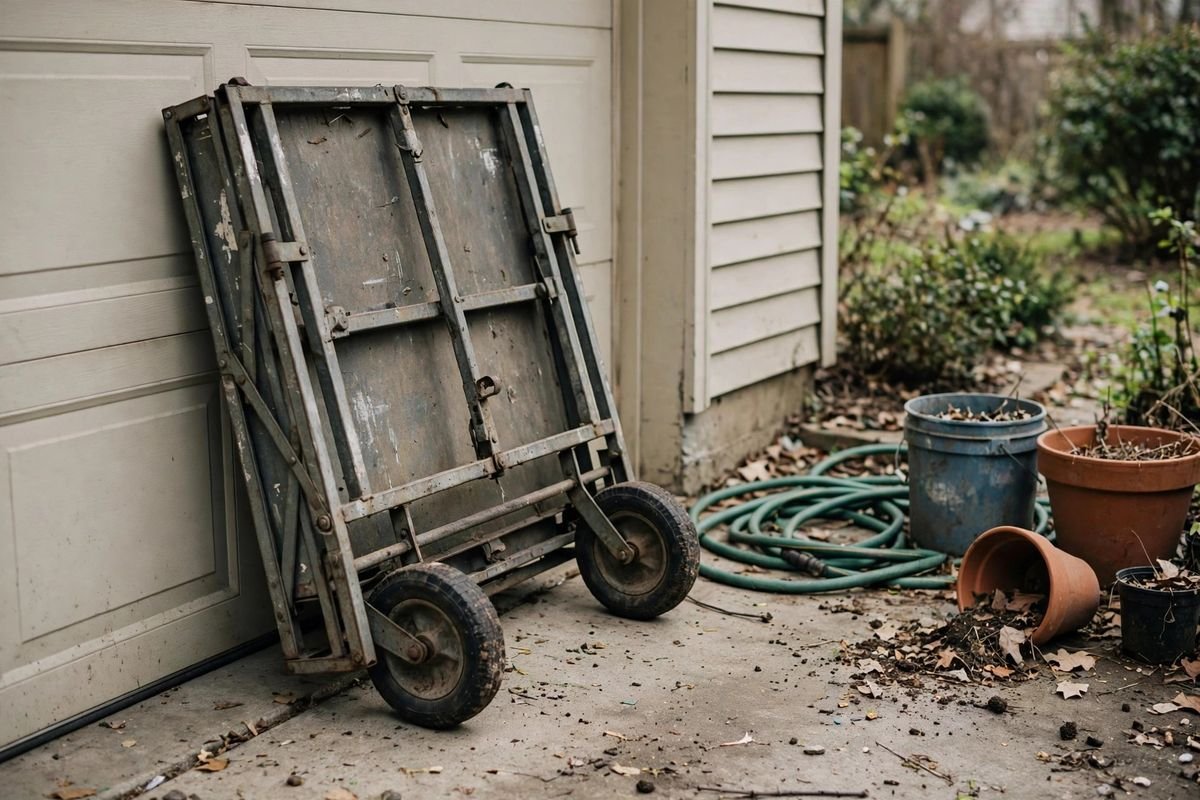
Storage decides the cart more often than capacity does in a small yard. A full-size dump cart needs about four feet of wall or floor, and a flatbed wagon needs about the same. A folding flatbed cart collapses to a few inches thick and leans against a wall, which suits a garage that already holds bikes, tools, and bins. The cost is capacity and wheel size: folding carts carry less and roll on smaller wheels. If you need a folding cart, you can browse folding garden carts on Amazon.
Measure before buying. Measure the gate the cart must pass through, the path between beds, and the garage space where it will live. A cart that is two inches wider than the gate is useless, and a cart that blocks the garage door will be left outside, where it rusts. For storage in a tight space, see our guide on how to store garden tools in a small garage.
Which cart fits which yard
Choose a steel dump cart if the yard moves soil, mulch, and compost in volume and has lawn paths to cross. It is the one cart that handles the bulk of hauling in a small yard.
Choose a poly dump cart if the loads are wet soil and compost and the cart will live outside or be hosed down often. It gives up some strength under stone, but it will not rust.
Choose a flatbed wagon if the loads are pots, pavers, and boards rather than loose material. It carries wide loads flat and has no pivot to wear.
Choose a folding flatbed cart if storage space is the limit and the loads are light. It suits a small yard where the cart must lean against a wall between uses.
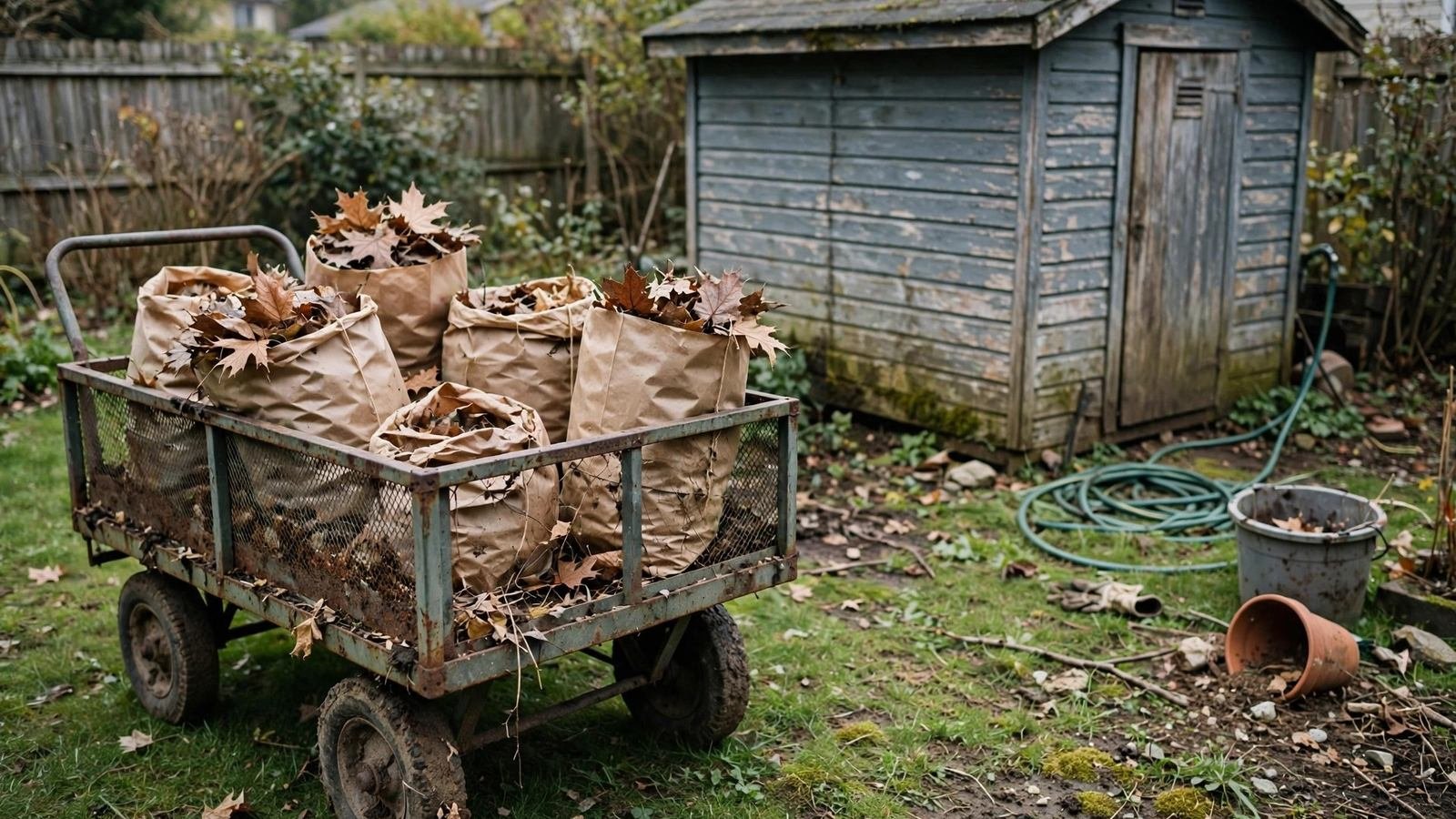
Choose a mesh-sided wagon if the main job is moving leaves and brush. The mesh sides hold bulky light loads, and the open sides let air through so leaves do not blow out. For the leaf work itself, see our guide on what to do with fallen leaves, and for mulching beds before winter, see our guide on how to mulch perennials for winter.
Our worked example: cost per trip for one season of hauling
Here is the cost-per-trip math for one small yard that moves 10 cubic yards of mulch and compost in a season, plus a fall leaf cleanup. Every price and lifespan below is a stated example figure for the math, not a store price. Change any figure and the result changes with it.
Assumptions: the yard moves 10 cubic yards of loose material a season, which is 270 cubic feet; each cart load holds 10 cubic feet for a dump cart, 8 cubic feet for a flatbed wagon, 5 cubic feet for a folding flatbed cart, and 7 cubic feet for a mesh-sided wagon; the yard makes about 40 trips a season in total; example purchase prices are 140 dollars for a steel dump cart, 110 dollars for a poly dump cart, 90 dollars for a flatbed wagon, 80 dollars for a folding flatbed cart, and 70 dollars for a mesh-sided wagon; example useful lives are 12 seasons for a steel dump cart, 10 seasons for a poly dump cart, 8 seasons for a flatbed wagon, and 6 seasons each for a folding flatbed cart and a mesh-sided wagon.
| Type | Example price | Example life | Trips over its life | Cost per trip |
|---|---|---|---|---|
| Steel dump cart | $140 | 12 seasons | 480 trips | $0.29 |
| Poly dump cart | $110 | 10 seasons | 400 trips | $0.28 |
| Flatbed wagon | $90 | 8 seasons | 320 trips | $0.28 |
| Folding flatbed cart | $80 | 6 seasons | 240 trips | $0.33 |
| Mesh-sided wagon | $70 | 6 seasons | 240 trips | $0.29 |
The math is simple. Divide the purchase price by the number of trips the cart makes over its life. For the steel dump cart, 140 dollars divided by 480 trips is 0.29 dollars per trip. For the folding flatbed cart, 80 dollars divided by 240 trips is 0.33 dollars per trip. The per-trip costs sit close together, so price alone should not decide the pick. Capacity and fit matter more than a few cents per trip.
Trips saved are the real payoff. Moving 270 cubic feet at 10 cubic feet per cart load takes 27 trips. The same material moved in a wheelbarrow holding 6 cubic feet takes 45 trips. The cart saves 18 trips, and at 8 minutes per round trip that saves about 144 minutes, or about two and a half hours, for each 10 cubic yards moved. That time saving is the reason a cart earns its place in a small yard, and it grows with every load the garden produces.
Care and upkeep
A cart lasts longer when it is cleaned and stored dry. Hose off soil and compost after wet loads, and let the bed dry before it goes back in the garage. Oil the pivot on a dump cart once a season, and check the latch before the first heavy load of spring. For the yearly upkeep round, see our garden tool maintenance checklist.
Check the tires each spring. Pump pneumatic tires to the pressure printed on the sidewall, and replace a tire that will not hold air rather than hauling on a flat one, which wears the rim and makes the cart pull to one side. Our guide on how to keep hand tools from rusting covers the same rust care used on steel cart beds, and our guide on how to remove rust from garden tools covers beds that have already spotted.
Store the cart under cover. A cart left outside rusts, its tires crack in sun, and its bed fills with rain. A folding cart leans against a garage wall, and a full-size cart parks with its bed tipped up so rain runs off.
Troubleshooting
The cart pulls to one side when loaded
A cart that pulls to one side usually has one soft tire or a bent axle. Check tire pressure on both sides first, and pump the soft tire to the printed pressure. If the tires match and the cart still pulls, check the axle for a bend and the wheels for wobble, and replace the bent part rather than hauling against it.
The dump bed sticks halfway
A bed that sticks usually has a dry pivot or a bent latch. Oil the pivot, clean grit from the latch, and check that the bed sits square on its frame. A bed that still sticks after oiling has a bent pivot pin, which should be replaced before the next heavy load.
The wheels sink in the lawn
Sinking wheels mean the tires are too small or too narrow for soft ground, or the load is too heavy for the yard after rain. Wait for the lawn to dry, split the load into two trips, and consider wider pneumatic tires on the next cart. Hauling on wet lawns also ruts the grass, so a dry day is worth waiting for.
The bed rusts after one season
Rust after one season usually means the cart was stored wet or left outside. Scrub the rust, dry the bed, and coat it with a rust-inhibiting paint made for metal. Store the cart under cover from now on, and hose it off after wet loads instead of letting soil sit in the bed.
Frequently asked questions
What size garden cart do I need for a small yard?
A bed of about 7 to 10 cubic feet suits most small yards. It carries a full load of mulch or leaves without being too wide for gates and paths. Measure the gate first, since a cart wider than the gate is useless.
Are pneumatic tires better than solid tires?
On lawns and soft soil, yes. Pneumatic tires spread the load and roll over roots without jolting the bed. On paved paths and driveways, solid tires are fine and never go flat.
Can a garden cart replace a wheelbarrow?
For wide, bulky loads it can. For narrow paths, stairs, and tipping a load into a raised bed, a wheelbarrow still works better, since a four-wheel cart cannot tip and turn in tight space.
How much weight can a garden cart carry?
Most home garden carts carry 250 to 400 pounds, but the limit varies by type and by listing. Check the listing for a stated weight limit, and treat a cart loaded past its limit as a cart that will wear out early.
Sources and further reading
- U.S. Environmental Protection Agency, Composting at Home
- Cornell Waste Management Institute, Composting
- University of Minnesota Extension, Pruning Trees and Shrubs
Related reading: What to Do With Fallen Leaves, How to Mulch Perennials for Winter, How to Store Garden Tools in a Small Garage, Garden Tool Maintenance Checklist
By the Pot and Plot Team