

This post may contain affiliate links. If you buy through links on this page, we may earn a commission at no extra cost to you.
As an Amazon Associate I earn from qualifying purchases.
Every fall, trees drop a free garden supply onto the lawn, and most gardeners pay to haul it away. A single mature tree can shed enough leaves to mulch a whole bed, feed a compost pile for a year, and shelter the insects and small animals that live in the garden. Bagging every leaf and sending it to the curb wastes that supply, and it costs time and money to do it.
This guide works through the sensible uses for fallen leaves: mulch, compost, leaf mold, and habitat. It also covers the cases where leaves should come off the lawn, because a thick wet mat of leaves can smother grass and breed disease. The worked example below runs the volume math for one tree, so you can see how far your own leaf fall goes. For the wider fall routine, see our guide on fall garden cleanup.
Why leaves fall, and what they do on the ground
Trees drop leaves to save water and energy over winter, and the fallen leaves start breaking down where they land. Fungi, bacteria, worms, and insects feed on them, and the nutrients in the leaves return to the soil over months. A layer of leaves also holds moisture in the soil, softens the impact of rain, and gives cover to ground beetles, spiders, and overwintering pollinators.
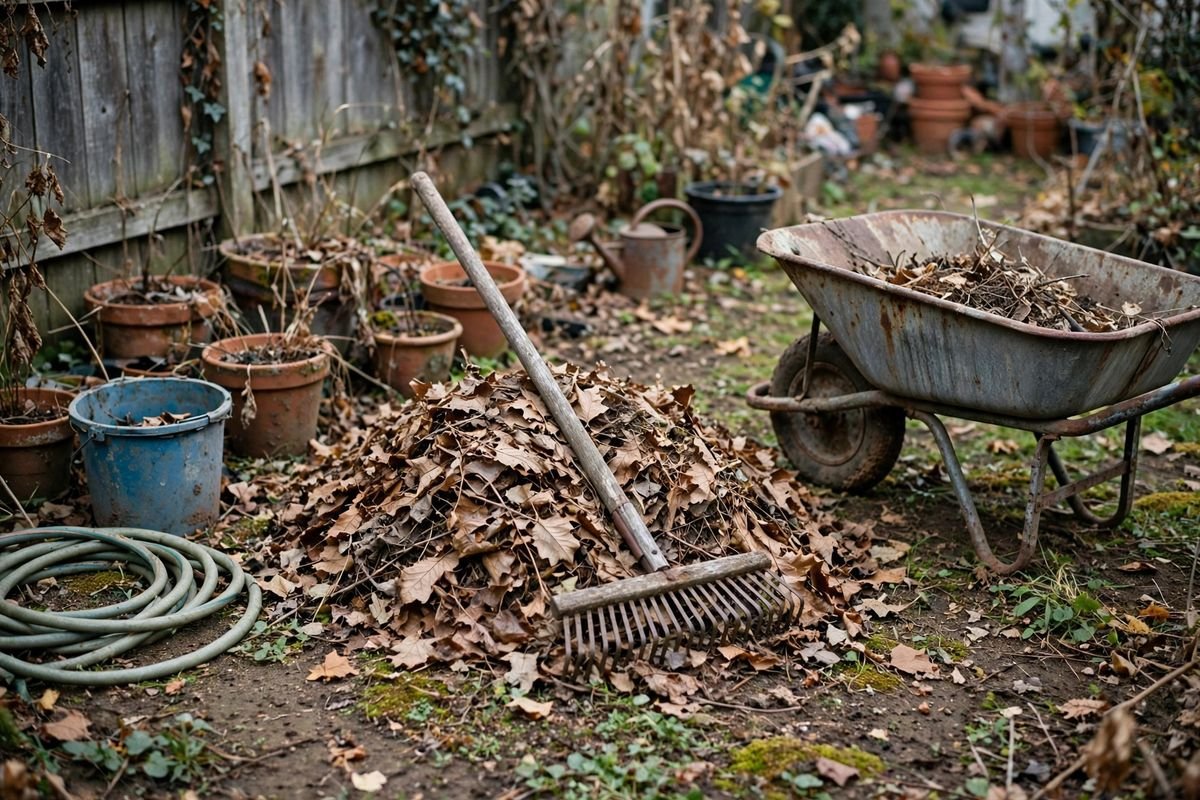
Left alone in a thin layer, leaves are part of the garden cycle, and a lawn can absorb a light scattering of them without any harm. The trouble starts when leaves pile up thick and wet, especially maple and oak leaves that mat together. A thick mat blocks light and air from the grass below, holds damp against the crowns, and can leave dead patches by spring. The fix is not to remove every leaf: it is to move the thick piles to places where they do good, and leave only a thin layer where grass grows.
Use fallen leaves as mulch
Shredded leaves make one of the best free mulches in the garden. Run a mower over dry leaves to chop them, or pass them through a leaf shredder, and spread the pieces 2 to 3 inches deep around perennials, shrubs, and trees. Shredded leaves stay in place better than whole leaves, they let water through, and they break down into humus over a season. Whole leaves can work too, but they tend to mat and shed water, so shredding is worth the extra pass.

Keep mulch a few inches away from stems and trunks, the same rule as with any mulch, so damp does not sit against bark. A leaf mulch layer also feeds the soil as it breaks down: worms pull the pieces underground, and the soil under a leaf mulch bed is usually darker and softer by spring. For the full winter mulching routine, see our guide on how to mulch perennials for winter.
Turn leaves into compost
Leaves are a carbon-rich compost ingredient, the brown half of the pile, and a fall leaf pile is the easiest way to stock up on browns for the whole year. Mix one part fresh green material, such as grass clippings or kitchen scraps, with two to three parts shredded leaves, add water until the pile feels like a wrung-out sponge, and turn it every few weeks. Shredded leaves compost far faster than whole ones, because the smaller pieces give microbes more surface to work on.

Oak leaves and other slow leaves can take a year or more to break down in a cold pile, and shredding plus regular turning speeds them up. If you have more leaves than your compost bin can take, bag the extra shredded leaves dry and store them for the year: a bag of dry leaves is the brown material you will reach for every time you add kitchen scraps. For the full home routine, see our guide on how to make compost at home, and for small yards, how to start composting in a small backyard.
Make leaf mold, the quiet soil builder
Leaf mold is a pile of leaves left to rot on its own, with no green material and no turning. It takes one to two years, and the result is a dark, crumbly material that holds water like a sponge and opens up heavy soil. Pile damp leaves in a wire bin or a corner of the yard, keep them moist, and walk away. Fungi do the work, slowly, and the finished leaf mold is a soil amendment rather than a fertilizer: it improves structure and water holding, and it feeds the soil life that feeds your plants.
Leaf mold suits gardeners who have more leaves than compost space, because it asks for almost no work and no balancing of greens and browns. Use it as a top dressing on beds, mix it into potting soil at about one part in four, or spread it under shrubs. For the step-by-step method, see our guide on how to make leaf mold.
Leave some leaves for wildlife
Here is the contrarian angle the tidy garden often misses: not every leaf must be removed. Fireflies spend their larval stage in leaf litter. Native bees and butterflies overwinter as pupae and adults tucked under fallen leaves. Ground beetles, spiders, and salamanders hunt and shelter in the same layer. Raking a yard bare in fall clears out a whole winter habitat, and the garden loses the pest eaters that would have worked for free in spring.
You do not have to leave the whole yard messy to help. Keep the lawn clear enough that the grass stays healthy, and leave the leaves in the beds, under shrubs, and along the back fence, where they form habitat without smothering anything. A leaf pile in a quiet corner is a winter home for insects and a hunting ground for birds, and it costs nothing to keep. If your town requires curbside leaf pickup, leave what the beds can use and send only the surplus to the curb.
Our worked example: the leaf math for one maple
How far does one tree’s leaf fall go? The table below runs the numbers for one medium maple, using assumptions we state here so you can rerun the math for your own trees. Assumptions: the tree drops about 200 cubic feet of loose leaves in a season, a standard yard waste bag holds about 4 cubic feet of loose leaves, shredding compresses leaves to about one third of their loose volume, and mulch goes down 3 inches deep, which means one cubic yard of mulch covers about 108 square feet.
| Step | Math | Result |
|---|---|---|
| Loose leaves from one maple | Stated assumption | 200 cubic feet |
| Bags of loose leaves | 200 / 4 cubic feet per bag | 50 bags |
| Volume after shredding | 200 / 3 | About 67 cubic feet, or 2.5 cubic yards |
| Bags of shredded leaves | 67 / 4 cubic feet per bag | About 17 bags |
| Bed area mulched 3 inches deep | 2.5 cubic yards x 108 square feet | About 270 square feet |
One tree, in other words, mulches a 270 square foot bed area at a full 3 inch depth, or fills a compost bin several times over. The same math shows why hauling leaves away is a loss: 50 bags of loose leaves leave the yard, and the gardener buys mulch in spring to cover the same beds. Shredding is the step that makes the volume manageable, and it is the step that turns a chore into a supply.
When leaves should come off the lawn
Clear leaves from the lawn when they form a thick, wet mat that you cannot see grass through. Mow over a thin layer instead of raking it: the mower chops the leaves into pieces small enough to fall between grass blades and feed the soil. Rake or blow leaves off paths, drains, and low spots where water collects, because wet leaves on a path turn slick and block drains. Clear leaves from the crowns of low evergreen shrubs too, where a wet mat can hold damp and invite rot.
Use your local frost dates and regional planting guidance — not your USDA hardiness zone alone — to choose planting dates. The same local timing applies to fall cleanup: finish moving leaves before the first hard freeze, while they are still dry enough to shred and the ground is still workable, and leave the winter mulch layer in place once it is down.
Troubleshooting
Leaves matted into a wet sheet on the lawn
A wet mat means the leaves sat too long in rain. Rake them up now, before the grass underneath dies, and shred them for mulch or compost instead of bagging them. Next year, mow over the leaves weekly while they are still dry, so they never get the chance to mat.
My compost pile of leaves never heats up
A pile of leaves alone has too much carbon and too little nitrogen to heat up. Add green material, such as fresh grass clippings or kitchen scraps, at about one part green to two or three parts leaves, add water until the pile is damp through, and turn it. A pile that stays cold is still rotting, slowly, into leaf mold, so nothing is wasted.
Leaf mulch blew away in the first wind
Dry, whole leaves blow easily. Shred them first, water the mulch layer after spreading it, and tuck the edges under a heavier mulch or a few branches. A thin top layer of compost or wood chips holds leaf mulch in place and keeps it from drying out.
The leaf pile smells bad
A sour smell means the pile is too wet and short of air. Turn it, add dry shredded leaves or straw to open it up, and check that water drains from the base instead of pooling. A healthy leaf pile smells earthy, like forest soil, and a sour pile usually recovers within a week of turning.
Frequently asked questions
Can I leave fallen leaves on the lawn all winter?
A thin layer, yes: mow over it and let the pieces feed the soil. A thick layer, no: it blocks light and air, holds damp against the grass, and can leave dead patches by spring. Move thick piles to beds, compost, or a leaf mold bin.
Are oak leaves bad for compost?
No, they are only slow. Oak leaves are tougher and more acidic than maple leaves when fresh, but they break down fine with shredding, moisture, and time, and the finished compost tests near neutral. Mix them with other leaves and turn the pile a few times a season.
Do I need to shred leaves before mulching?
Shredding is strongly worth it. Whole leaves mat together, shed water, and blow away. Shredded leaves stay put, let water through, and break down in one season instead of two. A mower pass over dry leaves is the fastest shredder most gardeners already own.
What is the difference between compost and leaf mold?
Compost mixes leaves with green material, heats up, and finishes in months as a rich fertilizer and soil amendment. Leaf mold is leaves alone, rotting slowly by fungi over one to two years, and it finishes as a soil conditioner that holds water and opens up heavy soil. Both are useful, and leaves serve both purposes.
Sources and further reading
- North Carolina State University Extension, Extension Gardener Handbook
- University of Florida IFAS Extension, Planting and Care
Related reading: How to Make Compost at Home, How to Make Leaf Mold, Fall Garden Cleanup, How to Mulch Perennials for Winter, How to Start Composting in a Small Backyard
By the Pot and Plot Team