

This post may contain affiliate links. If you buy through links on this page, we may earn a commission at no extra cost to you.
As an Amazon Associate I earn from qualifying purchases.
Most gardeners put the hose away when cold weather arrives, and for much of the winter that is the right call. Plants use far less water when growth slows, and wet soil that freezes can heave roots and crack pots. But a dry winter is a different story. When weeks pass with no rain and no snow, the soil around roots dries out, and evergreens keep losing water through their leaves on every sunny, windy day. Roots in dry soil freeze harder and die back faster than roots in soil that holds some moisture.
Winter watering is a small job with a clear rule: water when the soil is dry, the air is above freezing, and the water has time to soak in before nightfall. This guide covers when winter water helps, how much to give each bed and pot, and how to time it around freezes. For the warm-season version of the same question, see our guide on how often to water a raised bed.
When winter watering helps
Winter watering helps when the soil is dry and the plants are still losing water. That combination is common in dry-summer regions, in windy sites, and in any winter with long gaps between rain or snow. Evergreens, new plantings, and container plants feel it first, because they hold leaves through winter or have small root zones that dry out fast. A bed of dormant perennials in moist soil needs nothing, and a garden under snow cover needs nothing either, since snow melts slowly into the soil all winter.

Check the soil before you reach for the hose. Push a screwdriver or a thin trowel 6 inches into the bed. If it slides in and the soil at that depth feels damp, leave the hose alone. If the probe stops in dry, crumbly soil, or the soil at depth feels like dust, the bed needs water. The surface can mislead you in winter: a frozen crust on top often hides dry soil below, and a damp-looking surface after a light frost can hide a dry root zone.
Do not water when the ground is frozen solid, when rain is due within a day, or when the soil is already wet at depth. Water poured onto frozen ground runs off instead of soaking in, and it can form an ice sheet over the bed. Water added to already wet soil sits around the roots and raises the chance of rot in plants that are dormant and using almost no water. The goal is moist soil, never soggy soil, and a quick probe test tells you which side of that line you are on.
How much water winter plants need
Winter watering is lighter than summer watering, but it should still soak the root zone. A light sprinkle that wets only the top inch does little good, because it evaporates before it reaches the roots, and it can freeze on the surface overnight. Aim for water that reaches 6 to 8 inches deep in beds, and water until it drains from the bottom of pots. One deep watering every few weeks in a dry spell beats a little water every few days.
The worked example below gives the water budget for a standard 4 by 8 foot raised bed, using numbers we computed from the stated assumptions. One inch of water spread over one square foot equals about 0.623 gallons, a standard conversion for garden watering math. The assumptions are: the bed measures 32 square feet, the soil is dry to a depth of 6 inches, there has been no rain in the past two weeks, and the daytime temperature is above 40 degrees Fahrenheit.
| Water depth over the bed | Gallons for a 4 by 8 foot bed | What it does |
|---|---|---|
| 0.5 inch | 10 gallons | Wets the top 3 to 4 inches, enough for shallow-rooted greens |
| 1 inch | 20 gallons | Soaks 6 to 8 inches, the usual winter target for a mixed bed |
| 1.5 inches | 30 gallons | Deep soak for dry beds with shrubs or new plantings |
For containers, the math is simpler: water until it runs from the drainage holes, then stop. A 5 gallon pot in dry soil usually takes about half a gallon per watering in winter, and a 10 gallon pot takes about one gallon. If water runs straight through a very dry pot without wetting the soil, the mix has gone hydrophobic, and you should water slowly in two rounds, ten minutes apart, so the first round can rewet the surface and the second can soak in.
Timing water around freezes
Time winter watering for the middle of the day, when the air is warmest and the sun is on the bed. Water applied at noon has hours to soak in before the temperature falls at night, and the soil surface dries enough that it does not freeze into a sheet. Watering in the late afternoon or evening is the common mistake: the water sits on cold soil, freezes overnight, and the roots get no benefit from it at all.
Use your local frost dates and regional planting guidance — not your USDA hardiness zone alone — to choose planting dates. The same local guidance helps with watering timing, because a hardiness zone tells you how cold the winter gets, while your local frost dates tell you when the cold nights actually arrive in your town. Check the overnight forecast before you water. If the night will drop below 28 degrees, water early in the day or wait for a milder day, and give the soil time to drain so no standing water is left on the surface.
Drain the hose after every winter watering session. A hose left full of water freezes solid, and it can split or stay blocked until the next thaw. Coil it and store it in a shed or garage, or at least drain it fully and leave both ends open. If you use a soaker hose or drip lines in winter, drain those too, and see our guide on how to winterize a drip irrigation system before the first hard freeze.
Watering containers in winter
Containers dry out faster than beds in every season, and winter is no exception. A pot holds a small volume of soil, it loses water from all sides, and wind strips moisture from it even on cold days. Check container soil every week or two in a dry winter, and water on any mild day when the top 2 inches feel dry. Terracotta pots dry fastest, because the clay itself pulls water from the soil, while glazed pots and plastic pots hold moisture longer.

Move small pots against a south-facing wall or into a sheltered corner for winter. The wall stores daytime heat and blocks wind, which slows both drying and freezing. Group pots together so they shade each other from wind, and raise them on pot feet or bricks so water drains freely instead of pooling under the pot and freezing the base. If a hard freeze is forecast, water the pots the morning before, while the air is still above freezing, so the roots go into the cold night in moist soil.
Evergreens and new plantings
Evergreens lose water all winter through their needles and leaves, and they cannot replace it when the ground is frozen. That is why broadleaf evergreens such as rhododendron and boxwood often show brown, scorched leaves in spring after a dry winter, even though the cold alone would not have hurt them. Water evergreens deeply in late fall before the ground freezes, and again on mild days in midwinter if the soil has dried out.
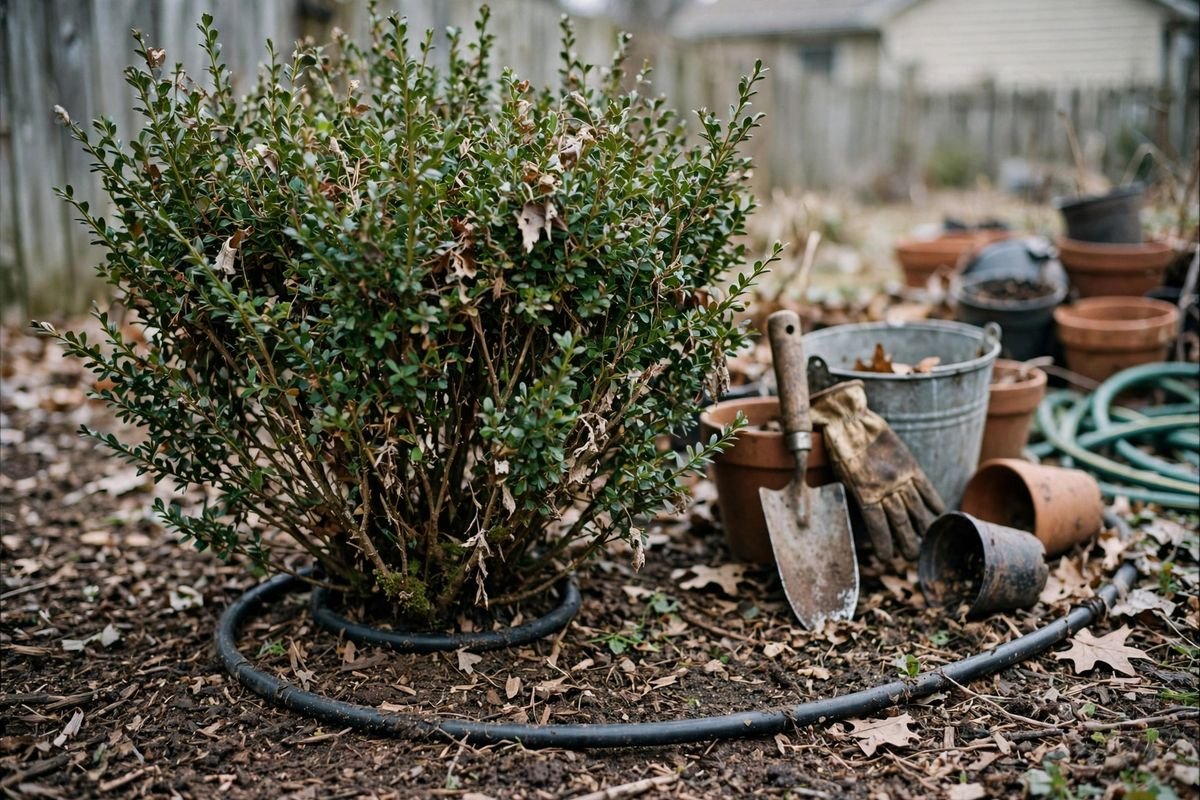
New plantings need winter water more than established plants. A tree or shrub planted in fall has a small root ball that has not yet grown into the surrounding soil, so it dries out fast and has no deep roots to draw on. Water new plantings every two to three weeks in a dry winter, on mild days, and keep a 3 inch mulch layer over the root zone to slow drying. For frost protection that pairs with watering, see our guide on how to protect raised beds from frost.
How to water in winter, step by step
Start by checking the forecast and the soil. Pick a day with air temperatures above 40 degrees and no hard freeze forecast for that night, then probe the soil to 6 inches. If the soil is damp at depth, stop there and check again in two weeks. If it is dry, water slowly at the base of the plants, not over the leaves, so the water goes straight to the roots and the foliage stays dry going into a cold night.
Water in the late morning, give the bed the amount from the table above, and let it soak in before you judge the result. If water pools on the surface, pause and come back in twenty minutes so it can drain down. When you finish, drain the hose, and note the date so you can keep a simple rhythm, about once every three to four weeks in a dry winter, more often for pots. For the rest of the winter bed routine, see our guide on how to winterize a raised garden bed.
Troubleshooting
The soil froze right after I watered
Water applied too late in the day can freeze on the surface before it soaks in. Water earlier next time, in the late morning, and water more slowly so it drains down instead of pooling. If an ice sheet formed, leave it alone: chipping at it can damage crowns and shallow roots. The soil below will thaw on the next mild day.
My pots cracked over winter
Pots crack when wet soil inside them freezes and expands. Terracotta is the most at risk, because it absorbs water into the clay itself. Empty spare pots for winter, store them upside down under cover, and keep planted pots drained and raised on feet. A pot that already cracked can still hold a plant if the crack is small, but move the plant to a sound pot in spring.
Evergreen needles turned brown by spring
Brown needles in spring usually point to winter drying, not cold damage alone. The plant lost water through its leaves faster than the frozen roots could replace it. Water evergreens in late fall before the ground freezes, mulch the root zone, and add a windbreak on the windy side if the site is exposed. Brown needles will not turn green again, but new growth in spring shows the plant survived.
Water pooled on the surface instead of soaking in
Pooling means the water went on faster than the soil could take it, or the soil surface has sealed over. Water in short rounds with pauses between them, and break the surface crust lightly with a hand fork before watering. If pooling happens in the same bed every time, the soil may be compacted, and a layer of compost worked into the top inches in spring will help it absorb water again.
Frequently asked questions
Should I water outdoor plants in winter at all?
Yes, when the soil is dry and there has been no rain or snow for several weeks. Plants in moist soil need nothing, and plants under snow cover need nothing, but roots in dry soil are more open to freeze damage. Probe the soil to 6 inches and water only when it is dry at that depth.
How often should I water in winter?
In a dry winter, beds usually need water about once every three to four weeks, and containers about once every one to two weeks. Rain, snow, and soil type change that rhythm a lot: sandy soil dries faster than clay, and a windy site dries faster than a sheltered one. The probe test matters more than any calendar schedule.
Can I water when a freeze is forecast tonight?
Water early in the day, while the air is above freezing, so the water soaks in and the surface dries before nightfall. Avoid watering in the late afternoon or evening before a hard freeze, because the water can freeze on the surface and give the roots nothing. If the freeze is already hours away, wait for a milder day.
Do I need to water plants under snow?
No. Snow is a slow-release water supply: it melts a little at a time into the soil, and it insulates the ground at the same time. Leave snow-covered beds alone, and save your watering for dry, snow-free spells.
Sources and further reading
- Colorado State University Extension, Fall and Winter Watering
- University of Maryland Extension, Watering Trees and Shrubs
- North Carolina State University Extension, Plants Grown in Containers
Related reading: How to Protect Raised Beds From Frost, How to Winterize a Raised Garden Bed, How Often Should You Water a Raised Bed, Best Drip Irrigation Kits for Raised Beds, How to Winterize a Drip Irrigation System
By the Pot and Plot Team