
This post may contain affiliate links. If you buy through links on this page, we may earn a commission at no extra cost to you.
As an Amazon Associate I earn from qualifying purchases.
Renting a balcony garden means every planter has two jobs: grow plants well, and leave the railing, floor, and lease exactly as we found them. No drilled holes, no rust rings on painted metal.
We judge planters the way a renter has to: by mounting style, wet weight after watering, drainage, and how cleanly the planter comes off at move-out. We use manufacturer dimensions and stated weight assumptions rather than hands-on load tests. New to balcony growing? Our guide on how to start a balcony garden covers layout and crop picks first.
Quick Comparison: Four Mounting Styles at a Glance
Wet weight is the figure that matters: dry mix is light, and a freshly watered box is not. The best pick changes with railing shape, floor space, and who lives below.
| Planter style | Mounting | Typical wet weight | Drainage behavior | Lease risk |
|---|---|---|---|---|
| Over-rail planter | Hooks or a saddle straddle the railing; no tools, no drilling | About 15 to 35 lb for a 24-inch box after watering | Drain holes on the bottom; drips fall outside the railing line unless a tray is fitted | Low; lifts off clean, watch for paint rub on the contact points |
| Clamp railing box | Adjustable brackets clamp the railing; screws tighten by hand | About 20 to 40 lb for a 24-inch box after watering | Raised base lets a shallow tray slide under most models | Low to medium; pads protect paint, clamp marks possible on soft wood |
| Freestanding trough | Sits on the balcony floor; no railing contact at all | About 40 to 80 lb for a 32-inch trough after watering | Best tray control; saucers and risers keep water off the deck | Lowest for the railing; check floor load and deck staining instead |
| Hanging basket | Hook over the railing or a clamp-on arm; chain or hanger carries the load | About 8 to 18 lb for a 14-inch basket after watering | Drips freely from the base unless lined with a solid liner | Low; the swing in wind is the real concern, not the mount |
Browse over-rail balcony planters on Amazon and compare box depth and bracket style against your railing before anything else, since fit decides most of the rest.
Four Mounting Styles, Four Risk Profiles
Mounting style is the first filter. The four styles below split by where the load sits: on the railing, clamped to it, on the floor, or hanging from a hook.
Over-Rail Planters
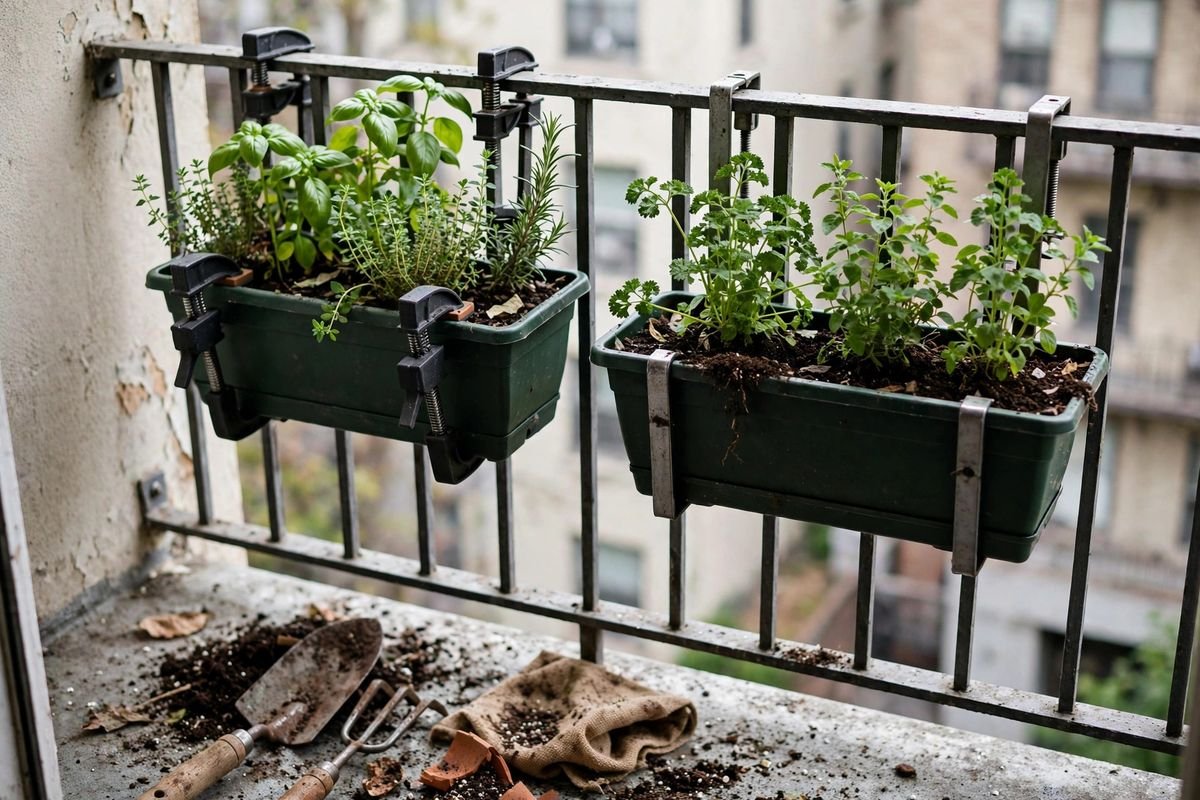
An over-rail planter hooks or saddles over the railing top; gravity does the work. Round railings suit curved hooks, square railings suit flat saddles. Most hold a 24-inch or 36-inch box.
Pros:
- No tools and no drilling; the planter lifts off in seconds at move-out.
- Keeps plants at railing height, where sun reaches over the rail.
- Floor stays fully clear for a chair and a watering can.
Cons:
- Fit depends on railing width and shape; a loose saddle rocks in wind.
- The full wet weight hangs on the outer face, so balance matters.
- Paint rub can mark the railing where the hook contacts it.
Clamp Railing Boxes
A clamp box hangs from adjustable brackets that grip the railing bars, tightened by hand screws with rubber pads against the paint. It sits level where a saddle would tilt.
Pros:
- Firmer hold than a plain hook; less rock in gusty weather.
- Brackets adjust to a range of railing thicknesses.
- The box can sit inside or outside the rail line, handy over a walkway.
Cons:
- Clamp pads can leave marks on soft painted wood over a long season.
- Costs more than a simple hook planter of the same size.
- Brackets need a re-tighten check after the first few waterings.
Compare clamp railing planter boxes on Amazon by bracket count and stated railing range, and count on two brackets minimum for any box over 20 inches.
Freestanding Troughs
A freestanding trough sits on the floor and ignores the railing completely. It gives roots the most soil volume here and suits leases that ban railing attachments.
Pros:
- No railing contact at all; the simplest lease story of the four.
- Largest soil volume, so watering stays less frequent in summer.
- Stable in wind; the load rests on the floor, not on a bracket.
Cons:
- Takes floor space, which small balconies guard closely.
- Full wet weight is high; empty the trough before moving or lifting it.
- Needs a tray or risers so the base never sits in its own runoff.
Hanging Baskets
A hanging basket carries a smaller soil volume on a hook or clamp-on arm. Trailing flowers, strawberries, and herbs suit it; wind swing matters more than raw weight.
Pros:
- Lightest wet weight of the four styles.
- Uses vertical air space and leaves floor and rail top free.
- Easy to take down for a storm or a cold night.
Cons:
- Small soil volume dries out fast in sun and wind.
- Swing can bang the railing or spill mix in gusts.
- Unlined baskets drip straight through after watering.
Our guide on how to protect balcony plants from strong wind covers placement and tie-down habits that keep baskets and boxes steady on exposed floors.
A Worked Example: What a Full Railing Box Really Weighs
Listings often quote dry weight or none at all. Gardeners hang the wet version. Here is our worked example with every assumption stated.
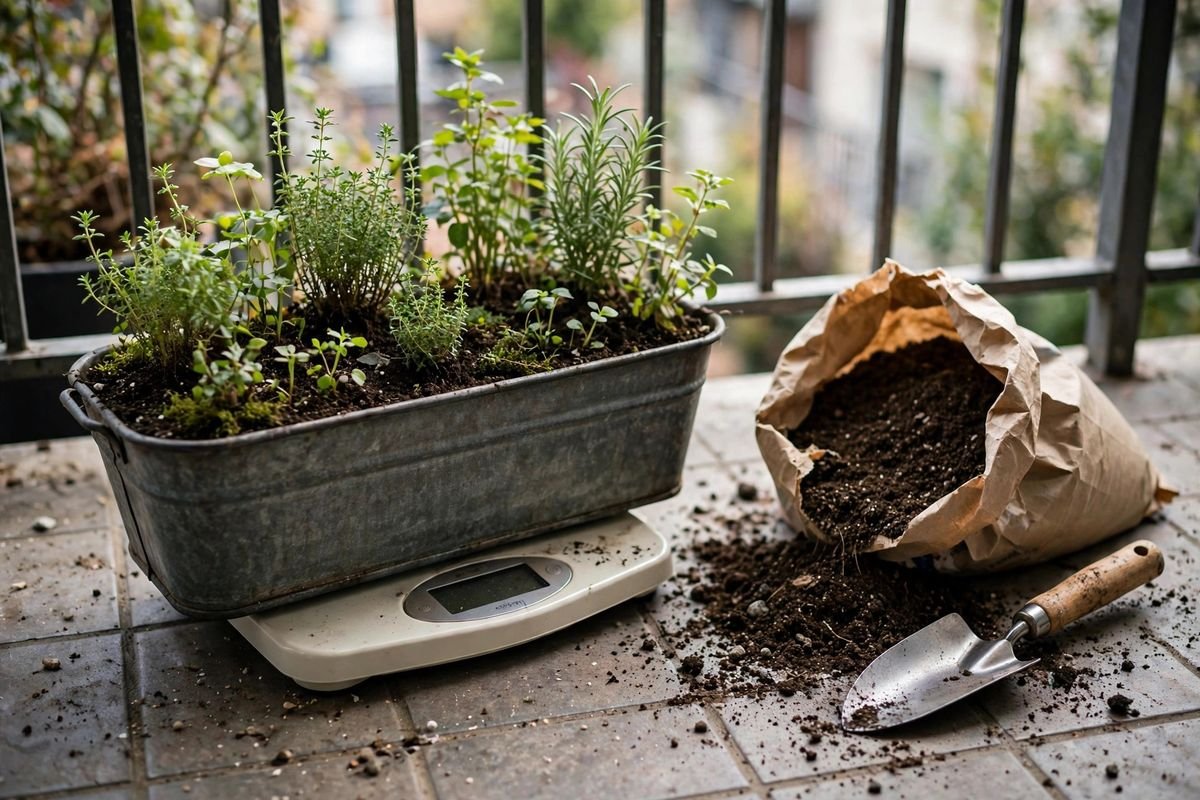
Assumptions. A 24-inch box (about 8 inches wide, 7 inches deep) holds roughly 0.7 cubic feet of mix after settling. Moist mix weighs about 38 pounds per cubic foot; dry bagged mix runs near 25 to 30. The empty box weighs about 3 pounds, plants and mulch about 2 pounds, and a full watering leaves about 4 pounds of held water.
Step 1: mix weight. 0.7 cubic feet times 38 pounds per cubic foot equals 26.6 pounds of moist mix.
Step 2: add the box and plants. 26.6 pounds of mix plus 3 pounds of box plus 2 pounds of plants equals 31.6 pounds.
Step 3: add held water. 31.6 pounds plus about 4 pounds of held water equals roughly 35.6 pounds, which we round to about 36 pounds hanging on the railing after a full watering.
Why two brackets. One bracket at 36 pounds leaves no margin for a gust or a bumped box. Two brackets share about 18 pounds each, keep the box level, and still hold if one clamp loosens. Our rule over 20 inches: two brackets, each rated well above half the wet weight, checked a week after hanging.
A 36-inch box at about 1.1 cubic feet lands near 53 pounds wet by the same math, so long boxes need two or three brackets — or a floor trough.
Lease-Safe Rules Before Anything Goes Up
A lease rarely names planters. The clauses that matter cover drilling, exterior attachments, and damage to painted surfaces.
- No holes, ever. If a mount needs a screw into the building, the mount is out. Clamp, hook, saddle, and floor styles cover every crop a balcony grows.
- Pad every contact point. Rubber or felt pads between bracket and railing stop paint wear and rust transfer, and they cost almost nothing.
- Keep weight honest. Run the wet-weight math before hanging, and stay well under any bracket rating printed on the packaging.
- Photograph the railing first. A dated photo of the railing and floor before setup protects the deposit at move-out.
- Ask when unsure. A short note to the landlord with the mounting style named settles most gray areas before plants go up.
New container gardeners will find the wider ground rules in our container gardening for beginners guide, which covers pot size, mix, and watering basics that apply on a balcony too.
Browse freestanding balcony troughs on Amazon if the lease bans railing attachments; a floor trough answers the same planting urge with zero railing contact.
Drainage Without Dripping on the Neighbors
Every planter here needs drainage holes; roots in standing water rot. The renter problem sits one floor down: drainage lands on the balcony or laundry below.
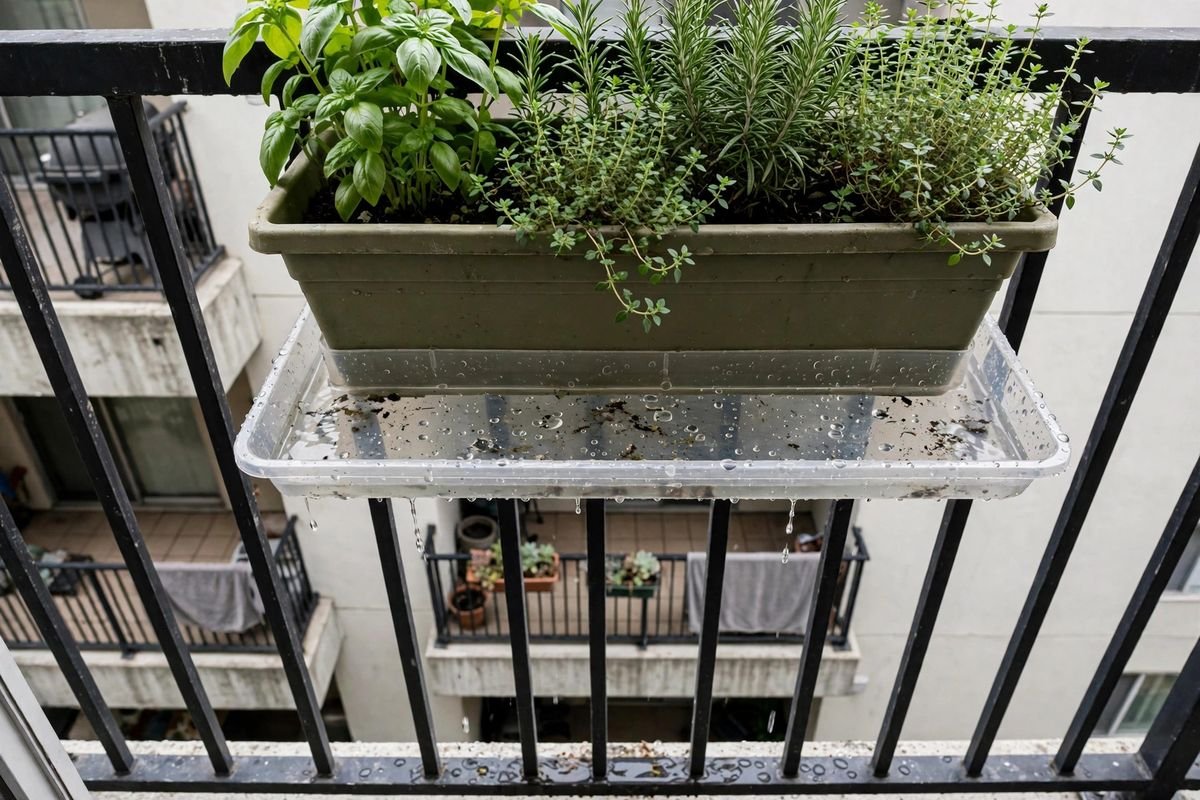
Three habits solve this without sealing the holes. Fit a shallow tray under boxes and troughs and empty it after watering. Water in two slow passes so the mix absorbs before any runoff starts. Lift pots on small risers so the base never seals against the tray.
Hanging baskets need a solid or plastic-lined basket, which holds water long enough for roots to drink and releases the surplus slowly. Over a walkway or lower balcony, a liner plus two-pass watering ends nearly all drips.
Morning watering helps too: trays get emptied and surfaces dry during the day.
Our Verdict: Match the Mount to the Lease and the Railing
The right pick comes from the lease wording, the railing shape, and who lives below.
Choose an over-rail planter if the railing top is flat or gently rounded, the box stays at 24 inches, and a tool-free lift-off at move-out matters most.
Choose a clamp railing box if the balcony catches wind, the box runs longer than 24 inches, or the railing shape defeats a plain saddle hook.
Choose a freestanding trough if the lease bans railing attachments, floor space allows it, or the crop list wants deep soil for peppers and compact tomatoes.
Choose a hanging basket if floor and rail space are gone, the plants trail, and the basket can hang where its swing clears glass and railing alike.
Our bottom line for most renters: start with one clamp box or over-rail box of herbs by the door, run the wet-weight math, fit a tray, and let one good season prove the setup before the railing fills.
Frequently Asked Questions
Will a railing planter damage the paint?
It can if bare metal grinds on paint all season. Rubber pads on every contact point, a level hang, and lifting the box straight off rather than sliding it keep paint intact. Photograph the railing before hanging so the starting condition is on record.
How much weight can a balcony railing hold?
Railings are built to resist a person leaning or falling against them, not as planter shelves, and ratings vary by building. We keep individual boxes modest, share the load across two brackets, and stay well under the bracket rating printed by the maker. When in doubt, the floor trough removes the question entirely.
Can we hang planters on a glass balcony railing?
Glass panel railings leave few safe grip points, and clamping glass is a risk we avoid. A freestanding trough inside the glass line grows the same crops with no load on the panel at all.
What grows best in a 24-inch railing box?
Herbs lead the list: basil, parsley, chives, thyme, and mint in its own pot, since mint spreads hard. Leaf lettuce, radishes, and compact flowers also suit the shallow, sunny slot a railing box offers.
Sources & Further Reading
- University extension guidance on container gardening, potting mix weights, and drainage for small-space gardens.
- Regional extension notes on balcony and patio container watering, tray use, and plant spacing.
- Manufacturer specification sheets for railing planter dimensions, bracket ratings, and mounting ranges.