
This post may contain affiliate links. If you buy through links on this page, we may earn a commission at no extra cost to you.
As an Amazon Associate I earn from qualifying purchases.
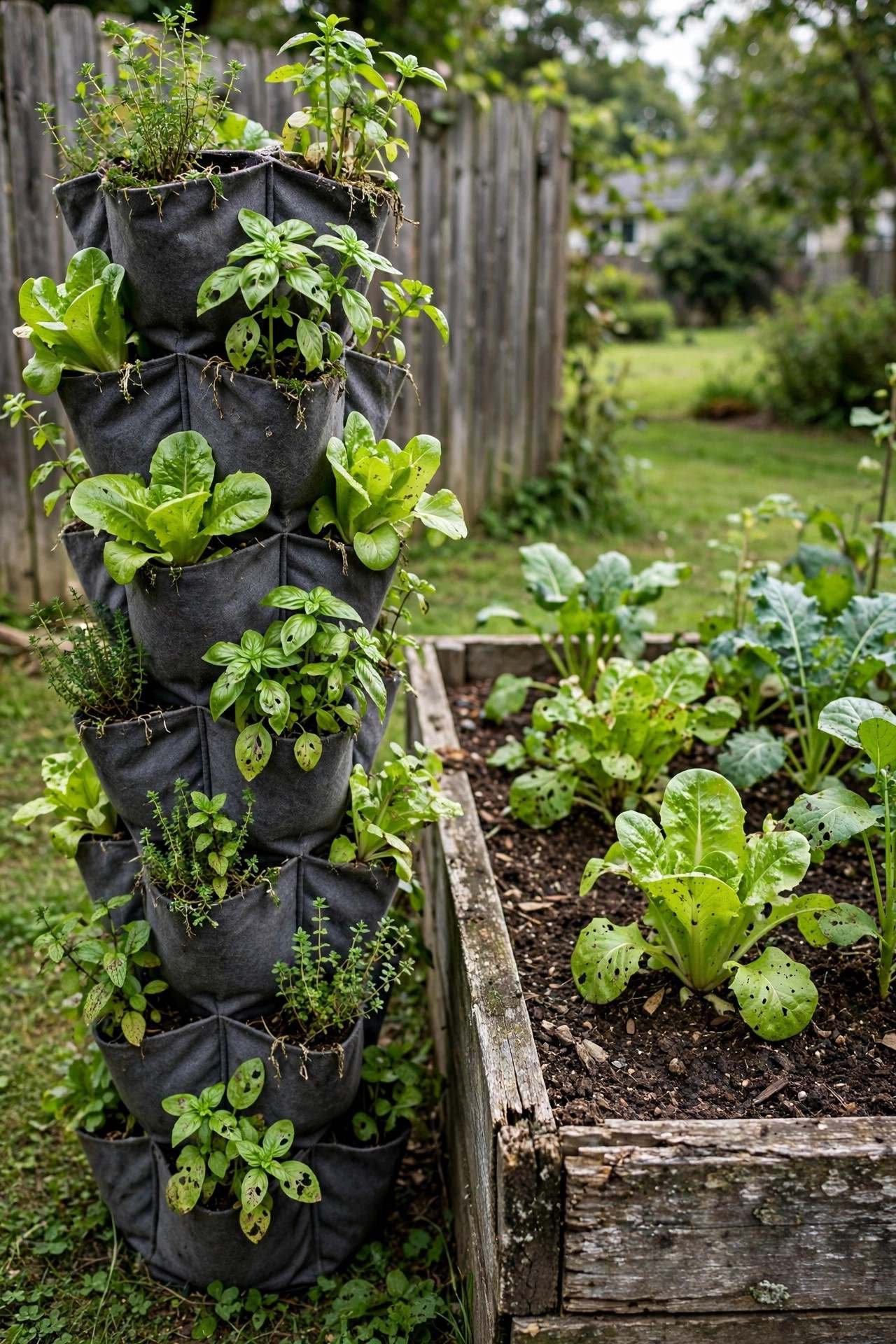
A small yard forces a clear choice. We can spread out with a raised bed, or stack pockets up a tower and keep the floor clear. Both grow real food with the same sun and mix. The difference is root room: wide and deep in a bed, or small pockets on a narrow footprint. That drives soil cost, watering, and crop choice.
Our quick answer: pick a vertical planter when floor space is the limit and the list is herbs, lettuce, and strawberries. Pick a raised bed for tomatoes, peppers, squash, carrots, or potatoes, or for soil that serves for years with less daily watering. Every number below comes from stated sizes and simple volume math — no test claims, no invented yields.
Side-by-Side Comparison
The table compares a common stacked-pocket tower with a standard 4 by 8 foot raised bed. Sizes vary by brand and build, so treat the figures as typical planning numbers, not brand specs. Soil volume for the bed assumes a 12-inch fill depth, which suits most vegetables.
| Feature | Vertical planter | Raised bed (4 x 8 ft) |
|---|---|---|
| Footprint | About 2 square feet of floor for a tower base | 32 square feet of ground, plus paths around it |
| Soil volume | About 1.5 to 2 cubic feet total across all pockets | About 32 cubic feet at 12 inches deep |
| Crop fit | Herbs, lettuce, strawberries, small flowers, trailing greens | Almost any vegetable, from carrots to squash to tomatoes |
| Watering | Small pockets dry fast; top tiers drink first, lower tiers catch runoff | Large soil mass dries slower; deep soak reaches roots across the bed |
| Cost drivers | The tower unit itself; small soil bill; pockets and liners wear over time | Lumber or kit plus a large first soil fill; soil lasts for years with top-ups |
| Mobility | Light when empty; many towers move or roll to chase sun | Fixed once filled; moving means emptying tons of soil by hand |
New to beds? Our guide to raised bed gardening for beginners covers bed height, soil depth, and spacing in plain steps. The tower side of this comparison builds on basic pot skills, and our container gardening for beginners guide covers mix, drainage, and feeding for any pocket or pot.
Footprint, Soil, and What Each One Holds
A tower stands on about 2 square feet, roughly the tile under a kitchen chair. A 4 by 8 bed covers 32 square feet before paths, and we still need knee room on one long side to plant and pick. In a small patio corner, bed plus paths can take half the floor. The tower takes a corner and leaves room for a chair or a second tower.
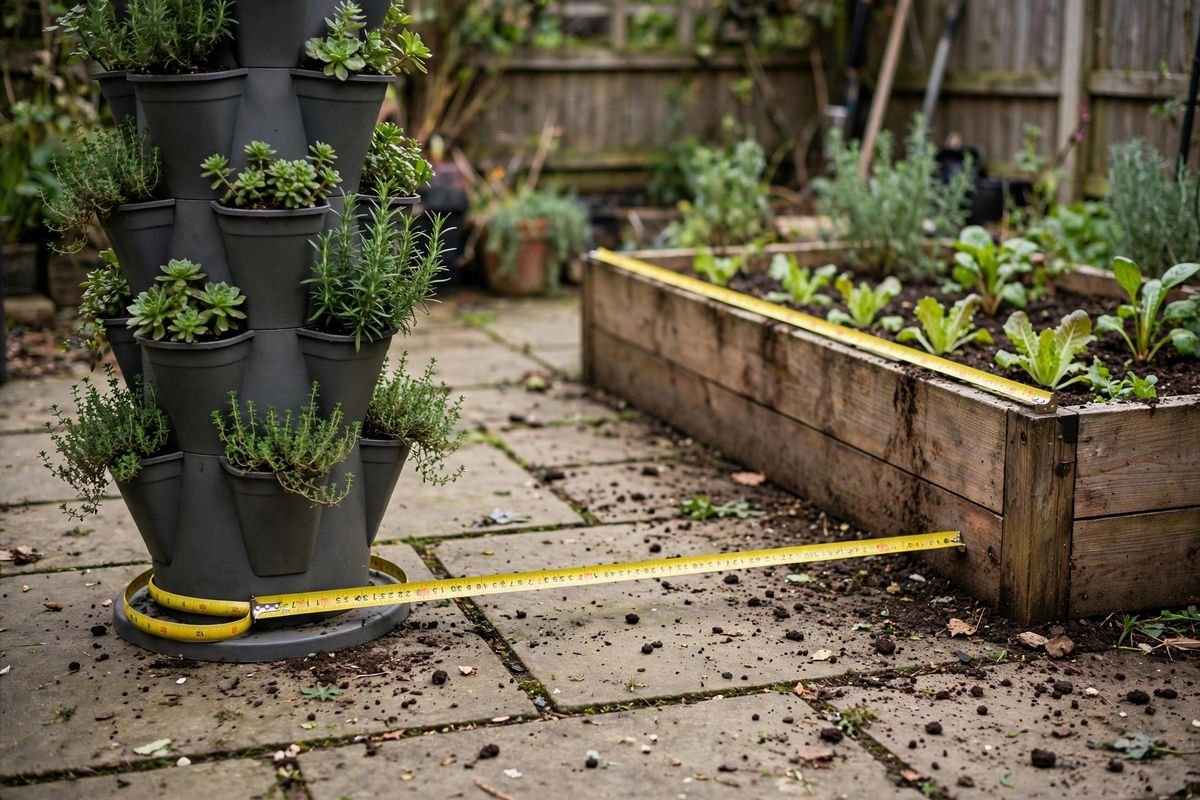
Pockets hold a few cups to a gallon each, so a whole tower may hold less mix than one large patio pot. A bed holds about 240 gallons. Small volumes warm fast, dry fast, and feed briefly. Large volumes change slowly, buffer heat and cold, and carry a crop all season. Each matches a different yard and crop list.
Worked Example: 12 Pockets on 2 Square Feet vs 32 Cubic Feet in One Bed
Our worked example, with stated assumptions. Swap in the true sizes of any tower or bed on hand.
Assumptions. Tower: 2 square feet base, 12 pockets at about 0.15 cubic feet each (about 1.1 gallons), one plant per pocket. Bed: 4 by 8 feet, filled 12 inches deep, 32 plants at one per square foot. Volume is length times width times depth, with no allowance for settling.
Step 1: total soil. Tower: 12 pockets times 0.15 cubic feet equals 1.8 cubic feet of mix. Bed: 4 times 8 times 1 equals 32 cubic feet. The bed holds about 18 times the soil of the tower (32 divided by 1.8 is about 17.8).
Step 2: soil per plant. Tower: 1.8 divided by 12 equals 0.15 cubic feet per plant. Bed: 32 divided by 32 equals 1.0 cubic foot per plant — about 6.7 times the tower volume. Root volume caps plant size: a pocket herb thrives in 0.15 cubic feet, while a tomato in that volume stalls and sets little fruit.
Step 3: plants per square foot of floor. Tower: 12 on 2 equals 6 per square foot. Bed: 32 on 32 equals 1 per square foot. The tower packs six times the plants per floor tile, its whole appeal on a balcony. Our balcony garden guide shows how towers pair with railing pots when tiles are scarce.
Step 4: what the math means. The tower wins on floor use and first soil cost. The bed wins on root room and water buffer. Short on floor but long on ambition? Run both: a tower by the door for herbs and greens, one bed for deep-rooted crops.
Watering Behaves Differently Up High
Small pockets lose water fast. Sun and wind hit every side, and each plant drinks from a cup-sized reserve. Top pockets can dry by mid-afternoon while a bed still holds its morning soak. Water poured at the top drains down, so lower pockets stay wetter. Even watering means slow pours with a pause, or a drip line feeding each tier.
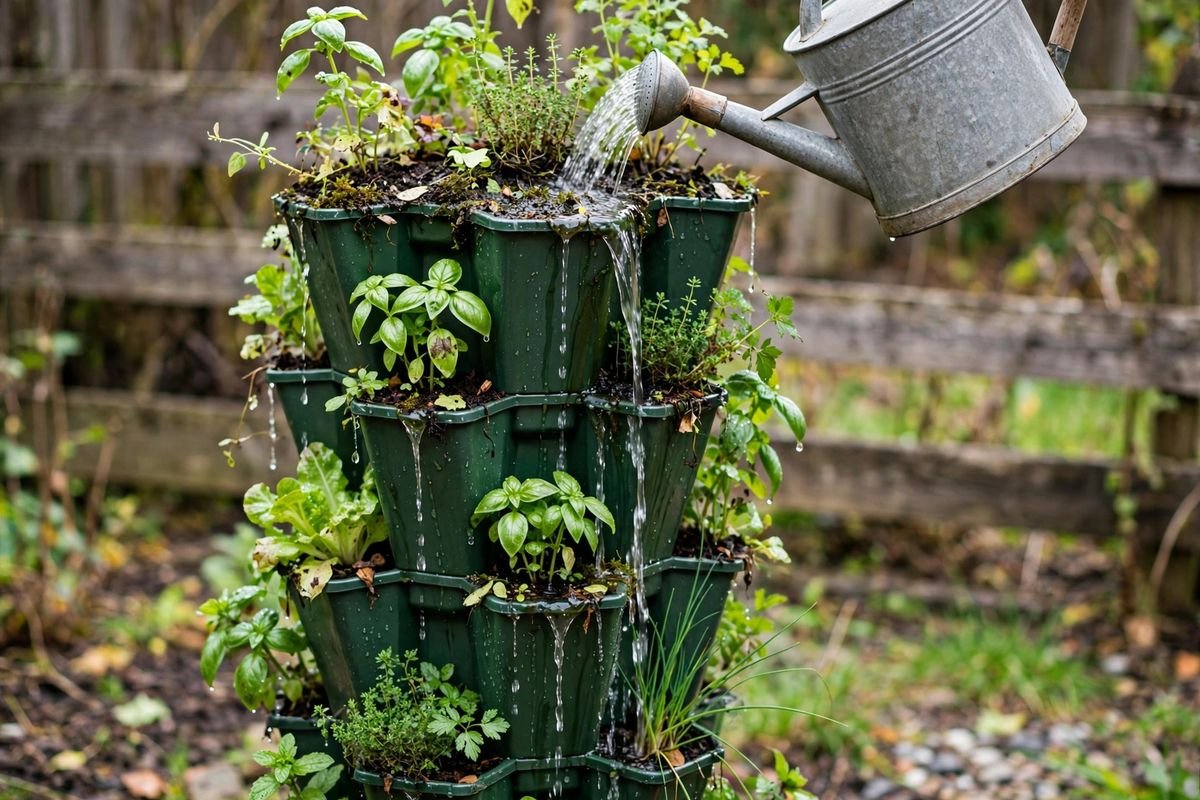
A bed forgives a missed day: the soil mass holds water deep down, and mulch slows surface loss. Beds suit deep, less frequent soaks. Towers want light, frequent drinks. Weekend travelers often find beds easier to keep alive; gardeners home each evening can keep a tower thriving with a daily can. Browse vertical planter towers on Amazon and check pocket depth, since shallow pockets dry fastest.
Crop Fit: Shallow Pockets vs Deep Beds
Pockets suit small, fibrous roots and a short life: basil, cilantro, parsley, mint (in its own pocket so it cannot spread), lettuce, spinach, arugula, strawberries, and compact flowers. These finish fast, so we can sow, pick, and replant a pocket two or three times a season.
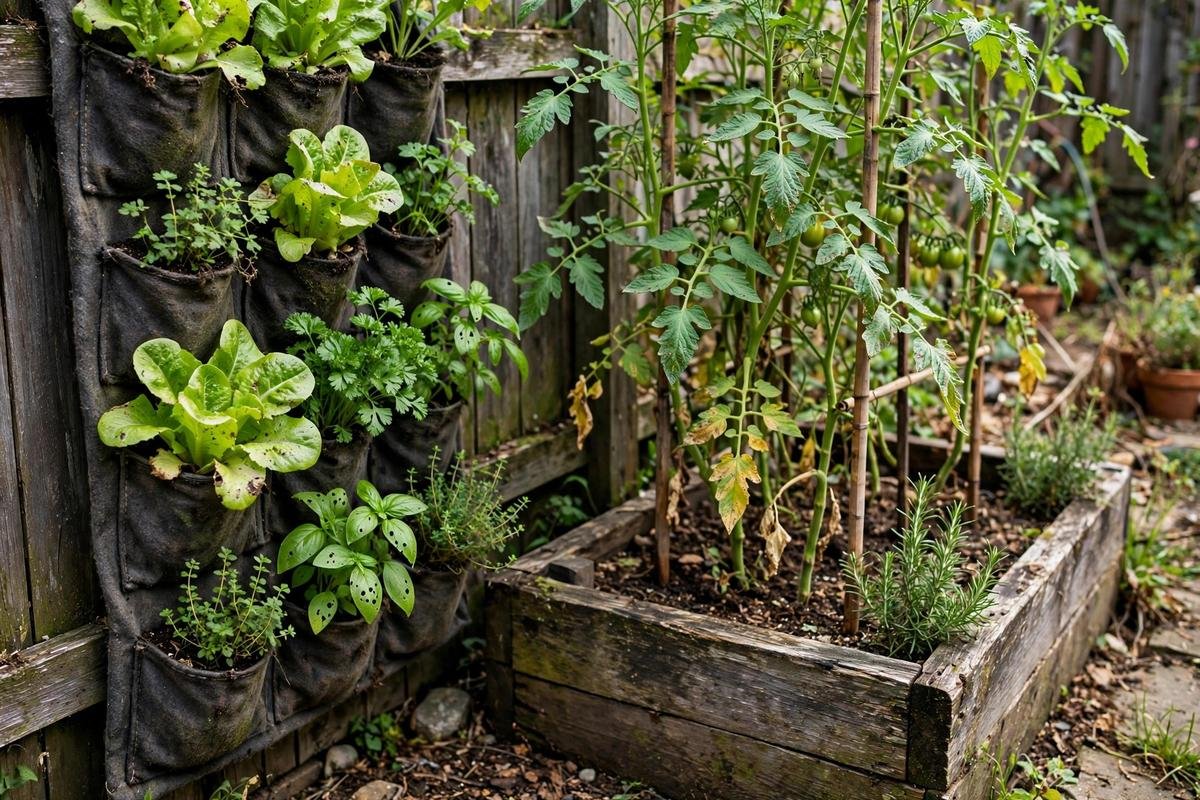
Beds suit crops that need depth or bulk. Carrots need loose soil 10 to 12 inches down. Potatoes need room to hill. Tomatoes, peppers, cucumbers, and squash grow large roots and heavy tops a pocket cannot anchor. Beans, kale, and chard also settle better in a bed. For planting dates, use this rule: Use your local frost dates and regional planting guidance — not your USDA hardiness zone alone — to choose planting dates.
Peppers can grow in the largest bottom pockets, but yield drops against a bed plant with six times the root room. A compact patio tomato works in a deep base pot; an indeterminate vine outgrows any pocket by July. Fruiting and vining lists need the bed. Leafy, herbal lists suit the tower. Compare raised bed kits on Amazon by board thickness, and towers by pocket volume, not pocket count.
Pros and Cons for Each Side
Vertical Planter
Pros:
- Tiny footprint: about 2 square feet holds a dozen herb or lettuce plants.
- Harvest at standing height for the top tiers; less kneeling for greens and herbs.
- Small soil bill at setup, and spent pockets refresh in minutes.
- Moves to follow sun or to clear a patio for guests, when empty or on casters.
- Good fit for renters and balconies where digging and heavy beds are not allowed.
Cons:
- Pockets dry fast and need frequent, even watering tier by tier.
- Root room caps plant size; fruiting crops stay small and yield less.
- Lower tiers can stay wet while top tiers dry, so drainage needs watching.
- Fabric and plastic pockets weather over a few seasons and need replacement.
- Wind can rock a tall, top-heavy tower unless it is anchored or placed against a wall.
Raised Bed
Pros:
- Deep, generous root room suits almost any vegetable, from carrots to squash.
- Large soil mass holds water and nutrients longer between care sessions.
- One build serves for years; we top up soil and compost each season.
- Even spacing, easy succession sowing, and room for mulch and drip lines.
- Raised soil warms earlier in spring and drains well after heavy rain.
Cons:
- Needs 32 square feet plus paths for a 4 by 8 bed; too big for many patios.
- First soil fill is the big cost: about 32 cubic feet for a 12-inch bed.
- Fixed in place once filled; moving it means shoveling out the whole bed.
- Weeding, planting, and harvest happen at ground or knee height.
- Wood sides rot over time and need repair or replacement boards.
For steady bed watering, a simple drip setup helps: see drip irrigation kits for raised beds on Amazon and size the kit by bed count and water pressure.
Our Verdict: Match the System to the Limit
Neither system wins for every yard. The right pick depends on which limit bites hardest: floor space, root depth, watering time, or budget. Our picks, by gardener:
Choose a vertical planter if floor space is under about 20 square feet and every tile counts, such as a balcony, a small patio, or a sunny side strip.
Choose a vertical planter if the crop list is herbs, lettuce, strawberries, and cut-and-come-again greens for salads and cooking.
Choose a vertical planter if renting rules bar heavy beds, or the garden must move at the end of a lease.
Choose a vertical planter if daily light watering fits the routine and standing-height harvest matters.
Choose a raised bed if tomatoes, peppers, squash, carrots, or potatoes top the crop list and need deep root room.
Choose a raised bed if weekends away are common and the soil must hold water for two or three days.
Choose a raised bed if one long-lived garden is the goal, with soil that improves each year as compost goes in.
Choose a raised bed if the yard has room for the bed plus paths, and kneeling or a garden stool suits harvest work.
Many small yards end up with both: a tower by the door for daily herbs and greens, one bed for fruiting crops. Start with the system that matches the first crop list, learn its watering rhythm for a season, then add the second if floor and time allow.
Frequently Asked Questions
Can a vertical planter replace a raised bed completely?
For herbs, greens, and strawberries, yes. For tomatoes, squash, carrots, and other deep or heavy crops, no: pocket root room caps size and yield. Most gardeners who cook with fruiting crops still want at least one bed or a few large pots.
Which costs less in the first season?
Usually the tower: under 2 cubic feet of mix against about 32 for a 12-inch bed, plus lumber or a kit on the bed side. Over years the bed spreads that fill across many crops, while tower liners need periodic replacement.
Which needs less watering?
The bed. Its soil mass takes deep soaks every few days. Tower pockets want light drinks daily in warm weather, with care to wet every tier evenly.
What about weight on a balcony or deck?
Wet soil is heavy. A tower concentrates modest weight on 2 square feet; a bed belongs on the ground. Check load limits, place towers near load-bearing walls, and confirm building rules before filling either system.
Sources & Further Reading
- University extension guidance on raised bed sizing, soil depth, and soil volume calculations for common bed sizes.
- Regional extension planting calendars that base sowing dates on local frost dates.
- University extension notes on container and vertical gardening: pocket volume, watering frequency, and crop selection for small soil volumes.