
This post may contain affiliate links. If you buy through links on this page, we may earn a commission at no extra cost to you.
As an Amazon Associate I earn from qualifying purchases.
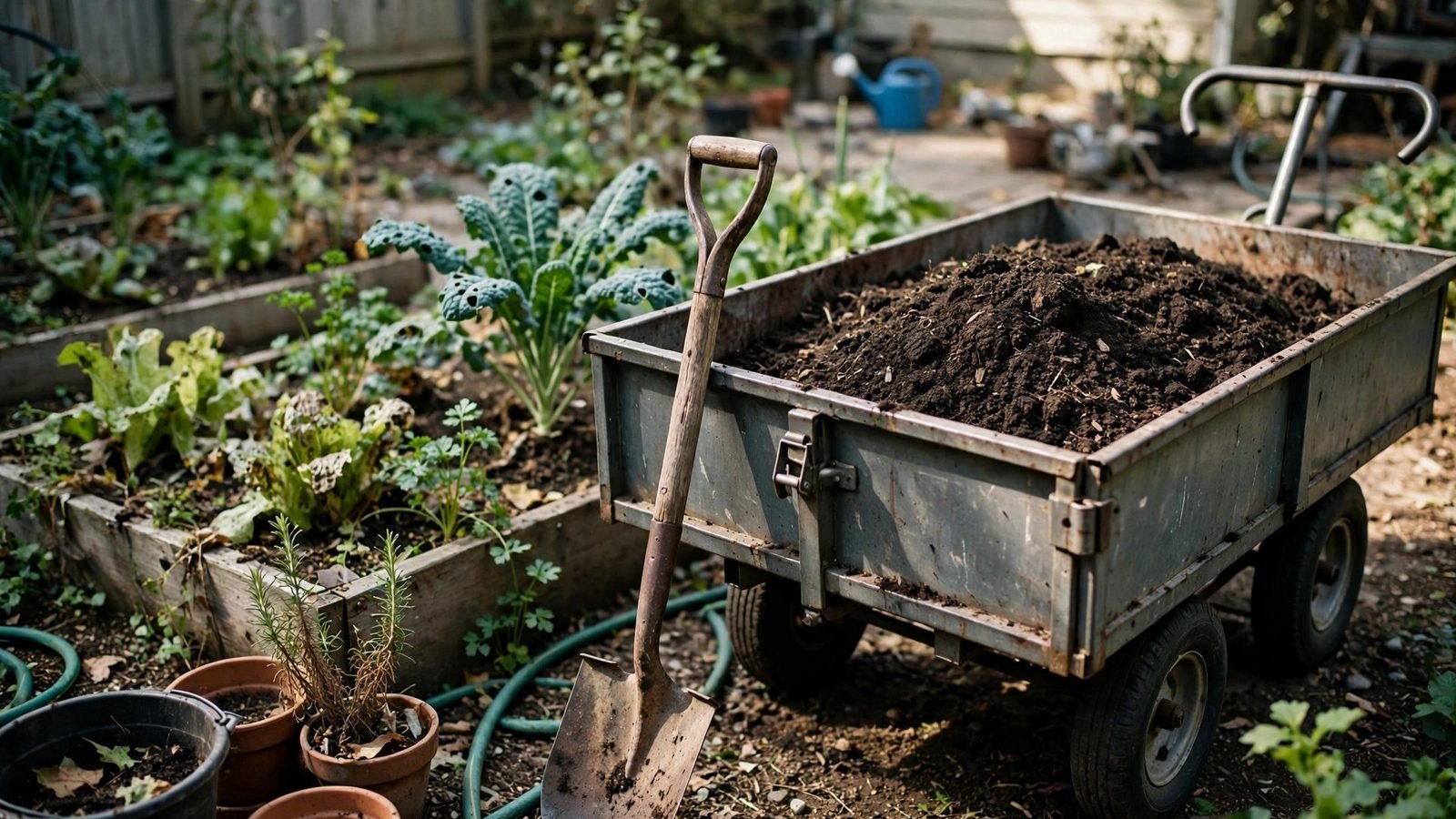
A wheelbarrow carries a load, but you have to lift it out by hand. A garden cart with a dump bed carries the same load and tips it out where you want it, with a pull of a handle. For moving soil, compost, mulch, or gravel around a garden, that tipping bed is the difference between a job that takes an afternoon and a job that takes an hour.
This is a research-based shortlist, not a hands-on test. The picks below come from the cart types, capacities, and tradeoffs that growers keep recommending, and from what the listings themselves describe. No cart here has been tested in our own garden, and prices and exact specs change, so check the listing before you buy.
A dump cart earns its keep in spring, when beds need compost and mulch after winter. Use your local frost dates and regional planting guidance — not your USDA hardiness zone alone — to choose planting dates. Plan the big cart jobs, such as hauling compost to the beds, for the weeks after the last frost, when the soil is workable and the plants are ready for it.
Quick comparison
The table below sums up the five picks. The sections after it give the tradeoff for each one, so you can match the cart to the loads you haul.
| Pick | Bed capacity | Wheels | Best for |
|---|---|---|---|
| Poly dump cart, 10 cubic feet | About 10 cu ft | 4 pneumatic | Most gardens, most loads |
| Steel dump cart, 10 cubic feet | About 10 cu ft | 4 pneumatic | Heavy loads: soil, gravel, stone |
| Compact dump cart, 6 cubic feet | About 6 cu ft | 4 pneumatic | Small yards and narrow paths |
| Heavy-duty dump cart, 12 cubic feet | About 12 cu ft | 4 pneumatic | Large gardens and big compost jobs |
| Convertible flatbed dump cart | About 10 cu ft | 4 pneumatic | Long loads: lumber, pots, bags |
Capacity is measured in cubic feet, and it is the number that matters most. A 10-cubic-foot cart holds about a third of a cubic yard, so three trips move a full cubic yard of compost. Check the weight rating as well: a cart rated for 800 pounds can carry a full bed of wet soil, while a cart rated for 400 pounds cannot, and wet soil is far heavier than dry mulch.
How to choose a garden cart with a dump bed
Start with the bed material. A poly bed is a molded plastic tub: it will not rust, it is easy to hose clean, and it is light enough to pull when empty. A steel bed is stronger and handles rocks, gravel, and firewood without denting, but it can rust if the paint chips, and it weighs more. For soil, compost, and mulch, poly is usually enough. For stone and firewood, steel is the better pick.
Next, look at the dump mechanism. A good dump bed tips with a pull handle at the front, locks upright while you haul, and releases cleanly when you pull the handle. Test the latch in the listing photos if you can: a latch that needs two hands to release is a nuisance when the bed is full, and a latch that sticks will leave half the load in the bed.
Check the wheels. Four pneumatic tires, the kind you inflate, roll over soft ground and rough paths far better than hard plastic wheels, and they carry heavy loads without sinking into a lawn. A cart with a swivel front axle turns in a tight space, which matters on a narrow path between beds. Flat-free tires cost more but never go flat, which is worth it if the cart sits outside all year.
Look at the handle as well. A pull handle with a padded grip is comfortable for a long haul, and a handle that converts to a tow hitch lets a lawn tractor pull the cart when the load is heavy. Our guide to garden carts for small yards covers the smaller carts that suit a tight space, including a few without dump beds.
Worked example: how many trips a cubic yard takes
Compost and soil are sold by the cubic yard, and carts are rated in cubic feet, so it helps to work out the trips before you order. This example uses a stated cart size, so you can repeat the steps with your own cart.
One cubic yard is 27 cubic feet. A cart with a 10-cubic-foot bed holds 10 divided by 27, which is about 0.37 cubic yards per trip. To move a full cubic yard, you need 27 divided by 10, which is 2.7 trips, so three trips move the whole yard with the last trip part full.
A 6-cubic-foot cart needs 27 divided by 6, which is 4.5 trips, so five trips move the yard. A 12-cubic-foot cart needs 27 divided by 12, which is 2.25 trips, so three trips move the yard with the last trip half full. The bigger cart saves trips, but it also weighs more when full, so match the cart to what you can pull on your own paths.
Weight matters too. A cubic foot of damp garden soil weighs about 75 pounds, so a 10-cubic-foot bed of damp soil weighs about 750 pounds. Check the cart’s weight rating on the listing: if the rating is 800 pounds, the cart can carry the load, and if the rating is 500 pounds, it cannot, even though the bed would hold it.
1. Poly dump cart, 10 cubic feet
The poly dump cart is the standard pick: a molded plastic bed of about 10 cubic feet, four pneumatic tires, a pull handle, and a dump latch at the front. It is the cart most gardens need, and it handles soil, compost, mulch, leaves, and bagged material without complaint.
Pros: will not rust; light to pull when empty; easy to hose clean; the most common size, so parts and accessories are easy to find.
Cons: a poly bed can crack if a heavy rock is dropped into it from a height; the bed can flex under a very heavy load; the plastic fades in strong sun over years.
Choose this one if you haul soil, compost, and mulch around a medium garden, and you want one cart that does most jobs well. It is the best pick for most gardens.
Search for a garden cart with dump bed 10 cu ft and check the weight rating and the tire type on the listing before you buy.
2. Steel dump cart, 10 cubic feet
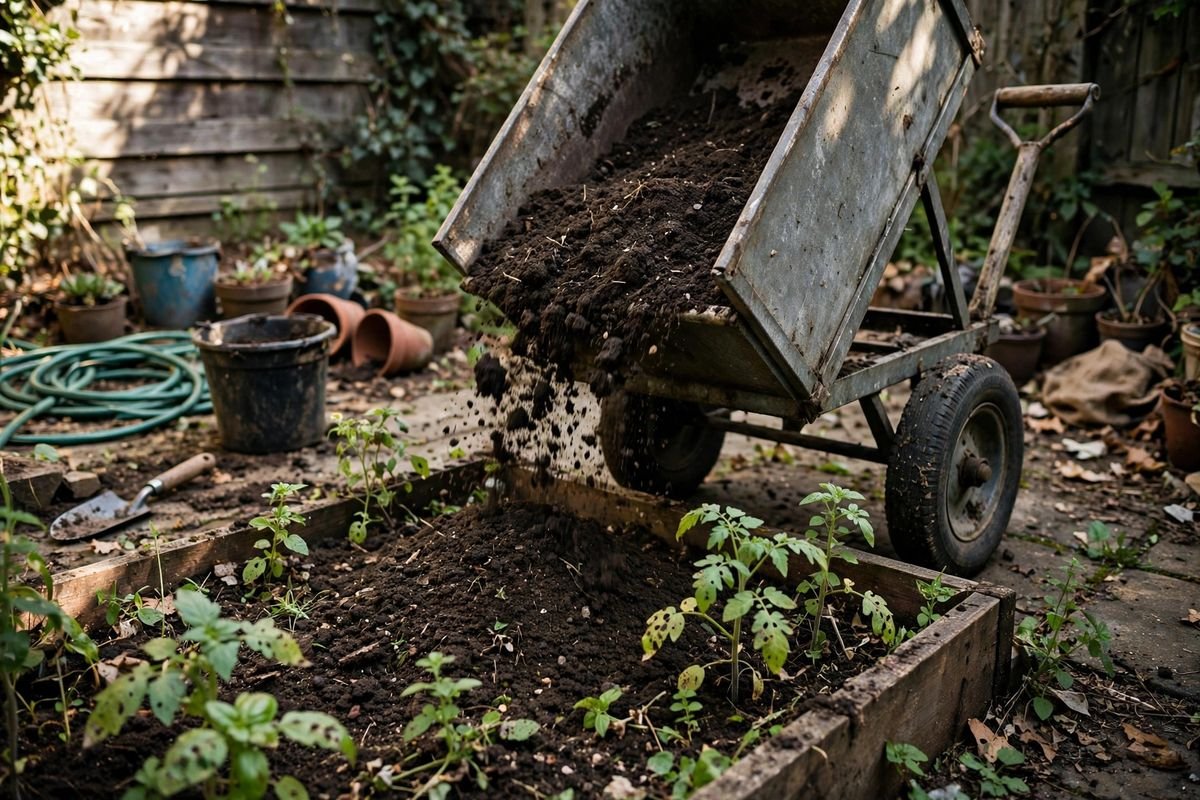
The steel dump cart is the same size as the poly cart, but the bed is steel. It is the pick for heavy loads: gravel, stone, firewood, and wet soil that would flex a plastic bed. A steel bed dents rather than cracks, and it takes a shovel scraping against it without damage.
Pros: stronger bed for rocks and firewood; does not flex under a heavy load; takes rough handling and shovel work.
Cons: heavier to pull when empty; can rust if the paint chips and the bare steel stays wet; costs more than a poly cart of the same size.
Choose this one if you haul gravel, stone, or firewood as well as soil, or if you load the cart with a shovel and want a bed that takes the scraping. Keep the paint touched up, and store the cart under cover when it rains.
Search for a steel garden dump cart and check the bed gauge and the weight rating on the listing.
3. Compact dump cart, 6 cubic feet
The compact cart is a smaller version of the standard cart, with a bed of about 6 cubic feet. It is the pick for a small yard, a courtyard garden, or a garden with narrow paths between the beds. It turns where a full-size cart cannot, and it stores in a corner of the garage.
Pros: fits narrow paths and gates; easy to turn in a tight space; light to pull; stores in a small spot.
Cons: needs more trips for the same job, since the bed holds about half as much; a full bed of wet soil can still be heavy for its size; fewer accessories fit it.
Choose this one if your paths are narrow, your garden is small, or you store the cart in a tight space. It is also a good second cart for a large garden, for jobs close to the house where a big cart is awkward.
Search for a small garden dump cart and measure your narrowest gate before you buy, since a cart that does not fit through the gate is no use at all.
4. Heavy-duty dump cart, 12 cubic feet
The heavy-duty cart is the largest pick, with a bed of about 12 cubic feet and a higher weight rating. It is the pick for a large garden, a big compost operation, or a gardener who moves a cubic yard of material in a single session and wants the fewest trips.
Pros: fewest trips per cubic yard; high weight rating for wet soil and stone; large bed takes bulky loads such as prunings and brush.
Cons: heavy to pull when full, especially on soft ground; needs a wide path to turn; costs the most; takes the most storage space.
Choose this one if you move large amounts of compost or soil each season and your paths are wide enough to turn it. If your garden is small, the extra capacity will sit empty most of the time, and a 10-cubic-foot cart is the better buy.
Search for a heavy duty garden dump cart 12 cu ft and check the weight rating, since the larger bed tempts you to overload it.
5. Convertible flatbed dump cart
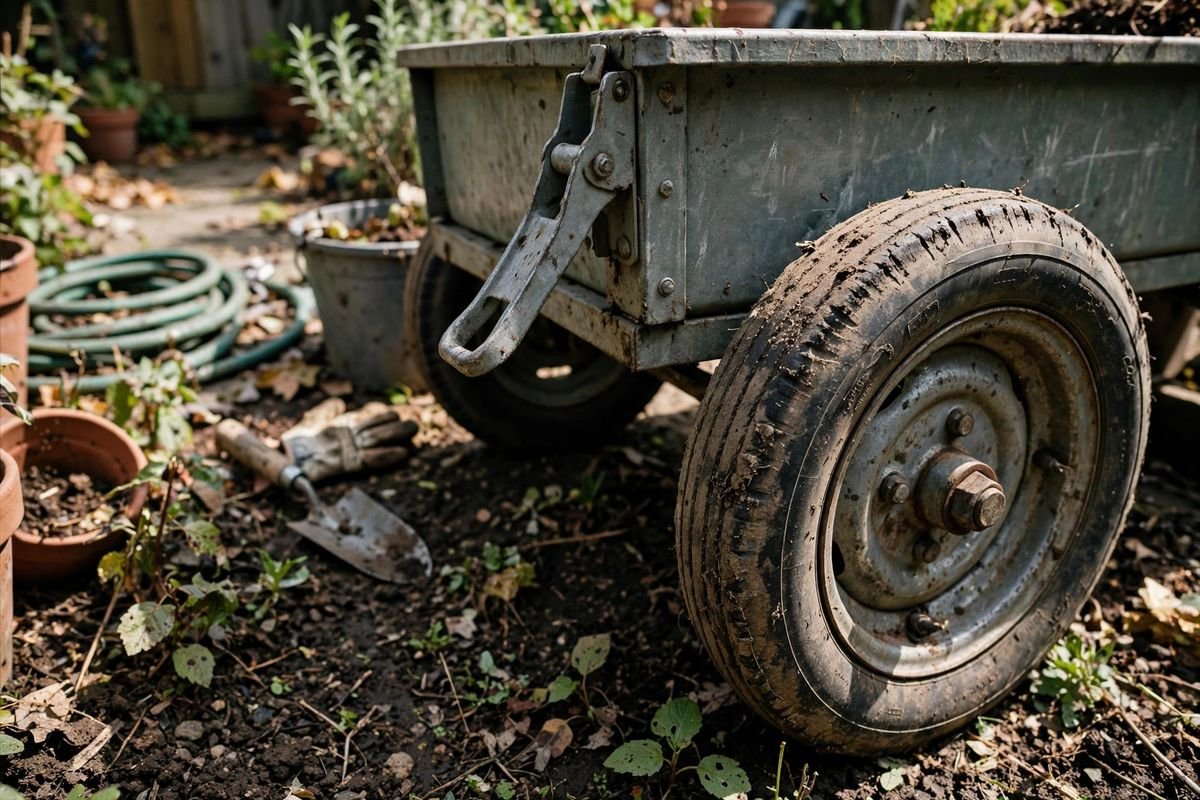
A convertible cart has side panels that fold down or come off, turning the dump bed into a flatbed. It is the pick for long loads that do not fit in a tub: lumber, long-handled tools, bags of soil laid flat, and large pots. With the sides up, it works as a normal dump cart, and with the sides down, it carries loads a tub cannot.
Pros: carries long loads a tub cannot; the flatbed is handy for moving pots and bags; works as a normal dump cart with the sides up.
Cons: costs more than a fixed-bed cart; the removable sides can rattle or get lost; the flatbed holds less loose material than a tub of the same size.
Choose this one if you haul lumber, long tools, or large pots as often as you haul soil. If you only haul loose material, a fixed-bed cart holds more and costs less.
Search for a convertible flatbed garden cart and check how the sides attach, since a side that drops off mid-haul is worse than no side at all.
Keeping a dump cart working
Grease the axle and the dump pivot once a season, and check the tire pressure before a big job. A soft tire makes a full cart much harder to pull, and a flat tire on a loaded cart is a job on its own. Keep a tire pump and a patch kit where the cart is stored.
Wash the bed out after hauling soil or compost, and let it dry before you put the cart away. Wet soil left in the bed cakes on, adds weight, and can rust a steel bed from the inside. A poly bed hoses clean in a minute, and a steel bed needs a brush and a rinse.
Store the cart under cover if you can. Sun fades a poly bed and rusts a steel one, and rain fills the bed with water that adds weight and breeds mosquitoes. A cart stored under a roof lasts years longer than one left out in the weather.
Our guide to filling a tall raised bed without wasting soil shows how a dump cart moves the filler layers in order, and our guide to making compost at home covers the pile the cart will be hauling from.
Frequently asked questions
How much weight can a garden dump cart carry?
It depends on the model. Most 10-cubic-foot carts are rated for 600 to 1,200 pounds, and heavy-duty models go higher. Check the rating on the listing, and remember that wet soil is far heavier than dry mulch: a full bed of damp soil can reach the weight limit even when the bed is not heaped.
Can one person pull a full dump cart?
On flat, firm ground, yes, for a 10-cubic-foot cart with pneumatic tires. On soft ground, up a slope, or with a full bed of wet soil, a full cart is hard work for one person, and a tow hitch for a lawn tractor is worth having. Load the cart lighter on soft ground rather than fighting it.
Do dump carts work on lawns?
Pneumatic tires spread the weight and do less damage than a wheelbarrow tire, but a full cart will still leave tracks on a soft lawn after rain. Wait for the ground to firm up after rain, and take the same path each time so the wear stays in one track.
Is a poly bed or a steel bed better?
For soil, compost, and mulch, poly is lighter, will not rust, and is easy to clean. For gravel, stone, and firewood, steel is stronger and takes the abuse. Most gardens do fine with poly, and most carts that haul stone do better with steel.
Sources and further reading
Related reading: Best Garden Carts for Small Yards, How to Make Compost at Home, How to Fill a Tall Raised Bed Without Wasting Soil, Garden Tool Storage Ideas for Renters
By the Pot and Plot Team