
This post may contain affiliate links. If you buy through links on this page, we may earn a commission at no extra cost to you.
As an Amazon Associate I earn from qualifying purchases.
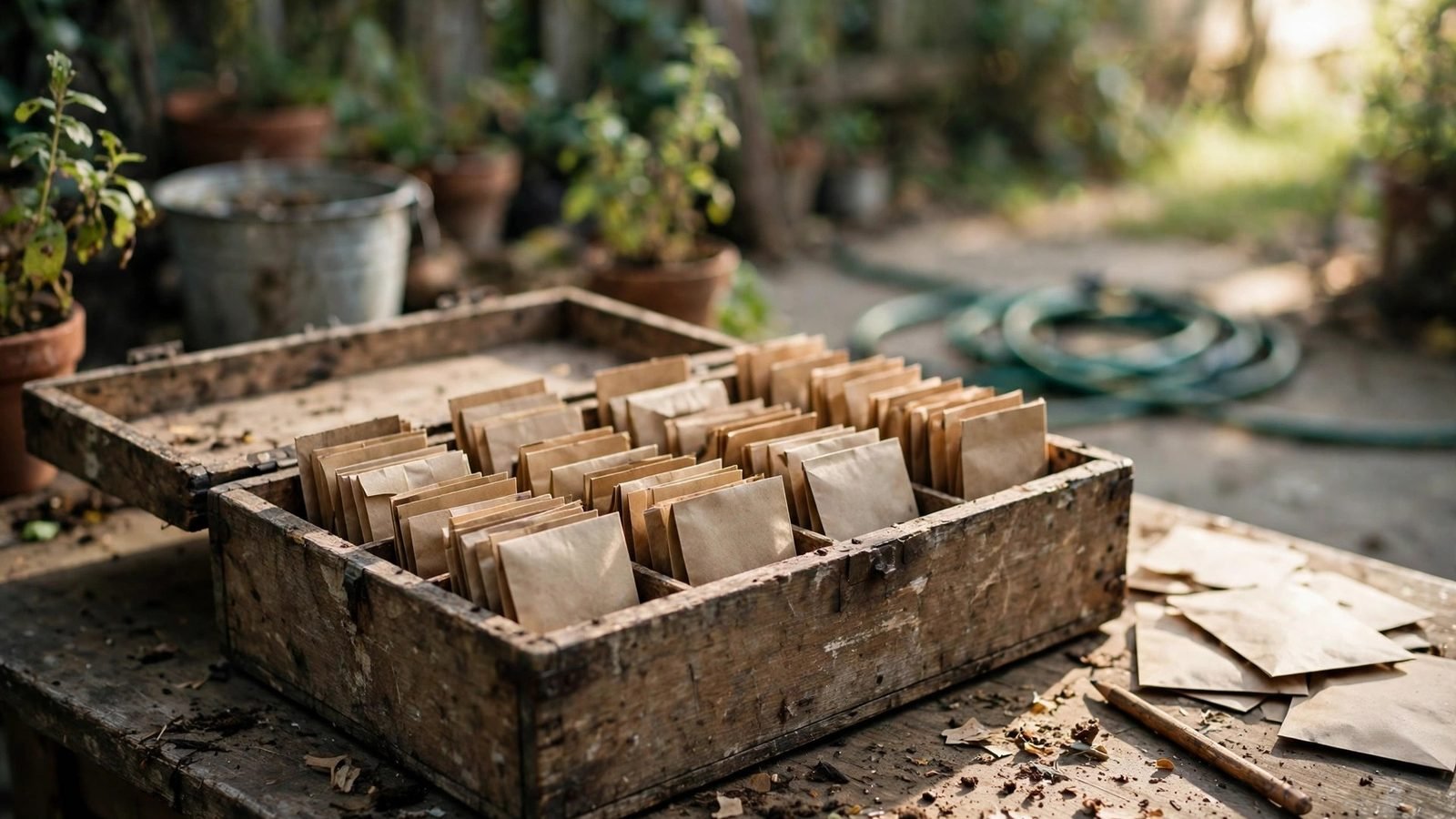
Seed packets breed in drawers. One season you have six packets, the next you have forty, and the one you need is always at the bottom of the pile, torn open, with half the seed spilled into the drawer. A seed storage box fixes that: one box, packets standing upright in rows, labeled by type, kept cool, dark, and dry, so the seed stays viable until you need it.
This is a research-based shortlist, not a hands-on test. The picks below come from the box types, sizes, and tradeoffs that growers keep recommending, and from what the listings themselves describe. No box here has been tested in our own growing space, and prices and exact specs change, so check the listing before you buy.
Seed storage is a winter job, done when the garden is quiet and the next season is still on paper. Seeds stored now get sown after your local frost dates have passed in spring, and a box that keeps them dry through winter is what makes that spring sowing work.
Quick comparison
The table below sums up the five picks. The sections after it give the tradeoff for each one, so you can match the box to the number of packets you keep.
| Pick | Capacity | Dividers | Best for |
|---|---|---|---|
| Photo storage box with cases | About 16 small cases | Yes, one case per type | Large collections, sorted by type |
| Seed organizer box with dividers | About 40 to 60 packets | Yes, adjustable | Most growers, most packets |
| Metal tin with lid | About 20 to 30 packets | No | Small collections, damp rooms |
| Acid-free seed envelope box | About 30 to 50 packets | Yes, fixed slots | Home-saved seed |
| Small airtight box with silica gel | About 10 to 20 packets | No | Humid climates, precious seed |
Capacity is the number that matters most, and it is easy to misjudge. A box that holds 40 packets sounds large until you count what you own, and most growers own more packets than they think. Count the packets first, then pick a box with room for next season’s orders as well.
How to choose a seed storage box
Start with the count. Empty every drawer and shelf, gather the packets, and count them. A grower with 20 packets needs a small box, a grower with 60 needs a medium one, and a grower with more than 100 needs a box with cases or a second box. Buy the size for the collection you will have next year, not the one you have today.
Next, look at the dividers. A box with adjustable dividers lets you sort by type, by sowing month, or by year, and move the dividers as the collection changes. A box with fixed slots is tidier but less flexible, and a box with no dividers at all is just a tin: the packets slide around, fall over, and spill.
Check the seal. Seed keeps longest when it stays cool, dark, and dry, and a box with a tight-fitting lid keeps damp air out far better than an open tray or a shoebox. A latch or a clasp holds the lid shut, and a rubber gasket seals it. If the box will live in a damp room, a gasket and a silica gel packet inside are worth having.
Look at the material as well. A plastic box is light, cheap, and easy to wipe clean. A metal tin blocks light completely and keeps mice out, but it can rust if it gets wet. A cardboard box with acid-free dividers is the pick for home-saved seed in paper envelopes, since paper breathes and the seed stays dry.
Our guide to storing seeds over winter covers the temperature and moisture conditions that keep seed viable, and our guide to organizing seed starting supplies covers the rest of the shelf the box will sit on.
Worked example: how many packets fit in a box
Box listings state capacity in different ways, so it helps to work it out from the packet size. This example uses a stated packet thickness, so you can repeat the steps with your own packets.
Take a standard seed packet, about 3 inches wide and 4.5 inches tall, and about 0.1 inches thick when full. A box with an inside length of 12 inches holds packets standing upright in a row, and the number per row is 12 divided by 0.1, which is 120 packets if they pack tight. In practice, packets vary in thickness, some are folded, and you need room to flip through them, so a realistic count is about half that: 50 to 60 packets per row.
A box with four rows of that size holds about 200 packets at a realistic count, and a box with two rows holds about 100. That is why a box sold as holding 60 packets often has two rows of 12 inches: the maker counted tight packing, and the grower counts room to browse.
Now work out the moisture control. A silica gel packet rated for a small box absorbs about 10 grams of water before it is spent, and a box that is opened once a week in a humid room lets in a little damp air each time. Two silica gel packets in a small box, replaced or dried out every few months, keep the inside dry through a winter of weekly browsing.
1. Photo storage box with cases
A photo storage box is a large outer box holding 16 small cases, each about the size of a photo print. Each case holds a group of packets, one case per type: tomatoes in one case, peppers in another, flowers in a third. It is the pick for a large collection, and for a grower who likes to pull out one case at a time instead of digging through a whole box.
Pros: holds a large collection in an organized way; each case comes out on its own, so you only open what you need; the outer box stacks neatly on a shelf.
Cons: the cases are sized for photos, so tall packets may not fit; the outer box is large and heavy when full; the cases have no dividers inside them.
Choose this one if you keep more than 60 packets and you sort by type. Label each case on the outside with a marker or a label maker, so you can find the case without opening the box.
Search for a photo storage box with cases and check the case size against your tallest packet before you buy.
2. Seed organizer box with dividers
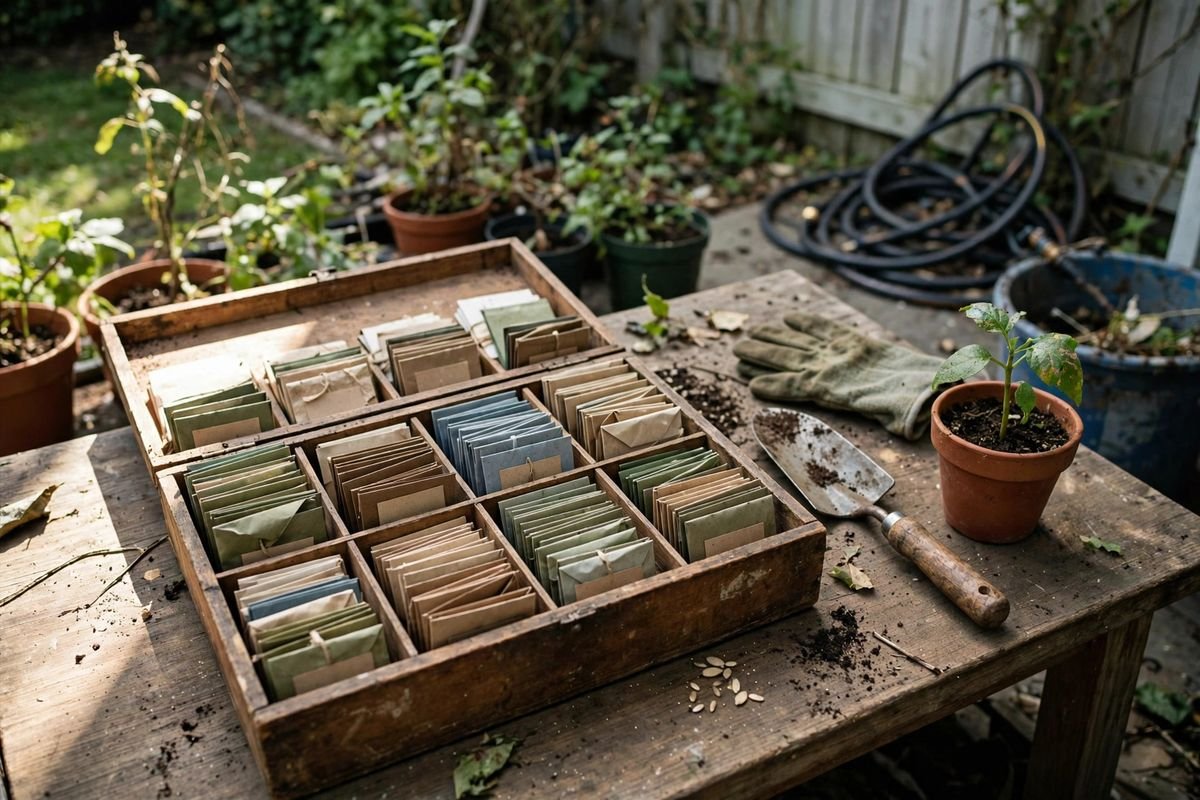
A seed organizer box is a single box with adjustable dividers, made for seed packets. It is the pick for most growers: it holds 40 to 60 packets, the dividers move to fit the collection, and the lid latches shut. Some versions come with blank dividers to label, and some come with a handle for carrying to the garden.
Pros: dividers adjust to the collection; the lid latches shut; the right size for most growers; easy to carry to the potting bench.
Cons: the dividers can slip if the box is not full; the plastic can crack if the box is dropped when full; a box without a gasket lets in damp air in a humid room.
Choose this one if you keep 20 to 60 packets and you want one box that does the whole job. It is the best pick for most home gardeners, and the one to buy if you only buy one box.
Search for a seed organizer box with dividers and check whether the dividers are included or sold separately, since that changes the price.
3. Metal tin with lid
A metal tin is a simple box with a tight-fitting lid, no dividers, and no moving parts. It is the pick for a small collection, and for a room where mice are a problem, since a metal tin keeps them out where a cardboard box does not. It also blocks light completely, which helps seed stay viable.
Pros: blocks light; keeps mice out; sturdy and hard to crush; the lid seals well enough for a dry room.
Cons: no dividers, so packets fall over and spill; can rust if it gets wet; a tin that is wider than it is tall makes packets hard to reach at the bottom.
Choose this one if you keep fewer than 30 packets, your storage room has mice, or you want a box that lasts for years. Put a small silica gel packet inside, and stand the packets upright in rows instead of laying them flat.
Search for a metal storage tin with lid sized to the packets you own, and check that the lid fits tightly before you fill it.
4. Acid-free seed envelope box
An acid-free box is a cardboard box with fixed slots, made for home-saved seed in paper envelopes. It is the pick for a grower who saves seed, since the paper envelopes breathe and the acid-free board does not damage the seed over years of storage. The slots keep the envelopes upright and easy to flip through.
Pros: made for paper envelopes; acid-free board protects seed over years; the slots keep envelopes in order; light to carry.
Cons: cardboard does not block damp air, so the box needs a dry room; no latch, so the lid can come off if the box tips; fixed slots do not adjust to the collection.
Choose this one if you save your own seed in paper envelopes and you store the box in a dry room. Label each envelope with the variety and the year, and keep a list of what is in the box taped to the lid.
Search for a seed envelope storage box and check the slot size against your envelopes before you buy.
5. Small airtight box with silica gel
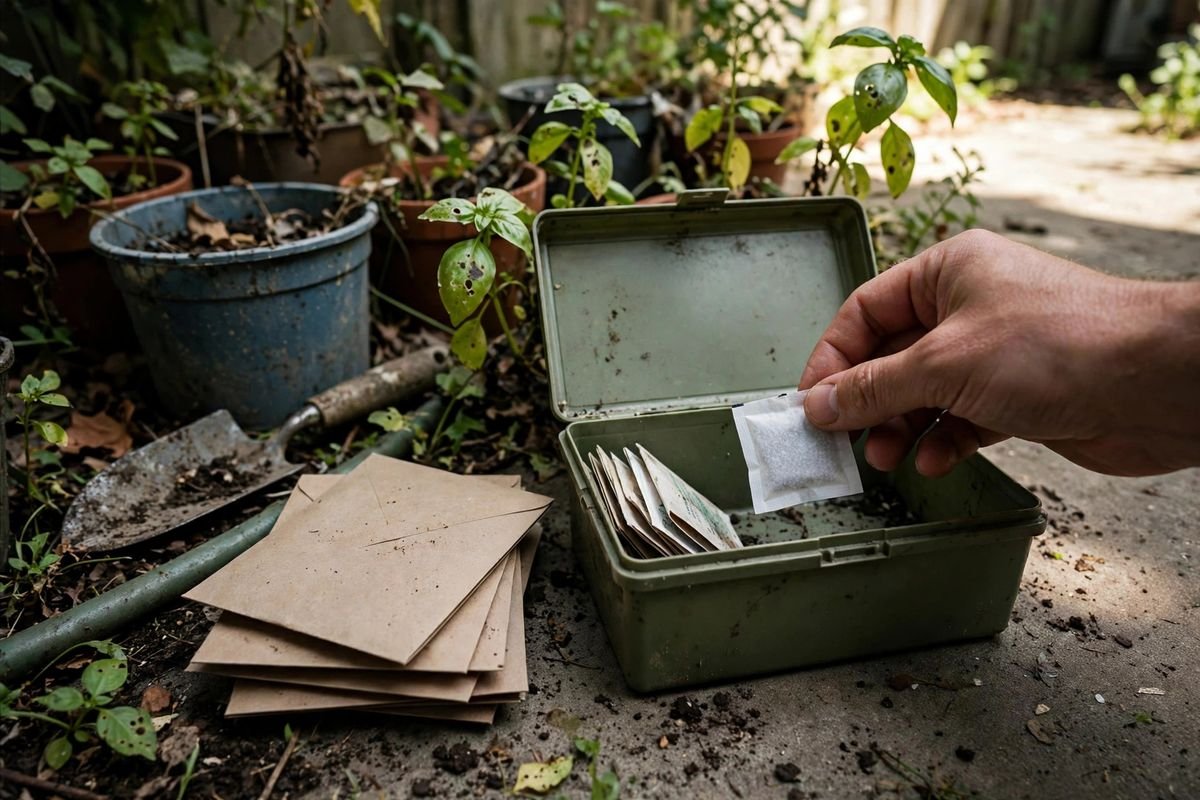
A small airtight box is a plastic box with a rubber gasket in the lid and a clasp that seals it shut, sold with silica gel packets inside. It is the pick for a humid climate, and for precious seed that you want to keep viable for years: a packet of a rare variety, or seed you saved from a plant you cannot replace.
Pros: the gasket keeps damp air out; the silica gel absorbs what gets in; small enough to fit in a refrigerator; the clasp holds the lid shut even if the box tips over.
Cons: holds only 10 to 20 packets; the gasket needs replacing after a few years; a box that is too small tempts you to overfill it, which cracks the seal.
Choose this one if your storage room is humid, or if you keep a small number of packets that matter more than the rest. Dry the silica gel in a low oven when it changes color, and put it back in the box.
Search for a airtight storage box silica gel and check the gasket and the clasp on the listing photos before you buy.
Our guide to the seed starting checklist covers the rest of the kit the box belongs to, and our guide to seedling labels that do not fade covers how to keep the packets and the plants they grow into matched up.
How long seed keeps in a box
Seed viability falls with time, and a good box slows the fall but does not stop it. Most vegetable seed keeps for a few years in cool, dry storage: tomatoes and lettuce often stay viable for 4 to 6 years, beans and peas for 3 to 4 years, and onions and parsnips for only 1 to 2 years. These are general ranges from seed saving guidance, not promises for any one packet.
Test old seed before you trust it. Put 10 seeds on a damp paper towel, fold it, keep it warm, and count how many sprout in a week. If 8 sprout, sow as usual. If 5 sprout, sow twice as thick. If fewer than 3 sprout, the packet is done, and the space in the box is better used for fresh seed.
Write the year on every packet when it goes into the box, and sort the box by year once a season. The oldest packets go to the front, so they get used first, and the box never fills up with seed that is past its best.
Frequently asked questions
Should seed be stored in the refrigerator?
A refrigerator is a good place for seed in a sealed box, since it is cool and dark. Keep the seed in an airtight box with silica gel, and let the box warm to room temperature before you open it, so condensation does not form on the packets. Do not store seed in a freezer unless the seed is fully dry, since ice crystals can damage damp seed.
Do seed packets need to stay upright?
Standing upright keeps the packets easy to flip through and stops the seed from collecting at one end and spilling when the packet is opened. It is a habit worth keeping, but a packet stored flat still keeps its seed, as long as the box stays dry.
Can I store seed in a zip-top bag instead of a box?
A zip-top bag keeps damp air out, but it does not protect the packets from crushing, and it is hard to browse. A box with the bags inside is the better setup: the box protects the packets, and the bags keep the seed dry.
How do I label packets I saved myself?
Write the variety, the year, and the source on the envelope before it goes into the box. A pencil lasts longer than a pen on a paper envelope, and a label on the outside of the box tells you what is inside without opening it.
Sources and further reading
- University of Minnesota Extension: Starting Seeds Indoors
- Royal Horticultural Society: How to Sow Seeds Indoors
- Penn State Extension Master Gardener: Starting Seeds
Related reading: How to Store Seeds Over Winter, How to Organize Seed Starting Supplies, Seed Starting Checklist: Everything You Need Before Sowing, Best Seedling Labels That Do Not Fade
By the Pot and Plot Team