
This post may contain affiliate links. If you buy through links on this page, we may earn a commission at no extra cost to you.
As an Amazon Associate I earn from qualifying purchases.
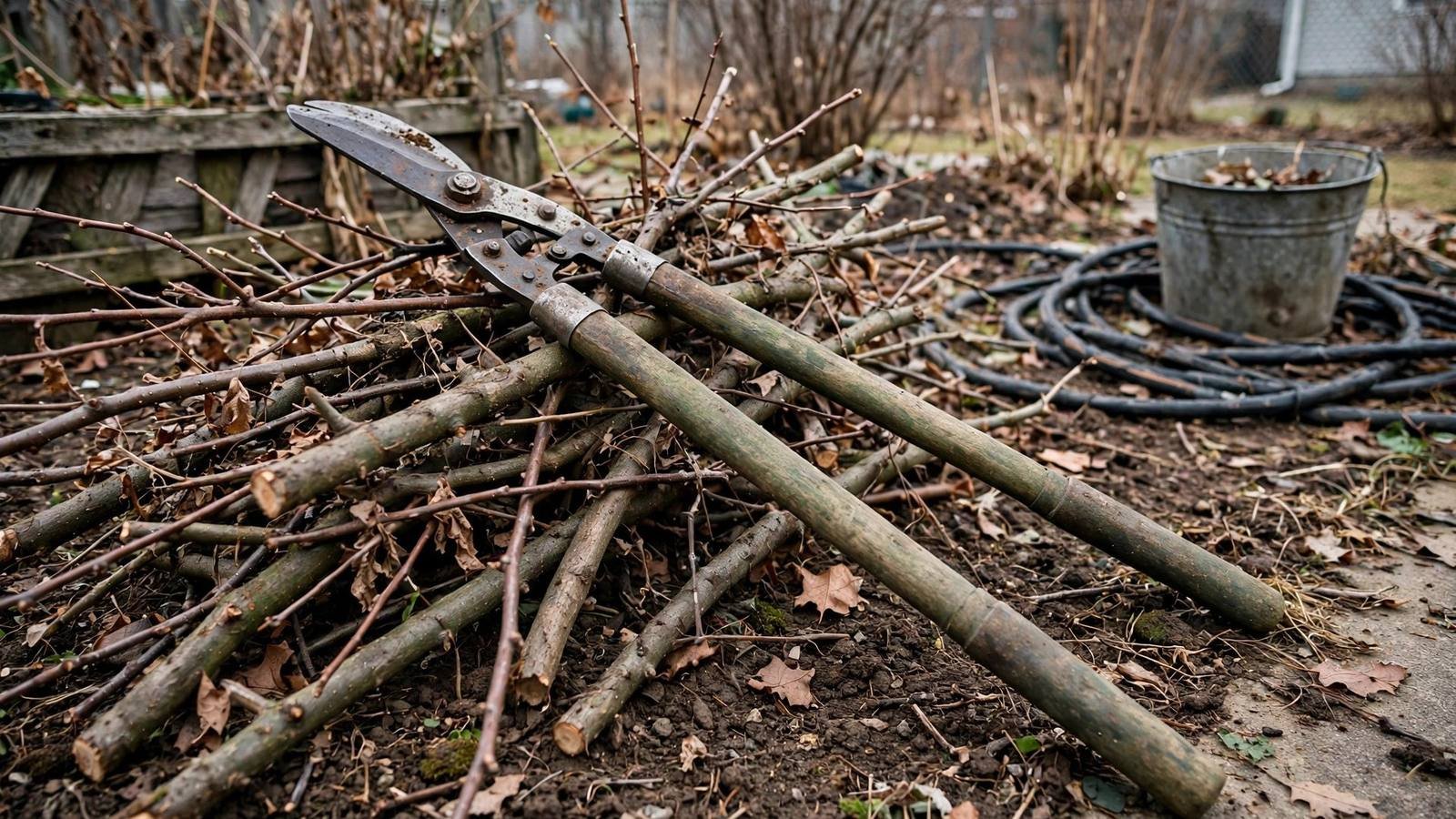
Hand pruners stop being enough when a branch passes three quarters of an inch. Loppers pick up where pruners leave off. With handles of 28 to 32 inches and a pivot that multiplies hand force, a lopper cuts live branches up to about one and a half to two inches thick, which covers most winter pruning on shrubs, roses, and young fruit trees.
The wrong lopper still makes that work hard. A short, light pair strains the shoulders on thick wood. A heavy pair with the wrong blade type crushes live stems instead of slicing them. This guide compares the five lopper types a home gardener is most likely to meet, gives cut-size and handle guidance, and works through cost-per-season math for one winter pruning routine. We have not tested the loppers linked here, and this guide compares types rather than naming tested winners. Prices change often, so check each listing for current details before buying. Pruning timing in this guide follows local frost dates and regional guidance rather than a USDA zone number alone, since two gardens in the same zone can sit weeks apart on frost.
The five types at a glance
Two blade designs do most of the work in this guide: bypass and anvil. Bypass blades pass each other like scissors and slice live wood cleanly. Anvil blades press one straight blade down onto a flat plate and suit dead wood, where a crushing cut does no harm. Ratchet and telescoping designs add force or reach on top of one of those two blade types. The table below gives the short version, and the sections after it fill in the tradeoffs.
| Type | Blade and handles | Cut size it handles | Best for | Main drawback |
|---|---|---|---|---|
| Standard bypass lopper | Curved bypass blades, fixed handles of 28 to 32 inches | Live branches up to about 1.5 to 2 inches | General winter pruning on shrubs and fruit trees | Needs real arm strength on wood near its limit |
| Compact bypass lopper | Bypass blades, shorter handles of 18 to 21 inches | Live branches up to about 1.25 inches | Close work inside a shrub and gardeners with less reach | Less leverage, so thick cuts take more effort |
| Anvil lopper | Straight blade pressing onto a flat anvil plate, long handles | Dead branches up to about 2 inches | Clearing dead wood and storm-damaged limbs | Crushes live stems and leaves a ragged cut on green wood |
| Ratchet bypass lopper | Bypass blades with a ratchet that holds progress between squeezes | Live branches up to about 2 inches | Gardeners with less grip strength and slow, thick cuts | More moving parts and a slower cut on thin stems |
| Telescoping bypass lopper | Bypass blades, handles that extend from about 25 to 40 inches | Live branches up to about 1.5 to 2 inches | High branches and varied reach without a ladder | Heavier at full extension and can flex under load |
Cut size is the first filter. A lopper that cannot finish a two-inch limb is the wrong tool for a mature shrub, and a lopper bought for dead wood should not be the one used on live fruit wood.
Bypass vs anvil: which cuts what
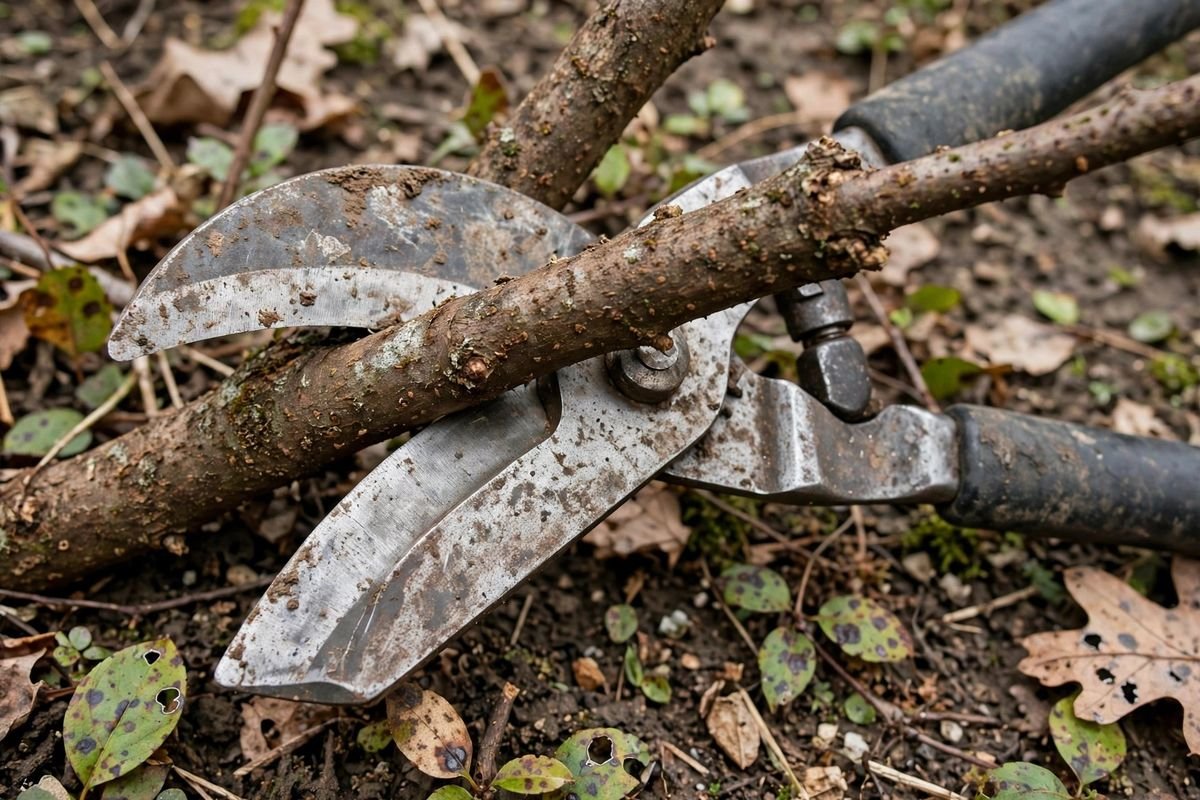
Bypass blades are the default for live wood. One curved blade slides past a hooked counter blade, and the pair slices the stem the way scissors cut paper. The cut face stays smooth, which helps the wound close and lowers the chance of disease entering the stem. Most winter pruning on live shrubs, roses, and fruit trees belongs to a bypass lopper.
Anvil blades work the other way. A single straight blade comes down onto a flat metal plate, and the stem is cut by pressure rather than by slicing. On dry, dead wood that pressure works well. On live wood the same pressure crushes the cells on either side of the cut, leaves a torn face, and slows healing. Keep an anvil lopper for dead wood only.
A quick check tells the two apart in a store or a listing. If the blades cross like scissors, the tool is bypass. If one blade meets a flat plate, the tool is anvil. When a listing does not say which type it is, look at the head photo before buying. If you need a bypass lopper for live wood, you can browse bypass loppers on Amazon. If you need an anvil lopper for dead wood, you can browse anvil loppers on Amazon. We have not tested the products linked here, and we give no current store prices.
Cut capacity and handle length
Cut capacity is the thickest branch the lopper can close on in one squeeze, and it is the number most often stretched in listings. A lopper rated for two inches may cut a two-inch softwood stem such as willow with ease and stall on a two-inch hardwood stem such as oak. Treat the rating as a softwood figure, and size the tool for the hardest wood in the garden rather than the easiest.
Handle length sets leverage. Longer handles multiply hand force, so a 32-inch lopper cuts a thick stem with less effort than a 21-inch lopper with the same head. The cost is weight and swing room: long handles need space to open, and inside a dense shrub they catch on stems a compact pair would slip past.
Weight and handle material
Lopper handles come in wood, steel, aluminum, and fiberglass. Wood handles feel warm in winter and absorb shock, but they can split if the tool is left out in rain. Steel handles are strong and heavy. Aluminum handles are light and resist rust, but they can bend if the tool is used as a lever. Fiberglass handles are light, strong, and weather resistant, and they are the most common choice on mid-priced loppers.
Weight is worth checking before buying, because a lopper is carried and lifted all through a pruning session. A pair that weighs under three pounds suits long sessions and gardeners with less arm strength. A pair over four pounds cuts with more momentum but tires the shoulders sooner. If the listing gives no weight, treat that as a gap in the listing rather than a sign the tool is light.
For the smaller cuts that come before lopper work, see our guide on the best pruning shears for home gardeners, and for branches past lopper size, see our guide on the best pruning saws for fruit trees.
Ratchet and telescoping loppers
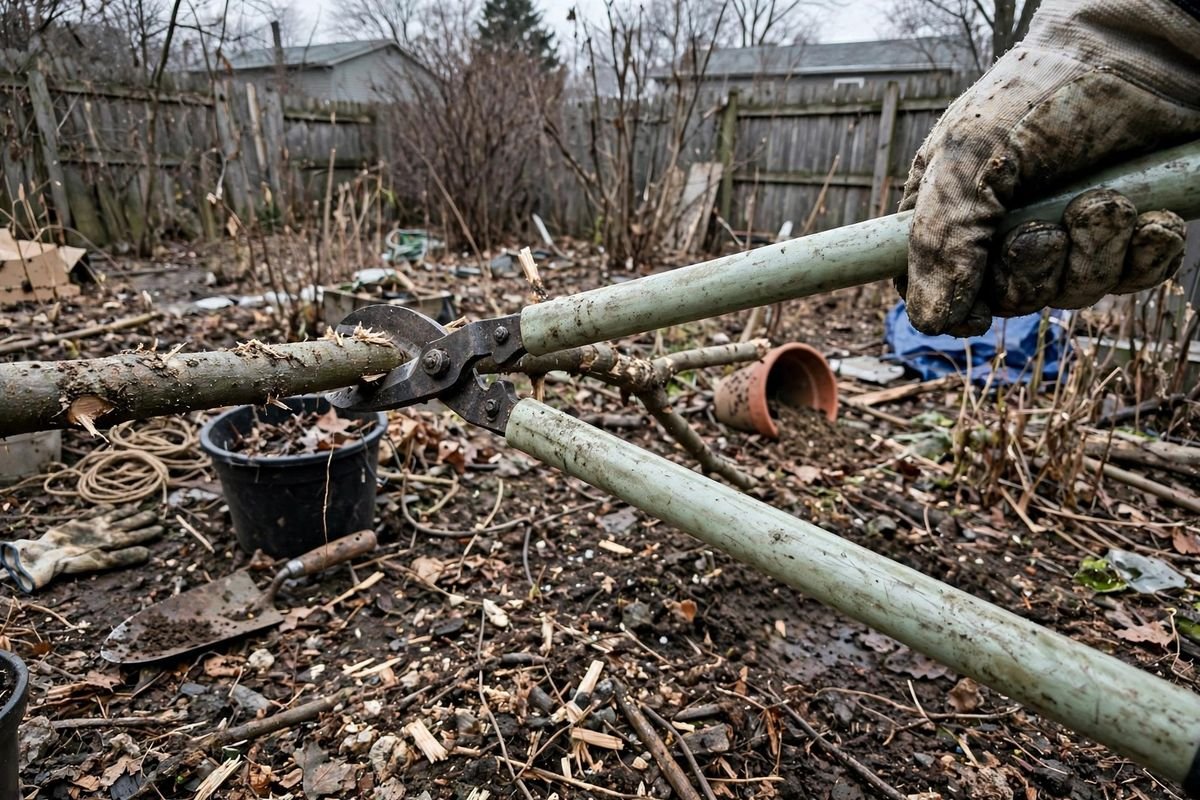
A ratchet lopper adds a toothed mechanism that holds the blades in place between squeezes. Squeeze once and the blades bite partway; squeeze again and they bite deeper, without the stem springing the blades open between squeezes. That staged cut suits gardeners with less grip strength and suits thick stems that need more force than one squeeze can give. The tradeoff is speed. A ratchet lopper takes several squeezes for each cut, so it is slow on thin stems where a plain bypass pair would finish in one squeeze.
A telescoping lopper adds reach. The handles slide out from about 25 inches to about 40 inches, which puts higher branches within reach without a ladder and lets the same tool work close in when the handles are short. At full extension the tool is heavier in the hands and the handles can flex, which makes the cut feel less direct. Lock the handles firmly before cutting, and check the lock each time the length changes. If you need a ratchet lopper, you can browse ratchet loppers on Amazon, and if you need a telescoping pair, you can browse telescoping bypass loppers on Amazon.
Which lopper fits which job
Choose a standard bypass lopper if the garden has shrubs and young fruit trees and most cuts fall between three quarters of an inch and one and a half inches. It is the one pair that handles the bulk of winter pruning.
Choose a compact bypass lopper if the work is inside dense shrubs, in a small garden, or in the hands of someone who finds long handles awkward. It gives up some leverage, but it reaches cuts a long pair cannot.
Choose an anvil lopper if the job is clearing dead wood after winter storms or cutting back dead canes. Keep it away from live stems.
Choose a ratchet bypass lopper if grip strength or wrist pain limits how hard one squeeze can be. The staged cut trades speed for force, and that trade is worth it when a plain pair cannot close.
Choose a telescoping bypass lopper if the garden has tall shrubs and the gardener wants extra reach without climbing. It is a second pair for most gardens rather than the first, since it is heavier and slower than a fixed-handle pair at the same cut size.
For the full winter routine around these cuts, see our guide on how to prune fruit trees in winter, and for rose care in the cold months, see our guide on how to protect roses from winter cold.
Our worked example: cost per season for one winter pruning routine
Here is the cost-per-season math for one home garden with eight shrubs and three fruit trees, pruned once a year in late winter. Every price and lifespan below is a stated example figure for the math, not a store price. Change any figure and the result changes with it.
Assumptions: the garden is pruned once a year; example purchase prices are 45 dollars for a standard bypass lopper, 30 dollars for a compact bypass lopper, 40 dollars for an anvil lopper, 55 dollars for a ratchet bypass lopper, and 60 dollars for a telescoping bypass lopper; example useful lives are eight seasons for a standard bypass lopper, six seasons for a compact bypass lopper, eight seasons for an anvil lopper, seven seasons for a ratchet bypass lopper, and six seasons for a telescoping bypass lopper; each lopper needs one 12-dollar sharpening or blade service in its life, counted once in the totals below.
| Type | Example price | Example life | Service in its life | Cost over its life | Cost per season |
|---|---|---|---|---|---|
| Standard bypass lopper | $45 | 8 seasons | $12 | $57 | $7.13 |
| Compact bypass lopper | $30 | 6 seasons | $12 | $42 | $7.00 |
| Anvil lopper | $40 | 8 seasons | $12 | $52 | $6.50 |
| Ratchet bypass lopper | $55 | 7 seasons | $12 | $67 | $9.57 |
| Telescoping bypass lopper | $60 | 6 seasons | $12 | $72 | $12.00 |
The math is simple. Add the purchase price to the service cost, then divide by the number of seasons the tool lasts. For the standard bypass lopper, 45 dollars plus 12 dollars is 57 dollars over eight seasons, or 7.13 dollars per season. For the telescoping pair, 60 dollars plus 12 dollars is 72 dollars over six seasons, or 12.00 dollars per season. The anvil lopper is cheapest per season in this example, but it cannot do the live-wood work, so the standard bypass lopper is the cheapest per season among the tools that cut live branches.
Time is the other half of the cost. Assume the yearly pruning makes about 120 lopper cuts, and assume each cut takes about 20 seconds with a sharp bypass lopper and about 35 seconds with a dull one. That works out to 40 minutes of cutting with a sharp tool and about 70 minutes with a dull one. A sharp blade saves half an hour a year in this example.
Keeping loppers sharp and clean
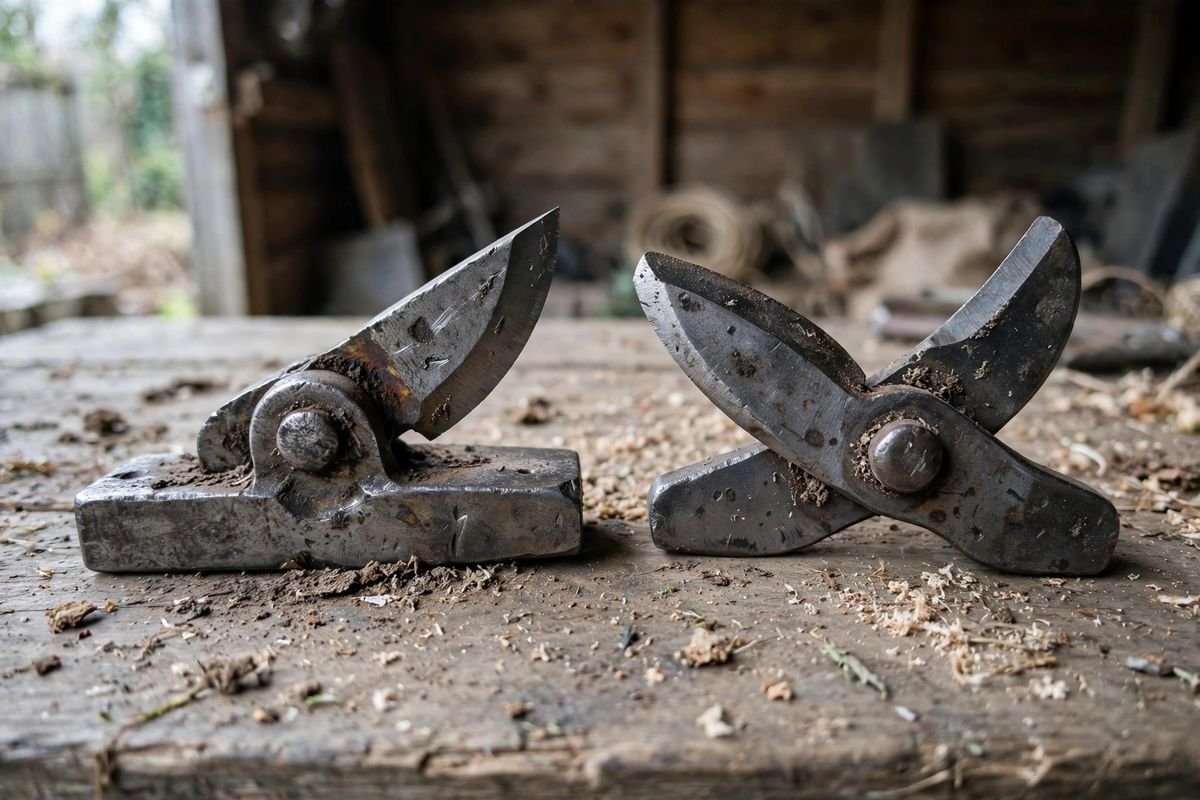
A dull lopper crushes stems the way an anvil lopper does, even when the blades are bypass. The cut face tears, the wound heals slowly, and disease has an open door. Sharpen the blade when it stops slicing cleanly, and replace the blade when sharpening no longer restores the edge. For the sharpening routine, see our guide on how to sharpen pruning shears.
Clean the blades between plants as well as at the end of the day. Wipe them with a cloth dampened with 70 percent alcohol or a one-to-nine mix of household bleach and water, and let them dry before the next cut. That step matters most when moving from a diseased plant to a healthy one. Our guide on how to clean and disinfect garden tools covers the full routine.
Store loppers dry, with the blades closed or sheathed, and a light wipe of oil on the blades before they go on the shelf. A lopper left damp in a shed rusts over winter, and rust shortens the blade life the cost table assumes. For storage in a tight space, see our guide on how to store garden tools in a small garage, and for the yearly upkeep round, see our garden tool maintenance checklist.
Troubleshooting
The lopper will not close on a thick branch
A lopper that will not close is usually past its cut capacity or dull. Measure the branch first. If it is over two inches, switch to a pruning saw. If it is within capacity, sharpen the blade, since a dull edge needs far more force than a sharp one. Never stand on the handles or force them with a foot, since that bends the pivot and ruins the tool.
The cut leaves a crushed, torn face
A crushed cut comes from a dull bypass blade, from an anvil lopper used on live wood, or from a cut made too far from the branch collar. Sharpen the blade, use bypass blades for live stems, and cut just outside the slightly swollen ring where the branch meets the trunk or a larger limb.
The blades stick or will not open fully
Sticky blades usually mean sap or rust on the pivot. Clean the pivot with warm soapy water, dry it, and add a drop of light oil. Check that the pivot bolt is snug but not over-tight, since an over-tight bolt binds the blades and a loose bolt lets them wobble.
Frequently asked questions
What size lopper do I need for thick branches?
A standard bypass lopper with 28 to 32 inch handles cuts live branches up to about one and a half to two inches. For wood thicker than two inches, use a pruning saw instead.
Can I use an anvil lopper on live branches?
It will cut them, but it crushes the stem and leaves a torn face that heals slowly. Use bypass blades for live wood and save the anvil lopper for dead wood.
When should I prune with loppers?
Most shrubs and fruit trees are pruned in late winter, while the plant is dormant and before buds break. Dead and broken branches can come off at any time of year. Check local frost dates and regional extension guidance for the exact window.
How do I keep loppers from rusting?
Wipe the blades dry after each use, oil them lightly before storage, and keep the tool out of rain. Our guide on how to keep hand tools from rusting covers the full routine.
Sources and further reading
- University of Minnesota Extension, Pruning Trees and Shrubs
- University of Maryland Extension, Pruning Tools
- North Carolina State University Extension, Training and Pruning Fruit Trees in North Carolina
Related reading: Best Pruning Shears for Home Gardeners, Best Pruning Saws for Fruit Trees, How to Prune Fruit Trees in Winter, How to Sharpen Pruning Shears
By the Pot and Plot Team