
This post may contain affiliate links. If you buy through links on this page, we may earn a commission at no extra cost to you.
As an Amazon Associate I earn from qualifying purchases.
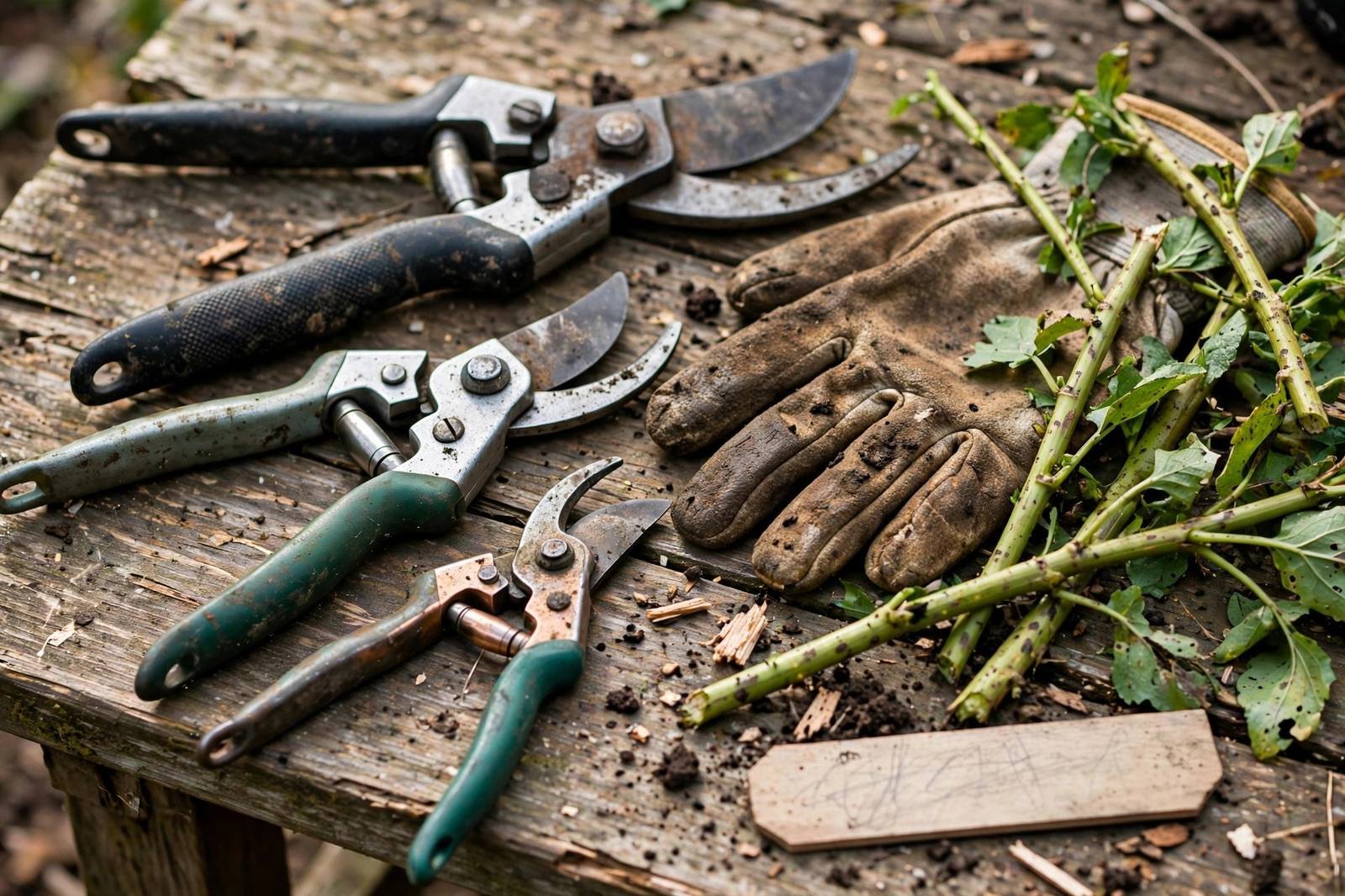
A clean cut heals fast. A crushed stem does not. The right pair slices green growth without tearing, fits the hand for an hour of work, and stays sharp season after season. The wrong pair chews stems, tires the wrist, and sits dull in a drawer by midsummer.
This is a spec-based research roundup, not a hands-on test report. We compared manufacturer specifications, blade materials, and extension guidance, then worked the numbers on cost and cut capacity. We did not test products side by side, and we will not pretend otherwise. Check the current listing for size, materials, and replacement parts before you order.
For everyday vegetable work, a sharp bypass pair handles most of what a home garden asks — suckering tomatoes, trimming herbs, and cutting back soft growth in fall. Our guides to how to grow tomatoes and fall garden cleanup show where that tool earns its keep.
Quick comparison: three shear types
| Shear type | Cut capacity | Best for | Watch out for |
|---|---|---|---|
| Compact bypass | Up to about 1/2 inch on green stems | Herbs, flowers, tomato suckers, small hands, detail work | Too small for woody canes; forcing thick stems bends the blade |
| Standard bypass | About 5/8 to 3/4 inch on live wood | General vegetable and shrub work, roses, berry canes | Heavier; large handles can strain smaller hands |
| Ratchet / ergonomic bypass | About 3/4 inch, cut in stages | Thicker live stems, less squeeze force per cut | Slower on thin growth; more parts to keep clean |
Those capacity figures are typical listing ranges for each class, not promises for every model. Size the tool to the stem, not the other way around. A stem that fills the full jaw opening is already too big for that pair — loppers should take over.
Why bypass is the home-garden default
Bypass shears cut like scissors: a curved blade slides past a hook blade, drawing the stem in and slicing it. A sharp bypass leaves a smooth face with little crushed tissue, which matters for disease control as much as neatness.
Anvil shears close a straight blade onto a flat pad. That suits dead, dry wood. On live green stems, the pad can bruise bark. For a head-to-head look, see bypass pruners vs anvil pruners. For vegetable beds and mixed borders, bypass is the safer default.
Sharp beats fancy. Extension guidance is consistent: tools must be sharp to give a good clean cut, and cutting branches too big for the pruners damages both plant and tool.
Cut-capacity guide: match stem to shear
Measure or eyeball the stem where you plan to cut, then pick the smallest shear that handles it with room to spare.
| Stem diameter | Typical examples | Shear to reach for |
|---|---|---|
| Up to 1/4 inch | Herb stems, deadheading, tomato suckers, shoot tips | Compact bypass |
| 1/4 to 1/2 inch | Late tomato side shoots, pepper stems, young rose growth | Compact or standard bypass |
| 1/2 to 3/4 inch | Rose canes, raspberry canes, currant wood, small shrub branches | Standard bypass; ratchet if hand strength is a concern |
| Over 3/4 inch | Older shrub limbs, thick fruit wood | Step up to loppers |
Seat the stem deep in the jaws, close to the pivot, where leverage is greatest, rather than snipping with the tips. Never twist the handles to finish a stubborn cut — twisting springs the blades apart, and a sprung pair will chew the next stem instead of slicing it.
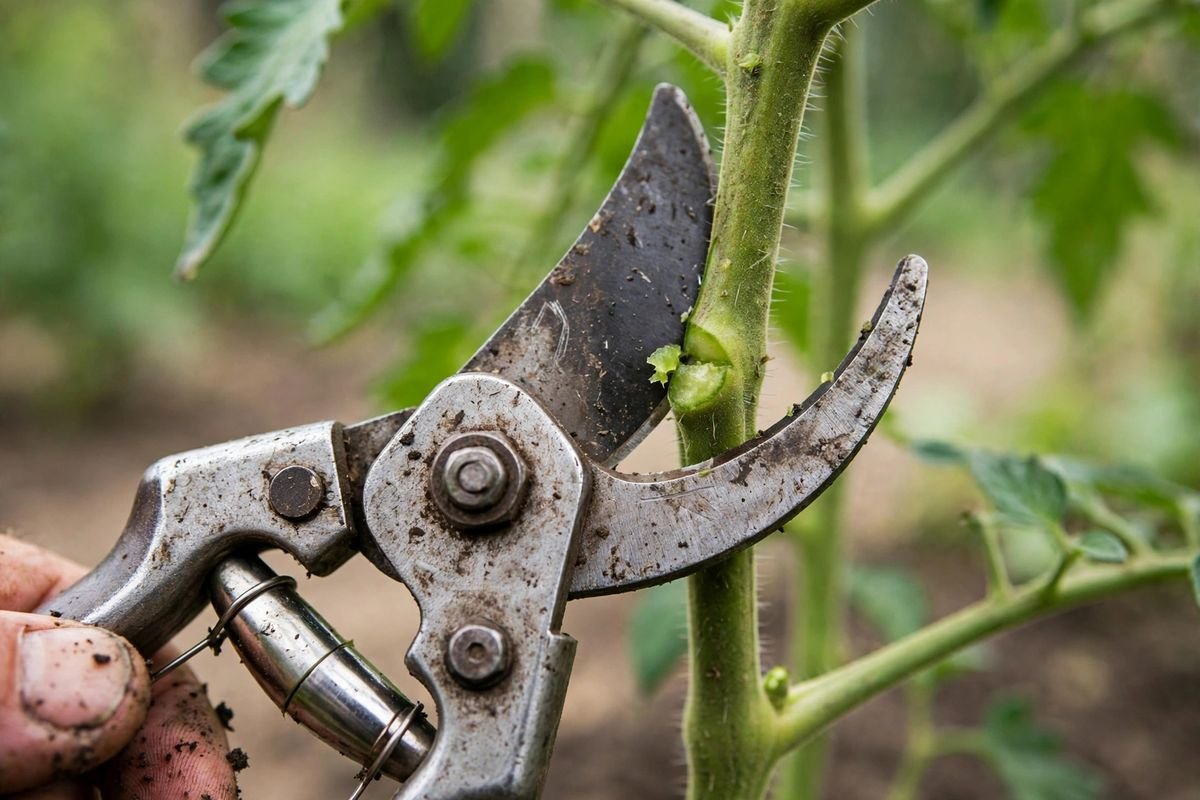
That clean slice on a green tomato stem is the whole point of the bypass design. Work a row with a dull or sprung pair and the difference shows at once: frayed edges and stems that brown back farther than they should.
Blade steel: what the listing words mean
High-carbon steel
High-carbon blades take a keen edge and resharpen easily on a stone or file. The trade is corrosion — leave one wet overnight and rust follows. A wipe, a dry, and a drop of oil prevent that.
Stainless steel
Stainless resists rust in damp sheds and forgives a missed cleaning. The edge can take more work to raise when dull, and hard stainless can chip on wire or frozen wood.
Coated blades
Nonstick coatings reduce sap drag and slow corrosion, but coatings wear. Extension notes caution that coated blades can be sharpened with care to avoid damaging the coating. Treat a coating as a convenience layer, not a substitute for decent steel.
Across all three, look for a replaceable cutting blade that the maker sells as a spare part. That one spec turns a five-year tool into a much longer one, and it anchors the cost math below. A bypass pruning shears search surfaces all three families side by side — check the listing for exact steel and parts support before ordering.
Handle fit: the spec nobody lists well
Listings give cut capacity to the sixteenth of an inch, then go vague on the part your hand holds. Fit decides how a pair feels at cut fifty.
Compact pairs around six to seven inches suit smaller hands. Standard pairs around eight to nine inches give leverage for thicker stems but can over-stretch a small grip. Contoured, cushioned grips spread pressure across the palm. A sound spring should reopen the blades fully, and the lock should work one-handed without engaging by accident.
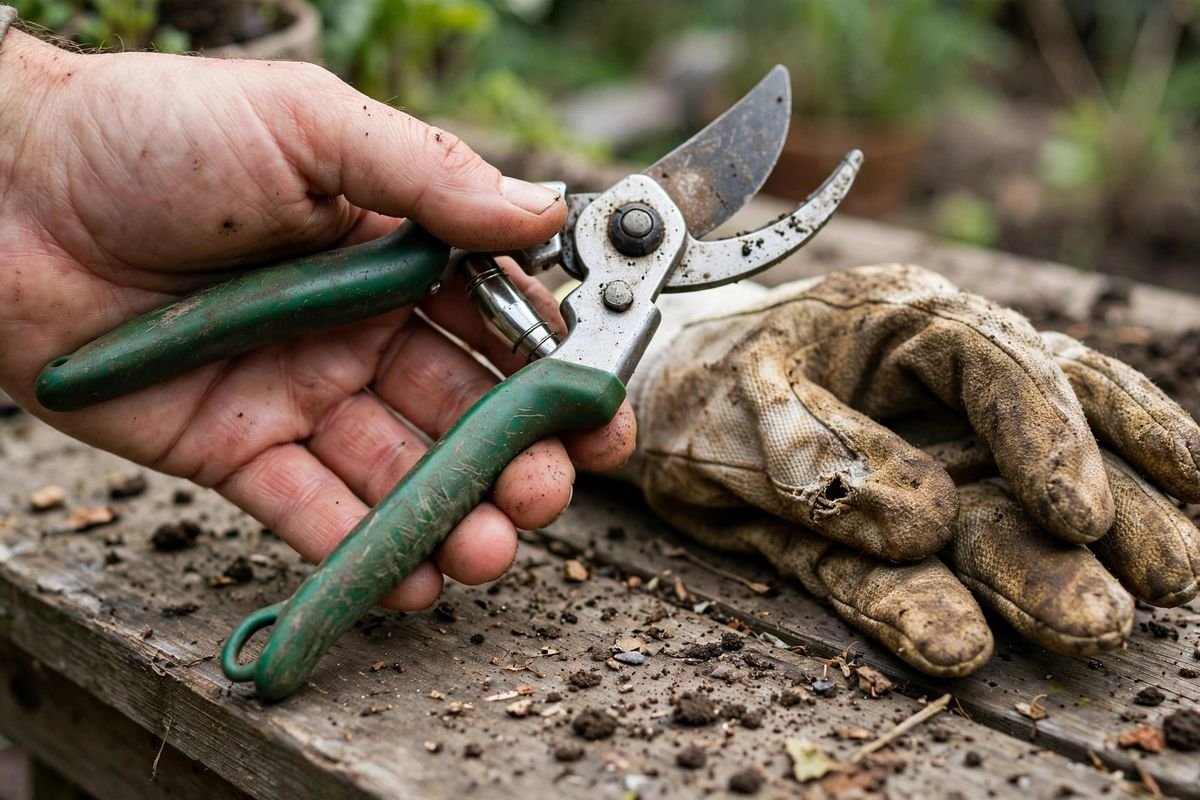
A pair that fits sits deep in the palm with fingers wrapped, not perched on fingertips. We look for stated overall length and weight first. If your hands ache after pruning, the cause is often a handle one size too large. Gardeners setting up a first plot will find the same fit-first logic in our guide to how to start a vegetable garden.
Cost per season: a worked example
Price on the listing is not cost in the garden. Here is our worked example with assumptions stated, so you can swap in your own numbers. Assumptions — illustrative price bands only; check the current listing for live prices, since these bands are examples for the math, not quotes. Budget pair: $12, replaced every season because the blade is not replaceable. Mid-range pair: $32 up front plus one $10 replacement blade in year three, lasting five seasons with basic sharpening. Same garden, same work: spring cleanup, summer tomato and herb work, and fall cutback each year.
Budget path: $12 × 5 seasons = $60 over five seasons, or $12.00 per season — and that assumes each cheap pair survives its full season.
Mid-range path: $32 + $10 = $42 over five seasons, or $8.40 per season. If the budget pair fades mid-second season, as non-replaceable blades often do, four pairs in five years cost $48, past the mid-range total, with worse cuts in the bargain. If the mid-range pair runs seven seasons on a second blade swap, its cost drops toward $7 per season.
The lesson is not that everyone should buy the $32 pair. Cost per season favors replaceable parts and sharpenable steel when you prune every year. If you prune twice a year and that is all, a budget pair stored clean and dry can be the honest value. If the tool works monthly, pay for the blade you can replace.
What to look for before you order
- True bypass action for live growth, with blades that pass closely without a visible gap.
- Cut capacity matched to your stems using the guide above, with headroom.
- Replaceable blade and spring, with spare parts the maker actually lists.
- Blade steel named on the listing — high-carbon for easy sharpening, stainless for rust resistance — not just “premium steel.”
- Stated length and weight, so handle fit is a decision, not a surprise.
Browse bypass pruning shears and sort by blade material and size rather than star order alone. Check each listing for cut capacity, steel type, and replacement-blade support. The mixed stem sizes in a fall garden cleanup session make the case for a well-matched standard pair that covers most cuts without a tool swap.
Care that keeps the cut clean
Most shears do not wear out — they get put away dirty, sap dries, the pivot stiffens, and stems tear. Wipe sap and soil off after use, wash with soapy water when sap builds up, and dry fully. Disinfect with 70 percent alcohol when moving from a diseased plant to a healthy one. Sharpen on the bevel side only, following the original angle — bypass blades are single-beveled, typically 10 to 20 degrees — then oil the blade and pivot. Store dry with the lock closed.
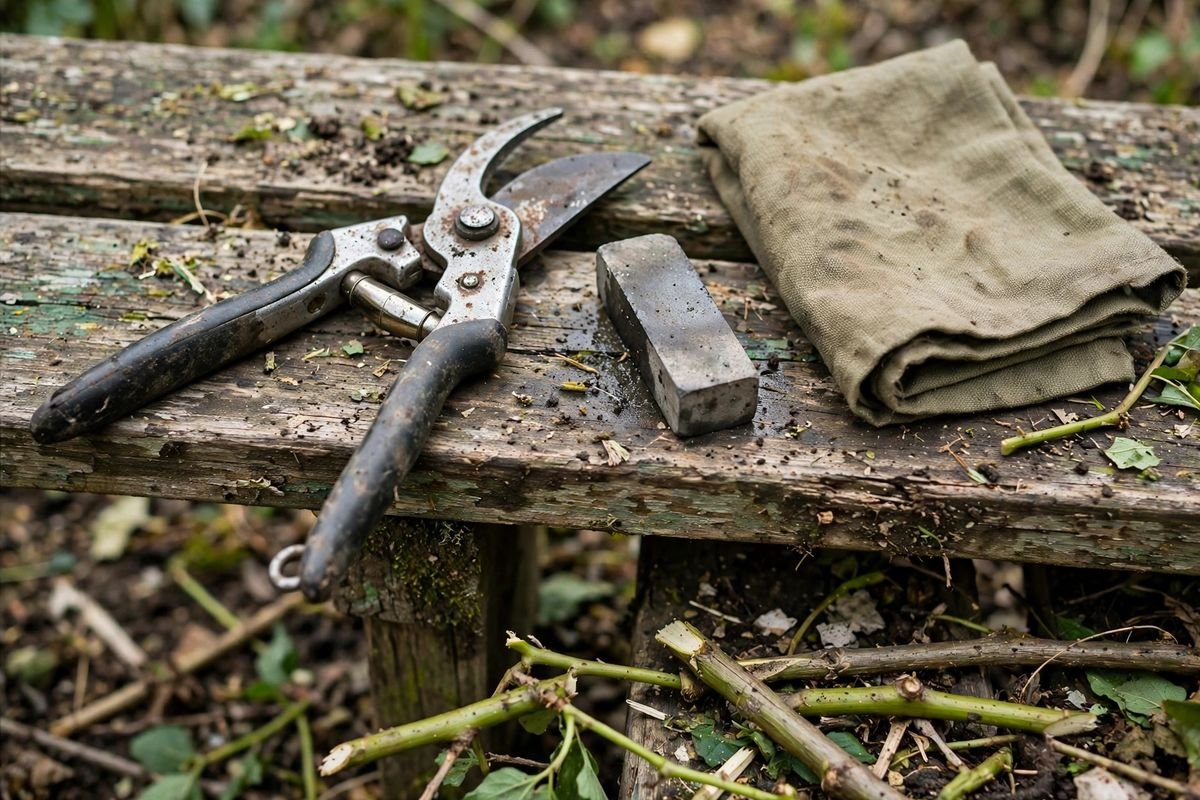
A small stone and a cloth on the bench make that routine easy to keep. Sixty seconds of cleaning and the occasional touch on the stone are what let a mid-range pair deliver the five seasons the cost example assumes. The same habit speeds every fall job, from trimming in our how to plant garlic in fall season to cutting scapes the next spring.
Our verdict: choose by hand and by stem
Choose a compact bypass pair if your pruning is herbs, flowers, and tomato suckers, or if you have smaller hands and value control over leverage.
Choose a standard bypass pair if you want one tool for most of the home garden, up to about 3/4 inch. For most readers, this is the pair to buy first, with a replaceable blade.
Choose a ratchet or ergonomic pair if thicker live stems are routine and squeeze force is your limit. The staged cut trades speed for power.
Whichever class you land on, buy the best blade your budget allows, keep it clean and sharp, and size the tool to the stem every time. That combination — not any single brand name — is what the best pruning shears for home gardeners have in common.
Sources & Further Reading
- Pruning Tools — University of Maryland Extension: bypass and anvil design, sharpness, and disinfecting between cuts.
- Maintaining Lawn and Garden Tools — University of Wisconsin Extension (PDF): cleaning, rust removal, disinfecting, oiling, and sharpening at the original bevel angle.