
This post may contain affiliate links. If you buy through links on this page, we may earn a commission at no extra cost to you.
As an Amazon Associate I earn from qualifying purchases.
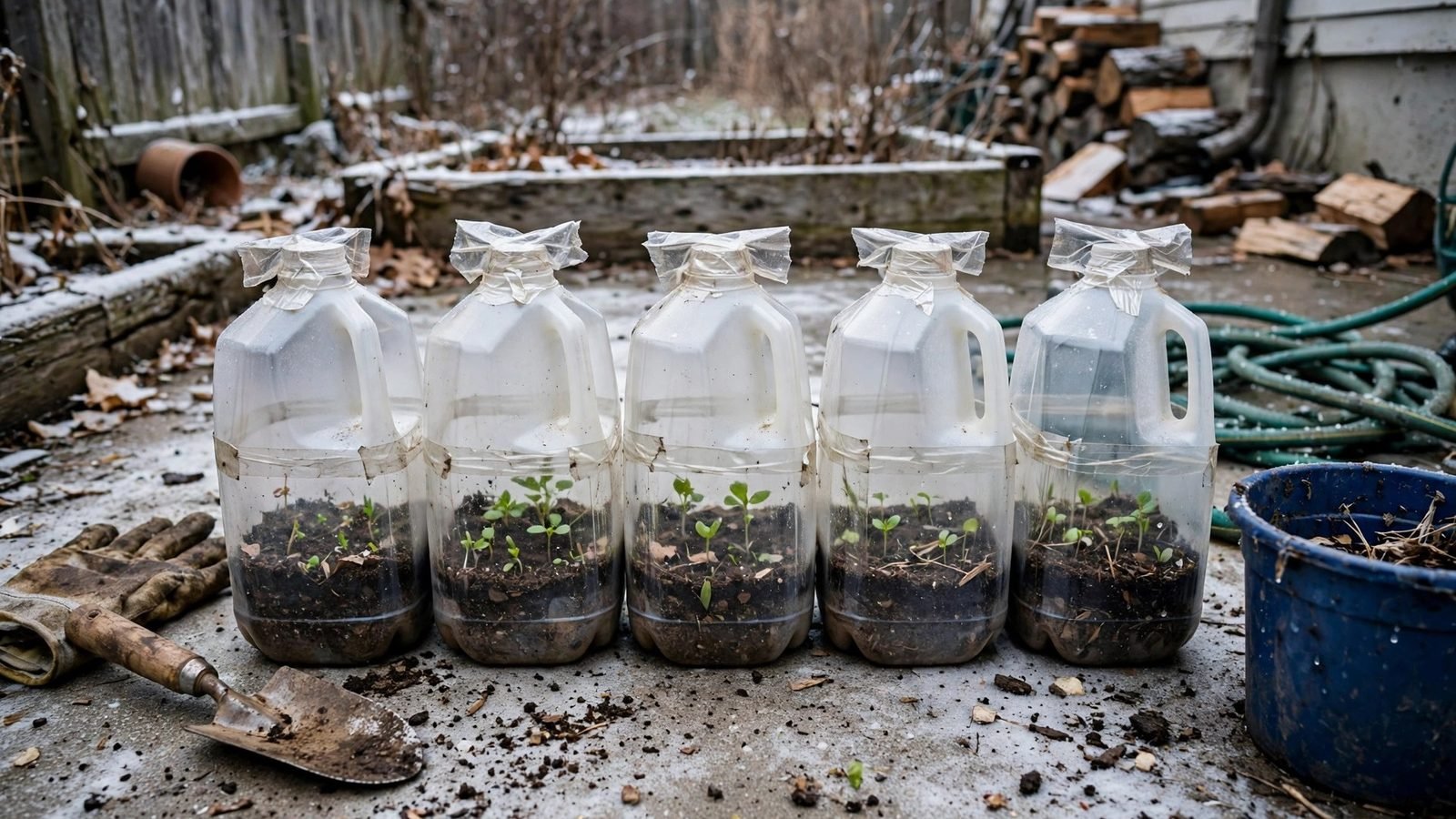
Winter sowing starts seeds outdoors in the middle of winter, inside a clear plastic container that acts as a small greenhouse. The seeds sit through cold, rain, and snow, then sprout when spring arrives. A milk jug is the classic container for this method: it is free, it holds enough soil for a dozen seedlings, and the cap opening gives the plants air once the weather warms.
This guide covers the milk-jug method from start to finish: which seeds suit it, how to build and fill a jug, sowing dates by zone, when to open the vents, and when to move the seedlings into the garden. It also works out how many jugs a 4-by-8-foot bed needs, so the first batch can be sized to the bed it will fill.
What winter sowing is and how it works
Winter sowing is sowing seed into a vented, covered container and leaving the container outside all winter. The container shields the seed from wind and heavy rain while letting in light, air, and moisture. The seed goes through the same cold, damp period it would face in the ground, which breaks dormancy in many perennials and hardy annuals. That cold period is called cold stratification.
When spring warms the soil inside the jug, the seeds sprout. Because the seedlings grow outdoors from the start, they are already used to sun, wind, and cool nights. They do not need a hardening-off period the way indoor seedlings do, and they do not need grow lights, heat mats, or window space. The jug does the work of a cold frame on a small scale, and the plants come out stocky rather than stretched. For a larger version of the same idea, see our guide on how to use a cold frame for winter vegetables.
Seeds that suit winter sowing
The best candidates are seeds that sprout in cool soil or need a cold period first. Hardy annuals, perennials, and cool-season vegetables head the list. The table below groups the common choices and notes what each group needs.
| Group | Examples | Notes |
|---|---|---|
| Native perennials | Milkweed, purple coneflower, black-eyed Susan, columbine, lupine | Need 30 to 60 days of cold; sow December through February |
| Hardy annual flowers | Poppies, snapdragons, calendula, bachelor’s buttons, larkspur | Sow December through March while nights stay chilly |
| Cool-season vegetables | Kale, broccoli, cabbage, cauliflower, lettuce, spinach | Sow February through April; sprout in cool soil |
| Herbs | Parsley, cilantro, dill, chives | Sow in late winter; parsley is slow and gains from the head start |
| Hardy greens | Swiss chard, Asian greens, arugula | Sow February through March; thin to spacing after sprouting |
Seed age matters here. Winter-sown seed sits in damp soil for weeks before it sprouts, and old seed with weak germination rots before it gets the chance. Test any packet older than two years before sowing a full jug of it. Our guide on how to test old seeds for germination shows the damp paper towel test. For seed that will wait until next year instead, see how to store seeds over winter.
Seeds to skip
Heat-loving crops do not belong in a winter jug. Tomatoes, peppers, eggplant, squash, cucumbers, and beans need warm soil to sprout, and seed sown in January will sit in cold, wet mix until it rots. Wait until March or April to winter-sow tender annuals, or start them indoors instead.
Large-seeded crops with long taproots also fare poorly in a jug. Carrots, parsnips, and beets resent transplanting, and the shallow soil in a jug gives their roots nowhere to go. Sow those direct in the bed when the soil can be worked.
How to build a milk-jug greenhouse
Start with a clean gallon milk jug or a clear juice jug of the same size. Wash it with warm soapy water and rinse it well, because milk residue turns sour in damp soil. Throw the cap away: the open neck is the vent, and a capped jug traps too much damp air. Clear jugs work better than opaque ones, since the seedlings need light from the sides as well as the top.
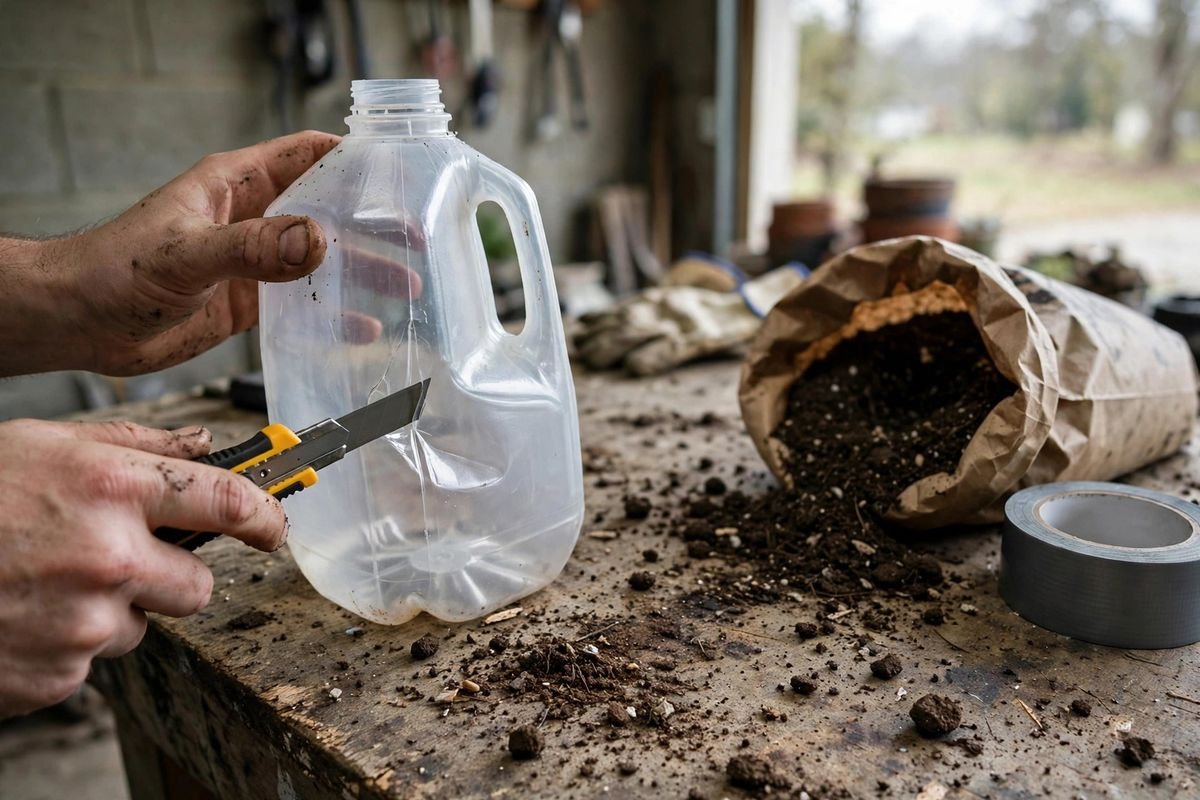
Cut drainage holes first. Poke six to eight holes about a quarter inch wide in the bottom of the jug with a drill, a hot nail, or a sharp knife. Without drainage, rain and snow melt pool in the bottom and the seeds drown. Next, cut the jug around the middle, about four inches up from the bottom, leaving a strip of plastic under the handle uncut so the top stays attached as a hinge. A utility knife works well for this cut, and a fresh blade keeps the line clean. If you need one, you can browse retractable utility knives on Amazon. We have not tested the products linked here, and we give no current store prices.
Fill the bottom with three to four inches of damp seed-starting mix or potting mix. Do not use garden soil, which packs down and drains poorly in a small container. Moisten the mix before you fill the jug, so it is damp all the way through but not dripping when you squeeze a handful. Sow the seed at the depth on the packet, press it gently into the mix, and mist the surface.
Tape the cut shut with duct tape or packing tape, leaving the hinge as the only gap. Set the jug outside in a spot that gets sun and is open to rain and snow, such as a patio or a low shelf near the house. Do not put it under a roof overhang, where rain never reaches it, and do not put it where roof snow slides off and buries it.
Sowing dates by zone
No extension source gives a start date for each zone, so the calendar below follows the windows the extension guides publish for cold-winter states. The rule behind them is simple: seeds that need a long cold period go out first, hardy annuals follow, and tender crops wait until spring.
| Zones | December to January | February to March | March to April |
|---|---|---|---|
| Zones 3 to 4 | Native perennials, hardy perennials | Hardy annuals, kale, lettuce, spinach | Tender annuals only, after the cold eases |
| Zones 5 to 6 | Native perennials, hardy perennials | Hardy annuals, cool-season vegetables, herbs | Tender annuals in late March or April |
| Zone 7 | Native perennials | Hardy annuals, cool-season vegetables | Tender annuals in April |
| Zones 8 to 9 | Hardy perennials, if the winter runs cold | Cool-season vegetables, hardy annuals | Warm-season crops direct sown in the bed |
| Zone 10 | Skip winter sowing | Cool-season vegetables direct sown | Warm-season crops direct sown |
Illinois Extension advises waiting until January or February to begin, so a warm spell in December does not sprout the seed too early. A seed that sprouts in a December thaw and then meets a January freeze is lost.
Timing and frost dates
Use your local frost dates and regional planting guidance — not your USDA hardiness zone alone — to choose planting dates. A zone number tells you how cold the winter gets, not when your last frost arrives, and two gardens in the same zone can sit weeks apart on frost dates. Your local extension planting calendar is the better guide for the exact dates in your town.
The transplant date follows the last frost date and the crop. Cool-season seedlings from a jug can move out two to four weeks before the last frost, once the soil can be worked. Tender seedlings from a late March jug wait until after the last frost, and in most zones that means holding them in the jug until the nights stay above 50 degrees. A frost cloth over the bed on cold nights adds a few degrees of cover for a new transplant. If you need one, see our guide on the best frost cloths for garden beds. For the month before this one, see our guide on what to plant in January.
Our worked example: how many jugs cover a 4-by-8-foot bed
A 4-by-8-foot bed holds 32 square feet. The number of jugs it needs depends on the crop spacing and how many seedlings each jug grows. The math below uses lettuce at 8-inch spacing and kale at 12-inch spacing, with stated assumptions, so the same steps can be rerun for any crop and any bed.
| Crop | Spacing | Area per plant | Plants for 32 sq ft | Seedlings per jug | Jugs needed |
|---|---|---|---|---|---|
| Lettuce | 8 inches | 64 sq in (0.44 sq ft) | 32 / 0.44 = 72 | 10 | 72 / 10 = 7.2, round up to 8 |
| Kale | 12 inches | 144 sq in (1 sq ft) | 32 / 1 = 32 | 8 | 32 / 8 = 4 |
Eight jugs of lettuce fill the whole bed, while four jugs of kale do the same job, because kale takes four times the room per plant. A mixed bed splits the difference: four jugs of lettuce (40 plants, about 18 square feet) plus two jugs of kale (16 plants, 16 square feet) comes to 34 square feet, just over the bed, so dropping one kale jug leaves room to work the rows. Sow one extra jug of each crop as insurance against poor germination.
Sowing the seed
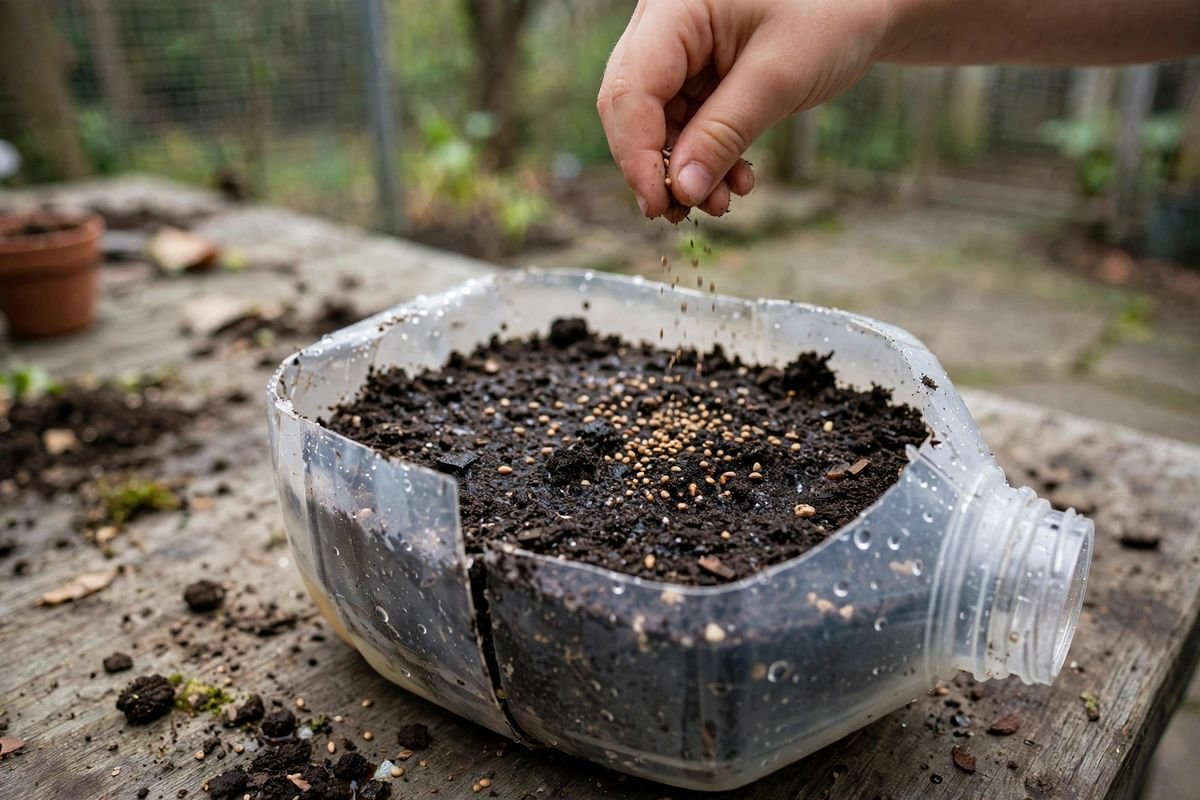
Sow at the depth on the packet, which for most small seed is barely covered, about a quarter inch deep. Large seed such as peas and nasturtiums goes a half inch to one inch deep. Scatter the seed evenly across the mix surface rather than piling it in the middle, since crowded seedlings in the center shade each other and grow weak stems.
Water the mix before sowing, not after, so the seed stays where it lands. Close the jug, tape the cut, and set it outside the same day. Seeds sown in a jug that sits indoors for a week before going out may sprout in the warm house, and those seedlings will not survive the move outside.
Venting, watering, and spring care
Leave the jugs alone through winter. Rain and snow melt water the mix through the open neck, and the cold keeps the seed dormant. Check them once a month for two problems: jugs blown over by wind, and mix that has dried out during a long dry spell. Set blown jugs upright and tuck them against a wall or inside a milk crate so they cannot roll again.
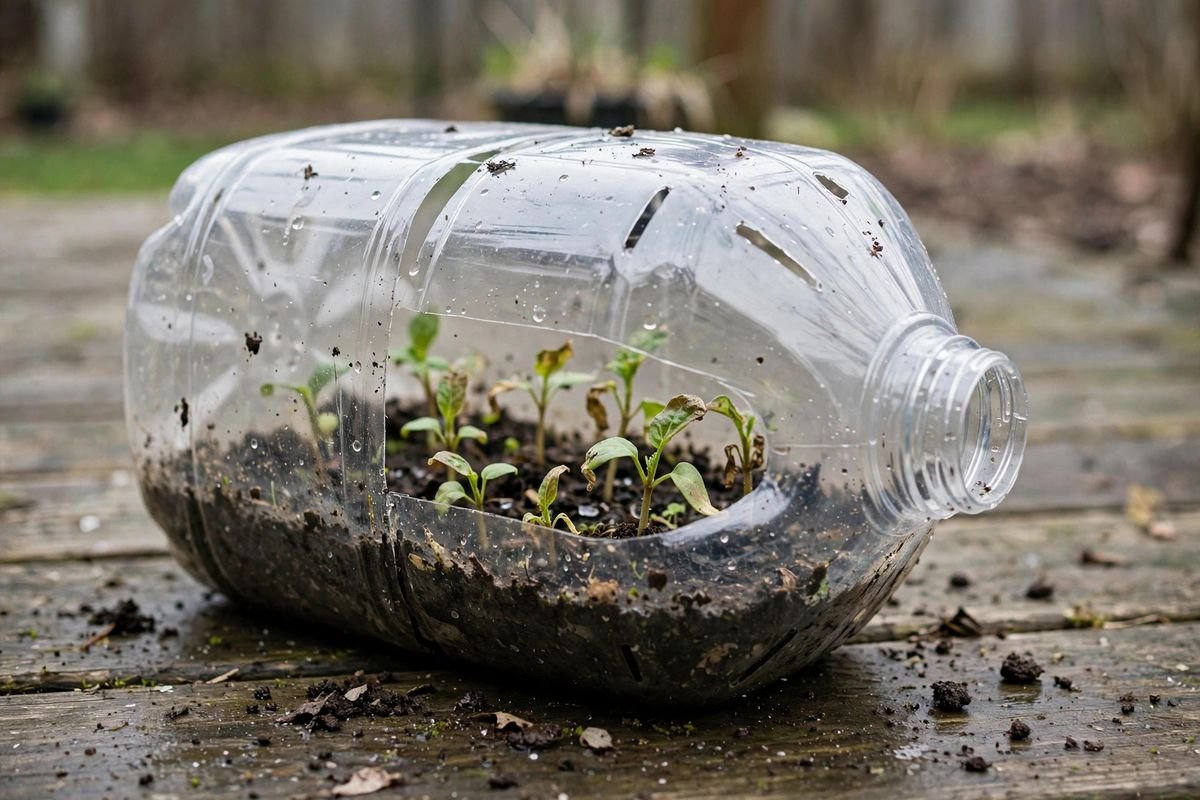
When seedlings appear in spring, venting begins. On sunny days, open the jug by peeling back the tape on one side or propping the top open an inch, then close it again before sunset. Illinois Extension advises opening the containers on sunny days and closing them at dusk, because a closed jug in full sun can run hot enough to cook the seedlings. As the days warm, leave the top open longer, then remove the tape and hinge the top back all day, closing it only on nights when frost is forecast.
Transplanting the seedlings
Move cool-season seedlings out two to four weeks before the last frost, when they have two to four true leaves and the soil can be worked. Water the jug well an hour before transplanting so the mix holds together. Open the jug fully, slide a fork under the soil block, and lift the seedlings out in clumps rather than pulling them apart one by one. Plant each clump at the same depth it grew in the jug, firm the soil around it, and water it in well.
Space the transplants at the spacing in the worked example above, and mulch 2 inches deep around them once they settle, keeping the mulch an inch away from each stem. A row cover or a cold frame over the bed for the first week cuts wind and holds in warmth while the roots take hold. For the trade-offs between the two covers, see our guide on cold frame vs row cover. Tender seedlings wait until after the last frost, and a late frost after transplanting is covered with frost cloth overnight and removed in the morning.
Troubleshooting
Nothing sprouts by late spring
Old seed is the most common cause, followed by a jug that dried out or a sowing that went in too late for the cold period the seed needed. Check the seed age and the sowing date, and sow a fresh jug of the same crop direct in the bed as a backup.
Seedlings sprout, then collapse
Seedlings that fall over at the soil line have damping off, a fungal problem that strikes in damp, still air. It follows a jug left taped shut on warm sunny days. Open the vent earlier in the day, and water in the morning so the surface dries before night. Affected seedlings cannot be saved, so pull them out and let the rest dry a little between waterings.
The jug dries out in a dry winter
Jugs under a roof overhang or in a windy spot lose moisture faster than jugs in the open. Move them where rain reaches the open neck, and check the mix once a month by lifting the top. If the surface is pale and dry, water until it drains from the bottom holes, then close the jug again.
Frequently asked questions
When should winter sowing start?
Start perennials that need a cold period in December or January, hardy annuals and cool-season vegetables in February or March, and tender crops in March or April. Illinois Extension advises waiting until January or February to begin, so a December warm spell does not sprout the seed early.
Do milk jugs need drainage holes?
Yes. Poke six to eight holes about a quarter inch wide in the bottom before you fill the jug. Without drainage, rain and snow melt pool at the bottom and the seeds rot.
Should the cap stay on the jug?
No. Throw the cap away. The open neck is the vent that lets in rain and air, and a capped jug traps damp air that breeds damping off.
Can winter sowing work in a warm climate?
It works for cool-season vegetables in zones 8 and 9, where winter still brings cool nights. In zone 10, winter rarely stays cold long enough for the cold period many seeds need, so direct sowing and indoor starts are the better route.
Sources and further reading
- University of Minnesota Extension, Jug It and Grow: Winter Sowing for Pollinator Gardens
- University of Minnesota Extension, Starting Seeds Indoors
- North Carolina State University Extension, Central North Carolina Planting Calendar for Annual Vegetables, Fruits, and Herbs
Related reading: How to Test Old Seeds for Germination, What to Plant in February, How to Use a Cold Frame for Winter Vegetables, Cold Frame vs Row Cover, How to Store Seeds Over Winter, Best Frost Cloths for Garden Beds
By the Pot and Plot Team