
This post may contain affiliate links. If you buy through links on this page, we may earn a commission at no extra cost to you.
As an Amazon Associate I earn from qualifying purchases.
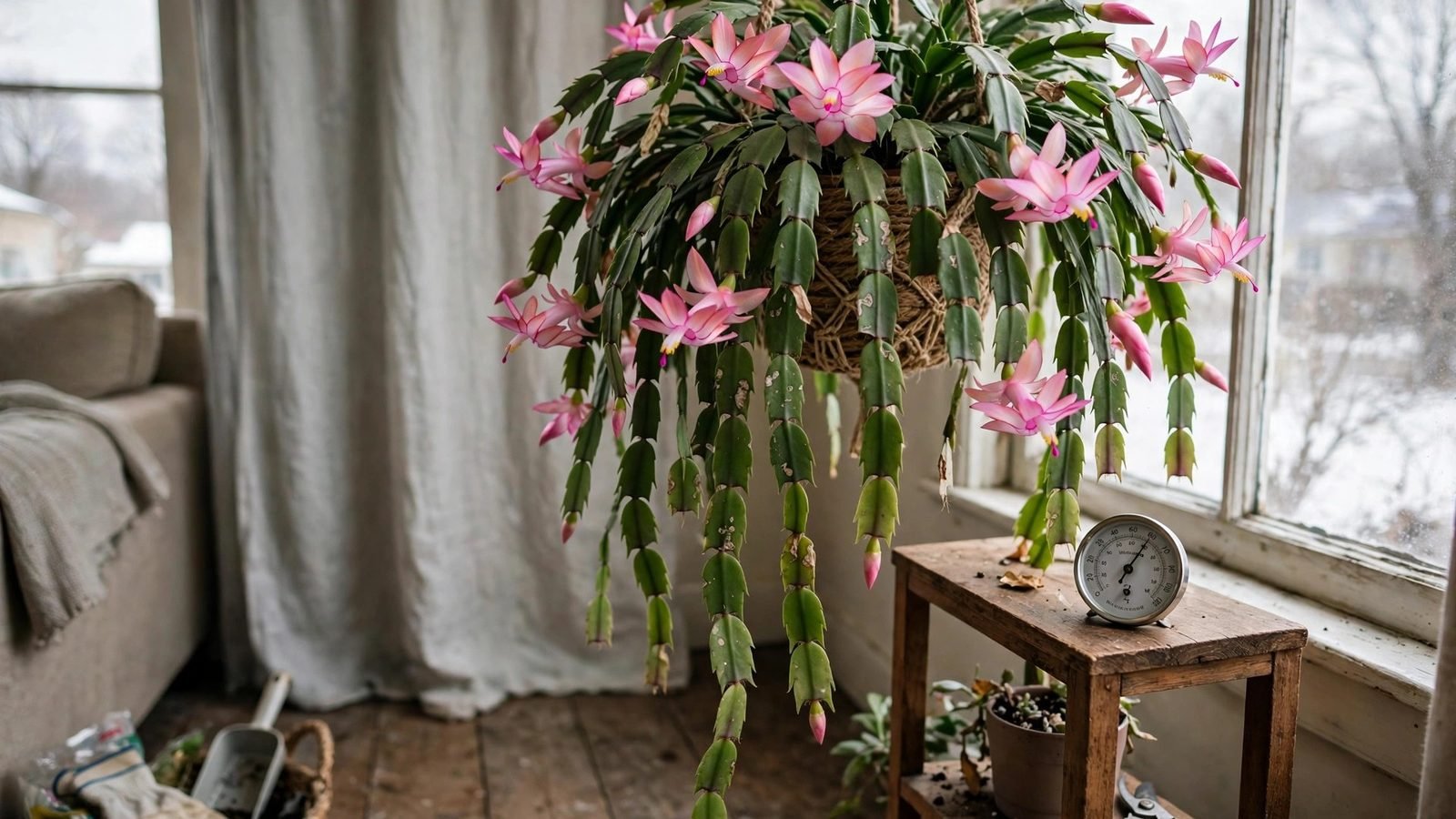
A Christmas cactus in full bloom is an easy holiday display. The plant asks for little through the year, then covers itself in pink, red, or white flowers. The trick is knowing what kind of plant it is: it comes from a Brazilian rainforest, not a desert, and it wants regular water, humid air, and shade, the opposite of what most people expect from a cactus.
This guide covers the daily care that keeps the plant healthy, the watering plan for a 6-inch pot, and the six-week routine in fall that sets holiday buds. It also covers what to do after the flowers fade, so the same plant comes back year after year. For more winter color, see our guide on how to force amaryllis bulbs indoors.
What a Christmas cactus is
A Christmas cactus is a Schlumbergera, a forest cactus from the coastal mountains of Brazil. In the wild it grows on tree branches and rock crevices, in pockets of leaf litter under dappled shade. It has no spines, and its flat green stem segments do the work of leaves. That explains the care in this guide: bright light but not direct sun, steady moisture, and air that is not bone dry.
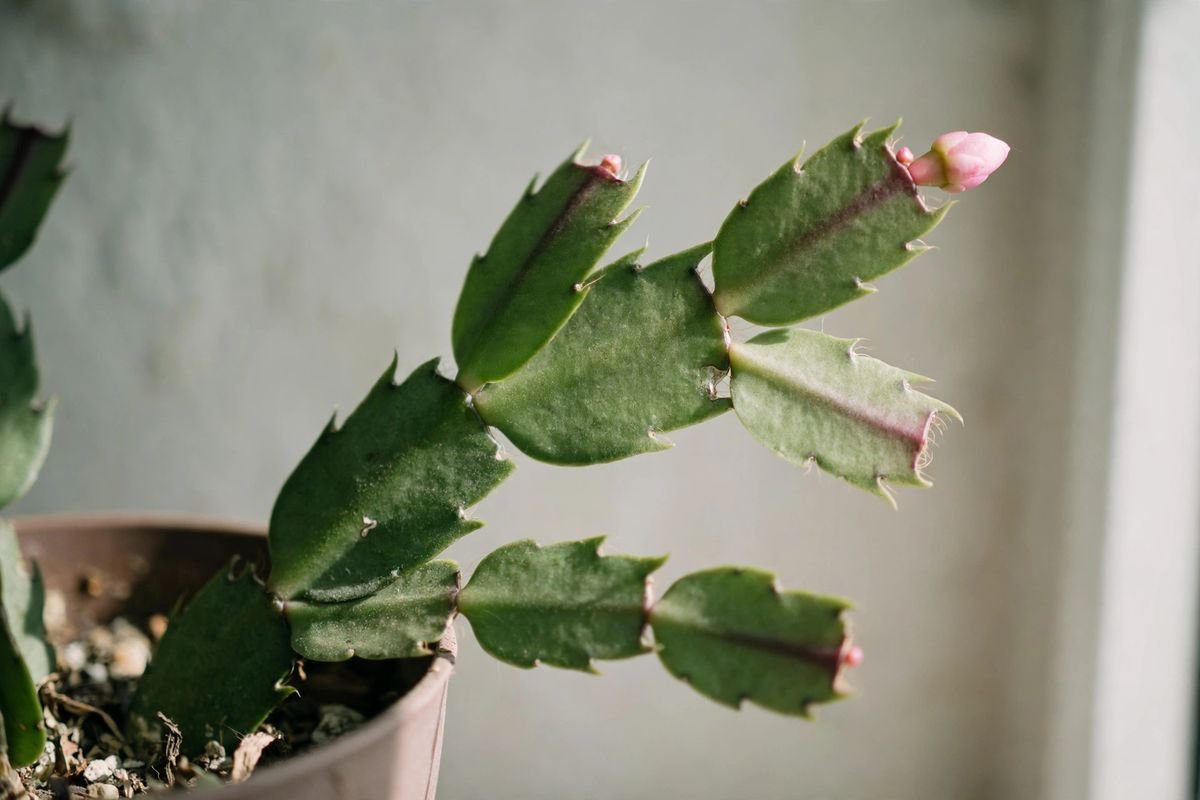
The name on the label is often wrong. Most plants sold as Christmas cactus are really Thanksgiving cactus, Schlumbergera truncata, or hybrids. The stem segments tell them apart: a true Christmas cactus, Schlumbergera x buckleyi, has smooth, rounded, scalloped segment edges, while a Thanksgiving cactus has pointed, claw-like teeth along the edges. Thanksgiving cactus usually blooms from mid-November into December, and a true Christmas cactus blooms a few weeks later, from late November into February. The care in this guide is the same for both, so it does not matter which one you own, but it helps to know why a plant labeled Christmas cactus sometimes blooms before Thanksgiving dinner.
A Christmas cactus can live for decades, and plants passed down through families are common. It grows slowly, rarely needs repotting, and forgives a missed watering or two. Dropped buds and limp segments almost always trace back to water, light, or a move at the wrong time.
Light: bright and indirect
A Christmas cactus wants bright, indirect light. An east-facing window is the usual recommendation, because it gives gentle morning sun and shade the rest of the day. A north-facing window also works if the room is bright. A south- or west-facing window works only if a sheer curtain softens the afternoon sun, because strong direct sun scorches the segments and turns them reddish purple.
Red or purple coloring on the segments means too much sun, too little water, or too little phosphorus. The first step is to move it out of direct sun and check the watering routine. The color fades back to green over a few weeks once the plant is watered steadily in a better spot.
In summer the plant can go outdoors in a shaded spot, under a tree or on a covered porch, where it gets dappled light and no direct midday sun. Bring it back inside before the first fall frost, and before night temperatures drop below 50 degrees. A summer outdoors often helps the plant set buds in fall. For more on keeping houseplants through the dark months, see our guide on how to grow herbs indoors in winter.
Watering: a worked plan for a 6-inch pot
A Christmas cactus needs more water than a desert cactus, and the most common mistake is treating it like one. The plant wants its mix to dry out partway between waterings, but not completely. The rule is to water when the top inch of mix feels dry to the touch, until a little runs out of the drainage holes, then empty the saucer so the pot does not sit in water.
Here is a worked watering plan for a 6-inch pot, with the assumptions stated so you can adjust it for your own plant. These are our own computed numbers, not measurements from a trial, and they assume a 6-inch pot holding about 1 quart of potting mix, a standard mix with perlite for drainage, an indoor temperature of 65 to 70 degrees, and a plant in bud or in bloom with average indoor humidity. A 6-inch pot like this takes about 1 cup of water to wet the mix through. In dry winter air the mix dries faster, and in a cool room it dries slower, so the finger test always beats the calendar.
| Week | Check days | What to do | Water used |
|---|---|---|---|
| Week 1, in bloom | Monday and Thursday | Dry both days, water 1 cup each time | 2 cups |
| Week 2, in bloom | Monday and Thursday | Dry Monday, damp Thursday, water once | 1 cup |
| Week 3, in bloom | Monday and Thursday | Dry both days, water 1 cup each time | 2 cups |
| Week 4, flowers fading | Monday only | Dry, water 1 cup, then start the rest period | 1 cup |
The four-week example uses about 6 cups of water, roughly 1.5 cups a week while the plant is in bloom. That is the pattern to aim for: check twice a week while buds are forming and flowers are open, and water about 1 cup each time the top inch is dry. Once the flowers fade, cut back to checking once a week, and let the mix dry out more between waterings.
Through spring and summer, while the plant grows new segments, check once a week and water when the top inch is dry, about 1 cup for a 6-inch pot. In the two rest periods, in fall before bud set and again after flowering, water half as often and use about half as much, roughly half a cup. A plant that goes limp and wrinkled is thirsty; a plant that goes limp and mushy at the base has been overwatered, so let the mix dry out.
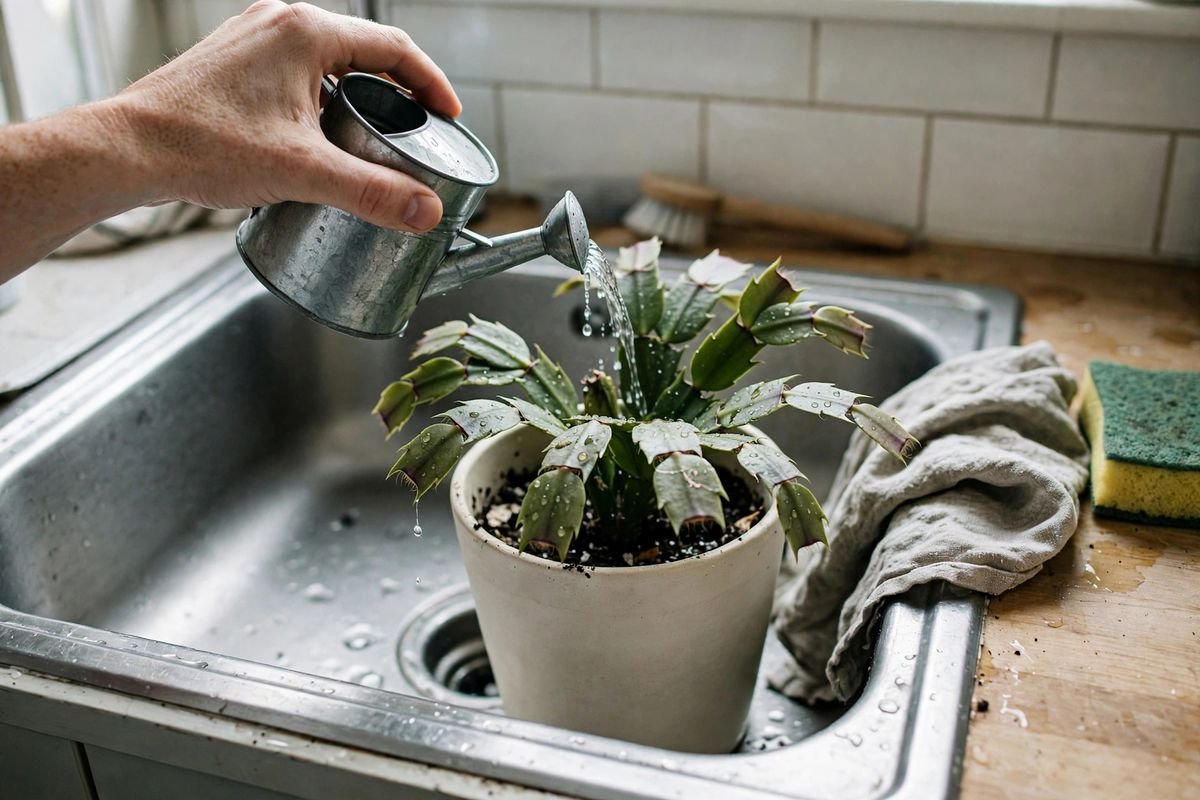
Always water the mix, not the plant. Water in the joints between segments invites rot, and water on open flowers shortens the bloom. A small watering can with a narrow spout makes it easy to aim at the soil. If you want one, you can browse small indoor watering cans on Amazon. We have not tested the products linked here, and we give no current store prices. Check each listing for current can sizes before you buy.
Temperature and humidity
A Christmas cactus is comfortable at 60 to 70 degrees. It needs cooler nights to set buds, 55 to 65 degrees, and nights above 70 degrees will delay flowering even when the nights are long enough. Keep the plant away from radiators, heating vents, and fireplaces: hot, dry air makes buds drop. Keep it away from cold drafts too, and never let it sit below 50 degrees: a cold snap can drop buds overnight.
Humidity matters more than most owners expect, because this is a rainforest plant. Indoor air in winter often sits at 20 to 30 percent humidity, and a Christmas cactus prefers 40 to 50 percent. The plant will survive dry air, but buds are more likely to drop, and segment tips may dry out. A pebble tray under the pot, a group of plants set close together, or a room humidifier all raise the humidity around it. Misting helps for an hour or two, but it is not a lasting fix, and mist on open flowers shortens the bloom.
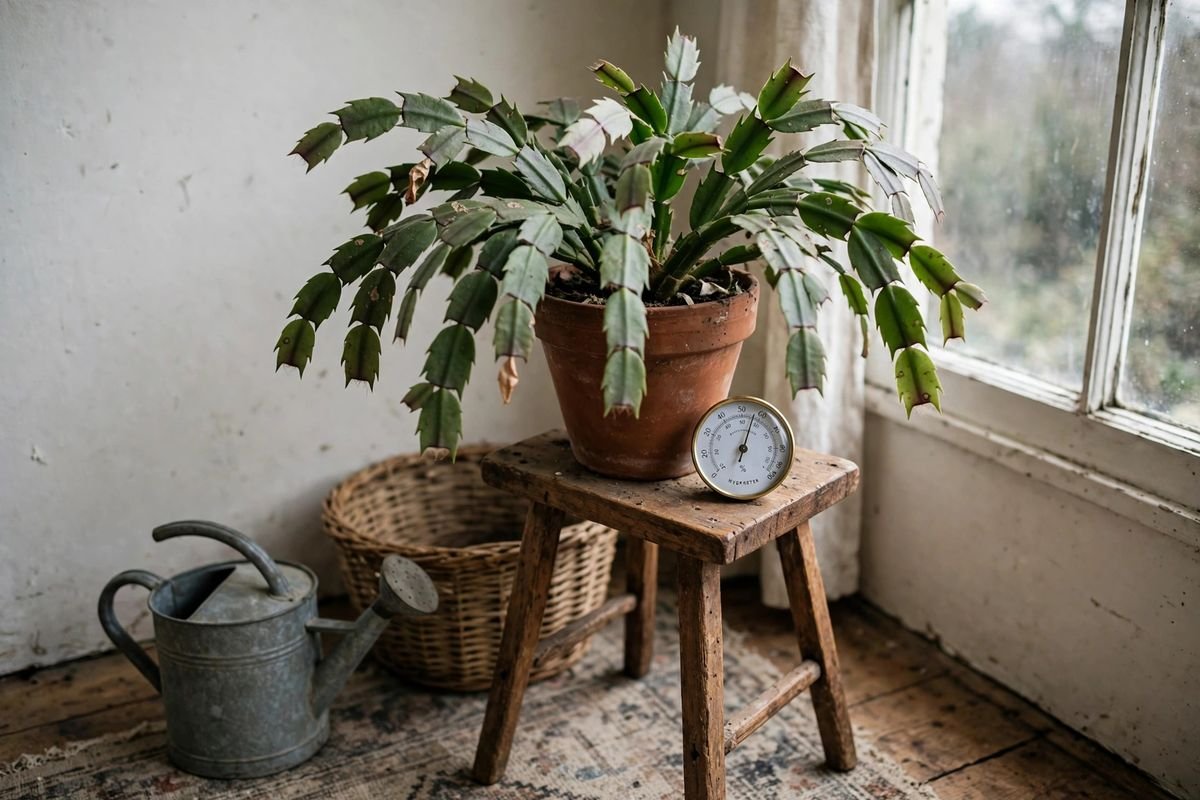
A small hygrometer on the plant stand takes out the guesswork. If the reading stays under 30 percent through the winter, a humidifier is worth having. For the full guide, see our guide on how to raise humidity for houseplants in winter. If you need a humidifier, you can browse humidifiers for houseplants on Amazon. We have not tested the products linked here, and we give no current store prices. Check each listing for current tank sizes and room coverage before you buy. For more ideas, see our guide on best humidifiers for houseplants.
Getting holiday blooms: the six-week bud-set routine
Christmas cactus blooms are triggered by two things: long, dark nights and cool nights. The plant is a short-day plant, which means it forms buds when the nights get long in fall. Extension guides give a range for the darkness, 12 to 14 hours of uninterrupted dark each night, and some go up to 14 to 16 hours. The routine below uses 13 hours, in the middle of that range, for six weeks, starting in mid-October for December flowers.
| Week | Dates | What to do |
|---|---|---|
| Week 1 | October 15 to 21 | Move the plant to a cool room, 55 to 65 degrees at night, with bright light by day and no lamp on at night |
| Week 2 | October 22 to 28 | Keep the 13-hour nights, water when the top inch is dry, no fertilizer |
| Week 3 | October 29 to November 4 | Keep the routine, check for tiny buds at the segment tips |
| Week 4 | November 5 to 11 | Buds should be showing, keep the plant in the same spot, do not move it |
| Week 5 | November 12 to 18 | Buds swell, keep watering steady, no fertilizer |
| Week 6 | November 19 to 25 | First flowers open on early plants, move the plant to its display spot only after buds are set |
Two rules matter most. First, the darkness must be uninterrupted. A lamp switched on for an hour in the evening, a television glowing in the same room, or a streetlight through an uncovered window can all interrupt bud set. A spare bedroom, a room you do not use at night, or a closet you open each morning all work, as long as the plant gets bright light by day. Second, do not move the plant once buds appear. Moving it, even to a better window, often makes buds drop.
Cool nights help the process along. At 55 degrees, many plants set buds even when the nights are shorter, and above 70 degrees the buds may not form. If your house stays warm at night, a cool spare room or an enclosed porch above 50 degrees is a better spot for the six weeks. Once the buds are set and the flowers start to open, the plant can come back to its usual spot.
If your plant has no buds by late November, it is not too late. Start the long nights and cool nights right away, and buds usually show up a few weeks later. The flowers will open in January instead of December. For a plant that blooms on a different schedule, see our guide on how to force paperwhite bulbs indoors, which flowers in three to five weeks from potting.
Feeding, potting mix, and repotting
Feed the plant monthly from spring through summer, while it is growing new segments. A balanced liquid houseplant fertilizer at half the strength on the label is enough. Stop feeding in fall, before the bud-set routine starts, and do not feed while the plant is in bud or in bloom. Feeding during bud set pushes leafy growth instead of flowers and can make buds drop.
The potting mix should drain well but hold some moisture, like leaf litter. A standard all-purpose potting mix with a handful of perlite or fine bark mixed in works well. A desert cactus mix is too dry and too gritty for this plant, and plain garden soil is too heavy and holds too much water. The pot needs drainage holes, because sitting in water rots the plant fast.
Repot only when the plant has outgrown its container, and do it in spring or early summer, after flowering is over. A Christmas cactus grows best slightly pot-bound, so a plant that looks comfortable in its pot should stay there. When you do repot, go up only one pot size, a 6-inch pot to an 8-inch pot, and use fresh mix. Repotting in fall or winter, while the plant is setting buds or in bloom, is a common cause of bud drop, so wait for spring.
After the flowers fade
When the last flowers fall, move the plant to a cooler spot, 55 to 60 degrees if you have one, and water less for six to eight weeks. Let the mix dry out more between waterings and skip the fertilizer. This rest is the second cool spell the plant needs each year. The RHS guide describes two rest periods a year: one in fall before the buds form, and one after flowering, from late January to late March.
In spring, bring the plant back to its usual spot, start feeding monthly, and water when the top inch is dry. New segments grow through spring and summer, and each new segment tip is a place where a flower can form next winter. A plant that gets its rest, its food, and its long nights in fall will bloom again the following December.
Troubleshooting
Buds form, then drop before they open
Bud drop is the most common complaint. The causes are short: the plant was moved after buds formed, the room got too hot or too dry, the plant dried out while in bud, or a cold draft hit it. The fix is to leave the plant alone once buds show, keep the room at 60 to 70 degrees, keep the humidity up, and water steadily. A dropped bud does not come back, but the plant will set new buds next fall.
Segments are limp and wrinkled
Limp, wrinkled segments mean the plant is thirsty, unless the mix is wet, in which case the roots have rotted and cannot take up water. Check the mix with a finger: if it is dry, water the plant well and it should firm up in a day or two. If the mix is wet and the plant is still limp, let the mix dry out and cut back on watering. A plant with a mushy base may need to be re-rooted from healthy cuttings.
Frequently asked questions
Is a Christmas cactus toxic to cats and dogs?
No. Christmas cactus is listed as non-toxic to cats and dogs, though a curious cat may still chew a segment or knock a bud off, so a hanging basket or a high shelf keeps plant and pet apart.
Sources and further reading
- Iowa State University Extension, All About Holiday Cacti
- Iowa State University Extension, How to Care for Holiday Cacti
- Royal Horticultural Society, How to Grow Christmas Cactus
Related reading: How to Force Amaryllis Bulbs Indoors, How to Force Paperwhite Bulbs Indoors, How to Water Indoor Plants in Winter, How to Raise Humidity for Houseplants in Winter, How to Grow Microgreens Indoors, How to Grow Green Onions Indoors
By the Pot and Plot Team