

This post may contain affiliate links. If you buy through links on this page, we may earn a commission at no extra cost to you.
As an Amazon Associate I earn from qualifying purchases.
A frost cloth is the simplest way to keep a garden growing after the first cold nights. It is a light fabric that drapes over plants, holds in a few degrees of warmth, and still lets light and water through. The right one depends on how cold your nights get and how long the cover stays on.
This guide compares the main types side by side, with the size math for a standard bed and a cost-per-season example. None of these picks come from hands-on testing on our part: the comparisons use published weights, typical frost protection figures from manufacturers and extension guides, and the tradeoffs gardeners report most. Check the listing for the exact weight and size before you buy.
Frost cloth types at a glance
| Type | Weight | Frost protection | Best for |
|---|---|---|---|
| Lightweight spunbond | About 0.5 oz per sq yd | About 2 to 4 degrees F | Light frosts, insect cover in warm months |
| Medium-weight spunbond | About 1.0 to 1.5 oz per sq yd | About 4 to 6 degrees F | Most fall nights, season extension |
| Heavyweight spunbond | About 1.5 to 2.0 oz per sq yd | About 6 to 8 degrees F | Hard frosts, tender crops, overwintering |
| Woven frost fabric | Varies by weave | About 4 to 6 degrees F | Long-term cover, windy spots |
Protection figures are typical ranges, not guarantees. Wind, wet soil, and how the cloth is secured all change the result by a degree or two. A cloth that touches the leaves protects less than one held up on hoops, since frost forms where the fabric meets the plant.
Size math: covering a 4-by-8-foot bed
Buy a cloth larger than the bed. A flat 4-by-8-foot sheet is 32 square feet, but it has no spare cloth to reach the ground on the sides, and that spare cloth is what traps warm air. Allow 12 inches of drape on each side: the cloth must be about 6 feet wide and 10 feet long, which is 60 square feet.
A 10-by-12-foot cloth, at 120 square feet, covers one 4-by-8 bed with spare cloth left over for anchoring, and it covers two beds if you cut it in half. A 6-by-10-foot cloth covers one bed with no spare, so it suits a bed with low hoops and a tight fit. Measure your bed, add 2 feet to each side, and buy the next size up.
Cost per season is the number that matters for a purchase. Take a cloth priced at $24 as an example, and assume it lasts three seasons with care: $24 divided by 3 is $8 per season. A heavier cloth that costs $36 and lasts four seasons works out to $9 per season, which is close to the same value with more protection. These are example figures with stated assumptions, not prices from a listing. Check current prices before you buy, and treat a cloth that lasts one season as a poor buy at any price.
Lightweight frost cloth
Lightweight cloth is the thinnest type, at about 0.5 ounces per square yard. It lets through the most light and water, and it is the type most gardeners reach for in spring, when the goal is keeping insects off young plants and taking the edge off a light frost.
It tears easily, especially at the edges, and it does little on a night that drops well below freezing. Treat it as a light shield rather than a blanket. You can browse lightweight frost cloth on Amazon to compare sizes and weights.

Pros
- Lets through the most light, so it can stay on for days.
- Light enough to rest on plants without crushing them.
- Cheapest per square foot of the four types.
- Works as an insect barrier in warm months.
Cons
- Protects only about 2 to 4 degrees, so it fails on hard frosts.
- Tears easily at folds and anchor points.
- Blows off in wind unless it is well anchored.
- Short service life, often one season.
Medium-weight frost cloth
Medium-weight cloth, at about 1.0 to 1.5 ounces per square yard, is the pick for most fall gardens. It protects about 4 to 6 degrees, which covers the light frosts that end the season in many regions, and it is strong enough to survive a season of use.
It blocks more light than the lightweight type, so take it off on warm sunny days if the plants under it are still growing. For a bed of kale, lettuce, or fall carrots, this is the type we would buy first. You can browse medium-weight frost cloth on Amazon to compare sizes and weights.
Pros
- Protects about 4 to 6 degrees, enough for most fall frosts.
- Strong enough to last two to three seasons with care.
- Still lets enough light through for short-term cover.
- Good balance of price and protection for a home garden.
Cons
- Blocks more light, so it should come off on warm days.
- Heavier, so it can flatten tender seedlings without hoops.
- Costs more per square foot than lightweight cloth.
- Still fails on a hard freeze below the mid-20s.
Heavyweight frost cloth
Heavyweight cloth, at about 1.5 to 2.0 ounces per square yard, protects about 6 to 8 degrees and suits hard frosts and tender crops. It is the type to use when the forecast drops into the mid-20s and the bed holds plants you want to keep, such as late peppers or tender herbs.
It is heavy, so it needs hoops or a frame to hold it off the plants. Laid flat on tender leaves, its weight can crush them, and it blocks enough light that it should come off during the day. You can browse heavyweight frost cloth on Amazon to compare sizes and weights.

Pros
- Strongest frost protection of the spunbond types, about 6 to 8 degrees.
- Thick fabric resists tearing and lasts three to four seasons.
- Suits tender crops and hard frost nights.
- Doubles as a wind break for exposed beds.
Cons
- Heavy, so it needs hoops or a frame to stay off plants.
- Blocks the most light, so it must come off during the day.
- Highest price per square foot.
- Overkill for a light frost, where a cheaper cloth would do.
Woven frost fabric
Woven frost fabric is a different construction: threads crossed in a grid rather than fibers bonded into a sheet. It protects about 4 to 6 degrees, similar to medium-weight spunbond, but it holds up better in wind and lasts longer, which suits a cover that stays on for weeks.
It costs more than spunbond of the same weight, and the weave lets through slightly less light. It is the type to pick for a long-term cover, such as a bed of overwintering greens that stays covered from late fall into early spring. Our comparison of frost cloth vs plastic cover covers when fabric beats plastic, and our roundup of frost covers for raised beds and containers covers sized covers for pots and small beds.
Pros
- Strong weave resists tearing and holds up in wind.
- Long service life, often four seasons or more.
- Protects about 4 to 6 degrees, like medium spunbond.
- Suits covers that stay on for weeks at a time.
Cons
- Costs more than spunbond of similar protection.
- Lets through slightly less light than spunbond.
- Heavier to handle and fold for storage.
- Fewer size options in garden centers.
How to use a frost cloth
Cover the bed before the sun sets, while the soil is still warm from the day. A cloth put on after dark traps cold air instead of warm air. Anchor the edges with soil, stones, or clothespins so wind cannot lift it. A cloth that flaps in the night lets cold air in under the edge.
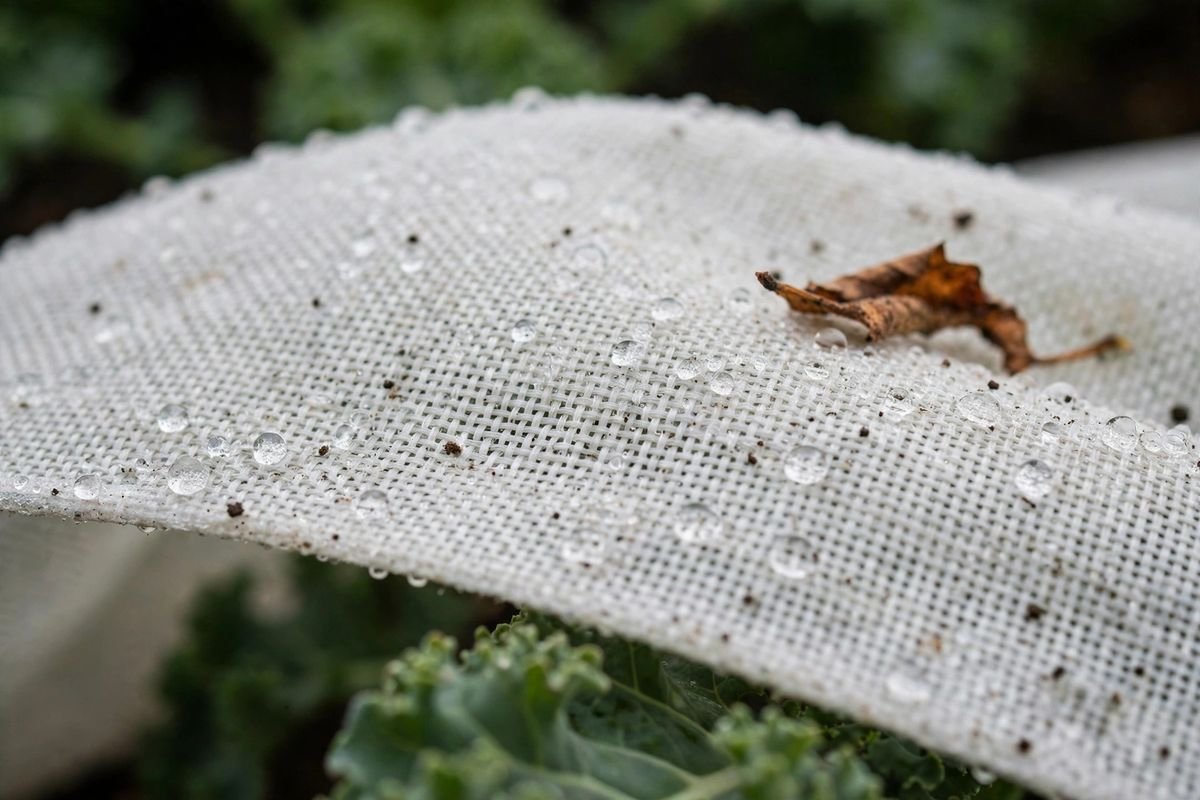
Use hoops for tender plants. A simple hoop of wire or PVC pipe, bent over the bed and pushed into the soil, holds the cloth off the leaves. That gap is worth a degree or two of protection, and it stops the cloth from crushing new growth.
Take the cloth off on warm sunny days if the plants are still growing, and always take it off when the temperature rises above 50 degrees. A bed left covered in warm sun can overheat, and damp leaves under a warm cloth invite disease. For potted plants, see our guide to protecting potted plants from frost, and for perennials, see our guide to mulching perennials for winter.
Which frost cloth fits your garden?
Choose lightweight frost cloth if your nights only dip a few degrees below freezing and you want a cover that can stay on for days, or if you need an insect barrier in spring. It is the cheapest option and the easiest to handle.
Choose medium-weight frost cloth if you want one cloth for most of the fall season. It protects about 4 to 6 degrees, lasts two to three seasons, and suits the beds most home gardeners cover.
Choose heavyweight frost cloth if your nights drop into the mid-20s and you are protecting tender crops, or if you want the longest service life and do not mind using hoops. It is the strongest protection in this guide.
Choose woven frost fabric if the cover will stay on for weeks, such as over winter greens, or if your garden is windy. It costs more, but it holds up where spunbond tears.
Troubleshooting
Plants still froze under the cloth
Check three things: whether the cloth touched the leaves, whether the edges were anchored, and whether the night was colder than the cloth’s protection range. A cloth that rests on leaves protects less, an open edge lets cold air in, and no cloth saves a tender plant in a hard freeze.
The cloth blew off overnight
Anchor the edges with soil or stones, and add a second anchor on the windward side. Clothespins alone will not hold the cloth in a strong wind.
Leaves turned mushy under the cover
The cloth stayed on too long in warm, damp weather. Take it off during the day when temperatures rise, and let the leaves dry in sun and air before covering again at dusk.
Frequently asked questions
Can frost cloth stay on all day?
Lightweight cloth can stay on for a few days, since it lets through the most light. Medium and heavy cloth should come off on warm sunny days, and always when the temperature rises above 50 degrees.
Is frost cloth better than plastic?
For most garden beds, yes. Frost cloth breathes, so moisture escapes and leaves stay drier. Plastic traps moisture and can cook plants in sun, though it protects slightly more on a cold night. Our comparison of frost cloth vs plastic cover covers the tradeoffs in detail.
How many degrees does frost cloth protect?
Lightweight cloth protects about 2 to 4 degrees, medium about 4 to 6 degrees, and heavyweight about 6 to 8 degrees. Wind, wet soil, and whether the cloth touches the leaves all shift the real number by a degree or two.
Sources and further reading
- University of Minnesota Extension, Extending the growing season: start early, end later
- North Carolina State University Extension, Season Extenders and Greenhouses, Extension Gardener Handbook
- North Carolina State University Extension, Vegetable Gardening, Extension Gardener Handbook
Related reading: Frost Cloth vs Plastic Cover, Best Frost Covers for Raised Beds and Containers, How to Protect Potted Plants From Frost, How to Mulch Perennials for Winter