
This post may contain affiliate links. If you buy through links on this page, we may earn a commission at no extra cost to you.
As an Amazon Associate I earn from qualifying purchases.
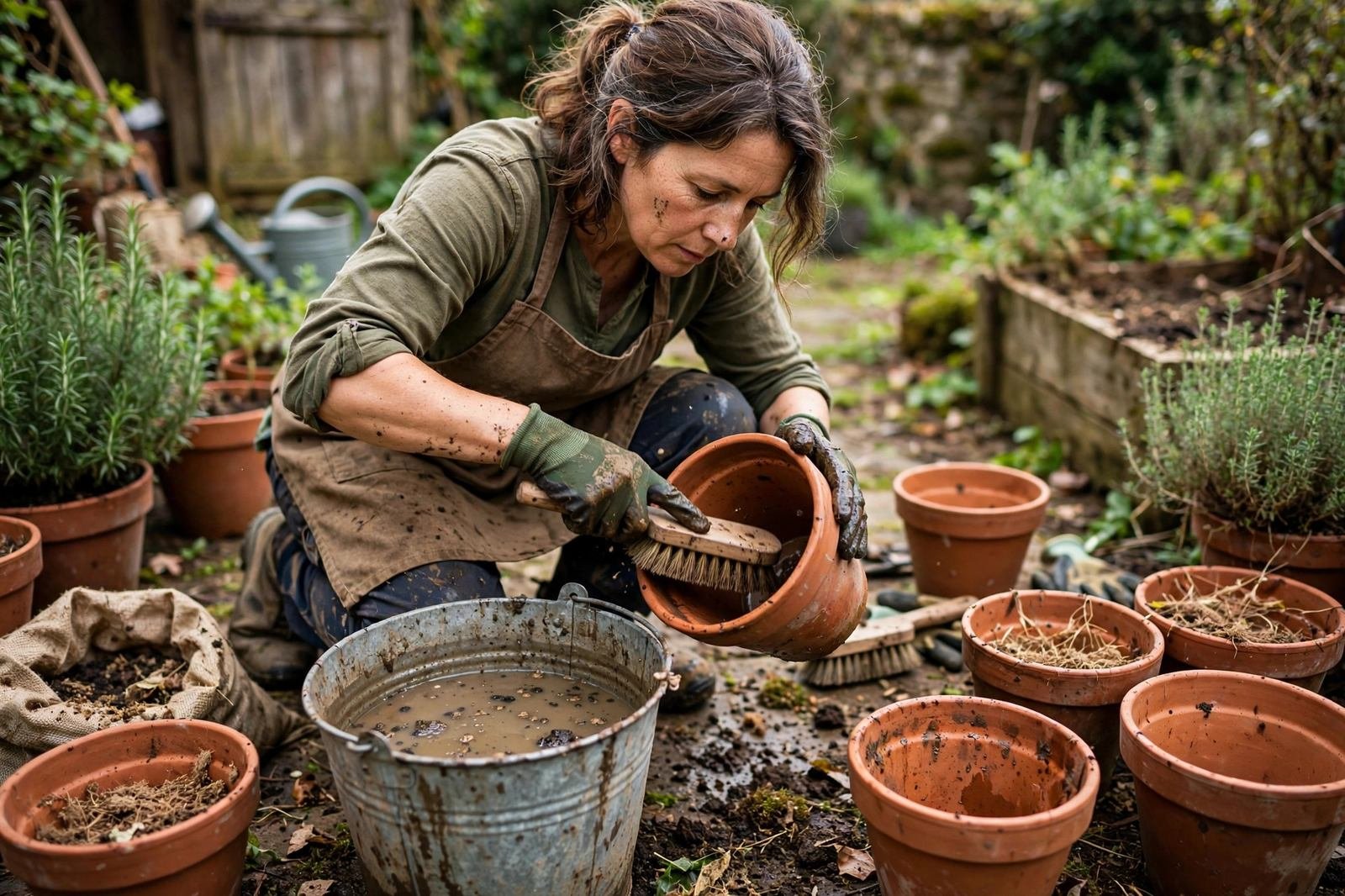
Old pots do not need to go in the trash when a plant finishes. Most plastic, terracotta, and ceramic pots can be cleaned and used again, and cleaning lowers the chance that soil pests or plant disease carry over to the next plant. The work is simple: empty the pot, remove old soil and roots, scrub, soak, rinse, and dry fully before you plant again.
We have not tested the products linked here, and we give no current store prices. The links below go to search pages for brushes and supplies, so you can compare current options at the time you shop. This guide covers the cleaning steps, a bleach soak ratio you can scale to your tub, drying times, and how to tell when a pot should be retired instead.
Why clean pots before reuse
Old potting mix holds roots, salts, and sometimes pests or disease spores. A pot that held a plant with root rot or aphids can pass the same trouble to the next plant if the pot goes straight back into use. Cleaning removes most of that carryover, and it also lets you spot cracks, blocked drainage holes, and salt crusts before you plant.
Cleaning also makes watering more predictable. Salt crusts on terracotta and clogged holes in plastic pots change how water moves through the mix. A clean pot with open holes drains as expected, so you can judge watering by soil moisture instead of guessing why one pot stays wet while another dries out.
Terracotta needs extra care. It is porous, so it absorbs salts and holds moisture in its walls. Scrub terracotta well and let it dry fully, since a damp terracotta pot stored in a stack can grow mold in the dark space between pots. Plastic pots dry faster, but they still need a full rinse so no cleaning solution stays on the surface.
A worked example: bleach soak ratio and a drying plan
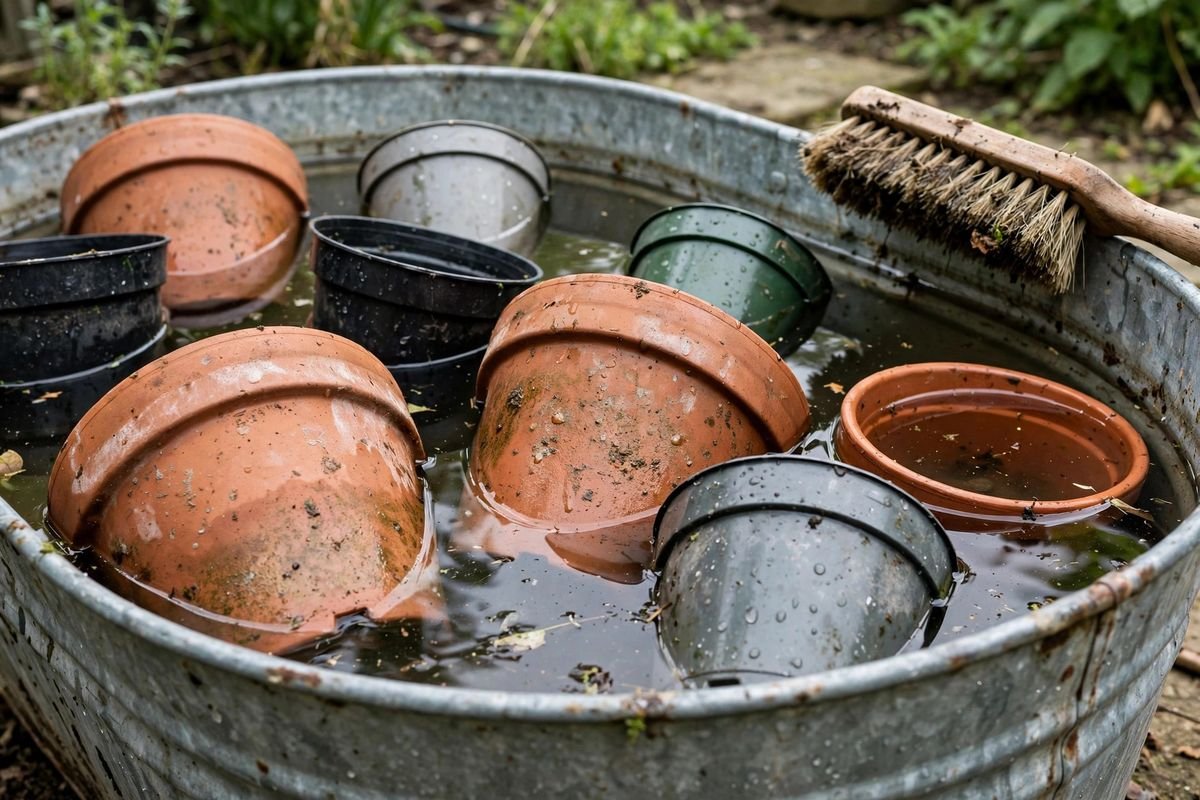
Use a 1 to 9 bleach solution, which is one part household bleach to nine parts water, for a 30-minute soak. That ratio gives a 10 percent bleach solution. Work outdoors or in a well-ventilated area, wear gloves, and never mix bleach with other cleaners.
Scale the ratio to your tub. A tub holding 5 gallons holds 80 cups of liquid. One-tenth of 80 cups is 8 cups, so that tub needs 8 cups of bleach and 72 cups of water. For a smaller job, a bucket holding 10 cups needs 1 cup of bleach and 9 cups of water. Measure the bleach, do not guess it, and pour the water in after the bleach so the mix is even.
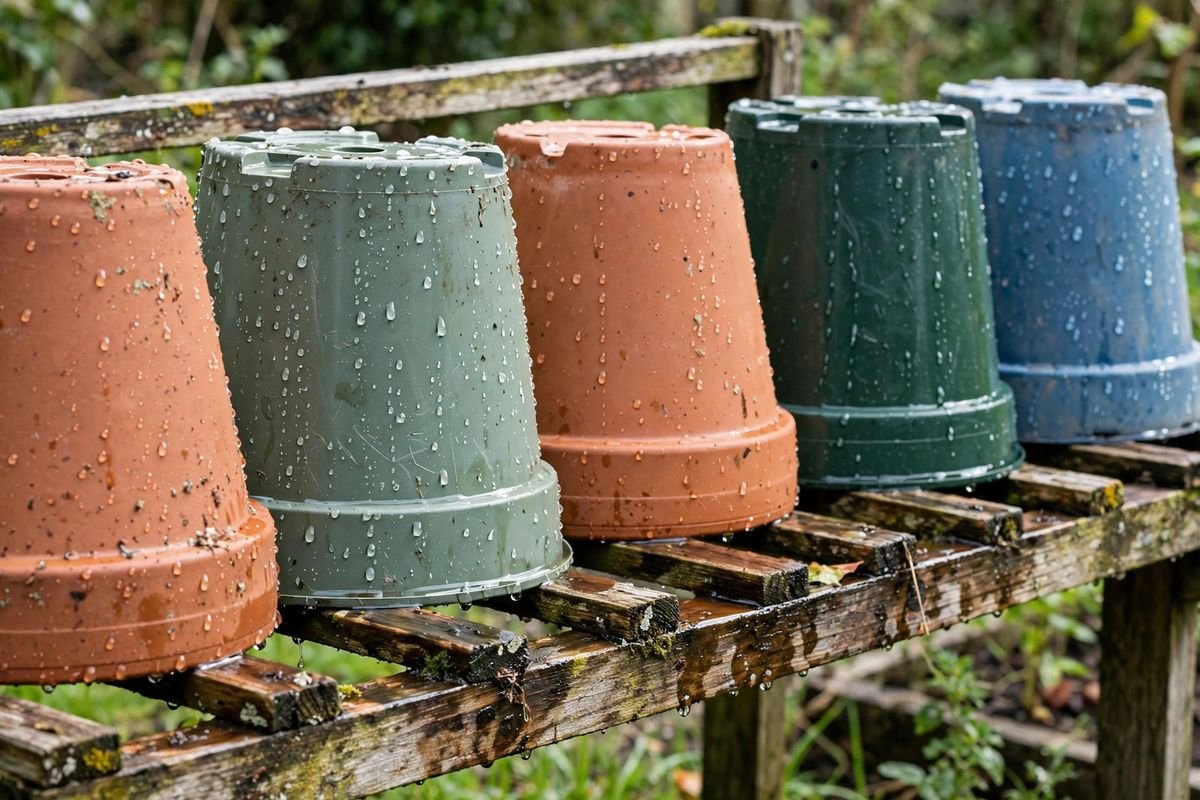
Plan the drying time as part of the job, not as an afterthought. After the soak and rinse, set pots upside down to drain for 30 minutes, then leave them upside down or on their sides in open air for at least 12 hours, and 24 hours in cool or shaded weather. A pot that feels dry on the outside can still hold moisture in a thick terracotta wall, so give terracotta the full 24 hours before you stack it or plant in it. If rain is forecast, move drying pots under cover, since a rain shower restarts the drying clock.
That plan fits a weekend routine well. Soak and scrub on Saturday morning, rinse and set pots out to dry by midday, and plant or stack them on Sunday morning after the full drying time has passed. If you need pots sooner, use pots that have already dried, and leave the wet batch to finish drying.
Empty, scrub, and soak step by step
Start by tipping out old mix and pulling out roots by hand. Shake loose mix into a compost pile or a trash bag, and check whether the old mix is worth saving. Our guide to whether you can reuse potting soil covers when old mix is safe to reuse and when it should be discarded.
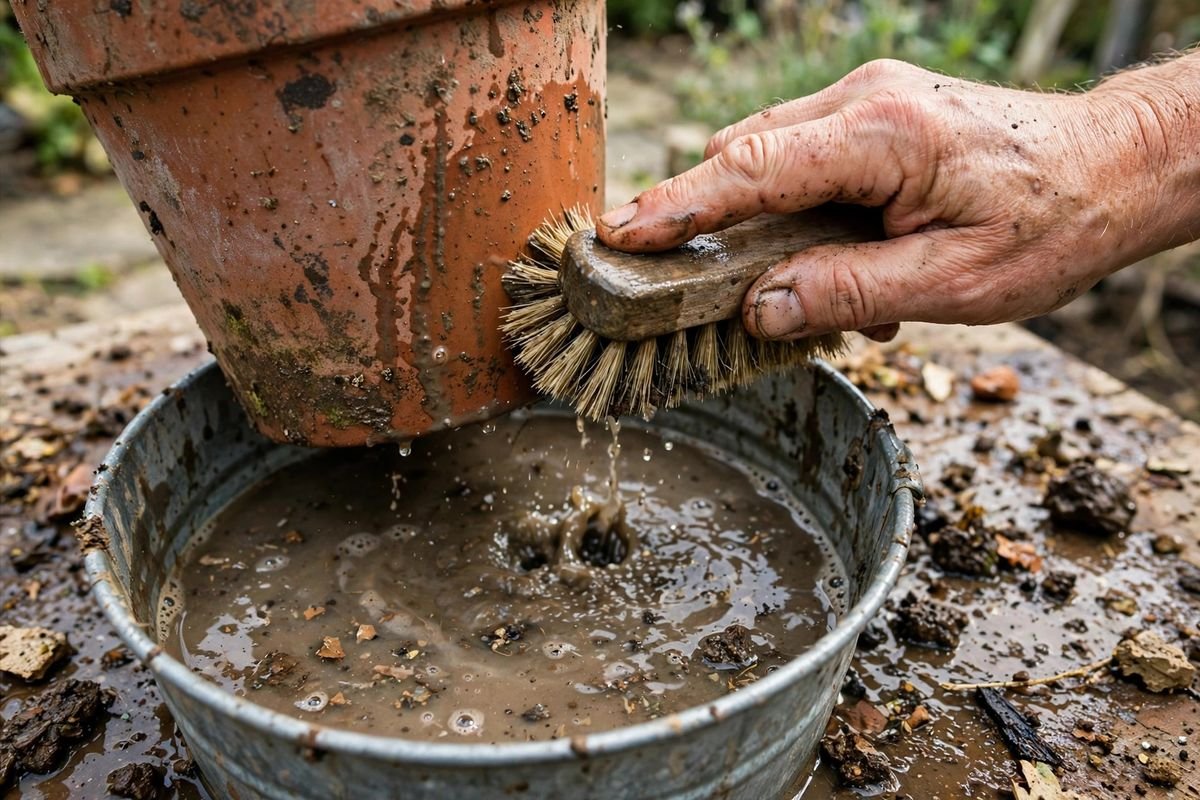
Scrub each pot with a stiff brush and plain water first, to remove soil and algae. Pay attention to the rim, the inside walls, and the drainage holes, where soil packs tight. A narrow brush or an old toothbrush reaches into small holes. If a hole stays blocked, push soil out from the inside with a stick, and do not widen the hole with a drill unless the pot is thick plastic.
Soak scrubbed pots in the 1 to 9 bleach solution for 30 minutes. Keep pots fully under the liquid where possible, and turn terracotta pots once during the soak so all surfaces stay wet. After the soak, rinse each pot twice in clean water, scrubbing once more during the first rinse. Two rinses matter, since bleach left on a pot wall can harm young roots.
To compare current options, search for stiff pot scrub brushes and large plastic tubs for soaking pots. Compare brush stiffness and tub size against your largest pot, since a brush that is too soft will not shift dried soil from terracotta.
Rinse, dry, and store clean pots
Drying is where many gardeners rush. Set pots upside down on a rack, a bench, or clean paving so air moves under them. Do not stack pots while they are damp, and do not store them in a sealed bag or box until they are fully dry. Damp stacks grow mold and smell musty by spring, and the smell is a sign the pots need cleaning again.
Once dry, stack plastic pots inside each other with a sheet of newspaper between pots if they tend to stick. Stack terracotta pots on their sides or rim to rim, not in a tall tower that can topple. Store pots under cover, out of standing water, and off bare soil where slugs can shelter inside them over winter.
When to retire a pot instead of reusing it
Retire a pot with a crack that runs through the wall or across the base, since the crack will widen when soil is wet and the pot is moved. Small chips on a rim are fine, and a chipped terracotta pot can still hold a plant well. A pot with a warped base that rocks on a flat surface is also a poor choice for a tall plant, since rocking plus wind tips pots more easily.
Retire plastic pots that have gone brittle in sun, with white stress marks or pieces flaking off when you flex the wall. Brittle plastic breaks without warning and can drop a plant. Also retire any pot that held a plant treated with a persistent herbicide, since residues can linger in porous terracotta even after scrubbing and soaking.
Material choice affects how often cleaning is needed. Our comparison of terracotta versus plastic pots covers porosity, drying, and breakage, and potting soil versus garden soil explains why clean pots still need the right mix inside them. For general pot setup, container gardening for beginners covers soil mixes and drainage from the start.
Questions
Clean pots last longer and give new plants a fair start. Empty and scrub each pot, soak for 30 minutes in a 1 to 9 bleach solution, rinse twice, and dry for at least 12 hours, and 24 hours for terracotta in cool weather. Pots that are cracked through, brittle, or warped belong in the recycling pile or the trash, not back on the patio.
For soil choices after cleaning, potting mixes for container vegetables covers mixes that drain well in clean pots, and the soil reuse guide linked above helps you decide what to do with the old mix you tipped out.