
This post may contain affiliate links. If you buy through links on this page, we may earn a commission at no extra cost to you.
As an Amazon Associate I earn from qualifying purchases.
Basil is the herb that turns many new gardeners into serious plant people. A few plants, given sun and warmth, will keep a kitchen in fresh leaves all summer. Left alone, the same plant grows one tall stem, flowers, and goes woody by August. The difference comes down to pinching. This guide walks through how to grow basil from seed or nursery starts, how to pinch for bushy growth, how much pesto three plants can realistically make, and how to fix the problems that show up most often.
Basil quick care
| Need | What basil wants |
|---|---|
| Sun | 6 to 8 hours of direct light daily |
| Soil | Well-drained, pH 6.0 to 7.5 |
| Water | Deeply every 7 to 10 days in beds; containers need water more often |
| Plant outside | After the last spring frost has passed |
| Spacing | 6 to 12 inches between plants |
| Harvest | Start once plants have 6 to 8 true leaves; never take more than a third at once |
Pick a variety that fits your plan
Traditional sweet basil (Ocimum basilicum) is the standard choice for pesto and tomato dishes, and it is the most widely grown variety for good reason. Genovese types are a sweet basil selected for large, tender leaves and are worth seeking out if pesto is your goal. Thai basil has purple stems, an anise-like note, and holds its flavor better in hot dishes. Lemon basil works in teas and salads. For pots on a windowsill, Spicy Globe stays compact at 8 to 10 inches and is slower to go to seed than most types, according to the University of Minnesota Extension. If you have lost basil to disease before, look for varieties listed as resistant to basil downy mildew, which is now the most common basil disease in many regions.
You can find a wide selection of basil seeds for planting online, including Genovese, Thai, and lemon types.
Start from seed or buy plants
Sow seeds indoors six to eight weeks before your last spring frost, covering them with about a quarter inch of soil. They sprout in five to seven days in warm soil. Move seedlings outside only after the danger of spring frost has passed, and thin or transplant them to stand 6 to 12 inches apart once they have two or three pairs of true leaves. A 2 to 3 inch layer of straw, compost, or shredded leaves keeps soil moisture steady and holds weeds down around the plants.
Use your local frost dates and regional planting guidance — not your USDA hardiness zone alone — to choose planting dates. Buying nursery starts is perfectly fine too, and it skips the indoor weeks for gardeners who want basil sooner. If you are new to starting seeds indoors, our guide to setting up a seed-starting station covers lights, trays, and timing for warm-season herbs like basil.
Pinch often for bushy plants
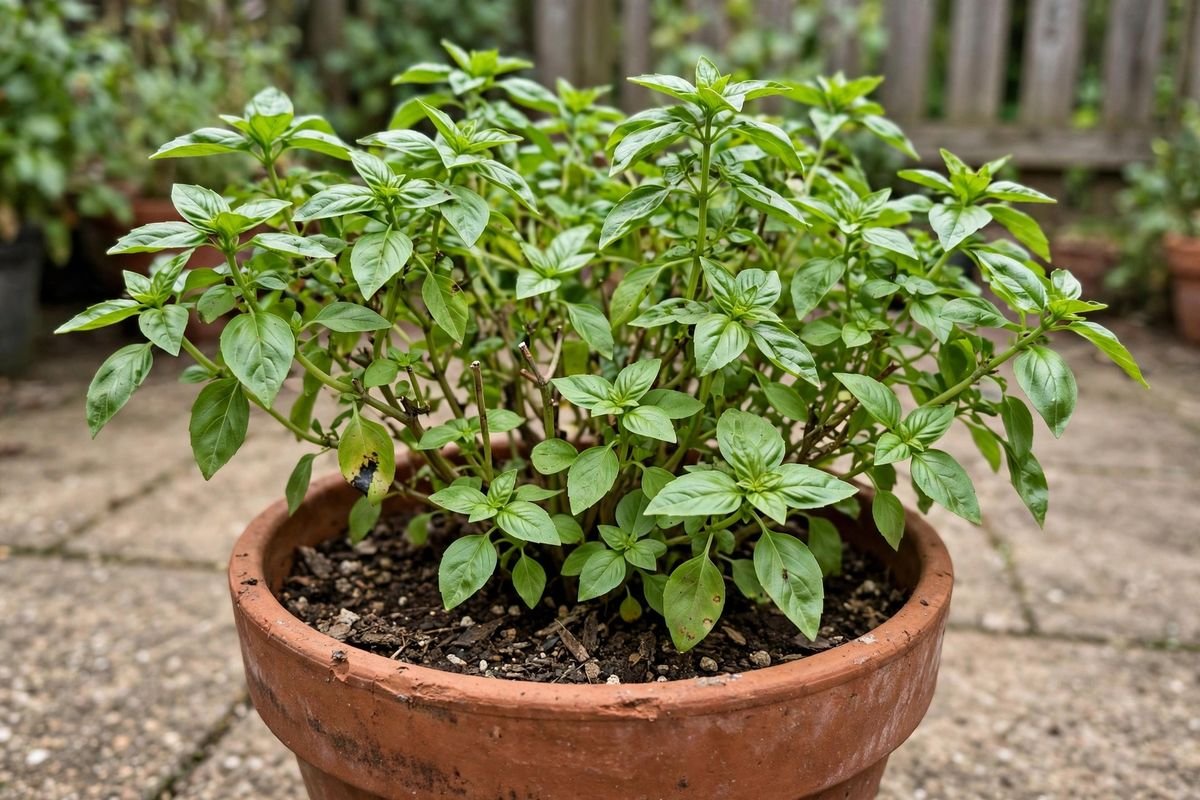
Pinching is the single habit that separates lush basil from a single lanky stem. When a young plant has three or four pairs of leaves, snip the main stem just above a leaf pair. The two buds sitting in the leaf axils below the cut each grow into a new branch. Wait until each new branch has three or four leaf pairs, then pinch both of them the same way. Keep repeating through the season.

Here is the math that shows why pinching works so well. Each pinch doubles the number of growing tips: one stem becomes two branches, two become four, four become eight. After three rounds of pinching, 8 growing tips are producing leaves where one stem stood before. That is our count, and it assumes a healthy plant with enough sun and water to push new growth after each cut. University of Minnesota Extension confirms that new growth appears at the cut point within about a week, and that letting the plant flower makes it woody with considerably lower yields, so pinch off any flower buds you see.
Harvest for pesto: our yield example
A standard pesto recipe uses 2 cups of packed fresh basil leaves per batch. A healthy Genovese plant in midsummer produces roughly 1 to 2 cups of packed leaves per cutting, so we will use 1.5 cups as our middle assumption. Say you grow 3 plants and cut them every 10 to 14 days during an 8-week summer stretch. That gives about 5 harvests.
The math: 3 plants x 1.5 cups per harvest = 4.5 cups per harvest, which is 2 full pesto batches with half a cup left for garnish. Over the season: 3 plants x 1.5 cups x 5 harvests = 22.5 cups, or about 11 batches of pesto. Actual yields vary with variety, light, water, and how faithfully you pinch, but this is a reasonable planning number. Freeze extra pesto in small containers without the cheese, and it keeps for up to a year with flavor closer to fresh than dried basil ever gives.

Growing basil in containers
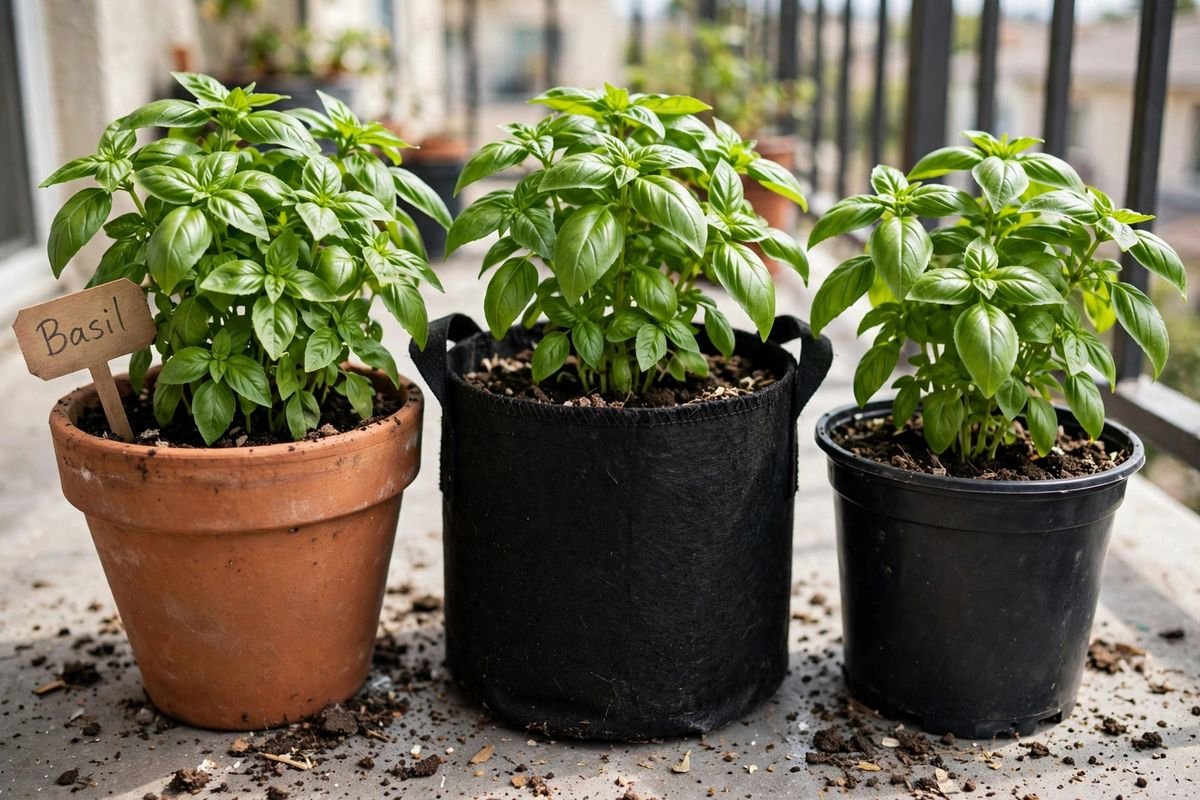
Basil is one of the best herbs for pots. Choose a container at least 10 to 12 inches wide with holes in the bottom, because basil roots rot in standing water. A standard potting mix works well; containers dry out faster than garden beds, so check the soil every day or two in summer heat and water when the top inch feels dry. Feed container plants with a liquid fertilizer at half the label strength every three to four weeks. One plant per 12-inch pot keeps air moving between leaves, which helps prevent disease. Our container gardening guide covers pot sizes, soil mixes, and watering rhythms in more detail.
Troubleshooting
Yellow leaves
The most common cause is too much water, especially in pots without drainage. Let the top inch of soil dry between waterings and make sure the pot can drain freely. Yellow lower leaves on an otherwise healthy plant can also mean it needs feeding during a long growing season.
Tall, leggy stems with sparse leaves
This is usually a light problem, a pinching problem, or both. Move the plant to a spot with 6 to 8 hours of direct sun and pinch the stems back to a lower leaf pair so the side buds can branch out.
Yellow spots with gray fuzz under the leaves
That pattern points to basil downy mildew, the disease University of Minnesota Extension calls the most common basil problem in its region. Pull off affected leaves, water at the base instead of overhead, and give plants room for air flow. For next season, plant a variety bred for resistance.
Plants flowering and tasting bitter
Flowering shifts the plant from making leaves to making seed, and the flavor turns bitter. Snip flower buds off as soon as they appear. A plant that has already gone woody will not fully recover its flavor, so pull it and start fresh seed for a fall crop.
If you are building your first vegetable garden, basil belongs on the short list: it is fast, forgiving, and genuinely useful in the kitchen. See our roundup of the easiest vegetables for beginners for more quick wins. To keep basil going through winter, read our guide to growing herbs indoors in winter.
Sources & further reading
- University of Minnesota Extension, “Growing basil in home gardens” (reviewed 2026): planting dates, spacing, watering, fertilizing, pinching, and downy mildew guidance used in this article. https://extension.umn.edu/vegetables/growing-basil-home-gardens