
This post may contain affiliate links. If you buy through links on this page, we may earn a commission at no extra cost to you.
As an Amazon Associate I earn from qualifying purchases.
Seed starting mix looks simple in the bag: fine, dark, and soft. The base ingredient changes how that mix behaves. Coco coir comes from coconut husks. Peat moss comes from sphagnum peat. Both hold water for tiny roots, but they differ in pH, in how they drink after drying out, in storage, and in what it takes to get them ready. Picking between them comes down to seed type, water habits, and shelf space.
Our quick answer: coir is close to neutral, rewets easily, and stores as compact dry bricks. It suits most vegetable seeds and any shelf short on space. Peat moss is acidic, holds water well, but resists rewetting once dry. It suits acid-loving seeds and gardeners who keep mix moist from the start. Detail, numbers, and limits follow.
Side-by-Side Comparison for Seed Starting
Both materials serve as the base of a seed starting mix, usually blended with perlite or vermiculite and a small amount of fertilizer. Neither one feeds seedlings for long on its own. The table compares the bases as gardeners meet them at the potting bench. Figures here are typical published ranges, not test results from our bench, and brand blends vary.
| Feature | Coco coir | Peat moss |
|---|---|---|
| Source and renewability | Coconut husk fiber; a by-product of coconut harvest, renewable on a yearly cycle | Sphagnum peat from peatlands; forms slowly over long periods |
| pH (typical published range) | About 5.5 to 6.5, close to neutral for most seeds | About 3.5 to 4.5 before liming; acidic |
| Water holding | High; holds several times its dry weight and releases it steadily | High when wet; holds a large volume of water in the mix |
| Rewetting after drying | Rewets readily; a dry surface drinks again fast | Can turn water-repellent when fully dry; needs slow soaking |
| Cost per tray (our example) | About $1 to $2 of expanded coir per filled 1020 tray in our example below | Often lower per bag volume in bulk bales; varies by region and brand |
| Storage | Dry bricks are compact and shelf-friendly; expand as needed | Bales and bags are bulky and light, but take floor space |
Cell depth changes how much mix each tray drinks, and our guide on how deep seed starting cells should be walks through depth by crop. Tray design matters too, and our best seed starting trays guide compares cell counts and tray build.
Where Each Material Comes From
Coco Coir: Husk Fiber, Washed and Pressed
Coir starts as the fibrous husk around a coconut. Processors wash, shred, and press that fiber into bricks, blocks, or loose bags. Quality varies: low grades can carry salts from processing water, so seed-grade coir is washed and often buffered with calcium. Rinsing a fresh brick until the runoff runs clearer is cheap insurance for seedlings, which are sensitive to salt.
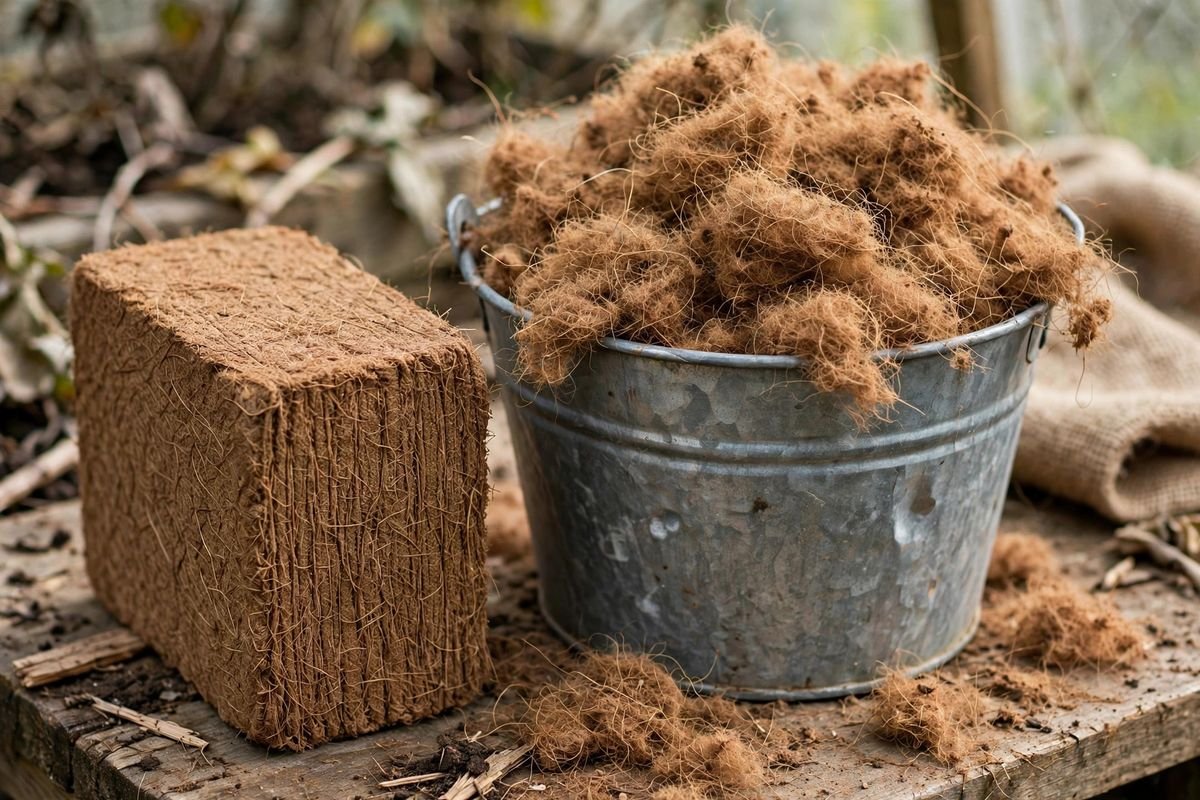
The dry brick feels like a light, dense board. Add warm water and it swells into a loose, springy pile that smells faintly earthy. That expansion is the storage trick: a season of mix can sit on a shelf corner until planting week.
Peat Moss: Sphagnum With an Acid Lean
Peat moss is partly decomposed sphagnum moss harvested from peatlands. It is light, fine, and uniform, which is why mix makers lean on it. Its acidity is natural, and commercial seed mixes usually add lime to lift the pH into the range most vegetables prefer. Loose peat labelled for gardens may stay more acidic than a finished seed starting blend, so the bag wording matters.
Peat is bulky to store. A compressed bale expands a long way, but it still wants floor space, and an open bale dries at the surface. Gardeners with a closet and a windowsill usually prefer bricks.
Water, Air, and the Dry-Down Problem
Seed cells dry from the top. The top quarter inch can go pale and dry while the bottom stays moist, and small seeds sit right in that dry zone. How a base recovers from that dry-down decides germination more than any single number.
Coir drinks again without a fight. A misting or a bottom-water soak pulls moisture back through the cells, and the surface darkens evenly. Peat, once fully dry, can repel water. Droplets sit on top, run down the cell edges, and leave the center dry. Slow bottom watering fixes it, but the soak takes patience. Keeping peat-based mix slightly moist from sowing day avoids the problem.
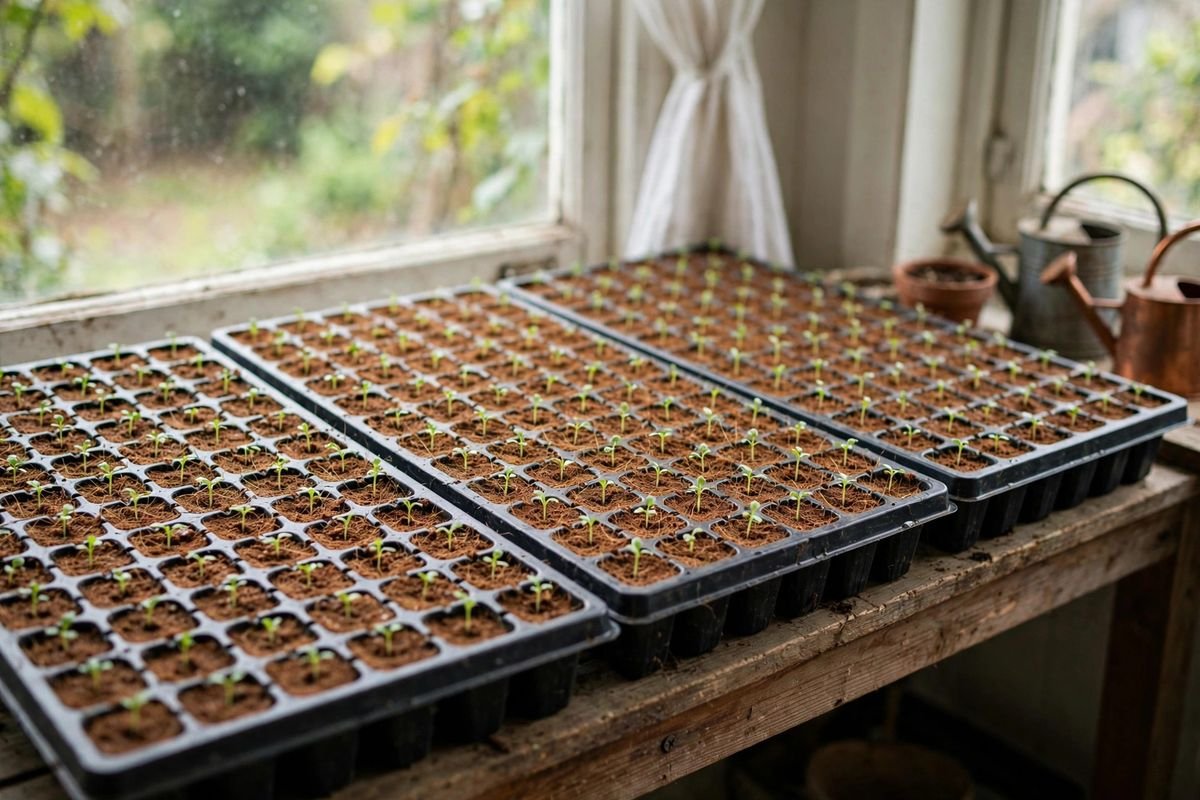
Water holding runs high on both sides. A coir-based mix holds water and still keeps air pockets around roots. A peat-based mix holds a generous volume too. Overwatering hurts seedlings in either base: cells that stay saturated grow algae on the surface and invite damping off. We water from below, let cells drain, and aim for evenly moist rather than wet.
Our guide to best potting mixes for container vegetables explains how those same base materials carry plants after transplant, when pots enter the picture.
Pros and Cons for Each Side
Coco Coir
Pros:
- Near-neutral pH for most vegetable and flower seeds.
- Rewets fast after the surface dries.
- Compact dry bricks store almost anywhere.
- Consistent, fluffy texture for fine seed mixes.
Cons:
- Needs expansion and rinsing before use.
- Low-grade coir can carry salts; seed grade costs more.
- Ships a long way from coconut-growing regions.
- Stays moist at the surface, which suits algae if overwatered.
Browse coco coir bricks for seed starting on Amazon and look for washed or buffered wording on the listing.
Peat Moss
Pros:
- Fine, uniform texture that seed mix makers have used for decades.
- Holds a large amount of water when evenly moist.
- Bulk bales can cost less per expanded volume.
- Acidity suits acid-loving seeds and blueberries in later mixes.
Cons:
- Resists rewetting once fully dry.
- Acidic unless limed; loose garden peat can sit too low for many seeds.
- Bulky bales need dry floor space.
- Light dust when dry; best handled damp, outdoors, or with care.
Compare coco coir and peat options by expanded volume, not by bag weight, since the two pack very differently.
Worked Example: One Brick, Two Trays
Coir math confuses gardeners because bricks sell by weight and cells fill by volume. Here is our worked example with stated assumptions. Yields and prices are typical label figures and illustrative example ranges, not live quotes.
Assumptions. One standard coir brick weighs about 1.4 pounds. The label states a typical yield of about 2 gallons of loose coir after expansion; we use that typical label yield as stated. A standard 1020 tray with cells takes about 1 gallon of loose mix to fill, tamping lightly. Peat side: a loose bag of peat moss lists about 8 quarts, which equals 2 gallons, before any perlite is blended in.
Step 1: trays per brick. Yield divided by tray volume: 2 gallons divided by 1 gallon per tray equals 2 trays of cells per brick.
Step 2: peat comparison. An 8-quart bag holds 2 gallons of peat. At the same 1 gallon per tray, that bag also fills about 2 trays. Volumes match; shelf space does not. The brick stores at roughly brick size until water touches it.
Step 3: cost per tray. If an example brick price is $3, then coir cost per tray is $3 divided by 2, which equals $1.50 per tray. If an example 8-quart peat bag is $6, peat cost per tray is $6 divided by 2, which equals $3.00 per tray. Bulk bales change the peat side fast: large bales often drop peat cost per tray below coir. Our point stands either way: divide price by expanded gallons, then by gallons per tray, before judging any bag.
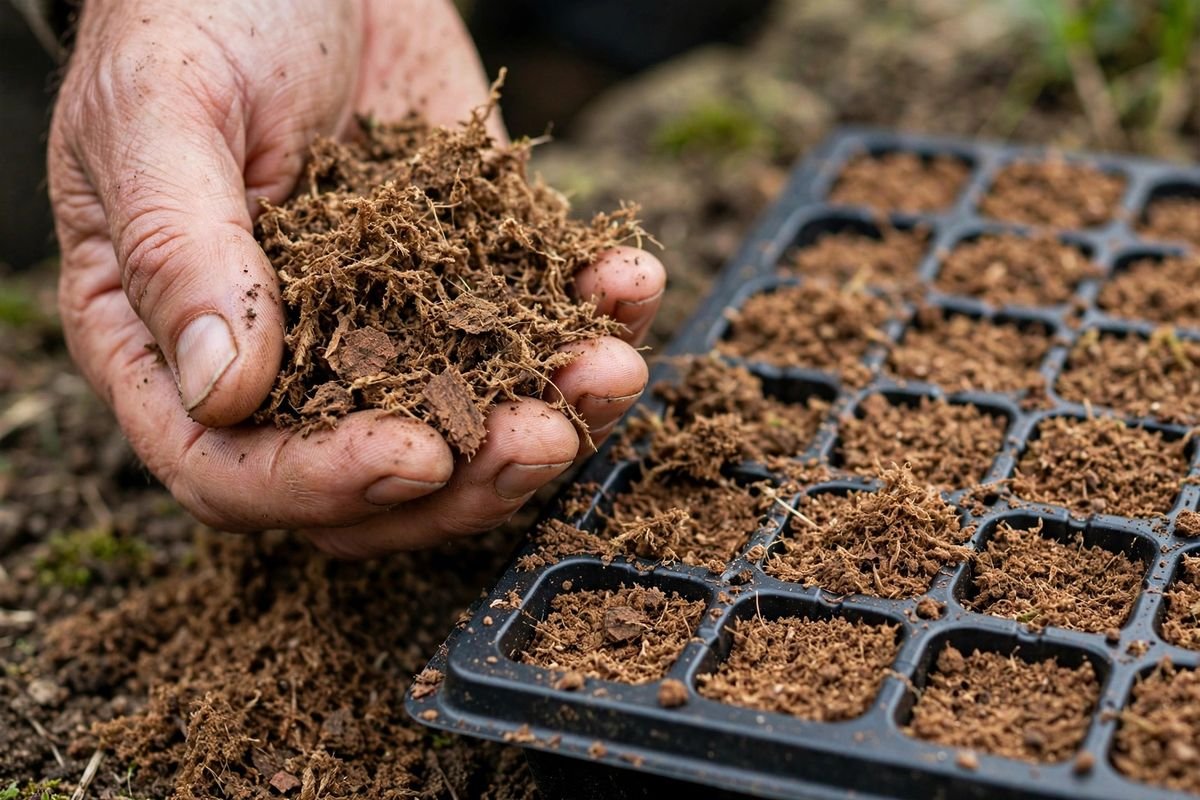
The hand check matches the math. Coir feels like fine, springy crumbs. Peat feels finer and dustier when dry. Both fill cells well; hands and shelves feel the real difference.
Mixing Each Base Into a Seed Starting Blend
Most gardeners blend rather than sow into a pure base. A simple starting blend for either base is about two parts base to one part perlite or fine vermiculite, plus a small amount of gentle fertilizer once seedlings show true leaves. Coir blends often add a calcium source when the brick is unbuffered. Peat blends often add a pinch of garden lime per gallon to lift pH, following the lime product label.
Salt rinse matters only on the coir side. We expand the brick, soak, drain, and repeat once if the runoff stays dark and salty-smelling. Buffered seed-grade bricks usually need just the expansion soak. Peat needs a slow pre-wet: stir warm water in gradually until the peat darkens and clumps softly, which can take several minutes of patient mixing.
Our Verdict: Match the Base to the Seeds and the Shelf
Both bases grow healthy seedlings when water stays even. The differences show up in pH, in recovery after a dry weekend, and in storage.
Choose coco coir if the seed list is mostly vegetables and herbs that prefer a near-neutral mix.
Choose coco coir if storage space is tight, since dry bricks stack on a shelf.
Choose coco coir if watering runs uneven and the surface dries between waterings; coir forgives that faster.
Choose peat moss if acid-loving seeds or later blueberry mixes are on the list, or when a limed commercial peat blend is the local standard.
Choose peat moss if a bulk bale is cheap nearby and dry storage space is available.
Choose peat moss if the habit of keeping mix moist from sowing day is already set, so the rewetting limit never appears.
Our bottom line: coir wins on storage and rewetting, peat wins on bulk price and a long track record in commercial blends. Either one beats sowing into garden soil, which compacts in small cells.
Frequently Asked Questions
Can coir and peat be blended together?
Yes, many gardeners blend them. A half-and-half base can balance coir rewetting with peat water holding. Keep the perlite share, rinse the coir share first, and treat pH as landing between the two bases.
Do seedlings need fertilizer in coir or peat mixes?
Both bases carry little nutrition. Seedlings run on seed reserves first, then need a weak fertilizer once true leaves appear. Finished commercial blends may include a starter charge; plain bases do not.
Which base is better for very small seeds?
Both work when sifted fine. A screened, fine grade gives small seeds even contact. Coarse coir chunks belong in potting blends rather than in tiny cells.
Sources & Further Reading
- University extension guidance on seed starting media, cell filling, and bottom watering.
- Regional extension notes on sphagnum peat pH, liming, and rewetting dried media.
- Coconut coir processing and seed-grade washing guidance from university horticulture resources.