
This post may contain affiliate links. If you buy through links on this page, we may earn a commission at no extra cost to you.
As an Amazon Associate I earn from qualifying purchases.
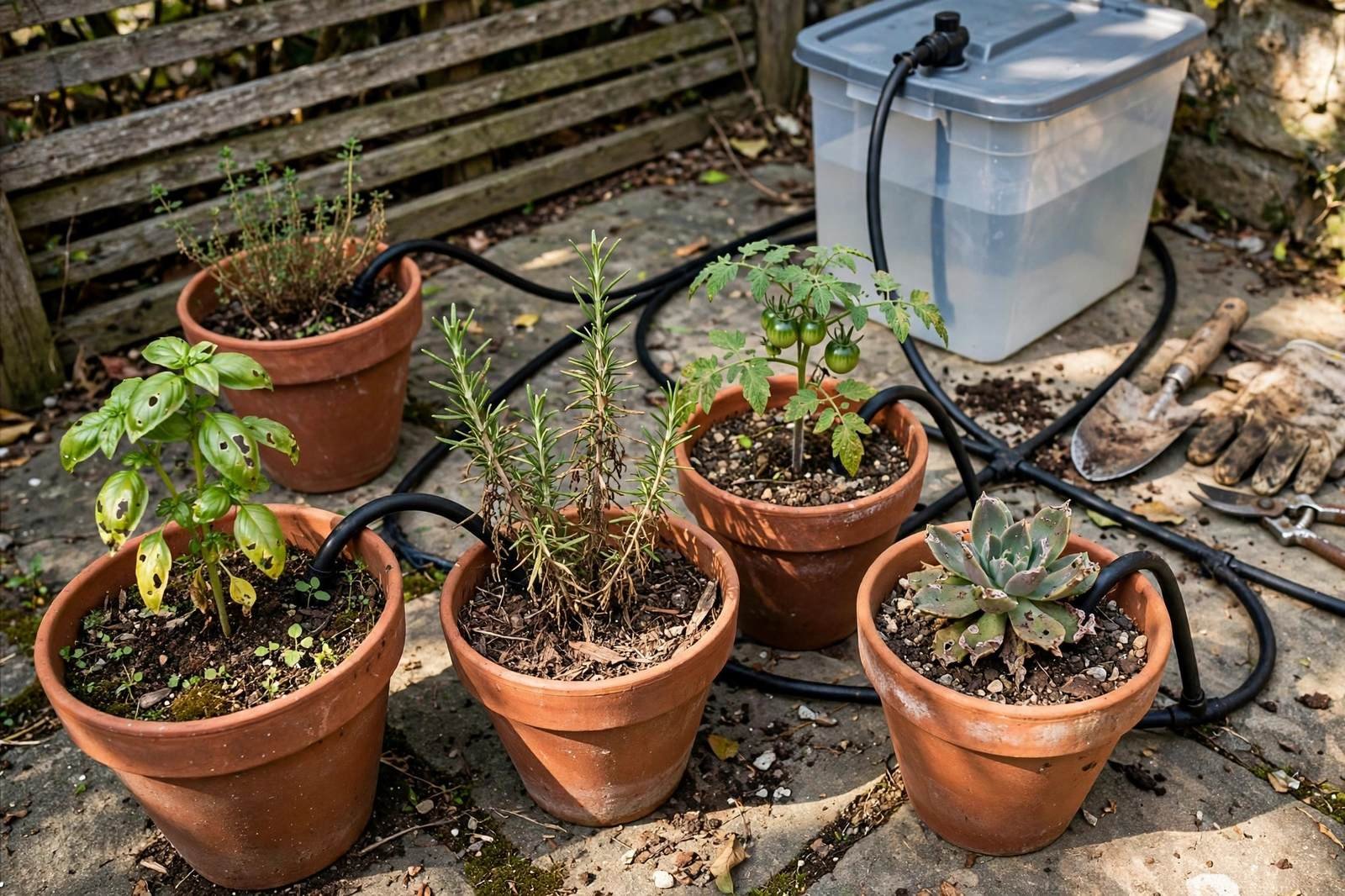
A week away does not have to mean wilted pots on return day. Containers in full sun, small pots, and plants that were already thirsty before the suitcase closed struggle first. The fix is plain: give each pot a slow, steady supply, test that supply for a full week before departure, and leave a backup for the thirstiest plants.
Short answer first. For two or three days, a deep watering, mulch, and light shade carry most pots. For four to seven days, wicks, bottle spikes, or self-watering pots cover many patio plants. For a week or longer in summer heat, a hose timer with drip lines or a trusted neighbor is the safer choice.
Match the Method to the Trip Length and the Pot
Pot size decides how fast trouble arrives. A 5-gallon pot in afternoon sun can dry in a day or two during a heat wave, while a 15- or 20-gallon mulched pot holds moisture far longer. Leafy plants drink faster than slow, woody ones, and seedling trays dry fast at the surface.
Plan for the thirstiest pot, not the average one, and group pots in light shade for the trip. Clustered pots shade each other, lose less water to wind, and let one drip line or one visit cover more plants. Our notes on how often you should water a raised bed make the same point: volume, sun, and mulch matter as much as the calendar.
Self-Watering Pots: The Simplest Hands-Off Start
Self-watering pots hold a reservoir at the base, and soil draws water up as it dries. For a long weekend or a five-day break, a full reservoir on a mid-size pot often does the job with no tubes and no timers. Refill right before departure day, and give newly potted plants a top watering, since shallow roots may not yet reach the moist zone.
Small reservoirs empty fast in heat, and a saucer or insert adds only a day or two. Our roundup of best self-watering planters for patio gardens compares reservoir sizes and fill tubes for herb pots and tomato planters alike.
Wicks, Bottles, and Reservoirs: The Passive Options
Passive systems move water without power or pressure, at a pace set by the soil itself. That slow pace suits small and mid-size pots, shaded patios, and trips up to about a week. Very large, thirsty pots in full sun need a generous reservoir or a different method.
Cotton Wicks and Capillary Draw
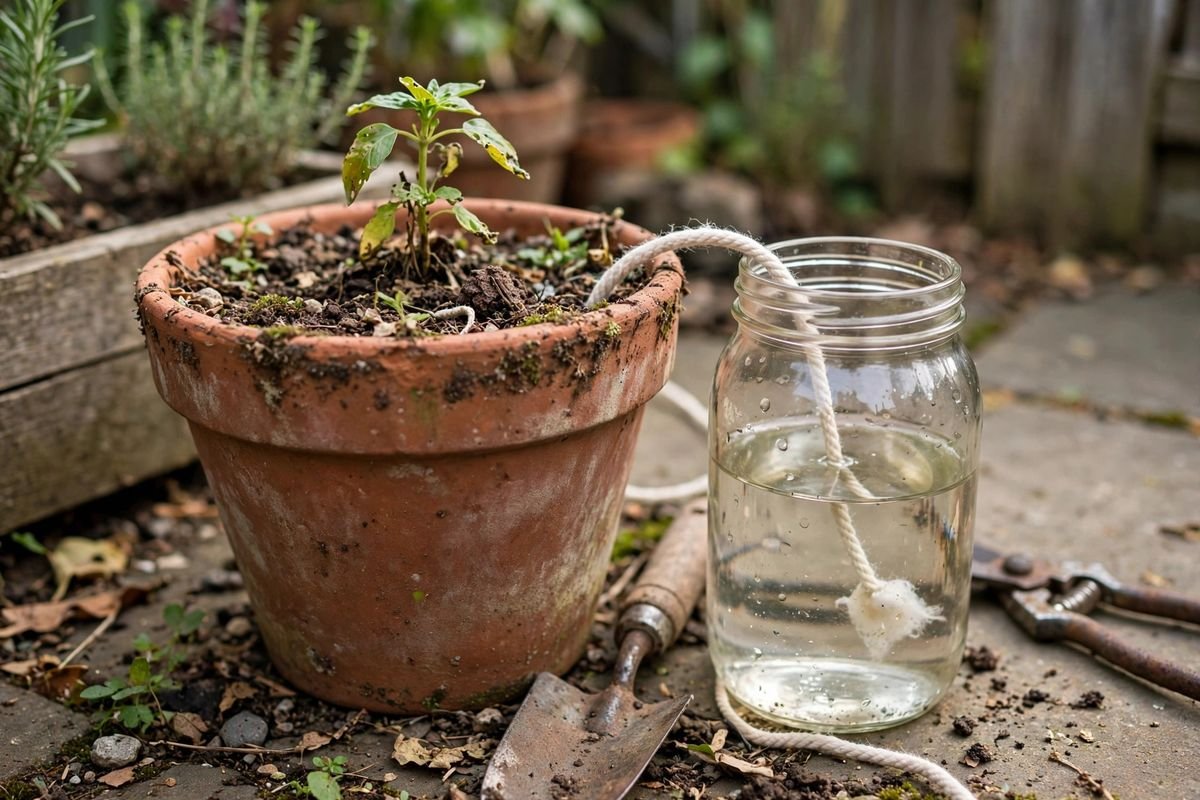
A wick setup uses cotton cord or capillary mat. One end sits in a bucket of water, the other is buried a few inches into the mix, and the reservoir sits level with the pot so water moves by capillary action. One wick serves one small pot; larger pots may need two. Soak cords first, since a dry wick may never prime well. Browse cotton wick cord for self-watering setups on Amazon and choose natural cotton without a synthetic core.
Bottle Spikes and Shared Reservoirs
A bottle spike pushes onto a filled bottle that sits upside down in the pot, seeping water through a small hole or porous tip. Rates vary with soil and temperature, so mark the water line with tape and check in 24 hours. Compare plant watering bottle spikes on Amazon by tip style, plan on one bottle per pot, and brace tall bottles against the rim. A covered tub with several wicks can also serve a row of herbs from one refill point.
Timers and Drip: The Active Option
A hose timer turns a faucet on and off on a schedule. Paired with drip tubing and small emitters, one timer can water a whole patio while the house sits empty. This is the only option here that can match normal watering volumes for large pots across a long, hot trip.
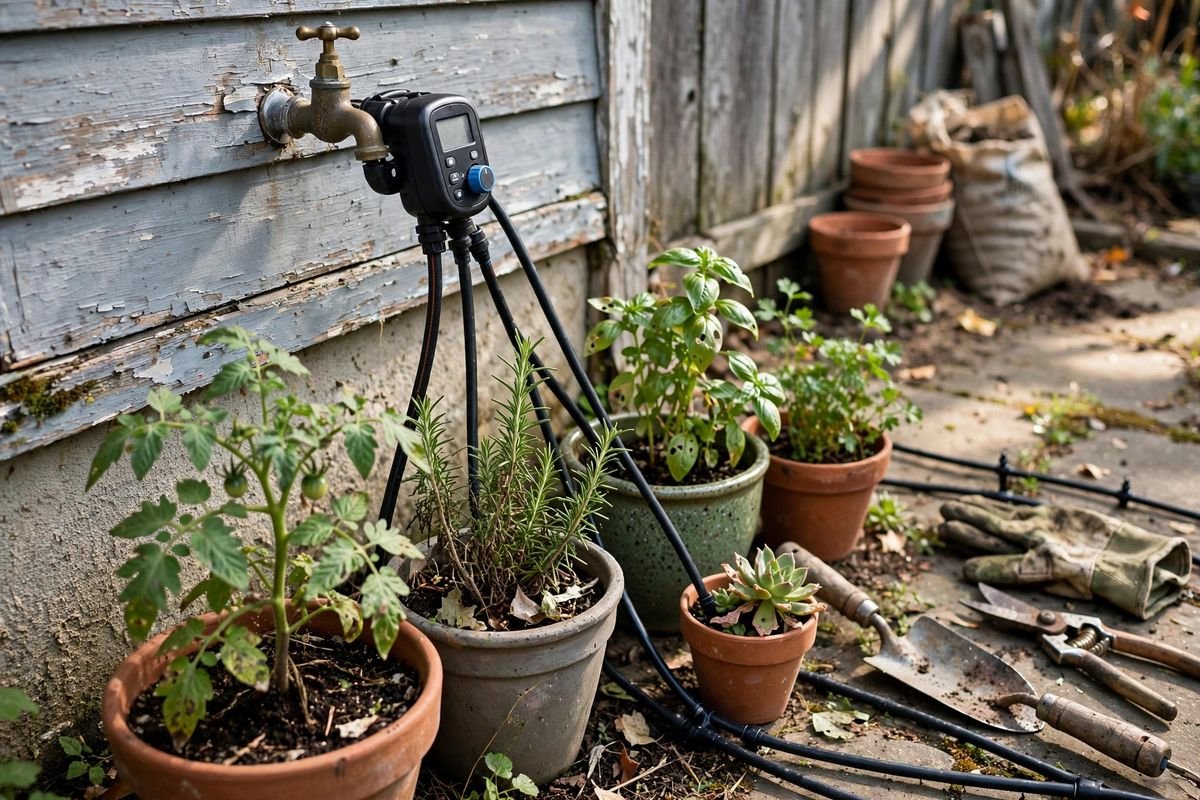
A plain layout works: timer on the faucet, a short main line, then drip lines with one or two emitters per pot. Emitters rated around 0.5 to 1 gallon per hour are common for containers, and runs of 20 to 45 minutes once or twice a day cover many setups. Our guide to best garden hose timers compares zone counts and rain-delay settings. Use fresh batteries, check washers for drips, and watch every emitter in the test run. Look at hose timers and drip kits for containers on Amazon with stake-held emitters in mind for pots.
The Neighbor Plan: A Human Backup
A neighbor, friend, or house sitter remains the most flexible system here. A person can move a pot out of a heat wave and spot a fallen bottle. Keep instructions short: group all plants that need care in one spot, leave the hose ready, and note how often to water. Even with a timer running, one visit around day three or four adds real protection.
Worked Example: Water Budget for a Seven-Day Trip
Guessing reservoir size is where vacation watering usually fails. A little arithmetic, with assumptions stated plainly, gives a target before any gear comes out. The figures below are a planning example built from typical container water use in summer heat, not measurements from a specific patio. Each garden should adjust the daily rate after its own test run.
Assumptions. The trip lasts 7 days. The patio holds four 10-gallon pots with mature, leafy vegetables in full sun during a warm week. Each pot uses about 0.8 gallons per day in that heat, an illustrative planning rate for large containers in hot weather. Shade, mulch, smaller pots, and cooler weather all pull the rate down.
Step 1: total demand. Four pots at 0.8 gallons per day equals 3.2 gallons per day. Across 7 days, total demand is 3.2 times 7, which equals 22.4 gallons.
Step 2: safety margin. Heat spikes, wind, and a late return argue for extra water. Adding 20 percent gives 22.4 times 1.2, about 26.9 gallons. We round the planning target to 27 gallons for the week.
Step 3: reservoir math. A 5-gallon bucket for one pot lasts about 5 divided by 0.8, roughly 6 days at the full summer rate, with no margin. A 2-liter bottle spike, about 0.53 gallons, covers less than a day at that rate. Bottle spikes therefore fit smaller pots or trips of two to four days, while the big pots need a larger reservoir or a timer.
Step 4: timer math. Suppose each pot gets two emitters rated at 0.5 gallons per hour, so each pot receives 1 gallon per hour while the timer runs. Delivering 0.8 gallons takes about 48 minutes per day, which can split into two 24-minute cycles that soak in with less runoff. The four pots still total 22.4 gallons for the week, drawn from the faucet, and the margin here is schedule rather than storage.
The lesson cuts both ways. A shaded 3-gallon herb pot at perhaps 0.25 gallons per day needs only about 1.75 gallons for a week, plus margin, which a 2-gallon reservoir handles well. Running these numbers pot by pot, even roughly, beats buying gear by hope.
The Week-Before Test Run
Every method above can fail quietly. A wick can lose its prime, a spike can clog, a fitting can weep at a seam. A test run started a week before departure catches those failures while fixes are still easy, and we treat it as part of the system rather than an extra.
Seven days out: set up and saturate. Water every pot deeply until water runs from the drainage holes. Install wicks, bottles, reservoirs, or drip lines while the mix is evenly moist, and mark reservoir levels with tape.
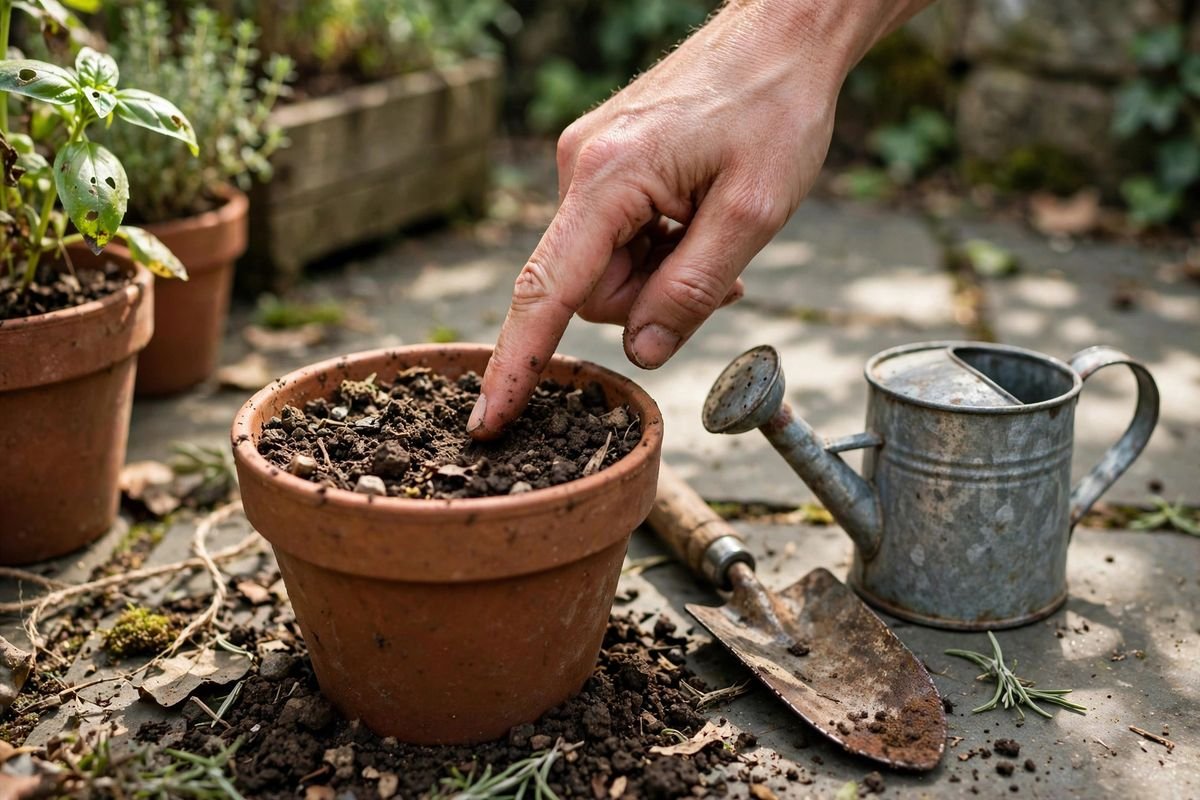
Six days out: first check. Push a finger into the mix to the second knuckle. The surface may look dry while the root zone stays moist, and that deeper check is the one that counts. Look for fallen bottles, kinked lines, and puddles that suggest a leak.
Five to three days out: measure the draw. Compare reservoir marks with the starting tape. A fast drop means the rate was low or a line is siphoning; no drop suggests a wick that never primed. Adjust now, then leave the system alone for one full 24-hour stretch exactly as it will run on the trip.
Departure day: refill and simplify. Top up reservoirs, refresh timer batteries, and start every pot with a last deep watering that morning.
Mistakes That Dry Out Vacation Plants
Setting up on departure morning. Untested wicks and timers fail on day one, with six days left to do damage. The test run moves that failure into a week when someone is home to see it.
Watering heavily once and hoping. A soaked 5-gallon pot in summer sun still dries within a few days. Water stored in the mix alone rarely spans a week in heat.
Leaving pots scattered and bare. A helper or a single drip zone can miss an isolated pot, so group pots together. A 2-inch mulch layer on container soil also slows surface evaporation between deliveries.
One method for every pot. The large tomato, the small herb, and the hanging basket live different lives. Bottles for the small pots and drip for the large ones matches supply to demand far better than one uniform setup.
Frequently Asked Questions
How long can a bottle spike keep a pot watered?
Bottle size, pot size, and heat decide the answer. In our worked example, a 2-liter bottle covers less than a day for a large pot drinking 0.8 gallons daily, while the same bottle can cover several days for a small, shaded herb pot. A 24-hour test run with a marked water line gives a local answer for each pot.
Is a hose timer safe to leave on for a whole trip?
A timer leaves the faucet pressurized, so connections matter. Firm washers, fresh batteries, and a full test week reduce the common failure points, and a neighbor check mid-trip adds another layer. Anyone unsure about an older faucet may prefer reservoirs and wicks instead.
Should pots move into shade during a trip?
Light shade helps most containers by cutting water loss, and a week in bright shade rarely harms sturdy patio plants. Aim for morning sun with afternoon shade where the patio allows it, and move pots back gradually on return day rather than straight into full afternoon sun.
Sources & Further Reading
- University extension guidance on container watering frequency, pot volume, and summer water demand for vegetables.
- Regional extension notes on drip irrigation for containers, emitter rates, and timer scheduling.
- USDA and university horticulture resources on mulch depth for containers and moisture retention.
- Extension publications on capillary and wick watering for greenhouse and patio containers.