
This post may contain affiliate links. If you buy through links on this page, we may earn a commission at no extra cost to you.
As an Amazon Associate I earn from qualifying purchases.
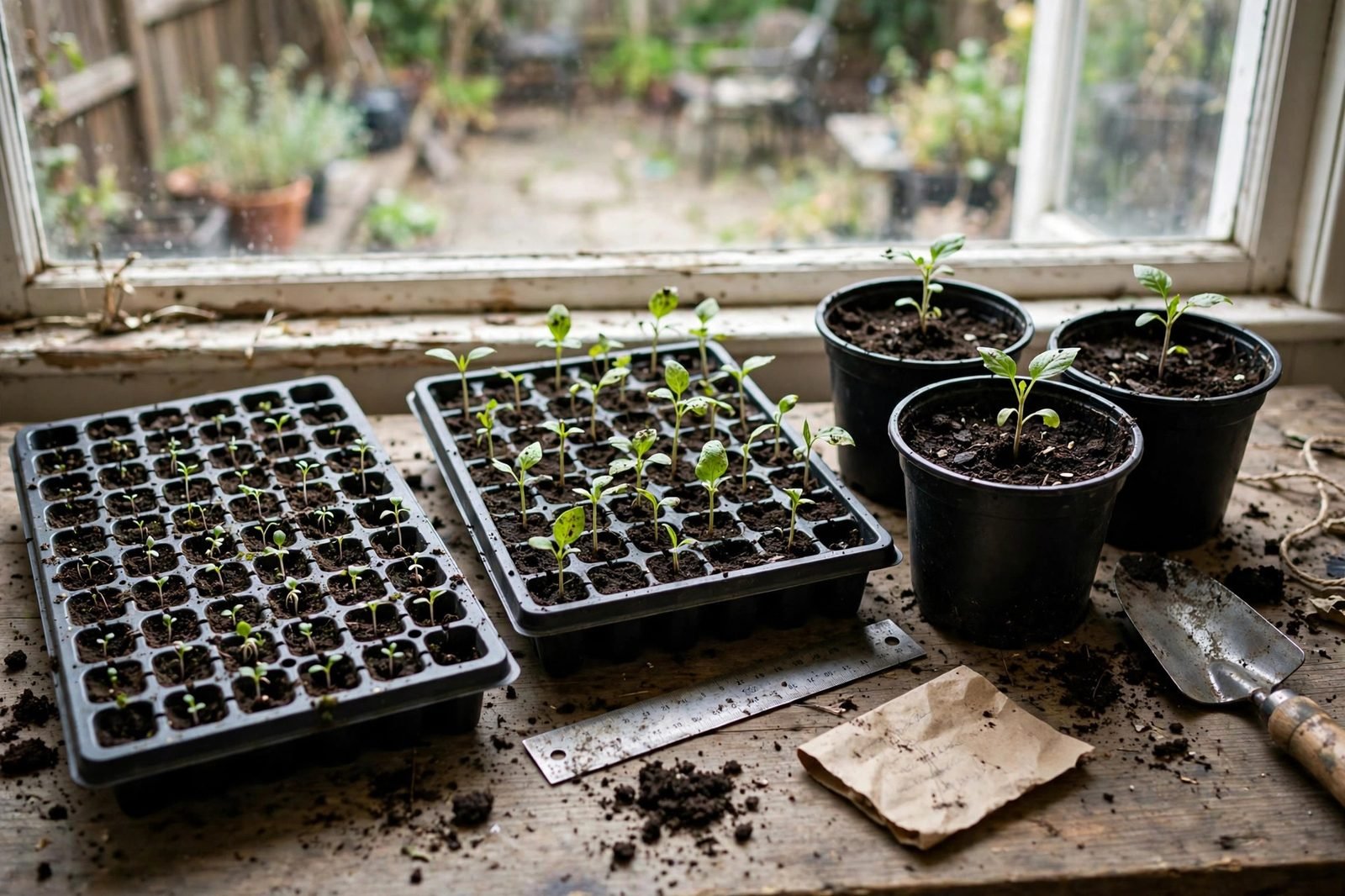
Walk into any garden center in late winter and you’ll see a wall of options: 128-cell plug trays with thimble-sized pockets, chunky 6-packs, deep 4-inch pots, and everything in between. Beginners tend to grab whatever looks right and sow everything in it — tomatoes in the tiny cells, lettuce in the giant pots — and then wonder why half the tray struggles.
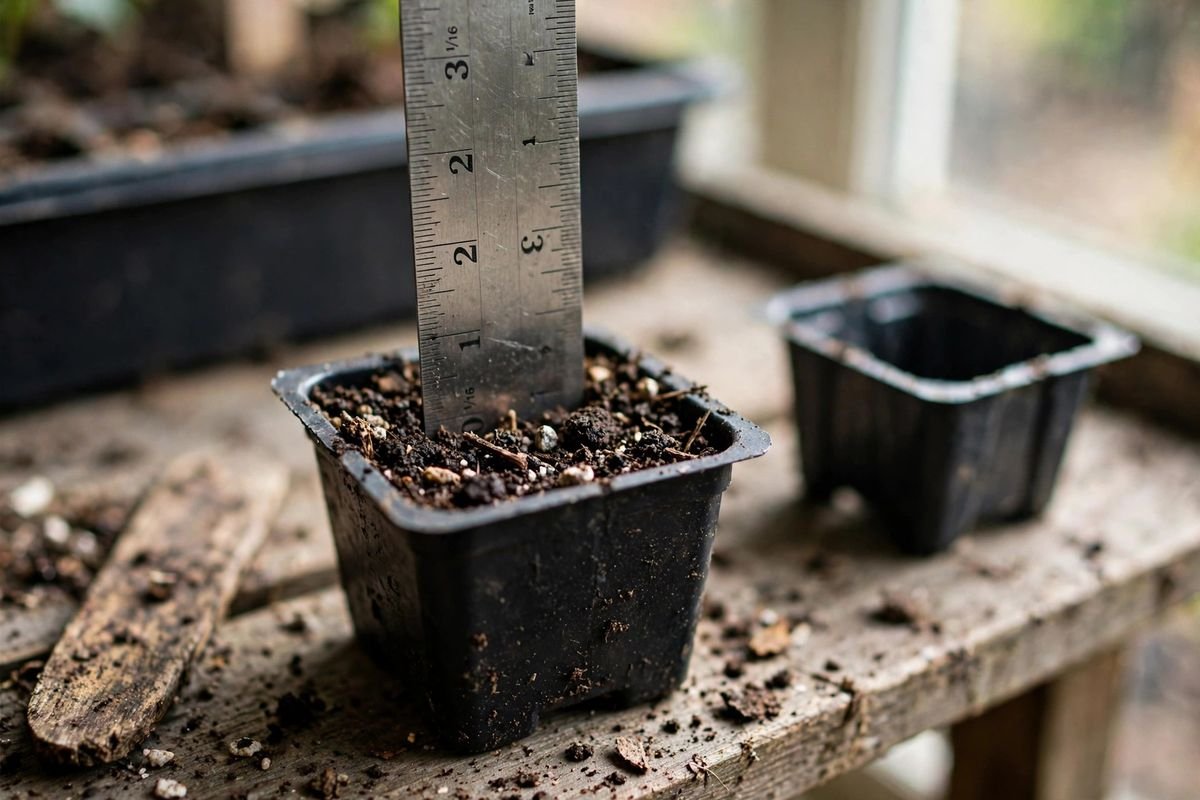
Cell depth matters because it sets the size of the root zone your seedling gets. Too shallow, and roots hit the bottom within days, circle around themselves, and stall. Too deep for the crop, and all that extra mix stays wet long after the roots need it, inviting algae and damping-off. The sweet spot depends on two things: the crop, and how many weeks the seedling will live in that cell before transplanting.
In this guide, we’ll give you the short answer first, explain why depth matters, and then walk through a crop-by-crop size guide grounded in university extension recommendations. Most vegetable seedlings spend 4 to 10 weeks indoors before moving outside — timed back from your average last frost. Use your local frost dates and regional planting guidance — not your USDA hardiness zone alone — to choose planting dates.
The Short Answer
For most home gardeners, two sizes cover nearly everything:
- Standard cells about 2 inches wide and 2 to 3 inches deep (the common 48- or 72-cell inserts) for tomatoes, peppers, brassicas, herbs, and flowers that will spend 4 to 8 weeks indoors.
- 4-inch pots, about 3.5 to 4 or more inches deep, for large-seeded, fast-growing crops like cucumbers, squash, melons, and beans — or for any seedling you plan to pot up once before transplanting.
Tiny plug cells (128-cell and smaller) are really a commercial-grower tool. They work for lettuce and herbs you’ll transplant within 3 to 4 weeks, but most home gardeners are happier with the forgiveness of a bigger cell. When in doubt, go one size larger than you think you need — the penalty for too-big is much smaller than the penalty for too-small.
Why Cell Depth Matters
A seedling’s roots explore downward first. In a cell that’s too shallow, the taproot hits the bottom within days and starts circling — the classic root-bound spiral you see when you pop a neglected seedling out of its cell. Circled roots don’t always straighten out after transplanting, and the check in growth can cost you a week or more of the season.
Depth also controls the moisture buffer. A deeper column of mix holds more water and dries more slowly, which is forgiving if you occasionally forget to water. But a deep cell holding a tiny seedling is mostly unoccupied wet mix — and wet, airless mix is where damping-off fungi thrive. That’s why matching matters: you want the root system to colonize most of the cell by transplant time, not rattle around in it.
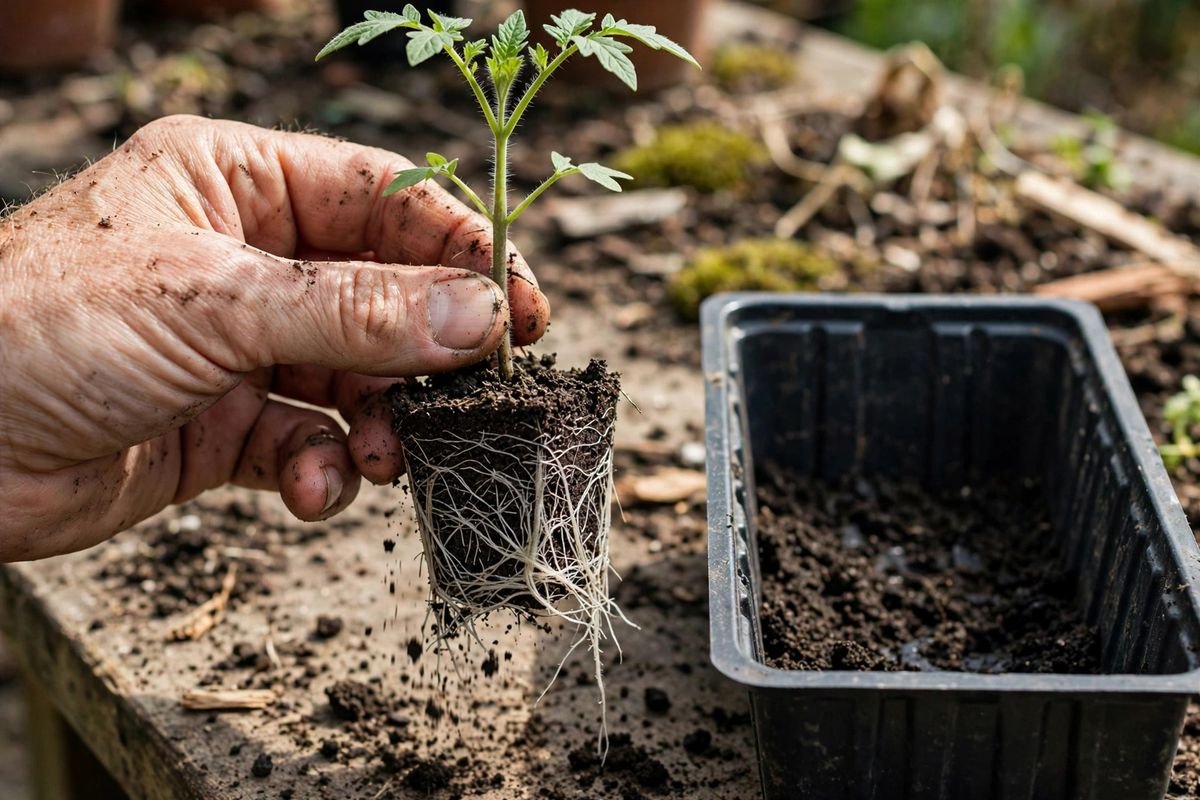
Depth affects transplant shock too. Seedlings grown in appropriately sized cells slide out with an intact root ball that holds together. Seedlings pried out of cells they’ve outgrown — or drowned in cells far too big — go into the ground stressed, and stressed transplants sit still for days instead of growing.
Related Post: Cell size and tray quality go together — see our best seed starting trays roundup for inserts that pop seedlings out cleanly without tearing roots.
Quick-Reference Cell Size Guide
The numbers below pull from university extension and USDA guidance: the USDA Natural Resources Conservation Service publishes recommended planting cell sizes for bedding-plant production (1.5-inch cells for broccoli, cabbage, and herbs; 2-inch cells for cucumber, eggplant, lettuce, and pepper; 4-inch cells for melons, squash, pumpkins, and tomatoes), and the University of Georgia’s transplant-production guide echoes the same split — smaller 1 to 1.5-inch cells for brassicas and lettuce, larger 1.5 to 2.5-inch cells for tomatoes, peppers, cucumbers, and squash. West Virginia University Extension adds the calendar side: typical indoor weeks per crop.
| Crop group | Cell size | Depth | Weeks indoors |
|---|---|---|---|
| Lettuce, spinach, most herbs | 1.5-inch cells (72- or 128-cell inserts) | 2 to 2.5 inches | 3 to 5 |
| Broccoli, cabbage, cauliflower, kale | 1.5 to 2-inch cells (50- to 72-cell) | 2.5 to 3 inches | 4 to 6 |
| Onions (sown thickly, trimmed like grass) | 1.5-inch cells, sown in clumps | 2.5 inches | 8 to 10 |
| Peppers, eggplant, basil | 2-inch cells (50- to 72-cell) | 2.5 to 3 inches | 6 to 10 |
| Tomatoes | 2-inch cells, then pot up to 4-inch | 3 to 4 inches at potting up | 6 to 8 |
| Cucumbers, squash, melons, beans | 4-inch pots or 50-cell inserts | 3.5 to 4+ inches | 2 to 4 (sow late) |
Shallow Cells: Lettuce, Herbs, and Small Seeds
Lettuce, spinach, and most herbs germinate happily in 1.5-inch cells and can head to the garden in as little as 3 to 4 weeks. Their root systems are modest, and they don’t need much vertical room — a shallow cell colonized edge to edge by transplant time is ideal. That’s why a 72-cell or even 128-cell insert is the classic choice for salad crops.
The catch is the calendar. Sow them too early and they’ll sit in those small cells for two months, getting leggy and root-bound. Match the sowing date to the transplant date first, then pick the cell. Our guide to growing lettuce in fall walks through timing salad crops so they leave the tray before they outgrow it.
Deep Cells and Pots: Tomatoes, Peppers, and Big Seeds
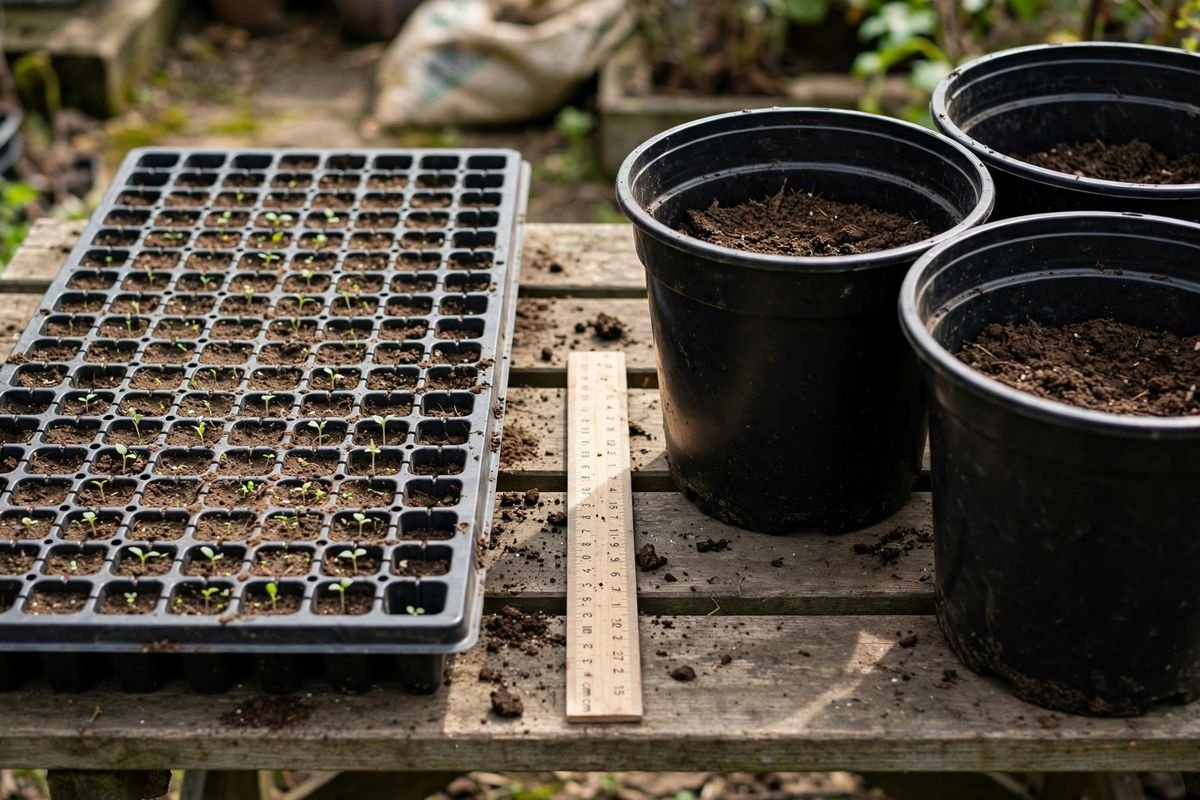
Tomatoes are the classic pot-up crop. They start fine in 2-inch cells, but most growers move them into 4-inch pots once they’re a few inches tall — burying the stem a little deeper each time, since tomatoes root along buried stems. That one intermediate step is the difference between a stocky transplant and a leggy one circling its starter cell. Our tomato growing guide covers the full journey from seed to harvest, including when to make that move.
Peppers and eggplant, which grow more slowly and spend up to 10 weeks indoors, want a 2-inch cell from the start — they need the mix volume to carry them without daily feeding, but they don’t need a 4-inch pot’s worth of room. Big-seeded, fast-growing crops are the opposite: cucumbers, squash, melons, and beans germinate fast and grow faster. In a small cell they’re root-bound before they have true leaves, so sow them directly into 4-inch pots about 3 to 4 weeks before transplanting — no earlier.
Choosing Your Trays
Once you know the depth your crops need, picking trays gets simple. Most home gardeners run a two-size system: one stack of 72-cell inserts for the standard crops, and a sleeve of 4-inch pots for big seeds and pot-ups. Deep 48-cell inserts (about 3 inches deep) are a nice middle ground for peppers and eggplant that will sit indoors for two months.
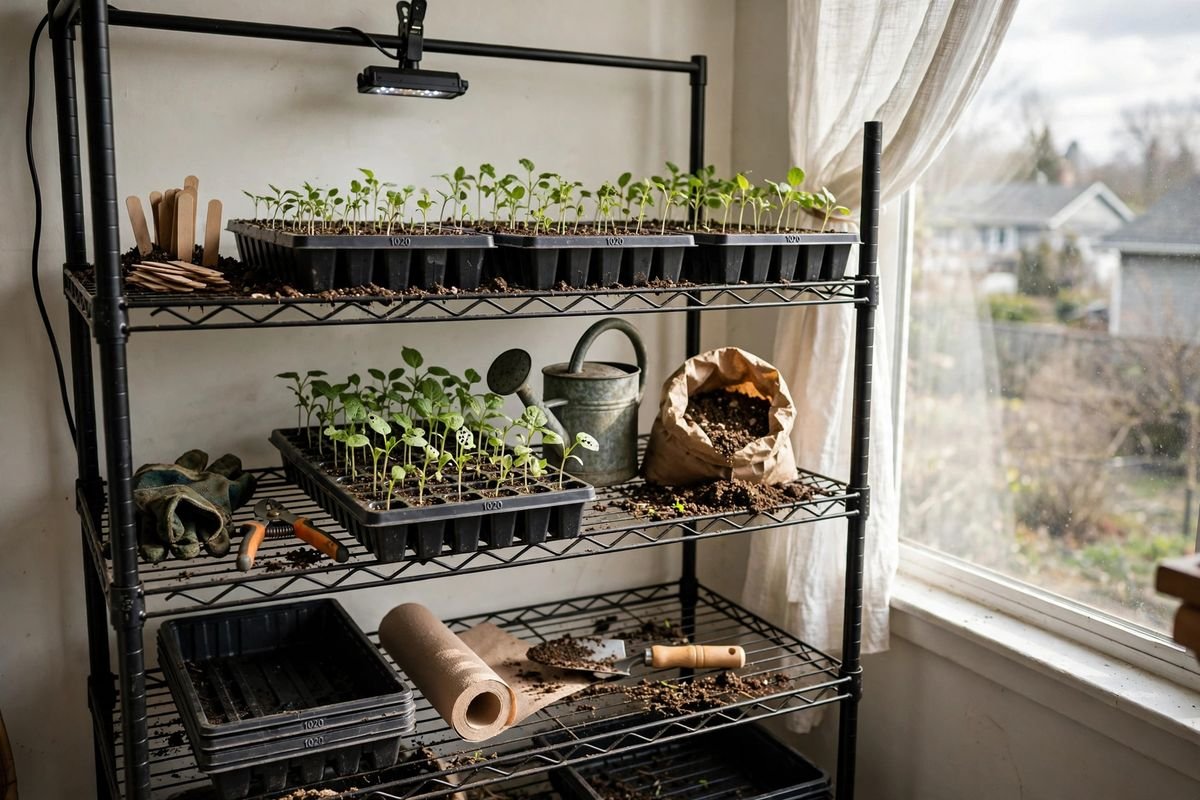
Look for inserts with sturdy sides and real drainage holes — flimsy cells buckle when you lift the tray, and torn cells mean torn roots. A standard 1020 tray underneath catches drips and makes bottom watering easy. If you’re buying your first setup, seed starting trays with cell inserts in a couple of cell sizes will cover your whole first season.
Signs Your Cells Are Too Shallow
- Roots circling the bottom. Pop a seedling out and look: a dense white mat spiraling around the root ball means the cell was outgrown a while ago.
- Drying out daily. A root-bound plant drinks its tiny reservoir of mix dry within hours. If you’re watering twice a day, the cell — not your schedule — is the problem.
- Stalled growth despite good light and water. Seedlings that stop growing while their neighbors thrive are often telling you they’ve run out of room below.
The fix is simple: pot up into the next size, or transplant out if the weather allows. Tease circling roots gently apart with your fingertips so they head outward instead of continuing the spiral.
Signs Your Cells Are Too Deep (or Too Big)
- Mix stays soggy for days. A tiny seedling can’t drink a 4-inch pot dry. Persistently wet mix invites algae, fungus gnats, and damping-off.
- Slow, pale growth. Waterlogged lower mix suffocates roots even when the surface looks fine.
- You’re wasting mix. Seed-starting mix isn’t free. Filling deep pots for crops that would thrive in a 72-cell tray is just expensive.
The fix: sow small-seeded crops in appropriately small cells, and let the surface dry slightly between waterings. If you’ve already sown too big, water sparingly — a little drink more often beats a full soak.
FAQs About Seed Starting Cell Depth
Can I just use 4-inch pots for everything?
You can, but small seeds in big pots are harder to keep evenly moist and slower to fill their space. A two-size system — standard cells plus 4-inch pots for the big seeds and pot-ups — covers nearly every vegetable with less fuss.
How deep should the seed itself be planted?
That’s a different question from cell depth, and the rule is simple: cover seeds with mix to about two to three times the seed’s width. Tiny seeds like lettuce barely want covering at all; big beans go about an inch deep. Your seed packet is the final authority.
Do deeper cells mean I water less often?
Somewhat — a deeper column of mix is a bigger reservoir. But don’t let that tempt you into oversized cells; the sogginess risk outweighs the convenience. Right-size the cell, then water by weight and feel, as described in our guide to bottom watering seedlings.
Are soil blocks a good alternative to cells?
Soil blocks eliminate the cell-size question entirely — roots air-prune at the block edges instead of circling. They take practice to make well, but many experienced seed starters swear by them for crops like brassicas and lettuce.
More Seed-Starting Posts to Explore
- Best Seed Starting Trays — sturdy inserts in every cell size, matched to the crops above.
- How to Bottom Water Seedlings — the soak-and-drain method that keeps small cells perfectly moist.
- How to Start a Vegetable Garden — where those seedlings go once they leave the tray.
- Easiest Vegetables to Grow for Beginners — forgiving crops to pair with your new tray system.
Sources & Further Reading
- USDA Natural Resources Conservation Service — Community Garden Guide: Season Extension — Seed Starting (recommended planting cell sizes by crop)
- University of Georgia Extension — Commercial Production of Vegetable Transplants (cell size by crop group, watering trade-offs)
- West Virginia University Extension — Vegetable Seeding and Transplanting (transplant age and container size chart)
What cell size do you reach for most — the standard 72-cell workhorse, or do you pot everything up? Share your system in the comments.