
This post may contain affiliate links. If you buy through links on this page, we may earn a commission at no extra cost to you.
As an Amazon Associate I earn from qualifying purchases.
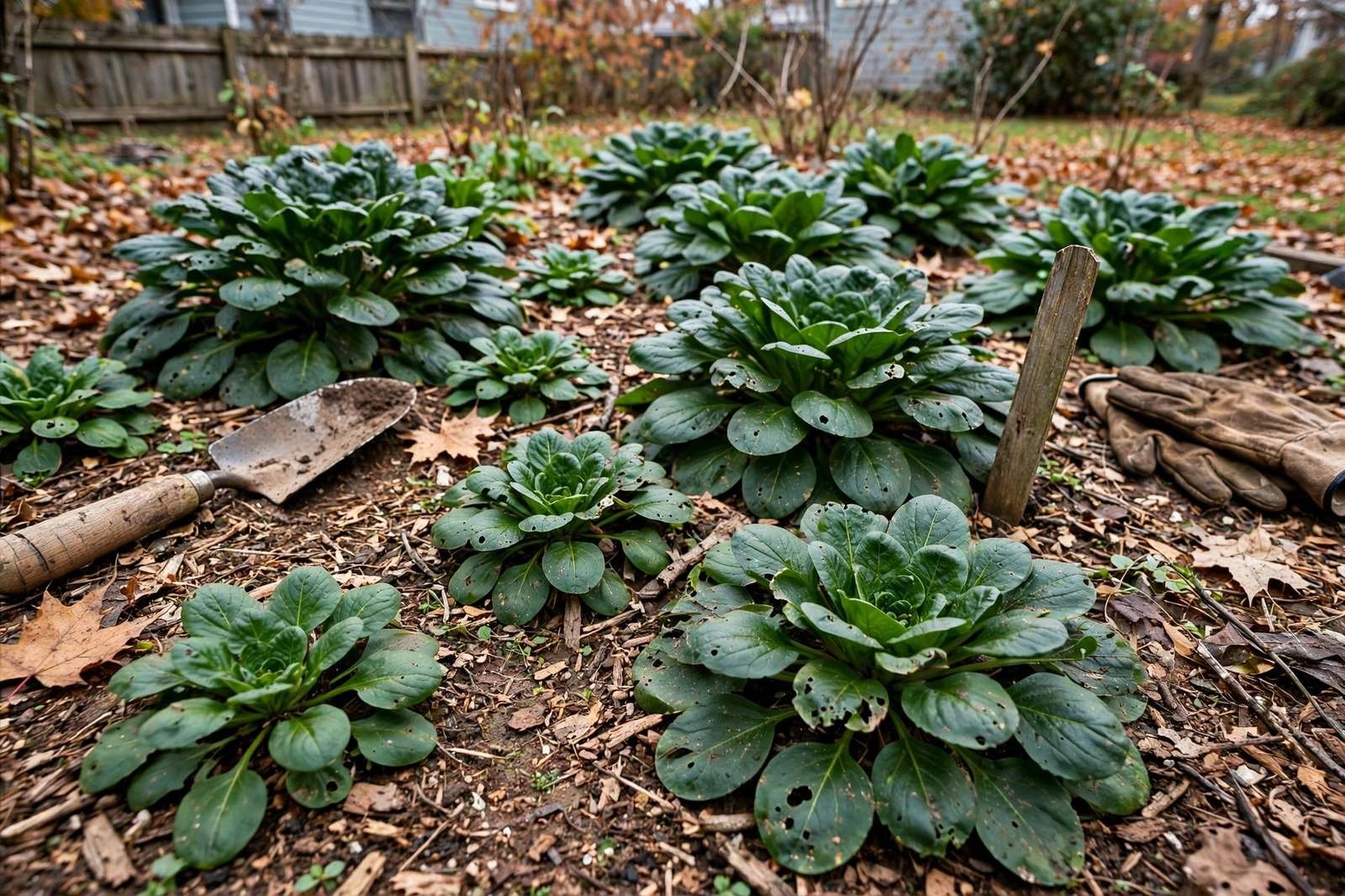
Tatsoi might be the toughest little green in the fall garden. It forms low, handsome rosettes of dark, spoon-shaped leaves, shrugs off cold that wilts lesser greens, and tastes mild and buttery with just a whisper of mustard warmth. Gardeners who find autumn spinach fussy often end up relying on tatsoi instead, and once it is established, harvests keep coming for weeks from a single sowing.
This guide covers when to sow, how to prepare the bed, spacing, watering, feeding, flea beetle defense, and the two harvest styles tatsoi handles well. It suits raised beds, in-ground rows, and containers, and it slots neatly into the same fall greens rotation as mustard, arugula, and kale.
| Sun | Full sun, 6 or more hours; tolerates light shade |
|---|---|
| Soil | Moist, well-drained, pH 6.0 to 7.0, compost enriched |
| Sowing depth | 1/4 to 1/2 inch deep |
| Spacing | 2 to 3 inches for baby leaves, 6 to 8 inches for full rosettes |
| Water | About 1 inch per week, keep soil evenly moist |
| Days to harvest | 20 to 25 days for baby leaves, 40 to 50 days for full rosettes |
| Frost tolerance | Very cold hardy; survives into the teens F under cover |
Why Tatsoi Belongs in the Cool-Season Garden
Tatsoi is a Brassica rapa relative of bok choy and mustard, grown for centuries along the Yangtze River and now a staple of salad mixes everywhere. What sets it apart is cold tolerance layered on top of speed. Plants handle frost that ends lettuce, keep growing slowly through chilly spells that stall other greens, and can even be picked when neighboring beds sit under a dusting of snow, given a layer of cover.
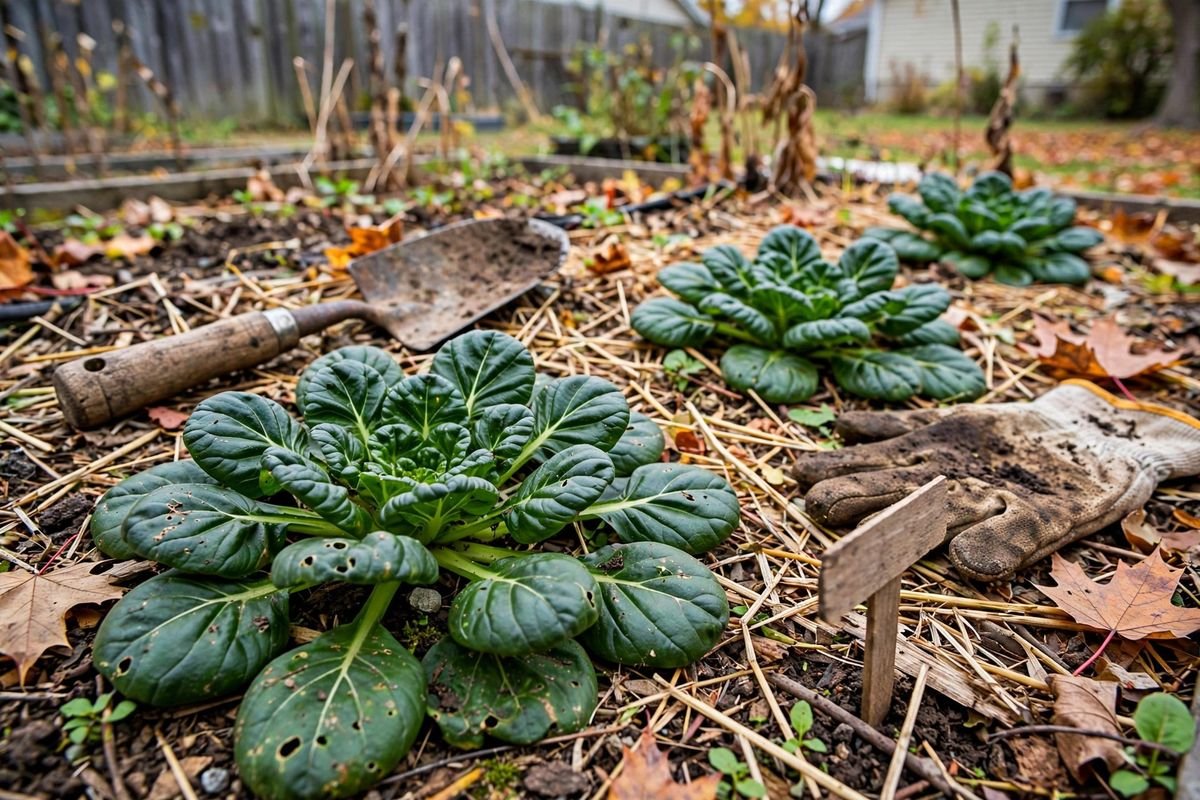
Fall is the natural season for it. Use your local frost dates and regional planting guidance — not your USDA hardiness zone alone — to choose planting dates. For full rosettes, we count back about 50 to 60 days from the first hard freeze. For baby leaves, 30 days is plenty. In mild climates, late sowings under row cover carry the harvest well into winter.
Because tatsoi bolts when young plants meet a long stretch of cold followed by warmth, spring sowings can be hit or miss. Fall sowings skip that trap entirely, and the flavor improves as nights cool. It earns a spot beside the other dependable autumn greens, from mustard greens in fall to winter-hardy kale.
Choosing Tatsoi Seed
Most seed racks carry tatsoi under its own name, sometimes as spoon mustard or rosette bok choy. Standard tatsoi forms the classic flat rosette of glossy, dark green, spoon-shaped leaves with pale stalks. Savoyed types grow a little taller with crinkled leaves and suit bunching harvests. Black Summer types are noted for very dark foliage and strong cold performance into winter.
A single packet of tatsoi seeds goes a long way, since each plant needs only modest room and seed stays viable for several years stored cool and dry. For a first planting, one standard variety is plenty; save the savoyed types for a second season once the rosette form is familiar.
Preparing the Bed
Tatsoi asks for what most leafy brassicas want: soil that holds moisture, drains after rain, and carries a moderate supply of nutrients. We rake 1 to 2 inches of finished compost into the top few inches of the bed and level the surface so the small seeds land at an even depth. A smooth seedbed matters with any small-seeded green, and it makes the shallow sowing pass much easier.
Soil pH between 6.0 and 7.0 is a good target. Gardeners starting a new bed will find the full routine in our guide to how to make compost at home, which keeps amendments home-grown instead of bagged. If the bed just held a heavy feeder, a light scattering of balanced organic fertilizer at prep time keeps young plants from stalling.
How to Sow Tatsoi
Direct Sowing Step by Step
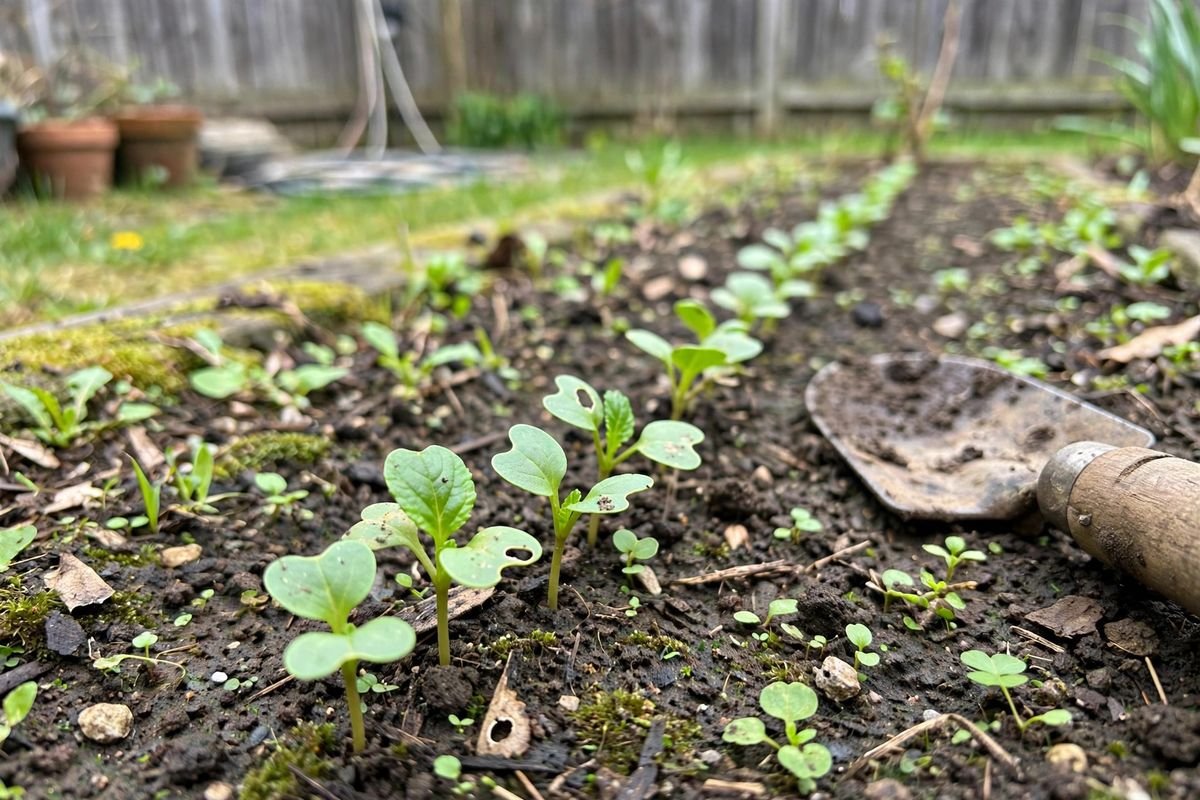
Tatsoi sows directly in the garden with no fuss. We draw shallow rows 12 inches apart, drop seed 1/4 to 1/2 inch deep about an inch apart, firm the soil, and water gently with a fine spray. Sprouts appear in 4 to 8 days in cool soil, a little slower as temperatures drop. Keeping the surface evenly moist until emergence is the one non-negotiable step.
A sheet of garden row cover for frost protection laid over the row after sowing guards against flea beetles, holds moisture, and buys a few degrees on cold nights. In windy spots, the edges get pinned or buried with soil so the fabric cannot flap against the seedlings.
Succession Sowing
Tatsoi stays tender for a good while, but a bed sown all at once still matures all at once. Short sowings every 2 to 3 weeks through the fall window keep baby leaves and young rosettes coming in an even stream, and each small patch is quick to thin and pick. Late sowings in mild areas go under low hoops and cover for winter harvests.
Transplanting as an Option
Starting seed in cell trays also works and suits gardeners whose beds free up late. Seedlings move out at 3 to 4 weeks old, spaced for rosettes, watered in well, and covered for the first week. Because tatsoi dislikes root checks in warm weather, transplants fare best once nights have turned cool.
Spacing and Thinning
Spacing depends on the harvest we want. For baby leaves cut young, plants can stand 2 to 3 inches apart in a wide band. For full rosettes, each plant needs 6 to 8 inches in every direction to spread its flat crown of leaves. We thin in stages as seedlings reach 2 inches tall, eating the thinnings, until the stand matches the goal.
Skipping the thinning step is the classic mistake with this crop. Packed rosettes stay small, trap moisture at the crown, and invite rot in wet weather. A few minutes with scissors at soil level, cutting rather than pulling, keeps the remaining plants undisturbed and growing.
Watering, Mulch, and Feeding
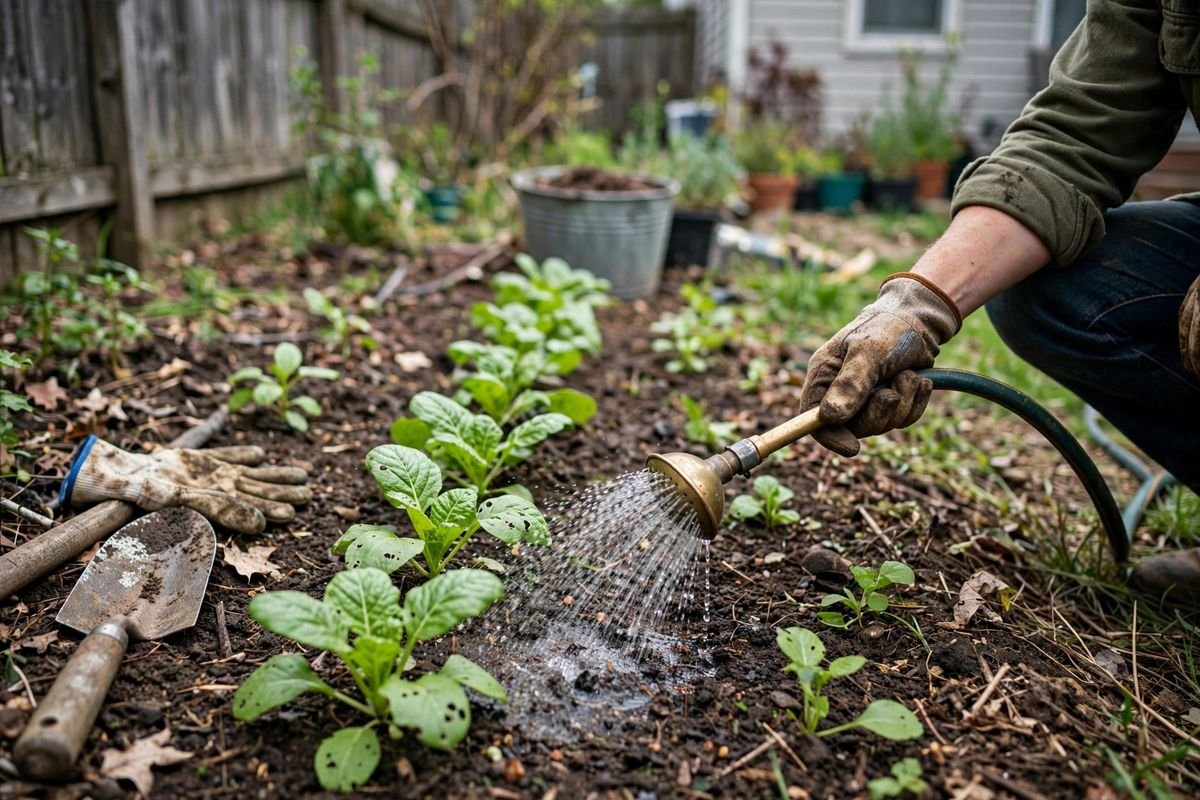
Tatsoi likes steady moisture and rewards it with tender, mild leaves. About an inch of water a week, delivered at the base in the morning, keeps growth even. A soaker line under mulch makes this easy in long beds, and it keeps water off the low leaves where it can spot them with soil splash.
Once plants are a few inches across, a light mulch of shredded leaves or clean straw between rows holds moisture and keeps the rosettes clean. Feeding stays modest: compost at planting carries baby-leaf crops, and rosette plantings get one light side-dressing of balanced organic vegetable fertilizer at thinning time. Heavy nitrogen pushes soft, sappy growth that aphids find quickly, so restraint pays.
Growing Tatsoi in Containers
The low rosette habit makes tatsoi a natural container green. A pot or window box at least 10 inches wide and 6 inches deep holds baby-leaf plantings, while full rosettes each want roughly a gallon of mix. Fresh potting mix blended with compost, steady watering, and a sunny sill or patio spot are the whole recipe. The drainage and pot-size basics in container gardening for beginners apply directly. When hard cold threatens, pots slide against a warm wall or under cover for the night.
Pests and Problems to Watch
Flea beetles are the main pest, chewing the same pinholes they leave on mustard and bok choy. Fall pressure usually runs lower than spring, and row cover from sowing day removes the problem entirely. Cabbage worms chew occasional holes and are easy to handpick during watering rounds. Aphids appear on stressed plants in dry spells; a firm spray of water on several consecutive mornings usually clears them.
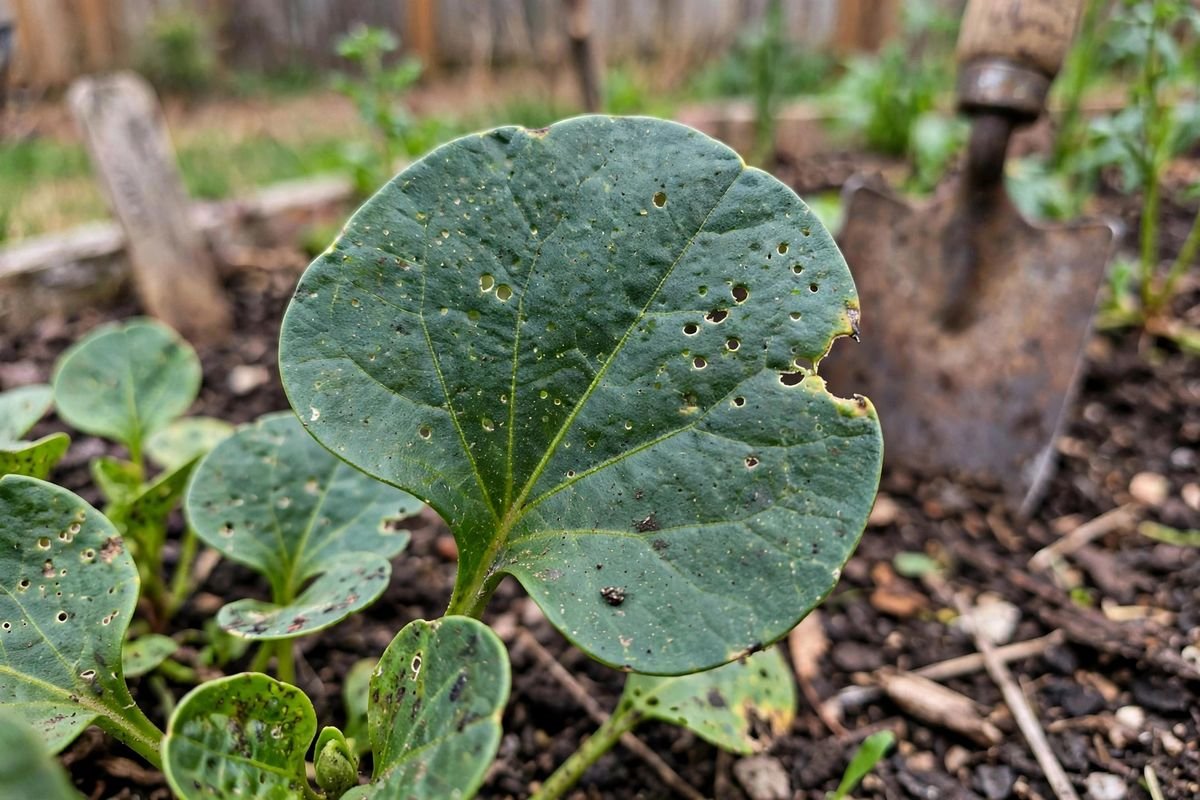
Rotation is the quiet long-term defense. We hold off planting tatsoi where cabbage-family crops just grew if disease showed up there, and we remove any rosette that rots at the crown rather than leaving it to spread trouble. Clean beds, airy spacing, and morning watering keep most problems from starting.
Harvesting Tatsoi
Tatsoi offers two harvest styles. For baby leaves, we shear the patch an inch above the soil when leaves reach 3 to 4 inches, and the crowns push a second, smaller flush. For full rosettes, we either pick outer leaves one by one, leaving the center to keep growing, or cut the whole rosette at the base about an inch above the soil, which often encourages a modest regrowth head.
Morning picking gives the crispest leaves. Rinse the harvest well, since the low rosettes catch soil, spin dry, and refrigerate in a loose bag with a paper towel; tatsoi keeps a week or more, longer than most salad greens. Leaves work anywhere spinach does: raw in salads while young, wilted into soups and stir-fries when larger, always added near the end of cooking.
Troubleshooting Tatsoi
Why did my tatsoi bolt in spring?
Young plants that sit through weeks of cold, then meet warming days, read that sequence as a finished winter and flower. Fall sowing avoids the trigger. Bolted plants turn bitter quickly, so harvest them at the first sign of a rising center and re-sow.
Why are my rosettes staying tiny?
Usually crowding or hungry soil. Rosettes need their 6 to 8 inches to spread, and a bed that grew a heavy feeder before them may need the compost boost at prep time. A light side-dressing and proper thinning fix most stalled patches.
Why are the leaves full of tiny holes?
That is flea beetle feeding. The damage is mostly cosmetic on cooking leaves. Covering the next sowing with row cover from day one and keeping seedlings moist so they grow past the vulnerable stage keeps leaves clean.
Why are leaf edges yellowing and soft?
Soggy crowns are the usual cause in wet weather. Tight spacing and heavy mulch pressed against the rosette trap moisture. Thin for airflow, pull mulch a couple of inches back from the crowns, and water at the base rather than overhead.
Why does my tatsoi taste strong and hot?
Heat and drought sharpen the mustard notes. Baby leaves picked young after cool nights are the mildest. Steady watering and timely harvests keep the flavor in the gentle range most cooks want.
FAQ
How cold can tatsoi handle?
Tatsoi is one of the hardiest salad greens we grow. Established plants tolerate frost well into the teens Fahrenheit, especially under row cover, and flavor often improves after cold nights.
How long does tatsoi take to grow?
Baby leaves are ready in about 20 to 25 days and full rosettes in 40 to 50 days. Cool weather slows the pace but extends the picking window once plants size up.
Can we harvest tatsoi more than once?
Yes. Leaf-by-leaf picking from rosettes goes on for weeks, and rosettes cut an inch above the crown often regrow a smaller second head. Baby-leaf patches give one strong cutting plus a lighter second flush.
Does tatsoi need full sun?
Full sun gives the sturdiest rosettes, but tatsoi tolerates light shade, especially during warm early fall days. In deep shade it stays small and slow.
Sources & Further Reading
- Cornell University College of Agriculture and Life Sciences — cool-season brassica greens guidance covering tatsoi timing, spacing, and bolting (cals.cornell.edu)
- University of California Agriculture and Natural Resources — Asian greens production, flea beetle management, and postharvest handling (ucanr.edu)
- University of Wisconsin-Madison Extension — cold-hardy fall greens and season extension with row cover (extension.wisc.edu)
- North Carolina State Extension — Asian greens for home gardens, fall sowing dates and spacing (extensiongardener.ces.ncsu.edu)
- Clemson University Cooperative Extension — leafy greens fact sheets covering soil pH, fertility, and harvest care (hgic.clemson.edu)
More fall greens to explore:
Sow a short row while the soil is still workable, keep it moist, and let the cold nights build that mild, buttery flavor. Will your first tatsoi harvest be baby leaves for salads or full rosettes for the soup pot?