
This post may contain affiliate links. If you buy through links on this page, we may earn a commission at no extra cost to you.
As an Amazon Associate I earn from qualifying purchases.
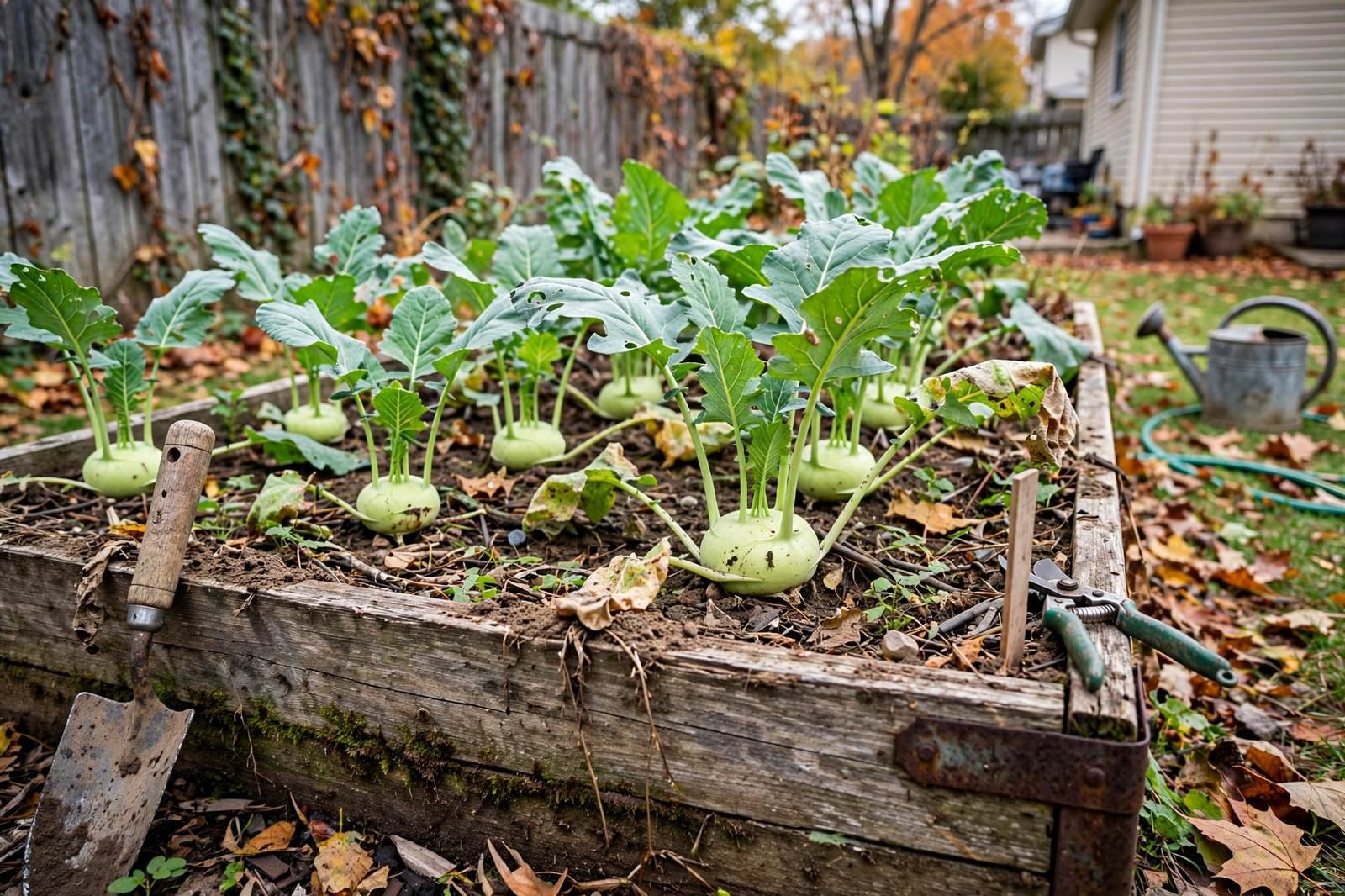
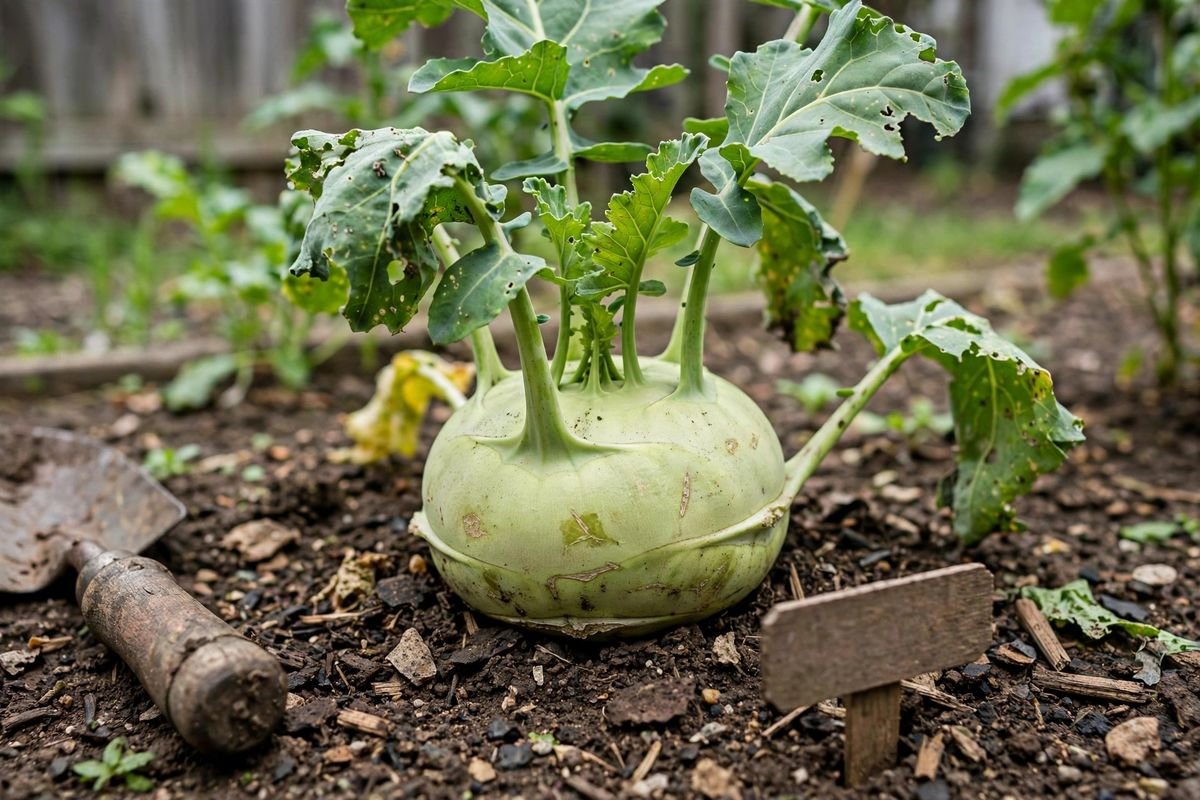
Kohlrabi looks unusual the first time we see it in a bed, like a pale green or purple turnip that decided to grow above ground with leaves sticking out in every direction. The part we eat is a swollen stem, crisp and mild when young, with a flavor that sits somewhere between a broccoli stem and a sweet turnip. Fall is one of the easiest times to get it right. Cool air keeps growth steady, flavor stays sweet, and the bulbs stay tender far longer than they do in late spring heat.
This guide covers fall timing, soil prep, direct sowing and transplanting, spacing, watering, feeding, common pests, and exactly when to harvest so the texture stays juicy instead of woody. Kohlrabi fits in raised beds, in-ground rows, and wider containers, and it grows fast enough to follow summer crops that are finishing for the season.
| Sun | Full sun, 6 or more hours; light shade tolerated in warm early fall |
|---|---|
| Soil | Loose, well-drained, pH 6.0 to 7.0, enriched with compost |
| Planting depth | Seeds 1/4 to 1/2 inch deep; transplants at same depth as the pot |
| Spacing | 6 to 8 inches between plants, rows 12 to 18 inches apart |
| Water | About 1 to 1.5 inches per week, keep soil evenly moist |
| Days to harvest | 45 to 60 days from seed, 40 to 50 days from transplants |
| Frost tolerance | Light frost tolerated; best quality before repeated hard freezes |
Fall Timing and Frost Dates
Kohlrabi is a cool-season brassica, in the same family as cabbage and broccoli, and it does its best work when days are mild and nights are cool. Steady temperatures roughly between 60 and 75 degrees F produce the fastest, most even bulb swelling. Hot soil slows growth and pushes the stem toward a tough, fibrous texture, while a few light frosts in fall rarely harm established plants and can even sweeten the flavor a touch.
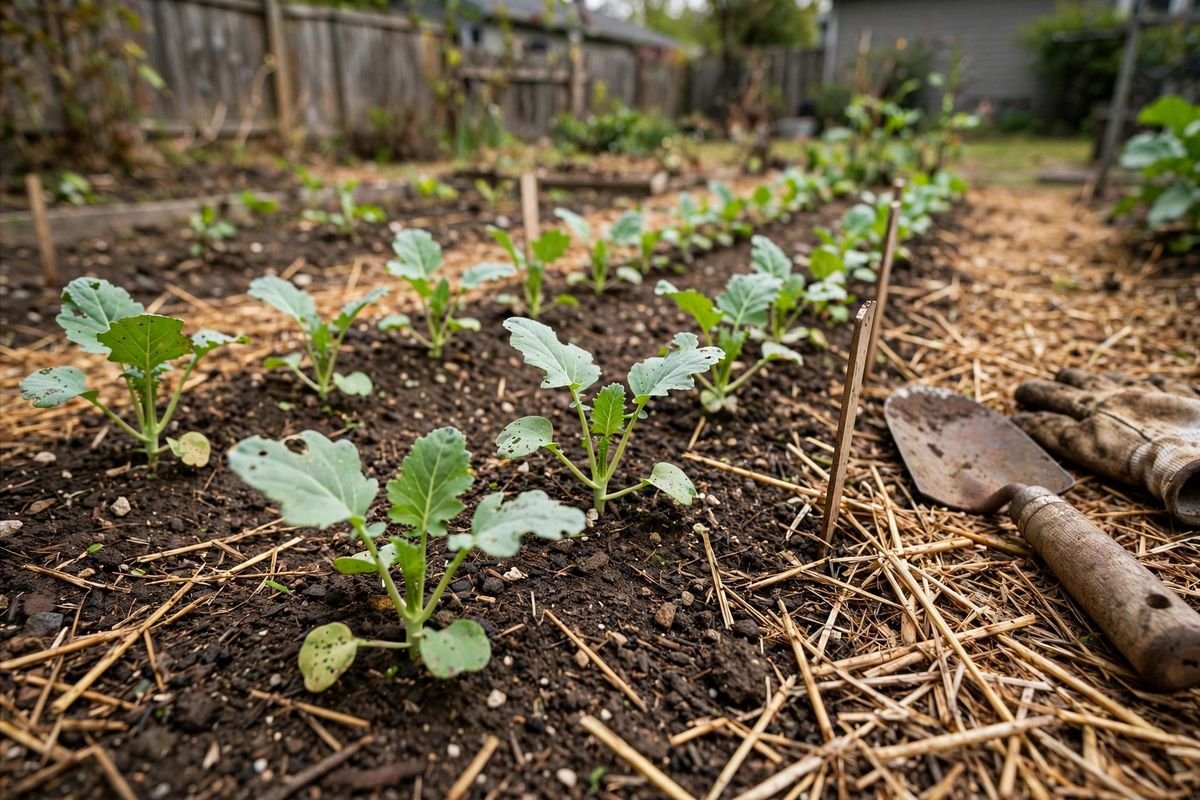
Use your local frost dates and regional planting guidance — not your USDA hardiness zone alone — to choose planting dates. For a fall crop, we count back from the first hard freeze and allow about 50 to 65 days from sowing to harvest for most varieties, plus a small buffer for cloudy weather. Direct sowing in late summer to early fall works well in many regions, and a second smaller sowing two to three weeks later spreads the harvest. In mild-winter areas, fall sowings can keep going into late fall with row cover on the coldest nights. In colder areas, the goal is bulbs that size up while growth is still steady, then a harvest before the ground stays frozen for long stretches. Gardeners growing broccoli in fall will recognize this same count-back math, since the two crops share a similar cool-weather window.
Direct seed and transplants are both workable in fall. Direct sowing is simple and avoids transplant shock, but seedlings need protection from flea beetles while they are tiny. Transplants started indoors or bought from a nursery give the crop a head start when the fall window is short. If we start our own transplants, we sow in cells about five to six weeks before the planned set-out date and harden the young plants outdoors for several days before they go in the bed.
Preparing Soil for Kohlrabi
Kohlrabi wants loose, moisture-retentive soil that drains freely. Compacted or stony ground leads to slow, uneven swelling and bulbs that stay small. Before planting, we clear spent summer plants, pull weeds, and loosen the bed to about 8 to 10 inches deep with a fork. Then we spread 1 to 2 inches of finished compost across the surface and rake it in. Compost improves both drainage in clay and moisture holding in sand, and it feeds the steady growth this crop needs.
A soil pH between 6.0 and 7.0 suits kohlrabi well. If a soil test shows strongly acidic soil, garden lime applied at the rate the test recommends is the usual correction. If the bed grew heavy feeders all summer, a modest application of balanced organic fertilizer worked into the top few inches can help, but rich compost often does most of the job on its own. Our routine for keeping beds supplied year after year is covered in our guide to how to make compost at home, which pairs well with fall brassica beds that follow summer tomatoes or squash.
Raised beds are a natural fit because the soil stays loose and warms a bit faster in fall sun. In containers, we choose a pot at least 12 inches wide per plant, or a wider grow bag for a small group, filled with fresh potting mix blended with compost. Drainage holes matter more than pot material here, since soggy mix in cool weather invites root trouble.
How to Plant Kohlrabi Step by Step
Fall planting rewards a tidy seedbed. We rake the surface level, remove clods, and mark rows 12 to 18 inches apart. Seeds go 1/4 to 1/2 inch deep, sown about 1 inch apart, then covered lightly and firmed with the back of a hoe or a palm so seed and soil make good contact. A gentle watering with a fine spray settles everything without washing seeds out of the row. In warm soil, sprouts often appear within a week. In cooler soil, germination takes longer, and keeping the surface evenly damp during that stretch makes a real difference.
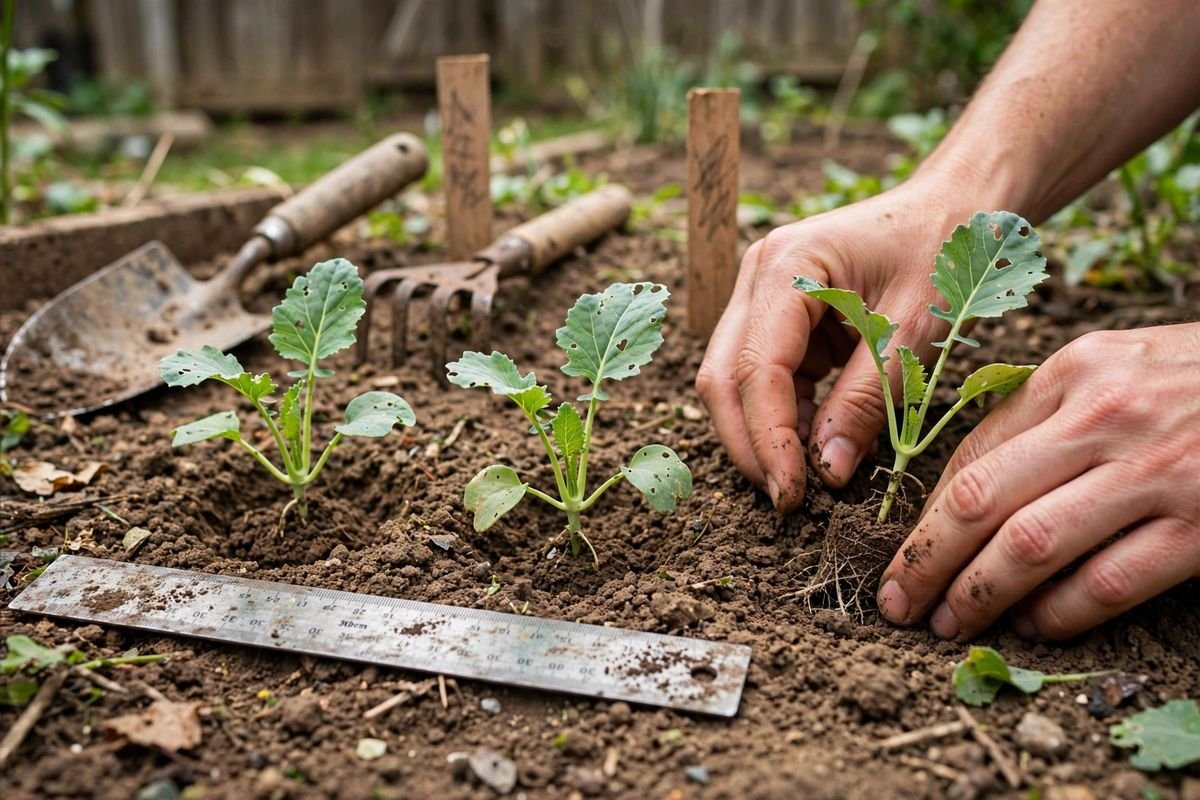
Thinning and Final Spacing
Thinning is the step that decides bulb size. Crowded kohlrabi stays thin and slow, and the stems never swell properly. When seedlings reach about 2 to 3 inches tall, we thin them to 6 to 8 inches apart in the row. That spacing gives each plant light, airflow, and root room to form a round, tender bulb. Thinnings can go straight into a salad, so very little is wasted. For larger storage types, which a few varieties are bred to become, we widen spacing toward 8 to 10 inches.
Setting Out Transplants
Transplants go in at the same depth they grew in the cell, with the lowest leaves just above the soil line. We water each planting hole, set the root ball in, firm the soil around it, and water again to settle air pockets. Spacing matches direct-sown plants at 6 to 8 inches apart. A light shade cloth for the first few hot afternoons can help transplants settle if early fall is still warm, and then we remove it so plants get full sun. A floating row cover for vegetables draped over hoops right after planting keeps flea beetles off young plants while they establish, and we leave it in place until growth is strong.
Choosing seed is straightforward. Early White Vienna and Early Purple Vienna are widely grown standards, Kolibri types are often noted for uniform bulbs, and larger storage varieties need more time and space. A single packet of kohlrabi seeds for planting contains plenty of seed for several fall rows, and leftover seed stored cool and dry stays usable for the next cool season.
Watering and Feeding for Tender Bulbs
Even moisture is the secret to tender kohlrabi. The bulbs swell quickly during their final weeks, and that swelling is mostly water moving into stem tissue. If the soil swings between dry and soaked, growth stutters, the outer layers toughen, and cracks can appear. We aim for about 1 to 1.5 inches of water per week from rain or irrigation, adjusted for soil type and weather. Sandy beds need smaller, more frequent drinks. Heavier soil holds moisture longer but should never stay waterlogged.
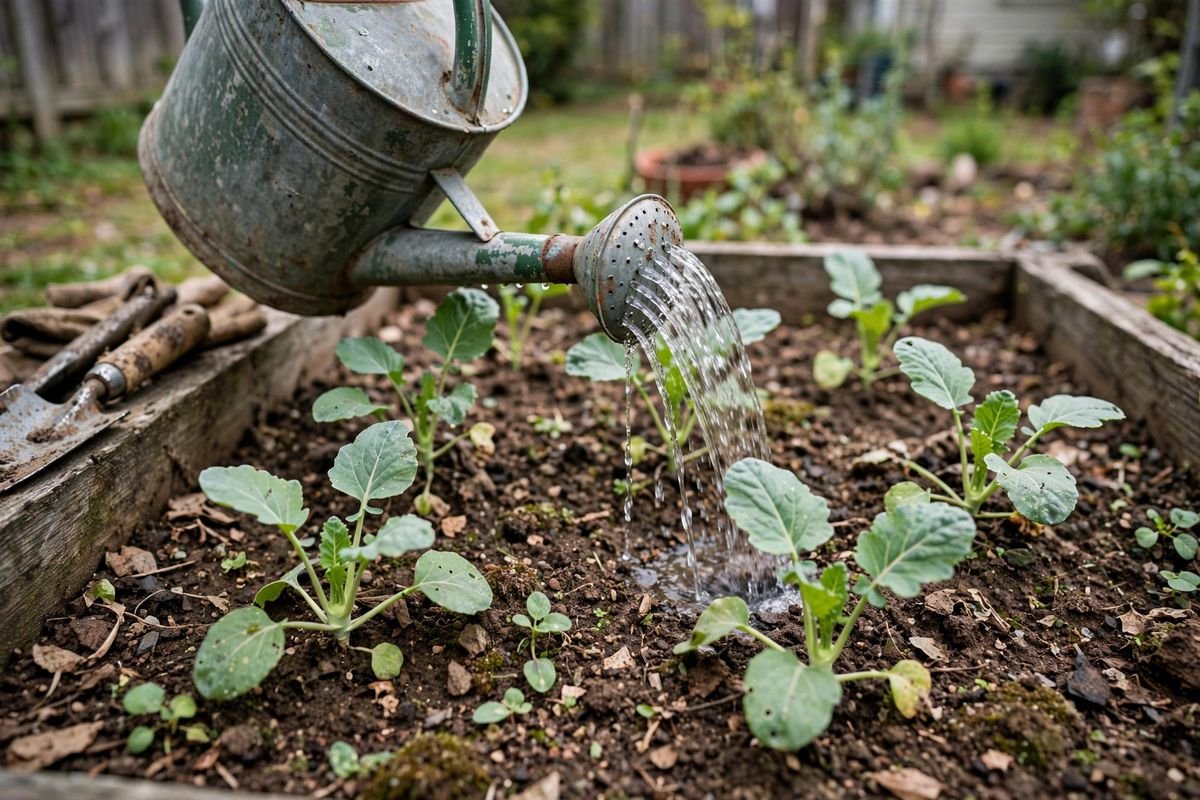
Watering at the base in the morning keeps foliage drier and puts water where roots can use it. A 2 to 3 inch mulch of clean straw or shredded leaves between rows, added once plants are a few inches tall, holds moisture, keeps rain from splashing soil onto the bulbs, and slows fall weeds. In small beds, a soaker hose for raised beds makes even watering easy without soaking every leaf.
Kohlrabi is a moderate feeder. Compost at planting carries many fall crops, especially fast early varieties. On lean soil or in containers, we side-dress once about three weeks after thinning or transplanting with a balanced organic fertilizer scratched lightly into the soil surface, then watered in. Steady, moderate nutrition beats a single heavy dose, which can push leafy growth while bulbs lag. Pale leaves and slow growth in midseason usually signal hunger or dry soil, and correcting moisture first often solves the problem.
Pests and Diseases to Watch
Flea beetles are the most common fall headache. These tiny dark beetles chew pinholes in leaves, and heavy feeding can stall young seedlings. Row cover from planting day is the simplest protection, paired with steady watering so plants grow past the vulnerable stage quickly. Older plants tolerate light chewing with little effect on the bulb. Cabbage worms and loopers also visit kohlrabi, since it is a true brassica. We check leaf undersides a couple of times a week and handpick any green caterpillars we find. Birds and beneficial insects handle some of this work when we leave a few flowering herbs nearby through fall.
Aphids gather on stressed plants during dry spells. A firm spray of water on several mornings usually knocks numbers down. On the disease side, clubroot can affect brassicas in acidic, poorly drained soil, showing up as stunted plants with swollen, distorted roots. Keeping pH near neutral, rotating brassicas away from the same bed for several years, and improving drainage reduce the risk. Downy mildew and leaf spots become more likely in crowded, wet canopies, so the spacing in the previous section doubles as disease prevention. Gardeners who also grow turnips in fall will find the same rotation advice applies across the fall brassica and root beds.
Harvesting Kohlrabi Before It Turns Woody
The edible bulb is a swollen stem that forms just above the soil line, with leaves emerging from points around its surface. It starts as a slight thickening, then rounds out over two to three weeks of steady growth. Young bulbs are crisp, juicy, and mild. As the plant ages, sits in hot soil, or goes through dry swings, the outer layers develop fiber and the texture turns woody, especially near the base. Fall weather works in our favor here, since cool nights slow that toughening and keep flavor sweet longer than a late spring crop that runs into heat.
For most varieties, the ideal harvest size is about 2 to 3 inches across, roughly the size of a tennis ball or a little smaller. At that stage the skin is thin, the flesh slices cleanly, and raw sticks are sweet enough for snack trays. Larger storage varieties are the exception and can grow bigger while staying usable, but standard garden types left to reach 4 or 5 inches often disappoint on texture. When in doubt, we harvest on the smaller side. A bed checked every few days during the swelling stage yields a succession of perfect bulbs instead of a row of oversized, fibrous ones.
Harvesting takes seconds. We grasp the leaf stems, pull or cut the bulb free at the soil line, and trim the roots and leaves in the garden. Leaves in good condition cook like turnip greens or kale and can go in a separate pile for the kitchen. Bulbs store well in the refrigerator in a loose bag for two to three weeks, and peeled, blanched cubes freeze for soups and stir-fries. Out in the bed, leaving one or two bulbs a few extra days is a useful way to learn how a variety behaves in our own soil and season length.
Troubleshooting Kohlrabi Problems
Why are the bulbs tough and woody?
Age, heat, crowding, and uneven watering are the usual causes. Harvest at 2 to 3 inches, keep soil evenly moist during swelling, and thin on time so each plant has room and light. A bulb that already feels fibrous can still be peeled deeply and cooked, since the center is often more tender than the outer layer.
Why did the plants grow leaves but no bulb?
Very young plants naturally focus on leaves first, so patience is part of the answer. Crowding, deep shade, and hungry or compacted soil can also stall swelling. If plants are older than the packet range and still flat at the base, check spacing and moisture before adding fertilizer.
Why are there cracks on the bulbs?
Cracks follow a dry spell and then heavy water, when the inside swells faster than the skin can stretch. Mulch and steady watering even out those swings. Cracked bulbs are still edible; we use them first and trim around deeper splits.
Why are the leaves full of tiny holes?
That pinhole pattern points to flea beetles. It looks rough but often matters less on plants past the seedling stage. Cover the next sowing with row cover from day one and keep seedlings well watered so they outgrow early feeding.
FAQ
Can kohlrabi handle frost in fall?
Established plants handle light frost well and often taste sweeter after cool nights. Repeated hard freezes can damage exposed bulbs, so we cover plants during sharp cold snaps or harvest mature bulbs ahead of severe cold.
Should fall kohlrabi be direct sown or transplanted?
Both work. Direct sowing is simpler when the fall window is generous. Transplants help when the time between summer crops and hard freeze is short, since they start the clock several weeks earlier.
How long does fall kohlrabi keep after harvest?
Trimmed bulbs kept cold and slightly humid in the refrigerator usually hold good quality for two to three weeks. Leaves are best used within a few days, like other cooking greens.
Can kohlrabi grow in containers in fall?
Yes. We use a pot at least 12 inches wide per plant with fresh mix and compost, water more often than in beds, and feed lightly. Containers can move to a sheltered wall during an early freeze warning.
Sources & Further Reading
- Utah State University Extension — How to Grow Kohlrabi in Your Garden, spacing, water, and cultivar guidance (extension.usu.edu)
- University of Kentucky Center for Crop Diversification — Kohlrabi production profile, site selection and spacing (uky.edu)
- University of Delaware Cooperative Extension — Kohlrabi Grow Your Own fact sheet, planting windows and harvest size (udel.edu)
- Louisiana State University AgCenter — Kohlrabi: The Cabbage Turnip, cool-season planting and fertility notes (lsuagcenter.com)
More fall crops to explore:
Fall kohlrabi rewards simple habits: count back from frost, sow or set plants into compost-rich soil, thin without delay, and keep moisture steady until harvest. Which variety will go in the first fall row this year, a classic green type or a purple one for color in the bed?