
This post may contain affiliate links. If you buy through links on this page, we may earn a commission at no extra cost to you.
As an Amazon Associate I earn from qualifying purchases.
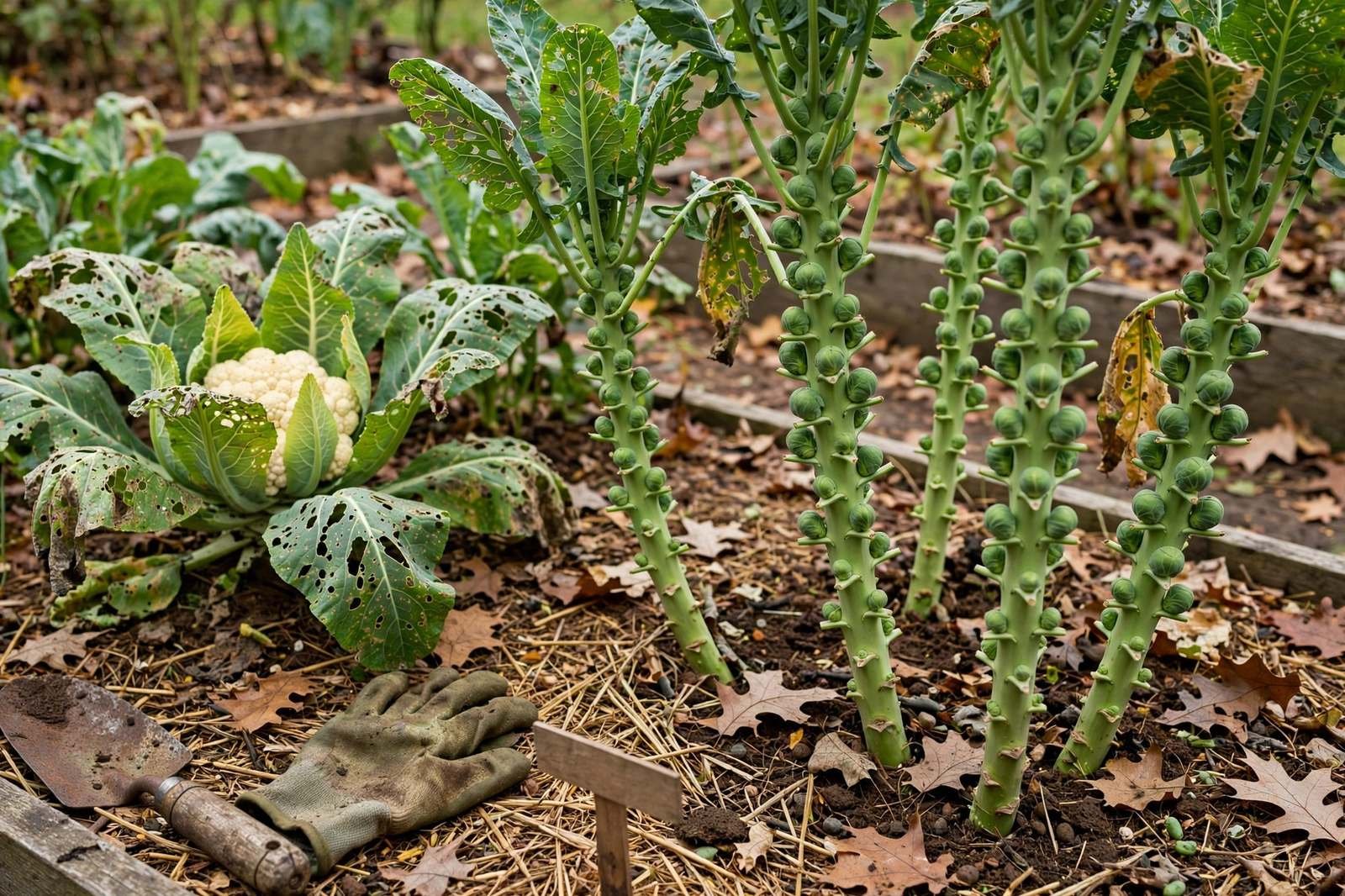
Brussels sprouts ask for one thing most gardeners run short on: time. These plants need a long, cool run to build a tall stalk and finish tight little sprouts, and a fall harvest gives them exactly that. Sprouts picked after a few cold nights taste sweeter and richer than any picked in summer heat.
The crop is not hard, just slow. Plan the dates, keep the plants fed and staked, and learn the topping trick near the end of the season. Do that and a single stalk can give you steady pickings for weeks. If you enjoy fall kale and other hardy brassicas, Brussels sprouts fit right into the same beds and the same weather.
| Sun | Full sun, at least 6 hours a day |
|---|---|
| Soil | Rich, well-drained, pH 6.0 to 7.0, compost worked in deeply |
| Transplant timing | About 90 to 110 days before your first hard fall frost |
| Spacing | 18 to 24 inches between plants, 30 to 36 inches between rows |
| Water | About 1 inch per week, kept steady |
| Height | 2 to 3 feet tall; staking helps in wind |
| Harvest | Sprouts 1 to 1.5 inches wide, firm and tight, picked from the bottom up |
Why Brussels Sprouts Belong to Fall
A Brussels sprout plant spends months making leaves and a thick stalk before the sprouts along that stalk size up. Warm weather early helps it grow. Cool weather late makes the sprouts firm and sweet. Fall harvest timing lines those two phases up in the right order.
Heat during sprout formation gives you loose, leafy, bitter sprouts. A light frost or a run of nights in the 30s and 40s shifts the flavor as the plant moves sugars into the sprouts. That is why extension guides across the northern states point growers at a fall finish rather than a summer one.
When to Start for a Fall Harvest
Count backward from frost and be honest about the long season. Most varieties need 90 to 110 days from transplant to first pickings, and the plant keeps producing after that. As a rule, set transplants out about 90 to 110 days before your first hard fall frost. In many regions that means transplanting in late May through June for northern gardens, and June into early July where falls are mild and long. Use your local frost dates and regional planting guidance — not your USDA hardiness zone alone — to choose planting dates.
Start seed indoors 4 to 6 weeks before your transplant date. Sow a few extra: slow, steady seedlings beat rushed ones. Harden plants off for about a week before moving them outside for good. If your fall arrives early and hard, choose a faster variety in the 85 to 95 day range.
Not sure how Brussels sprouts slot into a full autumn plan? Our guide to what to plant in October shows where long-season crops sit next to quick fall greens.
Varieties Worth Growing
- Long Island Improved — a classic open-pollinated type, about 90 to 100 days, compact plants that suit smaller beds.
- Jade Cross types — early hybrids around 85 to 95 days, a good fit where the fall window is short.
- Diablo — tall, uniform plants at roughly 100 to 110 days, bred for a clean fall harvest.
- Redarling types — red-purple sprouts at about 100 days, striking on the stalk and mild in flavor.
Match days to maturity against your frost date with a buffer of two weeks. A variety that finishes just as hard frost arrives leaves you no picking window.
Soil Prep for a Hungry, Long-Season Crop
Brussels sprouts feed heavily for months. Work 2 to 3 inches of finished compost into the bed before transplanting, and mix in a balanced organic fertilizer at label rates. A soil test every few years keeps pH in the 6.0 to 7.0 range these plants like, and helps guard against clubroot, which thrives in acid soil.
Drainage counts too. Waterlogged roots stall a plant that needs to grow without pause. Raised beds shine here. If you garden in containers, go big: one plant per 10 gallon pot at minimum, and expect to water often. For bed building basics, see how to make compost at home for the amendment side of the equation.
Transplanting and Spacing
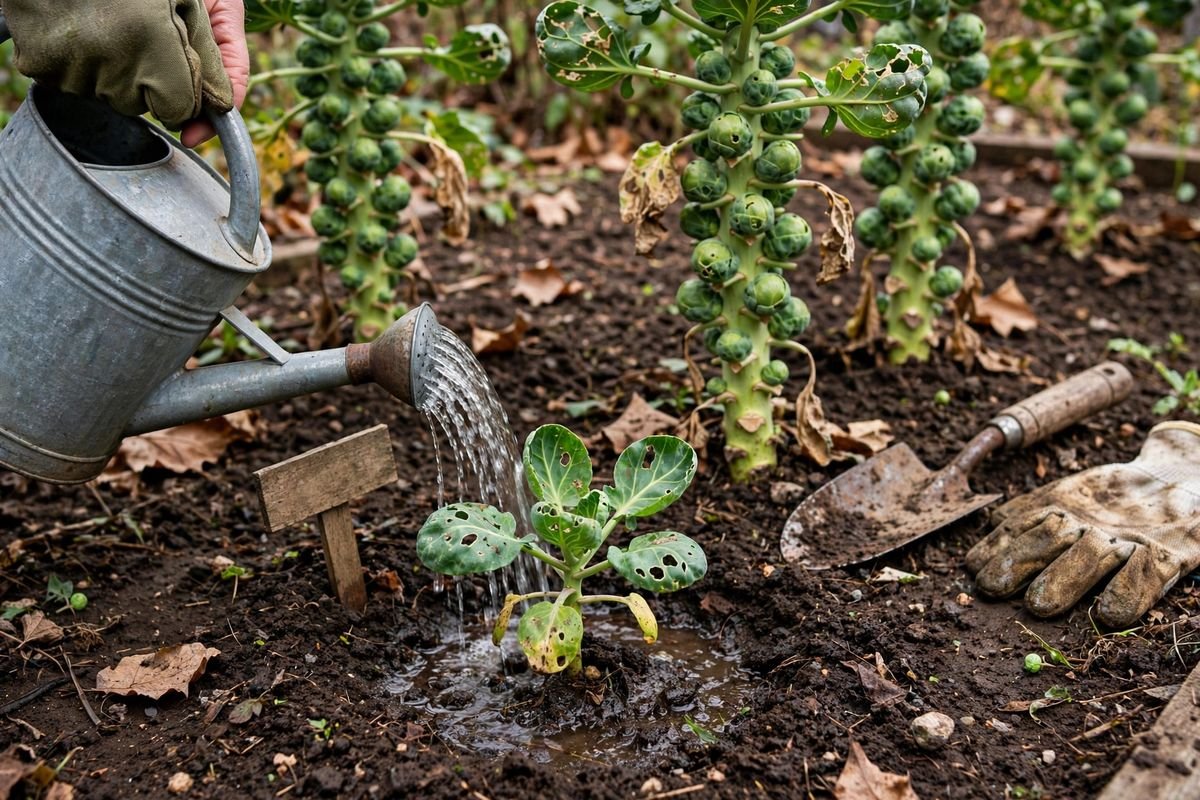
- Water seedlings before they leave the pot. A moist root ball transplants with less shock.
- Set plants at the same depth they grew indoors. Firm soil around the stem so wind does not rock the young plant.
- Space 18 to 24 inches apart in rows 30 to 36 inches wide. These plants get broad. Crowding cuts sprout size and invites disease.
- Water deeply and mulch 2 to 3 inches thick. Mulch evens out moisture for the whole long season.
- Cover young plants with row cover. A floating row cover keeps cabbage moths off during the vulnerable early weeks.
As plants pass knee height, put a sturdy stake beside each stalk and tie loosely. A top-heavy plant loaded with sprouts can lean or snap in fall wind. A tall garden stake added early is far easier than rescuing a fallen stalk in October.
Watering, Feeding, and Steady Growth
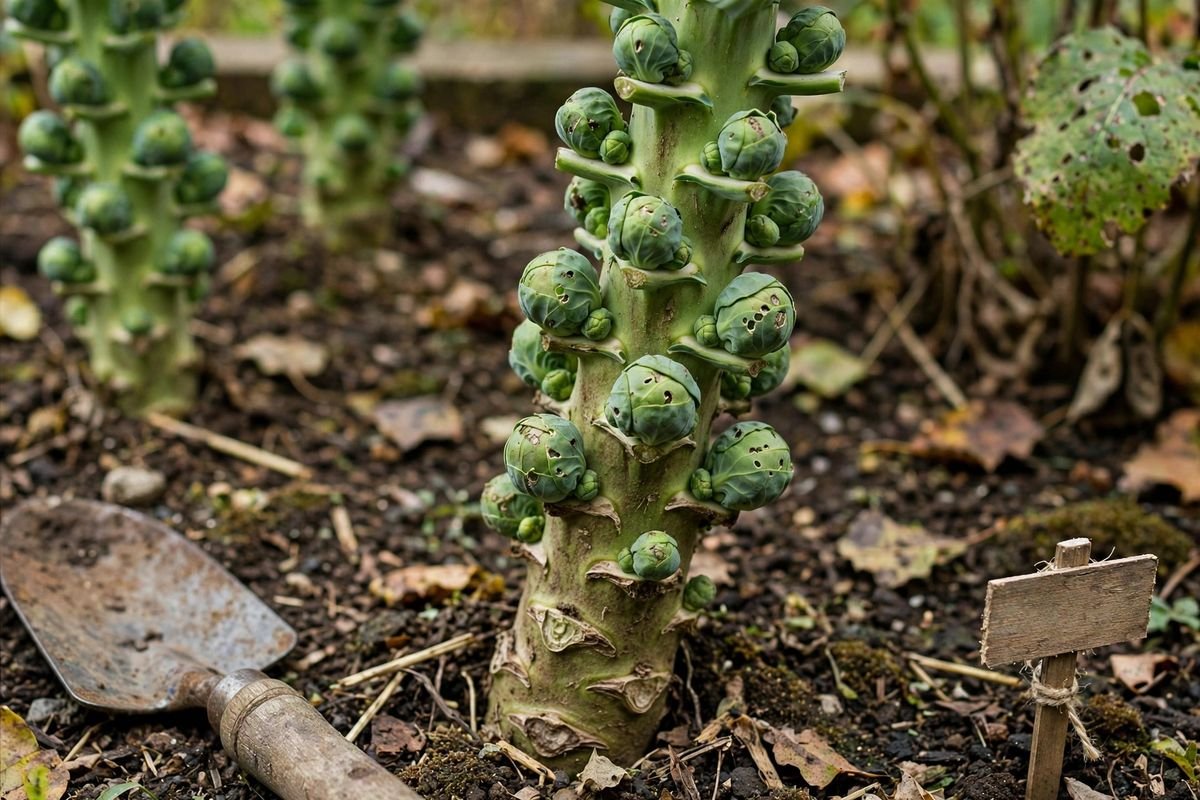
Aim for about an inch of water a week, rain included, and keep it steady. A long dry spell followed by a soak gives you split or loose sprouts. Mulch plus a soaker hose is the low-effort way to hold moisture even.
Side dress with compost or balanced fertilizer about a month after transplanting, and again when sprouts start to form. Brussels sprouts that run hungry make small sprouts on a thin stalk. Plants that grow without a check give you the long, loaded stalk you want.
The Topping Trick for Even Sprouts
About 30 days before your expected first hard frost, or when the lowest sprouts reach roughly half an inch wide, pinch or cut off the growing tip at the top of the plant. This is called topping. The plant stops making new leaves up top and pushes energy into sizing the sprouts already on the stalk, so they mature more evenly.
Skip topping if your season is long and mild and you want pickings spread over many weeks. Top the plants if frost will end the season soon and you want one strong harvest instead of a stalk of half-finished sprouts.
Trimming Lower Leaves
As sprouts size up, snap off the leaf just below each sprout cluster, working from the bottom. This gives sprouts room and improves airflow. Leave the top leaves in place: that crown feeds the plant. Take only a few leaves at a time so the plant stays strong.
Harvesting, Bottom Up
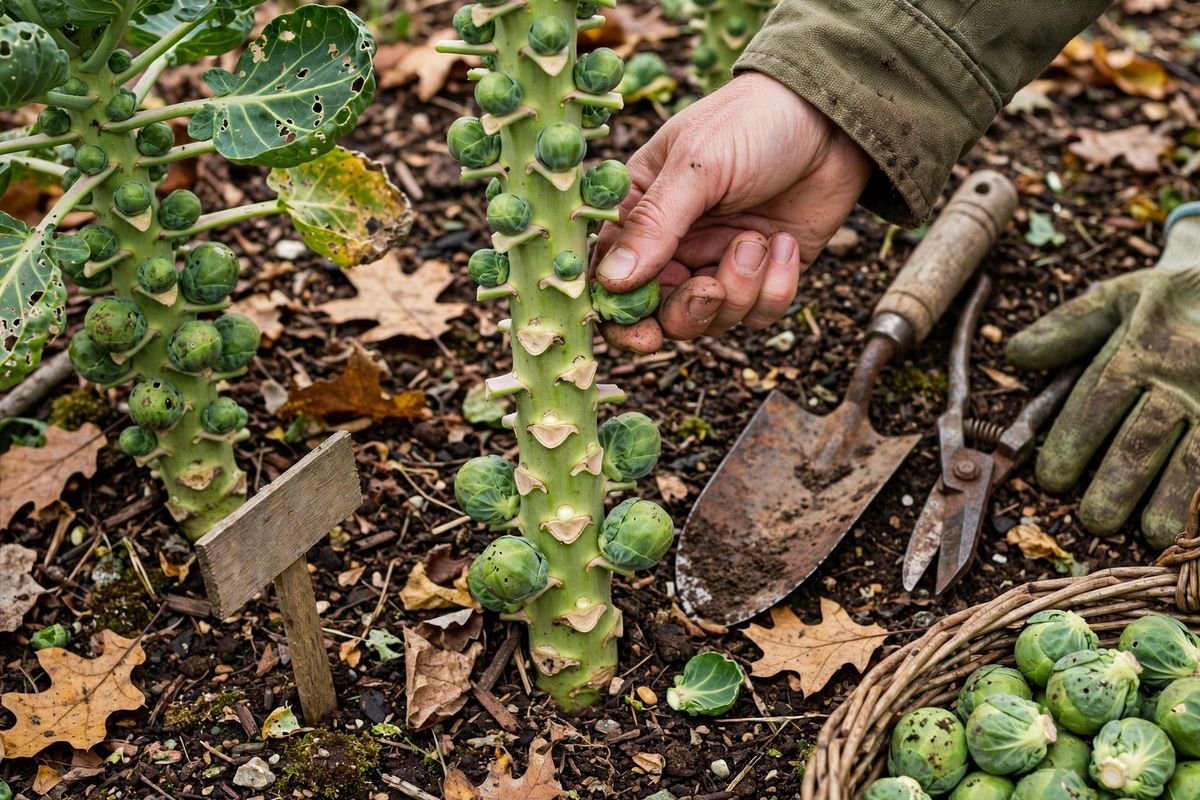
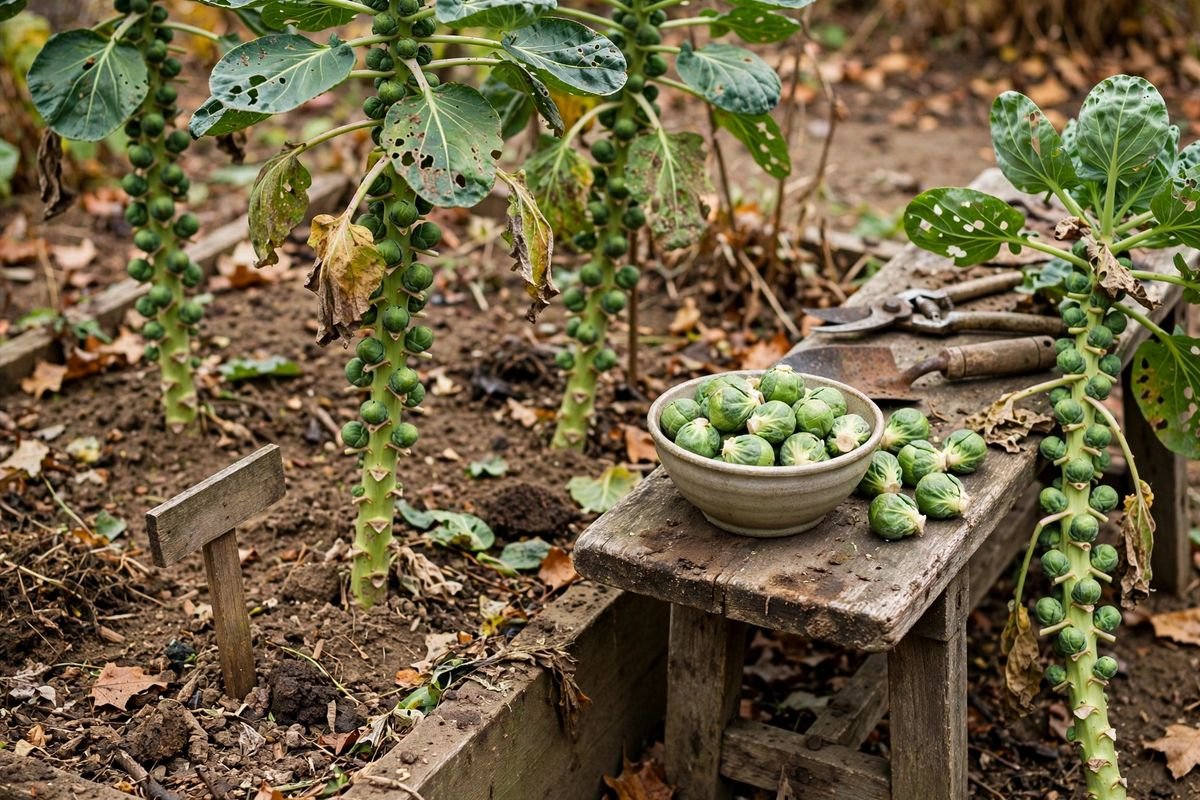
Sprouts mature from the bottom of the stalk upward. Start picking when the lowest sprouts are 1 to 1.5 inches wide, firm, and tight with shiny leaves. Twist each sprout off with a downward pull or cut it clean with a knife. Pick every few days and the upper sprouts keep sizing.
Cool nights improve flavor, so there is no rush before frost. Plants stand through light frosts easily and often into the 20s for short spells. In mild falls, a stalk can give pickings for a month or more. If a hard freeze threatens, cut the whole stalk and store it in a cool spot; sprouts keep well on the stalk.
Storing and Using Your Sprouts
Unwashed sprouts keep 7 to 10 days in the refrigerator in a loose bag. On the stalk, stored cool, they last longer. For freezing, trim, cut larger sprouts in half, blanch 3 to 5 minutes by size, cool in ice water, drain, and freeze. Fall sprouts roast beautifully: halve them, toss with oil and salt, and roast hot until the edges crisp.
Troubleshooting Quick Guide
- Loose, leafy sprouts: heat during formation or harvest ran late. Shift the calendar so sprouts finish in cool weather.
- Tiny sprouts: hungry or thirsty plants, or crowding. Feed mid-season and hold spacing at 18 inches or more.
- Sprouts only at the top: topping too early or stress below. Wait until lower sprouts start before topping.
- Plants falling over: stake early, especially in windy beds and rich soil.
- Aphids in the sprouts: blast with water early, keep row cover on young plants, and check the undersides of leaves weekly.
- No sprouts forming: usually a variety mismatch with your season length. Pick a faster variety and transplant earlier next year.
FAQ
Do Brussels sprouts need frost to taste good?
They do not need frost, but cool nights and a light frost improve sweetness. The plant converts starches to sugars as temperatures drop, which takes the edge off the bitterness.
How tall do the plants get?
Most reach 2 to 3 feet. Tall varieties in rich soil can pass that, which is why staking pays off before fall storms.
Can I grow Brussels sprouts in a container?
Yes, with one plant in at least a 10 gallon pot, steady water, and a stake. Bed-grown plants usually size up better, but a big pot works on a sunny patio, similar to the larger setups in best grow bags for vegetables.
When do I stop picking?
When sprouts turn yellow, open up, or a hard freeze softens them. Until then, keep picking from the bottom every few days.
Sources & Further Reading
- University of Minnesota Extension — growing Brussels sprouts in home gardens (extension.umn.edu)
- University of Wisconsin Extension — Brussels sprouts variety and maturity guidance (extension.wisc.edu)
- Penn State Extension — brassica fertility, spacing, and pest management notes (extension.psu.edu)
- University of Illinois Extension — fall vegetable harvest and frost tolerance guidance (extension.illinois.edu)
More fall growing posts to explore:
- How to Grow Cauliflower in Fall
- How to Grow Broccoli in Fall
- How to Grow Collard Greens
- Fall Garden Cleanup
Brussels sprouts reward the gardener who plans backward, waters steadily, and waits for cold nights to do the flavor work. Give them the long cool season they ask for, and the fall stalk full of sprouts is worth every week of patience.