
This post may contain affiliate links. If you buy through links on this page, we may earn a commission at no extra cost to you.
As an Amazon Associate I earn from qualifying purchases.
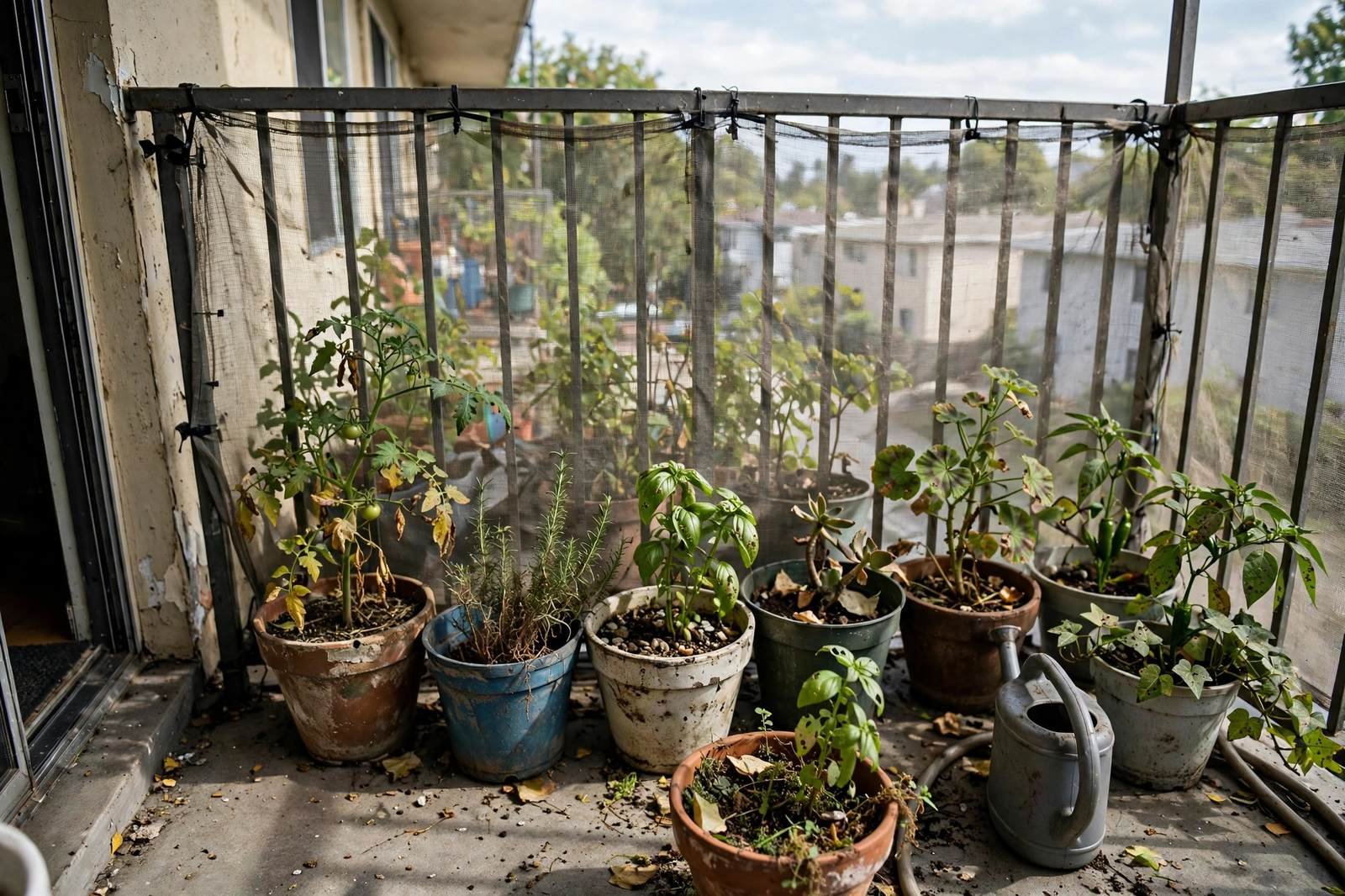
Every balcony gardener has lived this moment: you step outside on a gusty morning and find a favorite pot on its side, soil scattered across the deck, and a basil plant flattened like it lost a fight. Balconies are some of the windiest growing spots around — tall buildings squeeze and accelerate air through gaps, and railings funnel gusts straight across your pots. The good news is that wind damage is almost entirely preventable with a few smart setup choices.
Wind hurts container plants in three ways at once. It physically batters stems and tears leaves, it strips moisture from leaves and soil faster than the roots can replace it, and it can simply tip over anything top-heavy. A plant that thrives in a calm backyard can struggle on a windy tenth-floor balcony for exactly these reasons. But gardeners on exposed balconies grow tomatoes, peppers, and herbs every summer — they just set the stage differently.
In this guide, we’ll walk through the five defenses that matter most: blocking the wind before it reaches your pots, anchoring containers so they stay upright, clustering pots so they shelter each other, choosing plants that can take a beating, and adjusting your watering for windy conditions. Put even three of these in place and your balcony garden gets dramatically tougher.
Wind Protection at a Glance
| Question | Quick Answer |
|---|---|
| Signs wind is the problem | Torn leaf edges, one-sided drying, pots tipping, soil drying out within hours of watering |
| First fix to try | A windbreak screen on the windward railing — it slows gusts before they reach the plants |
| Screen height | Cover the railing up to about pot-and-plant height; leave small airflow gaps so pressure doesn’t build |
| Most wind-proof pot | Low, wide, and heavy — ceramic, concrete, or a nursery pot slipped into a weighted cache pot |
| Watering change | Check moisture daily in windy spells; wind dries pots far faster than still air |
Block the Wind Before It Reaches the Pots
The single most effective thing you can do for a windy balcony is put something between the wind and your plants. A windbreak doesn’t need to seal the balcony shut — in fact, it shouldn’t. A screen that blocks roughly half to two-thirds of the airflow slows gusts down without creating the turbulence and pressure buildup a solid wall would cause. Think of it as a filter, not a fortress.
The simplest version is a mesh windbreak or balcony privacy screen zip-tied or bungeed to the windward railing. Mesh screening is cheap, lets light through, and still breaks up the airflow nicely. Shade cloth in the 40–60% range works the same way and doubles as sun protection for heat-sensitive plants. Whichever you choose, fasten it at the top, middle, and bottom of the railing so it can’t billow or slap against the pots.
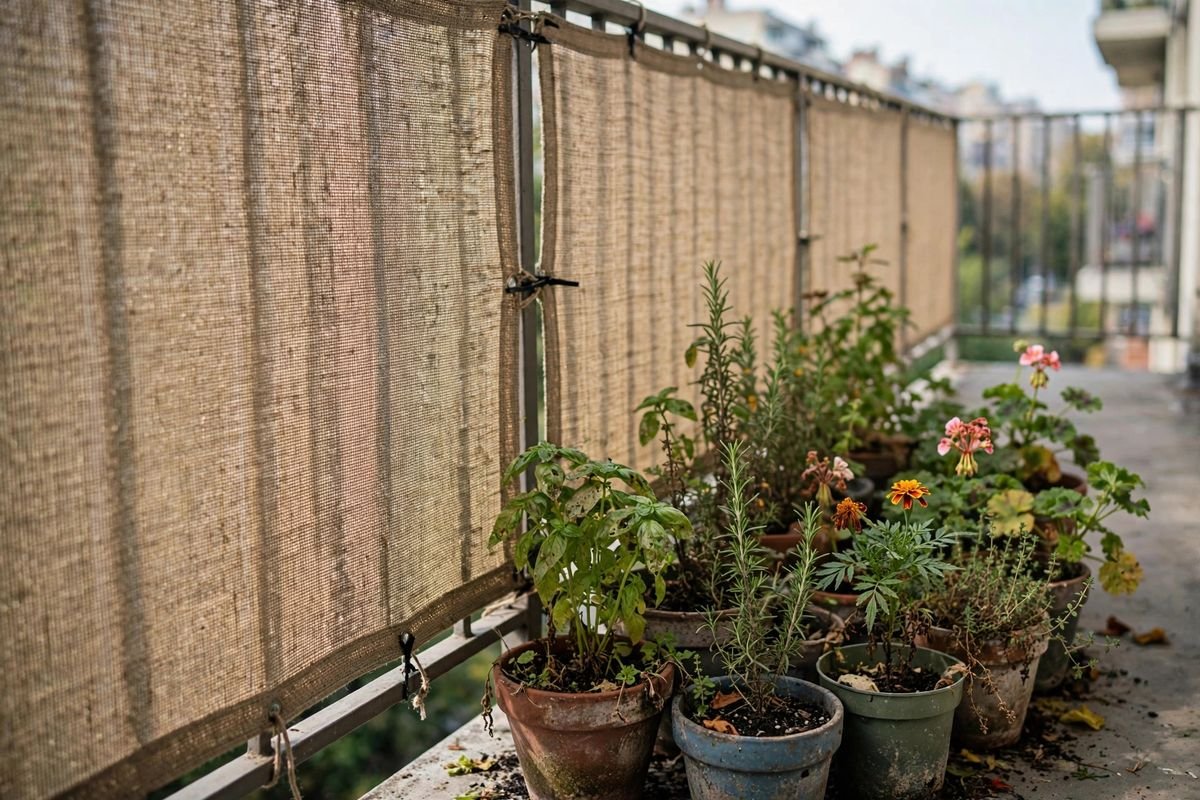
Two placement details make a real difference. First, identify which direction your strongest gusts come from — watch the flags, laundry, or trees below on a windy day, or just feel it over a few days. That’s where the screen goes; there’s no point screening the calm side. Second, don’t push your pots right against the screen. Leave a hand’s width of space between the railing and the pots so air that does get through can dissipate instead of eddying around the plants.
For a sturdier option, a lattice panel or a row of slatted planter boxes with tall plants in front of the railing creates a living windbreak. Bamboo screening rolled across the railing is another classic — it looks good and breaks wind well. Just check your building’s rules before attaching anything to railings; some HOAs and landlords restrict what can be mounted there.
Related Post: Once the wind is under control, everything else about container growing gets easier — see Container Gardening for Beginners for pot sizes, soil, and drainage basics.
Anchor With Heavy, Low, Wide Pots
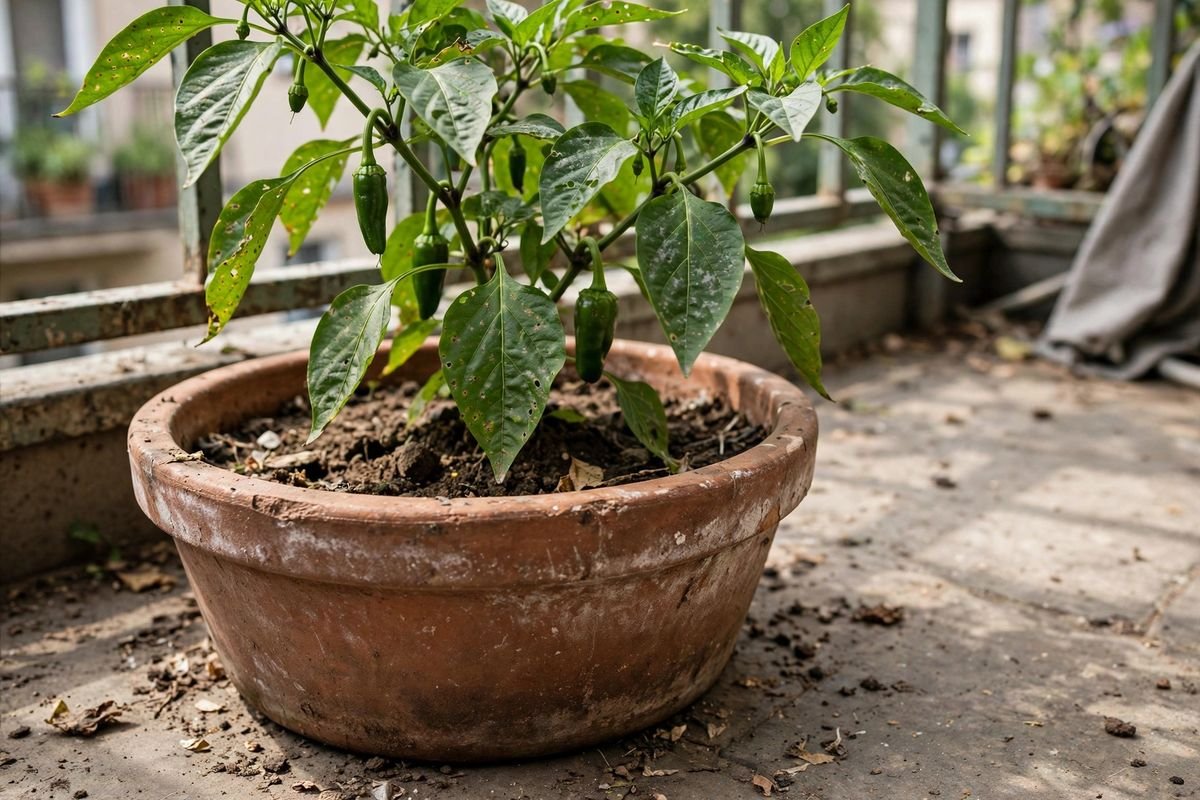
A tall, narrow, light plastic pot is a sail waiting to catch the wind. The fix is simple physics: lower the center of gravity and add weight. Short, wide-based pots resist tipping far better than tall slim ones, and heavy materials like ceramic, terracotta, or concrete add ballast exactly where it’s needed.
You don’t have to buy all new pots. A common trick is to slip your existing nursery pots inside heavier decorative cache pots — you keep the drainage and easy handling of the nursery pot and gain the stability of the heavy outer one. Filling the bottom inch or two of a decorative pot with gravel or sand before dropping the nursery pot in adds even more ballast. Just make sure the nursery pot still drains freely and isn’t sitting in trapped water.
For railing planters and hanging baskets — the most exposed spots on any balcony — use brackets rated for the weight and secure the planters with clips or wire so they can’t lift out of their hooks. Hanging baskets dry out fastest in wind, so line them with coir or use the self-watering type, and hang them on the sheltered side of the balcony when storms are forecast. A railing planter that slides along the rail is asking to be launched; wedge it in place or fasten it with a bungee cord.
One more anchoring trick for very exposed balconies: place the largest, heaviest pots at the corners and edges of your arrangement. They act as ballast for the whole group and take the first hit from gusts, shielding everything behind them.
Cluster Pots Together
Plants shelter each other. A tight group of pots creates its own little pocket of calmer air — the pots on the windward side break the flow for everything behind them, the same way a row of trees shelters a field. This is the easiest wind defense there is, and it costs nothing.
Arrange your cluster with the tallest, toughest plants on the windward edge and smaller, more delicate plants tucked in the middle. Leave just enough space between pots to water and check for pests, but close enough that leaves nearly touch. When you walk out on a windy day and see the whole cluster swaying as one, you’ll know it’s working — the plants are absorbing the gusts together instead of each one taking the full hit alone.
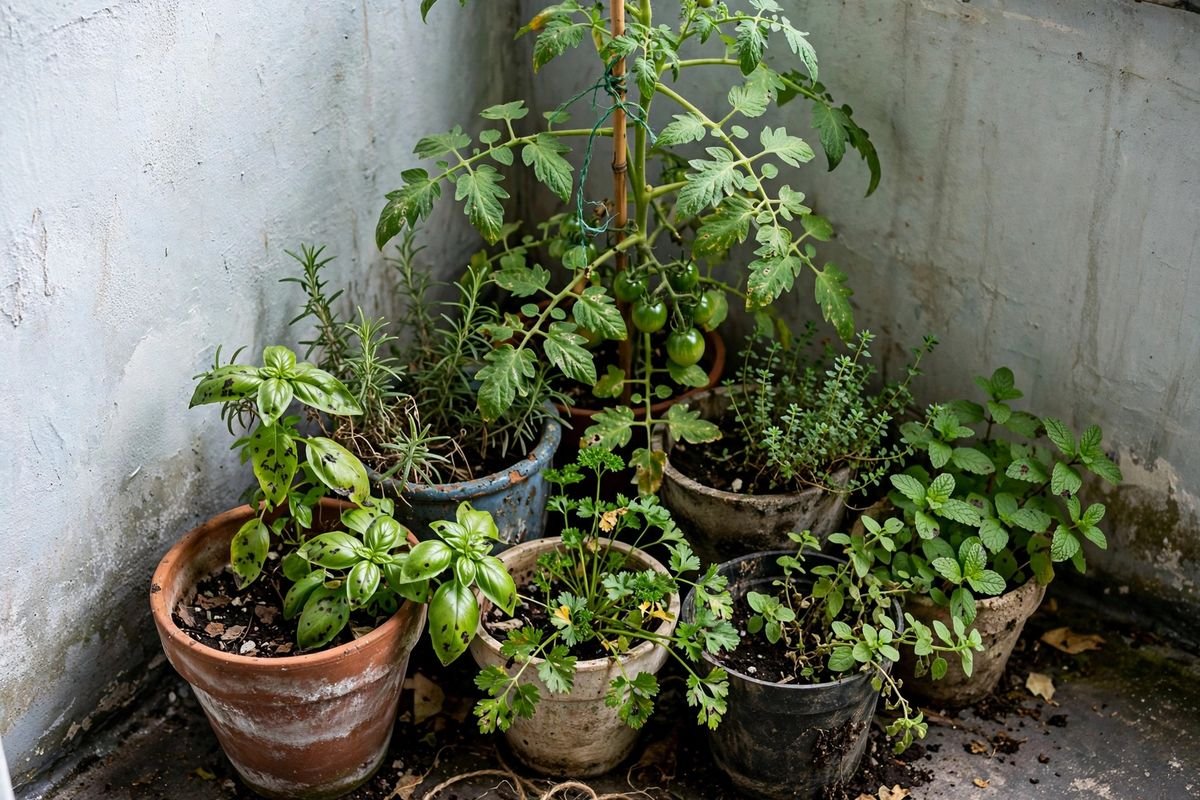
Clustering has side benefits too. Grouped pots shade each other’s soil surfaces, which slows evaporation — a real bonus since wind dries containers fast. They’re also easier to water in one pass, and many gardeners find pest-checking quicker when everything is in one spot. If you’re short on floor space, a sturdy plant stand with two or three tiers does the same job vertically: heavier pots on the bottom shelf for ballast, lighter ones up top.
Choose Plants That Can Take the Wind
Some plants are simply built for wind. Species with small, narrow, or leathery leaves lose less water to gusts, and plants with flexible stems bend instead of snapping. If your balcony is regularly breezy, lean your plant list toward the tough ones and save the most delicate varieties for the most sheltered corner.
Reliable wind-tough picks for containers include rosemary, lavender, thyme, and other Mediterranean herbs with small leathery leaves; ornamental grasses, which bend gracefully and rarely break; geraniums and pelargoniums, which shrug off rough weather; peppers and bush tomatoes, which stay compact enough to resist tipping; and nasturtiums, which sprawl low and recover fast. Most easy vegetables for beginners adapt fine to a breezy balcony as long as the pot is heavy enough to stay put.
Handle the fussy ones with placement rather than avoidance. Tall, large-leafed plants like cucumbers, full-size indeterminate tomatoes, and sunflowers can still grow on a windy balcony — stake them firmly at planting time, keep them in the lee of your windbreak, and give them the heaviest pots you own. A plant that’s staked from day one grows into its support; a plant staked after it starts leaning never quite recovers its balance.
When you’re planning a fall planting, remember that cool-season greens like spinach and kale tolerate wind better than most summer crops — their low, sturdy growth habit keeps them out of the worst gusts.
Water More Often in Windy Spells
Wind is a thief of moisture. Moving air strips water from leaf surfaces constantly, which makes plants transpire faster, and it also evaporates water straight from the soil surface. A pot that holds moisture for three days in still air might be bone-dry by the next morning when the wind picks up. This is why so many “wind-damaged” plants are actually just thirsty — the leaves wilt, crisp at the edges, and look battered, but the real culprit is dehydration.
During windy stretches, check soil moisture daily with a finger pushed an inch or two into the mix. Water when the top inch or two feels dry — for many containers in active wind, that means watering every day instead of every two or three. Water slowly until it runs from the drainage holes, and water the soil, not the leaves: wet foliage in wind dries fast but can still invite disease in the humid pockets where leaves touch.
A layer of mulch on the pot surface — straw, shredded bark, or even small pebbles — cuts evaporation noticeably and keeps the potting mix from blowing away in strong gusts. Self-watering planters are another strong option for windy balconies: their reservoirs buy you a day or two of forgiveness when a windy spell coincides with a busy week. Look for a self-watering planter with a large reservoir if you’re away from home often.
Feed lightly but regularly, too. Extra watering leaches nutrients out of containers faster, so a half-strength liquid fertilizer every couple of weeks during the growing season keeps wind-stressed plants from going hungry. Signs of a plant that’s drying out faster than it’s drinking: wilting that recovers slowly after watering, leaf edges browning from the tips inward, and buds dropping before they open.
Troubleshooting Common Wind Problems
Plants keep blowing over even with heavy pots
Check the soil level. Pots that have settled low have a higher center of gravity relative to the pot, and dry soil is dramatically lighter than wet soil — a thirsty pot can be half the weight of a freshly watered one. Top up the potting mix, water thoroughly, and move the plant into a clustered group. If it still topples, the plant has outgrown the pot’s footprint: go wider, not just taller.
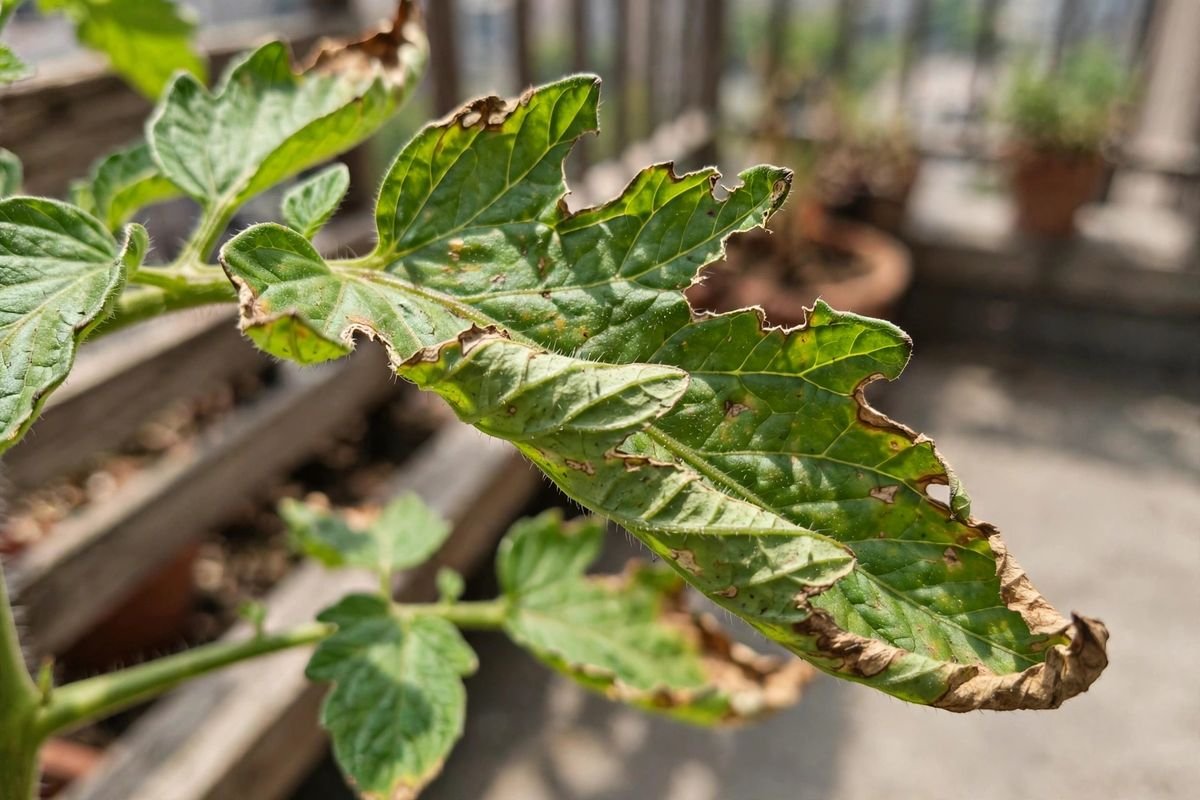
Leaves are shredded and brown at the edges
That’s classic wind scorch: the torn edges dry out and turn papery brown while the rest of the leaf stays green. It looks alarming but rarely kills an established plant. Move it deeper into the shelter of your windbreak, trim off the worst-damaged leaves, and make sure it’s getting enough water — damaged leaves lose moisture faster. New growth will come in fine once the plant is protected.
Buds and flowers keep dropping
Bud drop in wind is usually dehydration, not physical damage — the plant can’t pull water up fast enough to support its flowers. Increase watering frequency first. If buds still drop, the plant may be getting more wind than its variety can handle; move it to the most sheltered spot and consider a wind-tougher variety next season.
Hanging baskets dry out in hours
Baskets hang in the windiest air and have the least soil. On gusty days, they can need water twice. Line the basket to hold moisture, mulch the surface, and hang it on the sheltered side. In sustained wind, take baskets down and set them in the pot cluster until the blow passes — it takes two minutes and saves the plant.
Soil is blowing out of the pots
This happens with lightweight mixes and exposed surfaces. Top-dress with a half-inch of mulch or small pebbles, and avoid leaving freshly filled pots with bare mix during windy spells. A fine mist of water on the surface also helps the top layer crust over lightly.
FAQs About Protecting Balcony Plants From Wind
Should I bring plants inside during a big storm?
For severe storms with damaging gusts, yes — bringing containers inside or into a stairwell for the duration is the safest move. Move them before the wind peaks, not during it, and put them back once gusts drop. For ordinary breezy days, the windbreak-and-clustering setup should be plenty.
Does a taller railing mean less wind?
Somewhat — a solid parapet wall shields the lower pots well — but wind accelerates over the top of barriers, so plants sitting above the railing line still get hit. Keep tall plants below the railing height when you can, or screen the railing to extend the sheltered zone.
Can wind actually kill a healthy plant?
Wind alone rarely kills a plant outright, but the combination of physical damage and chronic dehydration can finish off a stressed one. The plants most at risk are recent transplants, seedlings, and anything already short on water. New plants deserve the most sheltered spot for their first few weeks.
Will a fan indoors prepare seedlings for balcony wind?
Gentle indoor airflow does help seedlings grow stockier stems, which is a real advantage once they move outside. Run a small fan on low near your seedlings for a few hours a day — it won’t replace a windbreak on the balcony, but it gives transplants a head start.
How do I protect balcony plants from wind in winter?
Winter wind is mostly a drying threat for hardy perennials left in pots. Group pots against the building wall, wrap the pots (not the plants) in burlap or bubble wrap to protect roots, and water during thaws so roots don’t go into deep winter bone-dry.
More Container Gardening Posts to Explore
- Container Gardening for Beginners — pot sizes, soil, drainage, and what grows best in pots.
- 10 Easiest Vegetables to Grow for Beginners — forgiving crops that adapt well to balcony conditions.
- What to Plant in October — cool-season crops, including sturdy wind-tolerant greens for fall containers.
Sources & Further Reading
- Cornell University Extension — Garden Planning (site selection and exposure considerations)
- University of Maryland Extension — Container Gardening (containers, media, and watering guidance)
- Royal Horticultural Society — Protecting Plants From Wind (windbreak principles and plant protection)
What’s the windiest corner of your balcony, and which plant takes the worst of it? Tell us in the comments — we’ll help you pick a defense for that exact spot.