
This post may contain affiliate links. If you buy through links on this page, we may earn a commission at no extra cost to you.
As an Amazon Associate I earn from qualifying purchases.
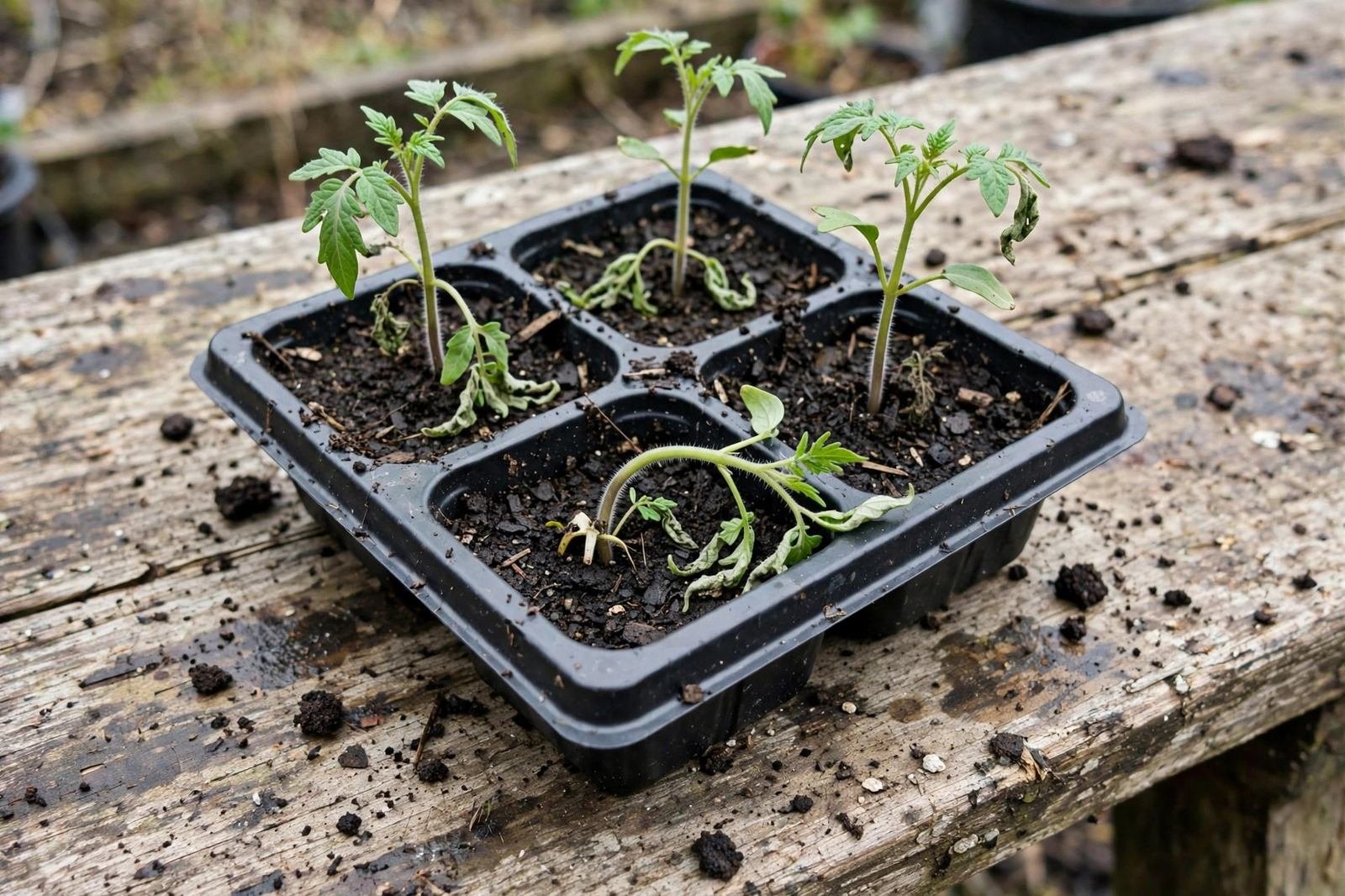
A tray that looked full and green one morning can look flat and sad the next. Seedlings that fall over after germination are a common setback for indoor growers, and the fix depends on what caused the fall. Some seedlings can be saved, some cannot, and telling the difference early saves time, mix, and seed.
What a fallen seedling looks like
A healthy seedling stands upright on a firm stem, with leaves held open to the light. A fallen seedling lies on the mix, leans hard to one side, or flops at a sharp bend. The stem may look thin, pale, or pinched. Leaves may wilt even when the mix feels damp.
One or two fallen seedlings can be a handling slip or a weak seed. A whole row falling in a day or two points to a wider problem, such as disease, low light, or mix that stays wet for too long. Count how many fell before you change anything.
Cause table: five common reasons seedlings fall over
| Cause | What you see | First step |
|---|---|---|
| Damping off | Stem pinched thin and brown at the soil line; seedling topples and wilts | Remove fallen seedlings; improve air flow; let the mix surface dry a little between waterings |
| Low light | Tall, pale, thin stems that lean toward a window | Move lights close above the seedlings and keep them on for 14 to 16 hours a day |
| Overwatering | Mix stays soggy; stems soften; algae or a sour smell may appear | Water less often; water from below; drain trays fully after watering |
| Heat stress | Seedlings wilt in warm sun or near a heat mat left on too long | Move trays out of direct hot sun; remove heat mats once most seeds have sprouted |
| Rough handling | One or two seedlings bent or snapped after transplanting or thinning | Handle seedlings by a leaf, never by the stem; thin with small scissors |
Damping off: the pinched stem at the soil line
Damping off is a soil disease problem that attacks young stems right where they meet the mix. Fungi that live in damp mix can rot that narrow band of stem tissue, so the seedling loses its support and falls. The stem often looks water-soaked, then thin and brown, at the soil line.
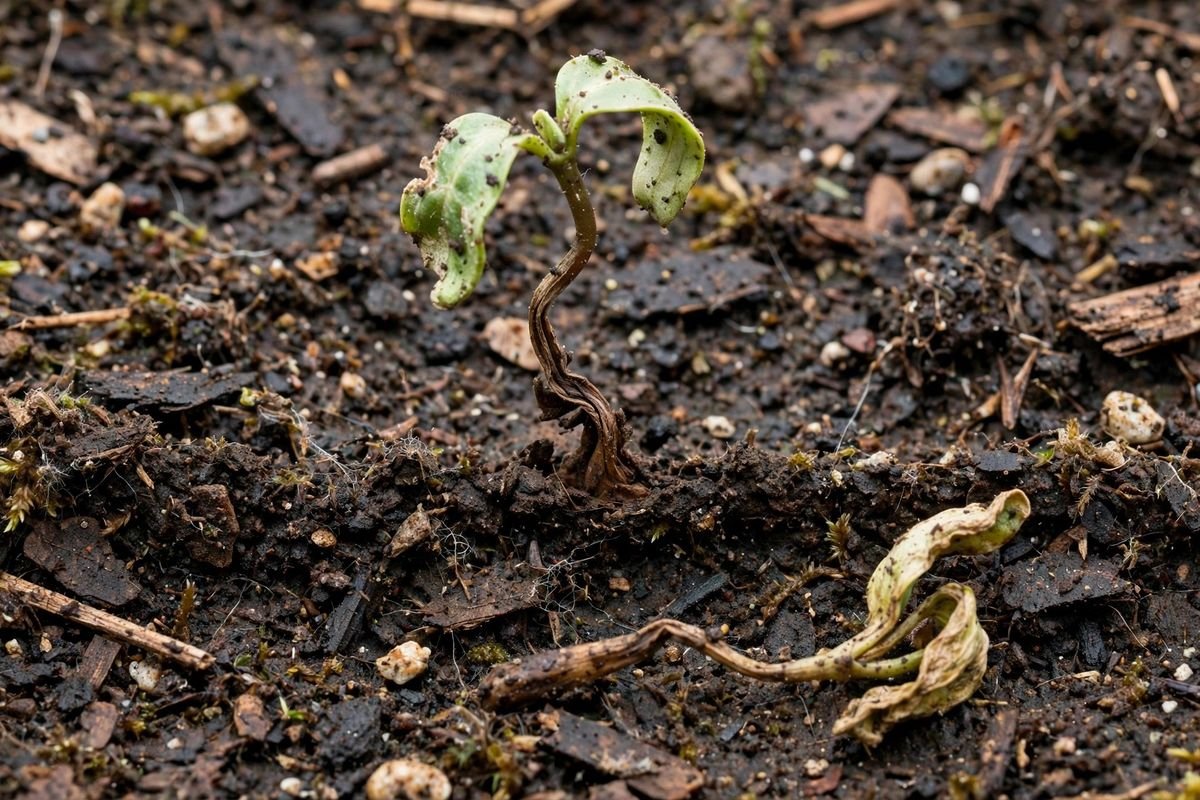
Once a stem has pinched through, that seedling will not recover, because the path for water and food from the roots is broken. Pull fallen seedlings out of the tray, give the rest moving air, and let the top of the mix dry a touch between waterings. Clean trays and fresh mix for the next sowing cut the odds of a repeat. See how to clean seed starting trays for that routine.
Leggy, weak stems from low light
Seedlings stretch toward light when light is too dim or too far away. The stems grow long and thin, leaves stay small, and the plant cannot hold itself up. A tray on a windowsill in late winter often shows this pattern.
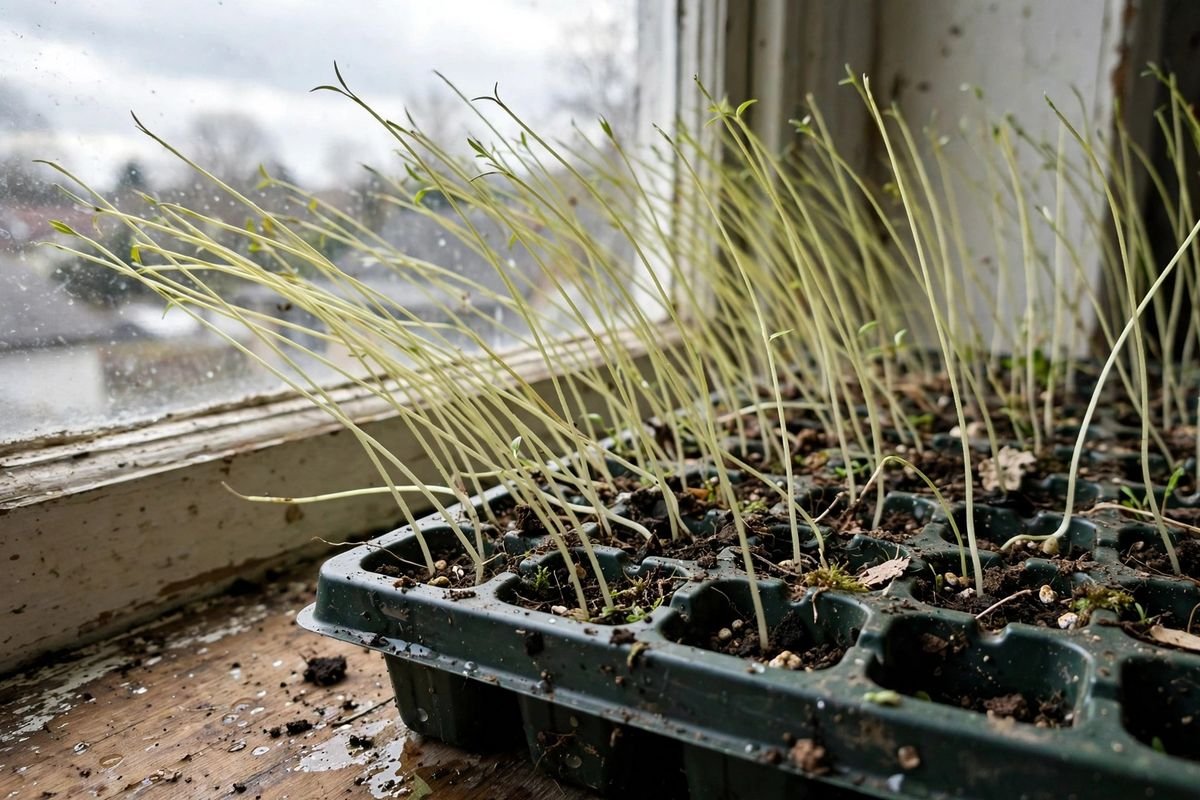
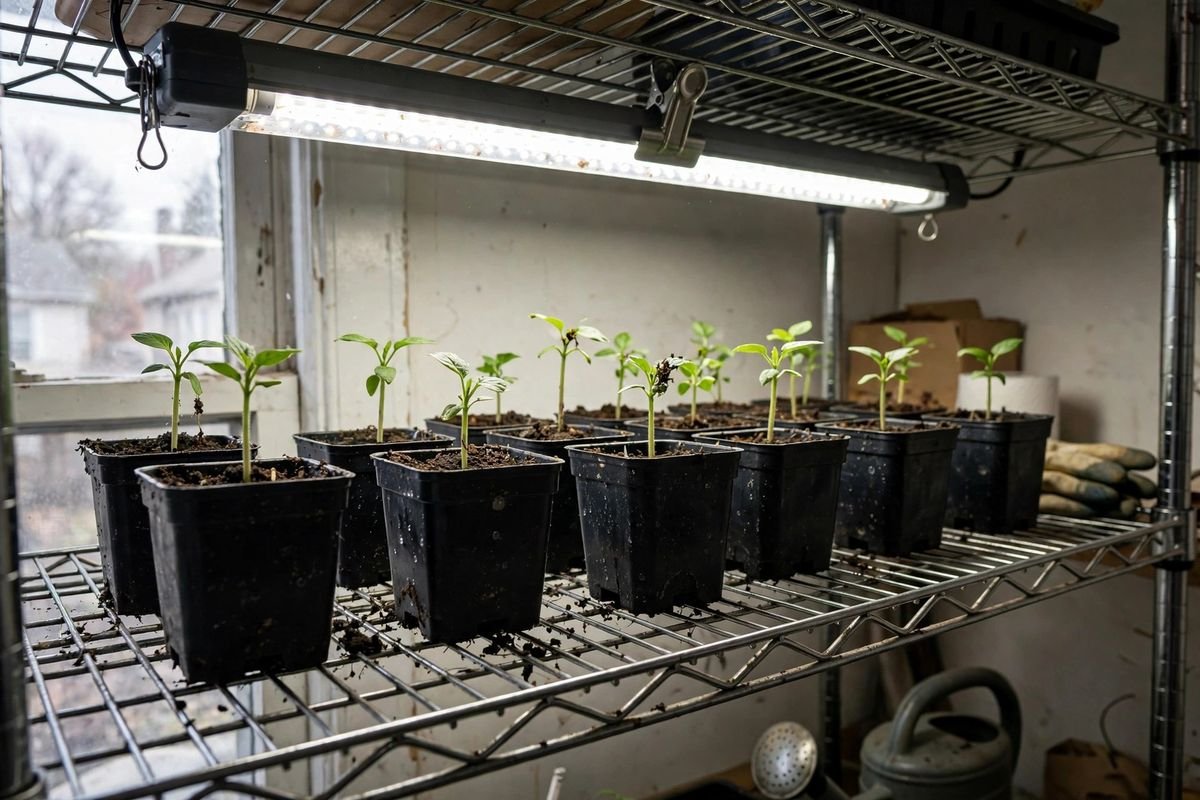
Leggy seedlings are not diseased, so they can sometimes be saved if the stem is still green and firm. Move a shop light or grow light to about 2 to 3 inches above the plant tops, and raise it as they grow. Keep lights on for 14 to 16 hours a day. A small fan moving air gently across the tray can help stems grow firmer, though a fan alone will not fix dim light. See why seedlings grow leggy under grow lights for more detail.
Overwatering and mix that never dries
Seed starting mix should feel like a wrung-out sponge: damp all the way through, but not dripping. Mix that stays soggy starves roots of air and invites the fungi behind damping off.
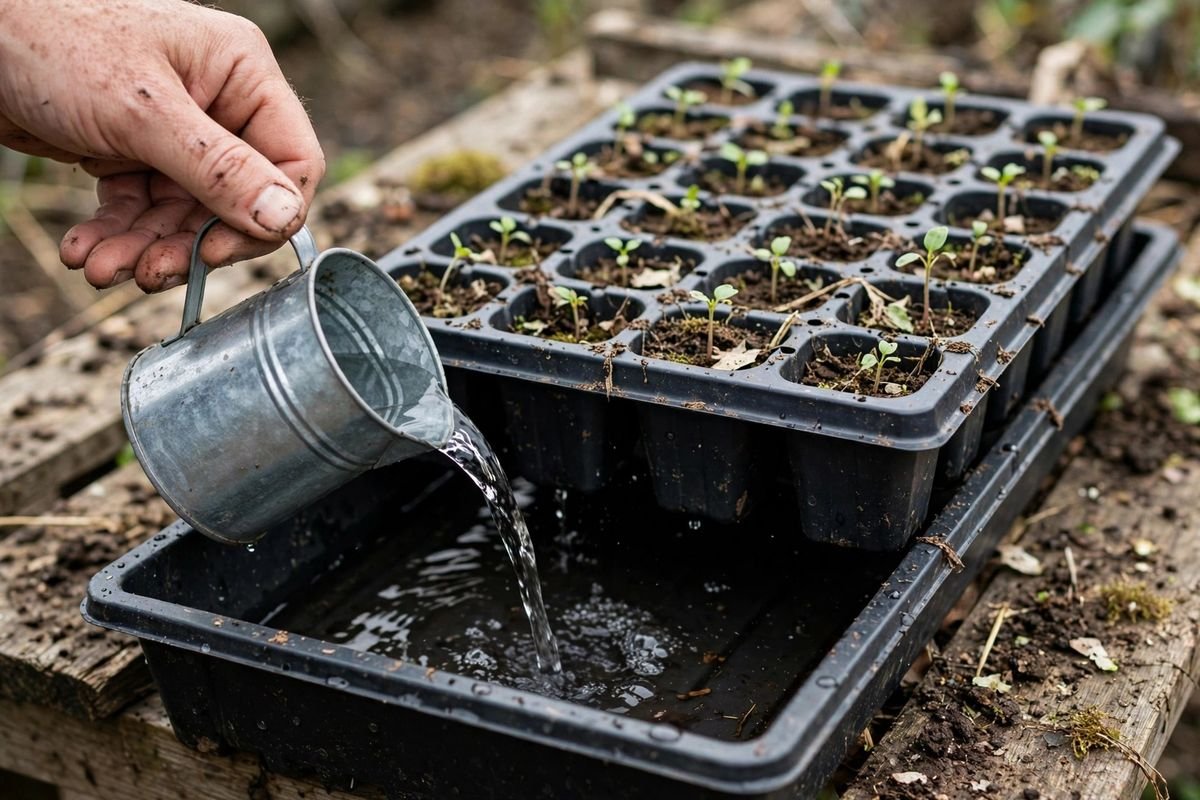
Water from below when you can. Set the cell tray in a solid tray, pour water into the solid tray, let the mix soak it up for 10 to 20 minutes, then pour off any water that remains. Check the mix with a finger before watering again: if the top half inch feels damp, wait. See how often to water seedlings for a simple finger-test routine.
Heat stress and rough handling
Heat mats help seeds sprout, but they should come off once most seedlings are up. A mat left on under a tray in a warm room can dry the mix fast at the surface, and seedlings may wilt and flop. Strong sun through a window can do the same.
Move trays into bright, indirect light once seedlings are up. Always hold a seedling by a leaf or by the root ball, never by the stem. A stem pinched by fingers often fails a day later, even if it looks fine at first. When thinning, snip the extra seedling at the soil line with small scissors rather than pulling it out, since pulling can disturb the roots of the seedling you plan to keep.
How to triage a tray
Work through a fallen tray in this order:
- Remove every seedling that has fallen, plus any seedling with a brown, pinched stem at the soil line. Bag them and put them in the trash.
- Check the mix. If water pools or the mix feels sodden, stop watering and let it dry down before the next watering.
- Check the light. If the light is more than a few inches above the plants, lower it to 2 to 3 inches above the tops.
- Check the air. If the tray sits under a closed dome or in a still corner, lift the dome and add gentle air movement with a small fan on a low setting, aimed across the tray.
- Count what is left. If at least half the cells still hold a firm, green seedling, the tray is usually worth keeping. If only a few cells remain, resowing often gives a stronger crop in less time than nursing a thin tray.
For the next sowing, start with clean trays and fresh mix. Sturdy seed starting trays with drainage holes and a solid bottom tray make bottom watering simple, and you can find seedling trays on Amazon in a range of cell sizes.
When to resow, and how much seed to sow
Resow when the tray has lost most of its plants, or when the remaining seedlings are all leggy or diseased. A fresh tray sown at the right time often passes a struggling tray within two weeks, because healthy seedlings grow faster than sick ones recover.
Planning math helps you sow enough without sowing far too much. Take a 72-cell tray sown with 2 seeds per cell: 144 seeds in total. If germination runs at 80 percent, about 115 seedlings come up. If 15 percent of those seedlings then flop, about 98 remain standing. These rates are planning assumptions, not measured results, and your rates will vary by seed lot, mix, light, and watering.
Work backward from the number of plants you want at transplant time. To end with 24 tomato plants, divide 24 by the share that survives both steps: 24 / (0.80 x 0.85) = 35.3. Round up to 36 cells. Sow 36 cells, thin each cell to one seedling, and you have a fair margin for normal losses. Use your local frost dates and regional planting guidance — not your USDA hardiness zone alone — to choose planting dates. Time the resow so the new tray is ready when outdoor conditions suit transplanting.
Keep the resow simple: fresh mix, clean trays, light close above the seedlings from the day they emerge, and water from below. Check the tray once a day, and act on the first fallen seedling rather than waiting for a row to fall.
Sources & Further Reading
University of Minnesota Extension: Starting seeds indoors
North Carolina State Extension Gardener Handbook: Chapter 13, Propagation