

This post may contain affiliate links. If you buy through links on this page, we may earn a commission at no extra cost to you.
As an Amazon Associate I earn from qualifying purchases.
By the end of the season, most pots hold mix that has worked hard all summer. It fed tomatoes through July, dried out in August, and sat through a few cold nights in October. Some of that mix has another season in it, and some of it should go. The hard part is telling which pot is which, because tired mix looks much the same from the top.
This post is a decision guide. It covers the three calls you can make for old mix, the signs that mean replacement is the right one, and a pot-by-pot triage you can copy for your own patio. For the reuse side of the question in more depth, see our guide to can you reuse potting soil, and for the refresh steps, see how to refresh old potting soil.
Reuse, refresh, or replace
Reuse means the mix stays in the pot and gets a new planting with little or no change. It fits pots where the plants stayed healthy all season and the mix still drains the way it did in spring. A top-dress of compost is usually all it needs.
Refresh means the mix stays but gets new life. Pull out the top few inches, work in finished compost, and add a handful of perlite if the mix has packed down. Refresh fits mix that is tired but not spent: it still holds together when damp, it still drains, and nothing in the pot had disease.
Replace means the old mix comes out and fresh mix goes in. It is the right call when the mix has lost its structure, when salts have built up, or when the plants in the pot had a soil-borne disease. Replacing costs more than the other two calls, so it should be saved for pots that truly need it.
Signs the mix is finished
Water tells the story first. Pour water on the surface and watch. If it beads up and runs down the gap between the mix and the pot wall, the mix has turned hydrophobic and roots are not getting water. If it ponds on top for a minute or more, the mix has compacted and air cannot reach the roots. Both are signs that refresh alone will not fix the pot.

A white crust on the surface or around the rim is the next sign. It means fertilizer salts have built up over the season, and roots sitting in salty mix struggle to take up water even when the pot is damp. A sour or rotten smell is another sign: healthy mix smells like damp earth, while mix that has gone anaerobic smells wrong and should not be planted into again without a full change.
Two more signs come from the plants themselves. If the pot held a plant with wilt, blight, or another soil-borne disease, replace the mix and do not reuse it anywhere, because the problem can carry over to the next planting. And if the mix has shrunk an inch or more below the rim and turns to dust when dry, it has lost the structure that held air and water, and no amount of compost on top will bring it back.
A worked example: triage for six pots
Here is a triage for six pots at the end of the season, with the math for the fresh mix the job needs. The assumptions are stated so you can swap in your own numbers: a 5-gallon pot holds about 19 quarts of mix, a 3-gallon pot about 11 quarts, a 12-inch pot about 5 quarts, and a 10-inch pot about 4 quarts, each filled to about an inch below the rim. A cubic foot of bagged mix holds about 30 quarts by dry measure, so one cubic-foot bag covers roughly 30 quarts of pots.
Pot 1 is a 12-inch pot that grew basil, healthy all season. The mix still drains, so the call is reuse: top-dress with an inch of compost and plant again.
Pot 2 is a 12-inch pot that grew chives. The mix is a little tired but drains fine, so the call is refresh: pull the top two inches, blend in compost, and put the pot back in service.
Pot 3 is the 5-gallon tomato pot, and the tomato showed signs of blight late in the season. The call is replace. The old mix goes in the trash or municipal green waste, never in the compost pile or another pot, because the disease can carry over.
Pot 4 is a 3-gallon pepper pot, healthy all season. Refresh it the same way as pot 2: top inches out, compost in.
Pot 5 is a 10-inch lettuce pot on its second season. The mix has compacted and water ponds on top, so the call is replace.
Pot 6 is a 10-inch parsley pot with a white salt crust on the surface. The call is replace, since flushing salts out of spent mix takes more water and time than the pot is worth.
The fresh mix needed is 19 quarts for the tomato pot plus 4 quarts each for the lettuce and parsley pots, which comes to 27 quarts. That is just under one cubic-foot bag, so one bag covers the whole triage with a little left over for topping up the refreshed pots. Three pots go back into service for the price of one bag of mix, and the three that were replaced get a clean start.
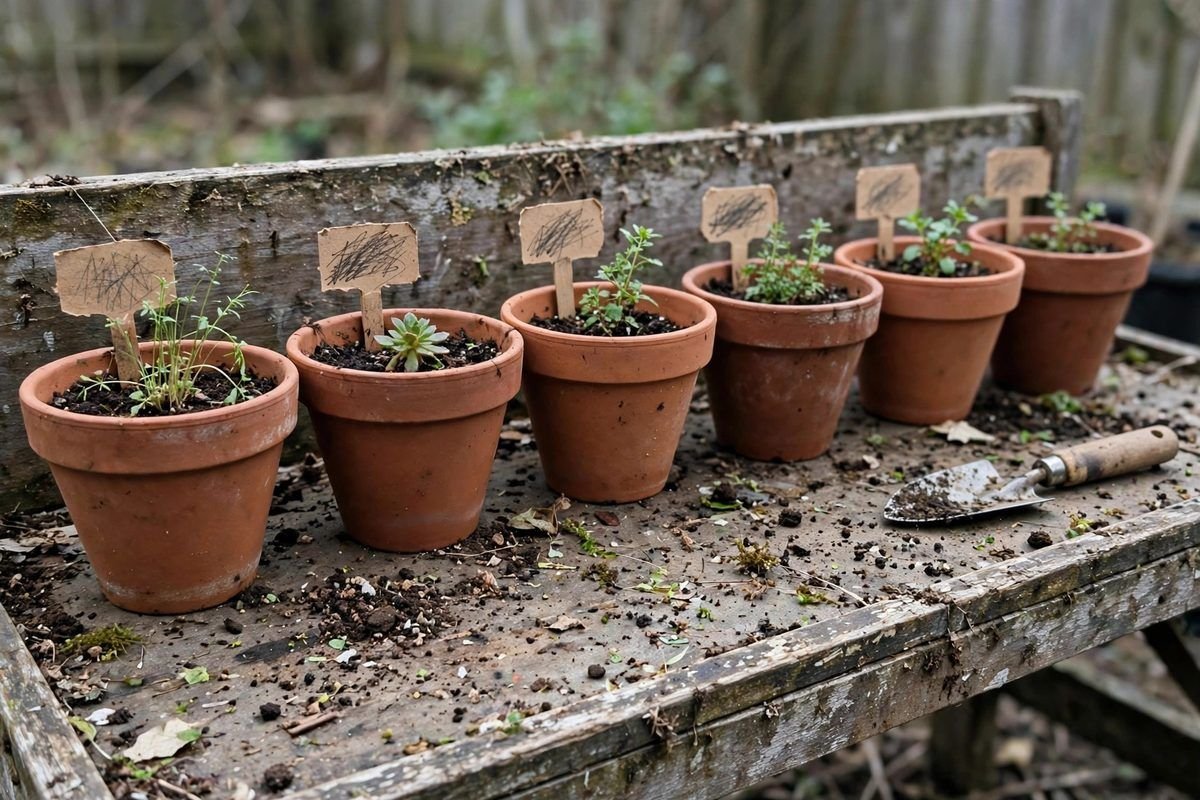
Test the mix before you decide
Three quick tests settle most pots. The squeeze test: take a handful of damp mix and squeeze it. Good mix holds together loosely and breaks apart when you poke it. Mix that stays in a hard lump is compacted, and mix that falls to dust is spent.
The drainage test: water the pot and watch how fast the water soaks in and drains from the bottom. Water should soak in within a few seconds and drain within a minute or so. Our guide to how to test soil drainage in a pot walks through the full check.
The smell test: healthy mix smells like damp earth. A sour, rotten, or ammonia smell means the mix has gone anaerobic or holds too much undecomposed material, and that pot is a candidate for replacement.
What to do with the old mix
Healthy old mix is still useful. Spread it on garden beds as a top layer, blend it into the compost pile, or use it to fill the bottom of large planters where roots will not reach it. Diseased mix is the exception: bag it and put it in the trash or municipal green waste, and wash the pot with soap and water before refilling it. For a full list of what to keep on hand for soil work, see our soil and compost supply checklist for beginners.

Stretching fresh mix further
Fresh mix goes further when it is blended with refreshed old mix. A pot that needs replacement can take a blend of half fresh mix and half refreshed old mix from a healthy pot, as long as the old half drains well and had no disease. That stretches one bag across more pots, and the fresh half brings back the structure and air space the old half lost. A search for bagged potting mix is one way to compare bag sizes if you buy online.
Sources & Further Reading
University of California Agriculture and Natural Resources
Cornell Cooperative Extension
North Carolina State University Extension