
This post may contain affiliate links. If you buy through links on this page, we may earn a commission at no extra cost to you.
As an Amazon Associate I earn from qualifying purchases.
Standing over the compost bin with a questionable item in your hand — “can this go in?” — is a universal gardener experience. Get the answer wrong often enough and you get odors, pests, or a pile full of things that never break down. Get it right and composting becomes second nature.
This is the complete reference: what goes in, what stays out, and the gray-area items with conditions. Bookmark it for the kitchen.
| Always yes | Veggie scraps, fruit, coffee grounds, eggshells, dry leaves |
|---|---|
| Yes, with care | Shredded paper, wood ash (small amounts), hair |
| Always no | Meat, dairy, oils, pet waste, glossy paper, treated wood |
| The rule | When in doubt, leave it out |
YES: Kitchen Scraps (Greens)
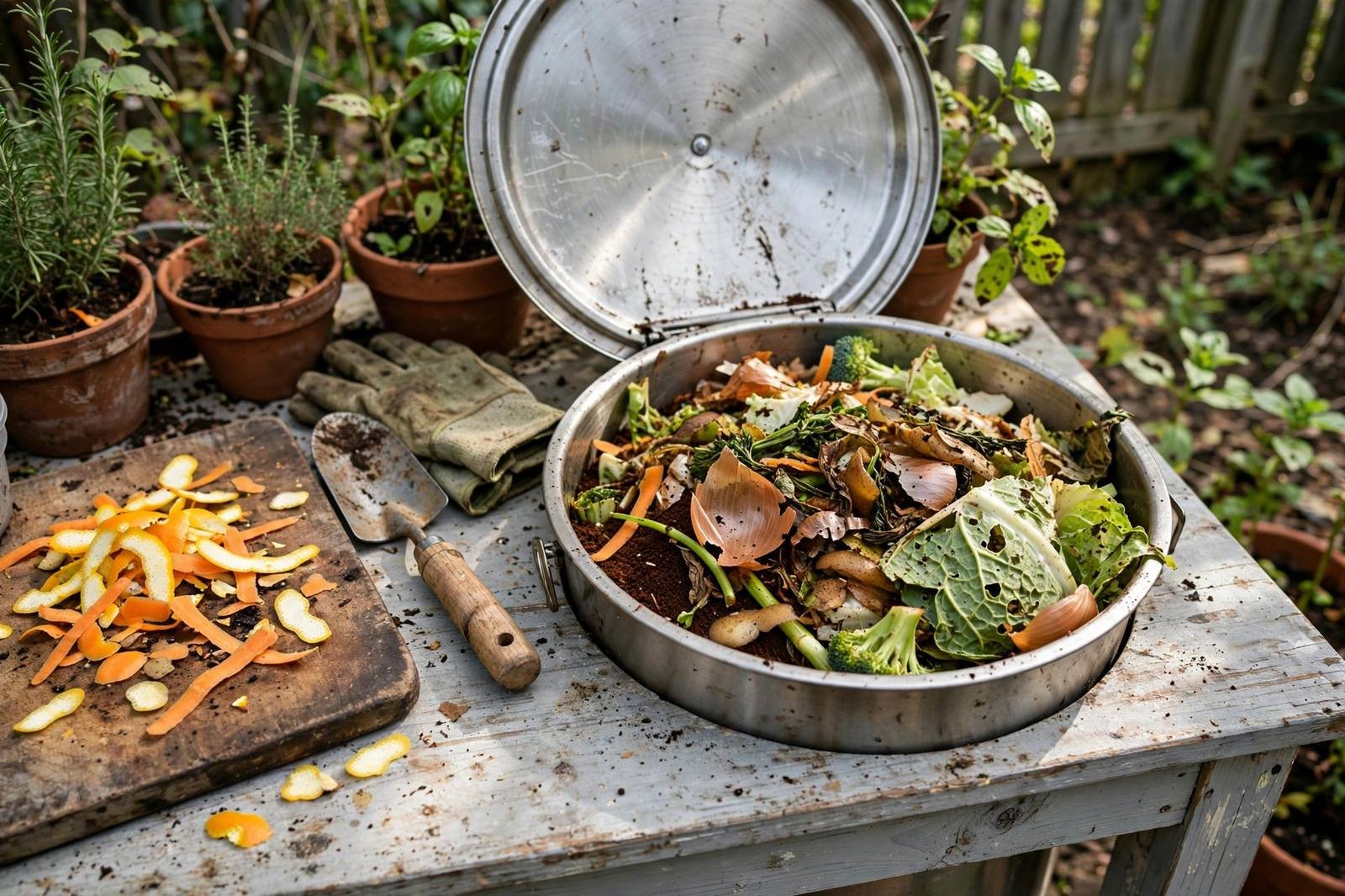
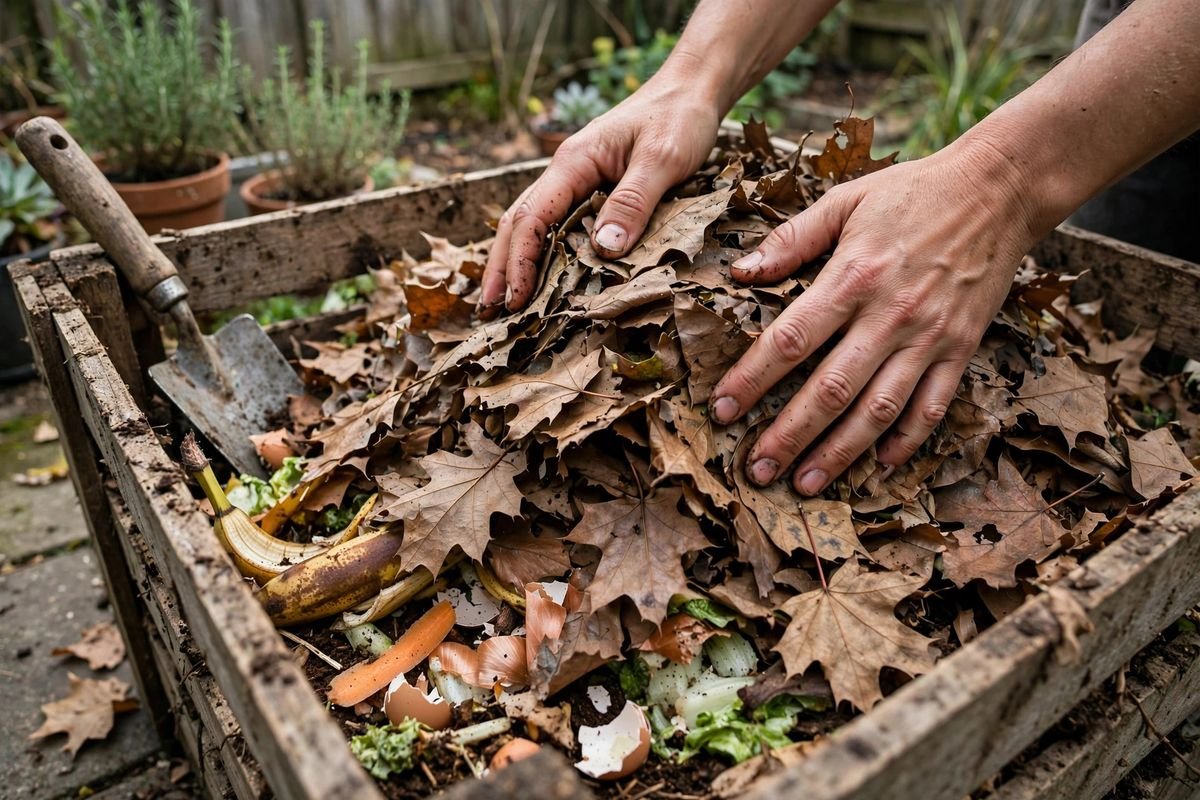
Fruit and vegetable scraps are compost gold — nitrogen-rich, moist, and quick to break down:
- Vegetable peelings, trimmings, and spoiled produce
- Fruit scraps, cores, and peels (including citrus — the “no citrus” rule is a myth for home piles; just don’t dump bushels at once)
- Coffee grounds and paper filters
- Tea bags (remove staples; avoid plastic-feeling “silky” bags)
- Eggshells (crush them — they break down faster and add calcium)
- Stale bread, cooked plain rice, and pasta in small amounts
- Nutshells (avoid black walnut shells, which contain a compound toxic to many plants)
Keep a kitchen compost caddy with a lid on the counter and scraps make it to the bin instead of the trash. Empty it every few days — a full caddy gets fragrant fast.
YES: Yard and Garden Waste
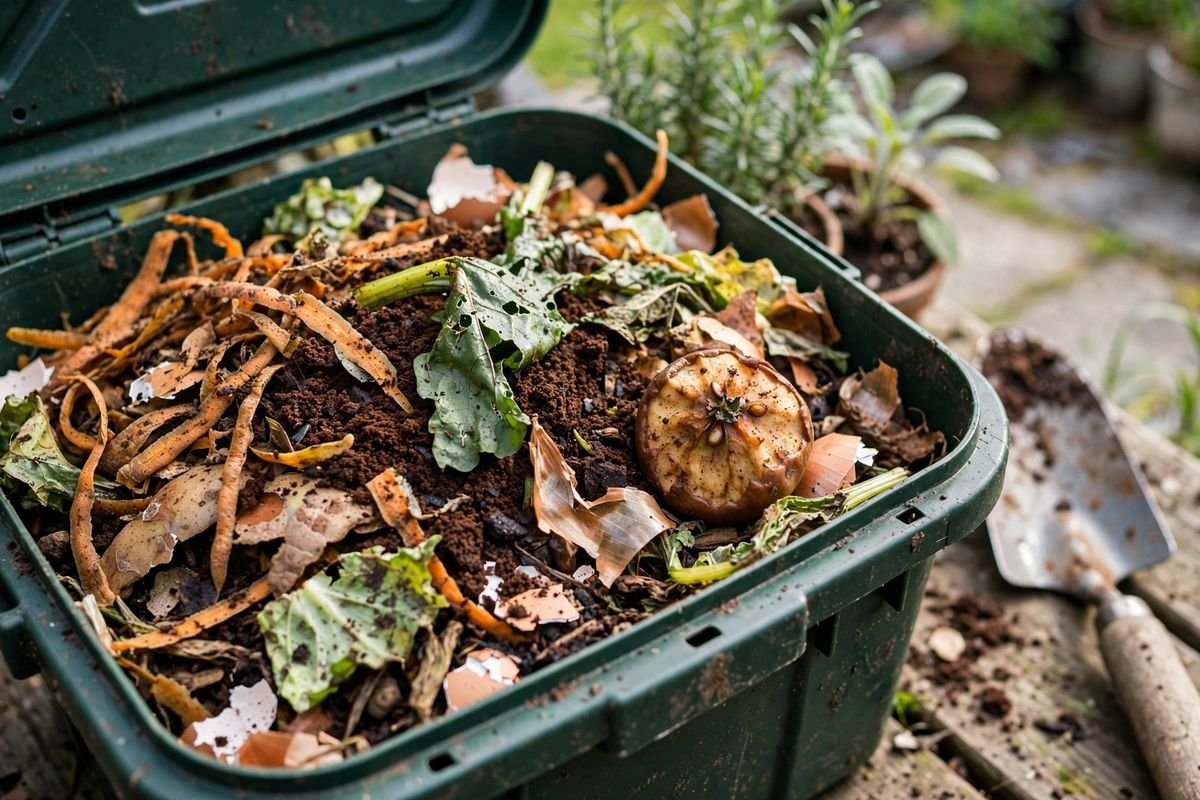
- Dry fall leaves — the single best brown ingredient; shred them to speed things up
- Grass clippings in thin layers (thick mats go slimy and anaerobic)
- Spent garden plants and trimmings (disease-free only)
- Straw and hay (check it’s herbicide-free if you’ll use the compost on food crops)
- Wood chips and small twigs (slow, but fine — they add structure)
- Sawdust from untreated wood, in moderation
YES: Paper and Household Items
- Shredded newspaper and office paper (black ink is fine; skip glossy inserts)
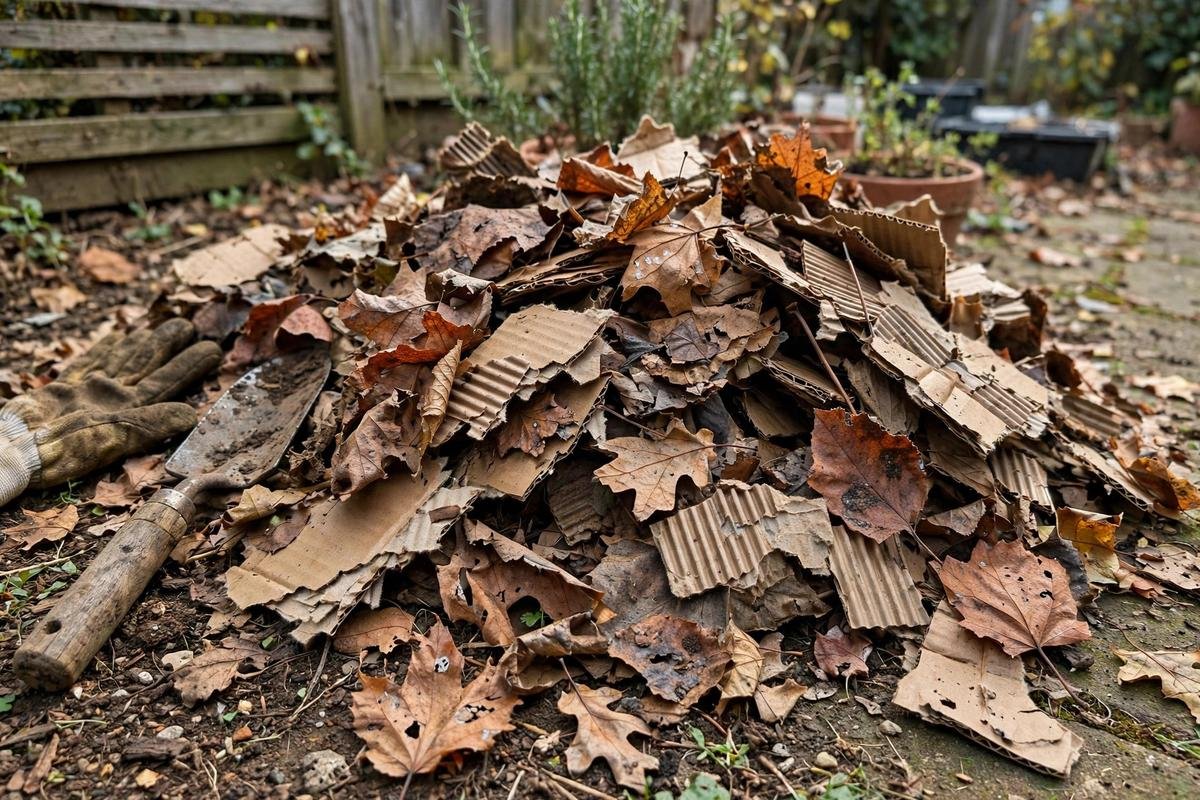
- Corrugated cardboard, torn up with tape removed — an excellent brown
- Paper towel and toilet paper rolls
- Plain paper napkins and paper towels (unused cleaning chemicals? then no)
- Wood ash from a fireplace or fire pit — small amounts only; it’s alkaline
- Natural fiber: cotton, wool, and dryer lint from natural fabrics
- Hair and pet fur (yes, really — nitrogen-rich)
NO: The Never-Compost List
These cause the problems people blame on composting itself:
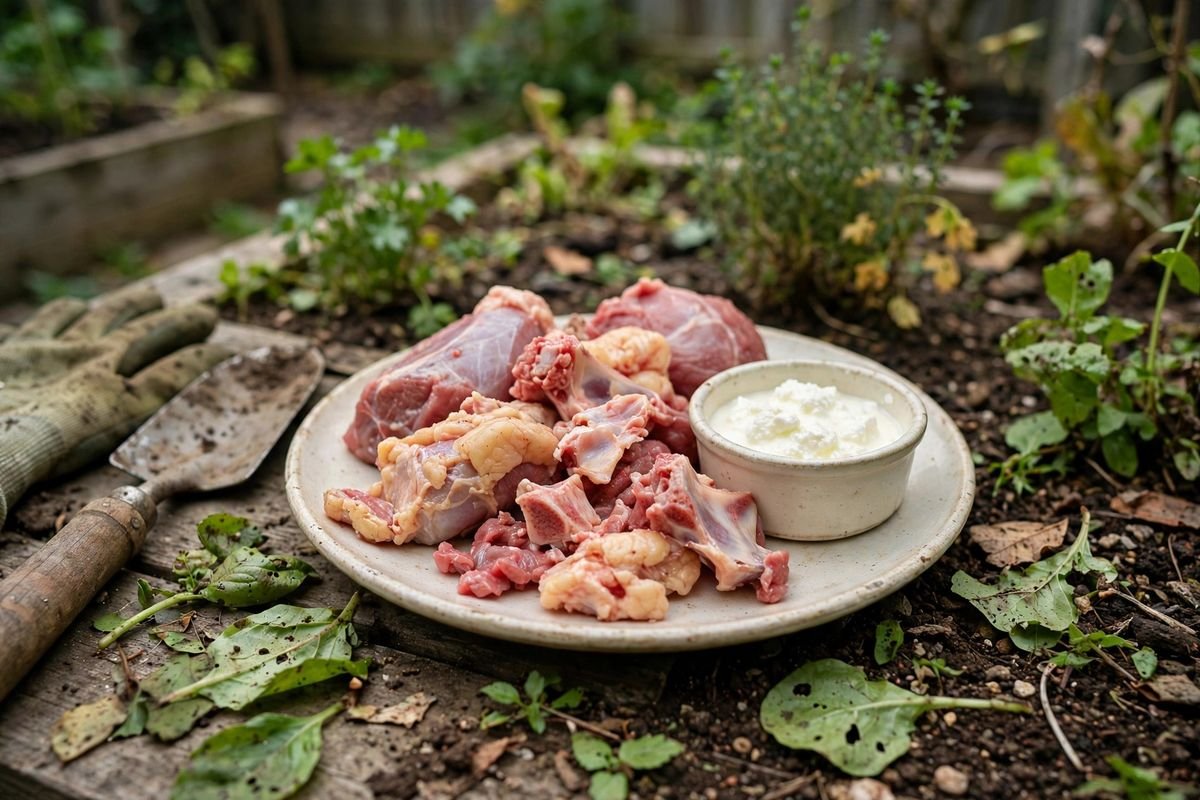
- Meat, fish, and bones — smell, attract rodents and flies, break down slowly in home piles.
- Dairy, fats, and cooking oils — go rancid, create anaerobic pockets, attract pests.
- Pet waste (dogs, cats) — can carry pathogens that survive home composting temperatures. (Herbivore manure like rabbit or horse is fine.)
- Glossy or coated paper — magazines, shiny flyers, waxed cartons; the coatings don’t break down cleanly.
- Treated or painted wood — preservatives and paint contain heavy metals you don’t want in garden soil.
- Charcoal or coal ash — contains sulfur compounds and heavy metals. (Plain wood ash is different — and fine in moderation.)
- Diseased plants — home piles rarely get hot enough to kill pathogens. Bag and trash them.
- Weeds gone to seed — same heat problem; you’ll just plant weeds with your compost.
- Synthetic fabrics and “compostable” plastics — most need industrial composting heat; they linger in home piles.
- Cat litter — even “natural” kinds can carry toxoplasmosis risk.
- Large branches — they’ll still be there in two years. Chip them first or leave them out.
- Black walnut leaves or twigs — contain juglone, which inhibits many garden plants. (Small amounts mixed well are debated; we skip them to be safe.)
The Gray Area: “It Depends” Items
- Citrus and onions: fine in normal kitchen quantities. The old warnings come from worm bins, where large amounts can bother worms — even there, moderation works.
- Cooked food: plain cooked vegetables and grains are fine in small amounts; saucy, oily, or salty foods are not.
- Paper with colored ink: modern soy-based colored inks are generally fine; avoid metallic or plastic-coated prints.
- Pine needles: fine as part of the mix. They don’t meaningfully acidify finished compost despite the persistent myth.
- Newspaper vs. cardboard: both fine shredded. Remove tape, staples, and glossy sections.
Feeding Strategy: Speeding Up (or Slowing Down) Your Pile
What you put in doesn’t just fill the bin — it sets the pace. A pile heavy on soft greens (grass clippings, fresh scraps, coffee grounds) heats fast and finishes sooner, but needs more attention: more turning, more browns to balance it, more watching for odors. A pile heavy on browns (leaves, cardboard, wood chips) is nearly maintenance-free and never smells, but it crawls — think many months. Most home composters land happiest in the middle: steady kitchen scraps buried under a generous brown cap, leaves and cardboard always on hand. If your pile is racing and smelly, you’re green-heavy; if it’s inert and boring, you’re brown-heavy. Adjust the inputs and the pile follows within days. That’s the real skill of composting — reading the pile and answering with the right material.
How to Remember It All
The two-question test handles 95% of decisions: Was it once alive? and Is it free of meat, dairy, oil, chemicals, and synthetics? Two yeses means compost it. And when you’re genuinely unsure, the trash can is always the safer choice — one bad addition can set a pile back weeks.
A practical habit that makes all of this automatic: keep a small list on the fridge for the first month — the household’s ten most common scraps with a yes or no next to each. After a few weeks of checking, the answers become reflex. Kids pick it up fast too, which means fewer “oops” items landing in the bin. And remember the golden rule of the gray area: moderation. A single orange peel in a healthy pile is nothing; a bucket of them at once is a problem. Nearly every composting rule works this way — it’s the dose that makes the poison.
New to the whole process? Start with how to start composting in a small backyard, and keep this list on the fridge until the answers become automatic.
FAQ
Can I compost paper towels with cleaning products on them?
No — residue from cleaners, especially antibacterial ones, can harm the microbes doing the composting work. Only compost paper towels used with water or food.
Do I need to chop everything up?
It helps a lot, but it’s not mandatory. Smaller pieces = faster compost. At minimum, tear cardboard, crush eggshells, and chop thick stems.
What about “compostable” bags and utensils?
Most are certified for industrial composting only and won’t break down in a home pile within any reasonable time. We skip them.
Sources & Further Reading
- Cornell Waste Management Institute — home composting feedstock guidance (compost.css.cornell.edu)
- University of Minnesota Extension — backyard composting publications
- USDA Natural Resources Conservation Service — composting resources
More composting posts to explore:
- How to Make Compost at Home: A Beginner’s Guide
- How to Start Composting in a Small Backyard
- Why Is My Compost Not Heating Up? 7 Fixes
Print the never-compost list, tape it inside a kitchen cabinet, and you’ll never stand over the bin second-guessing again. Which gray-area item surprised you most?