
This post may contain affiliate links. If you buy through links on this page, we may earn a commission at no extra cost to you.
As an Amazon Associate I earn from qualifying purchases.
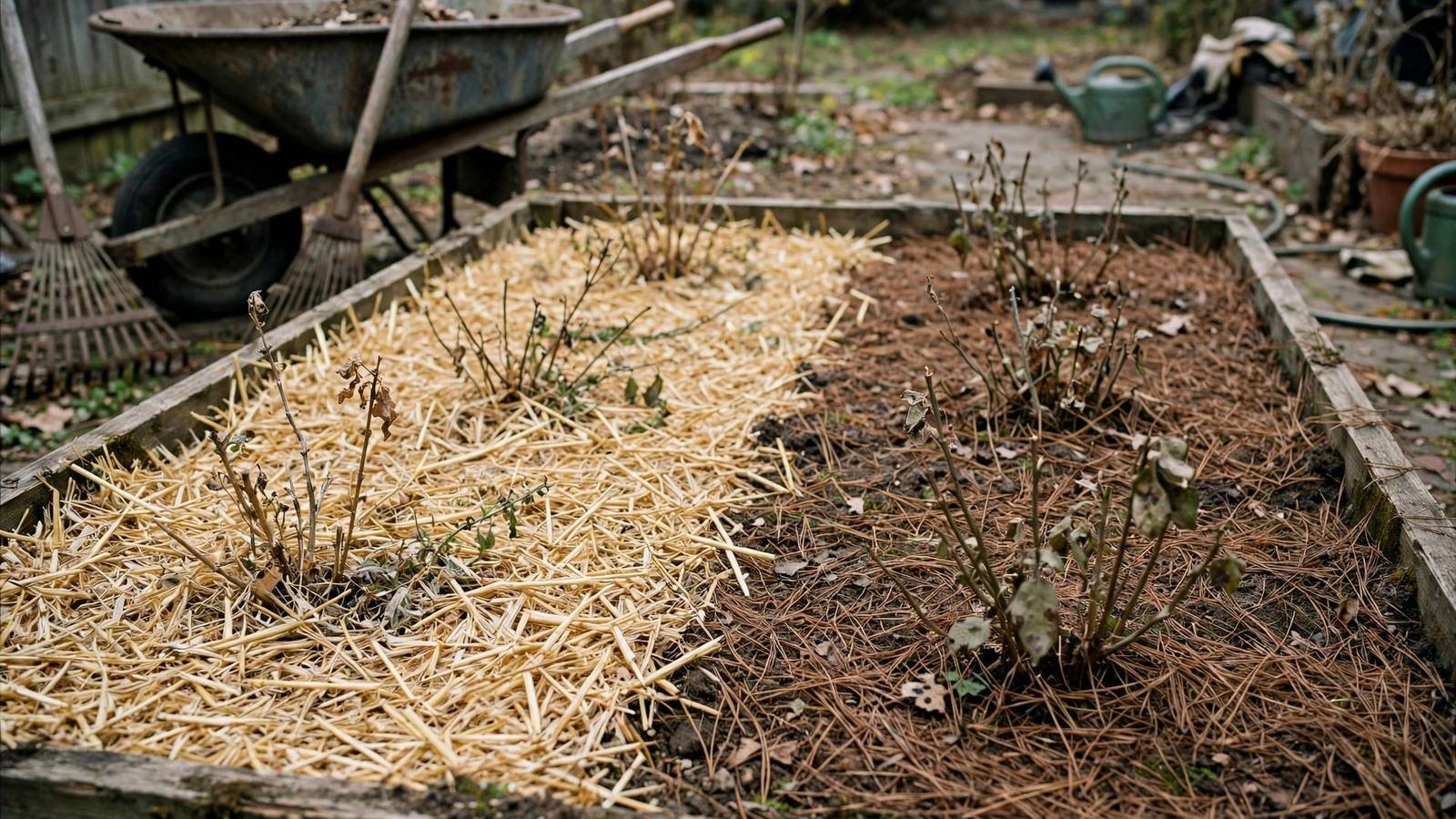
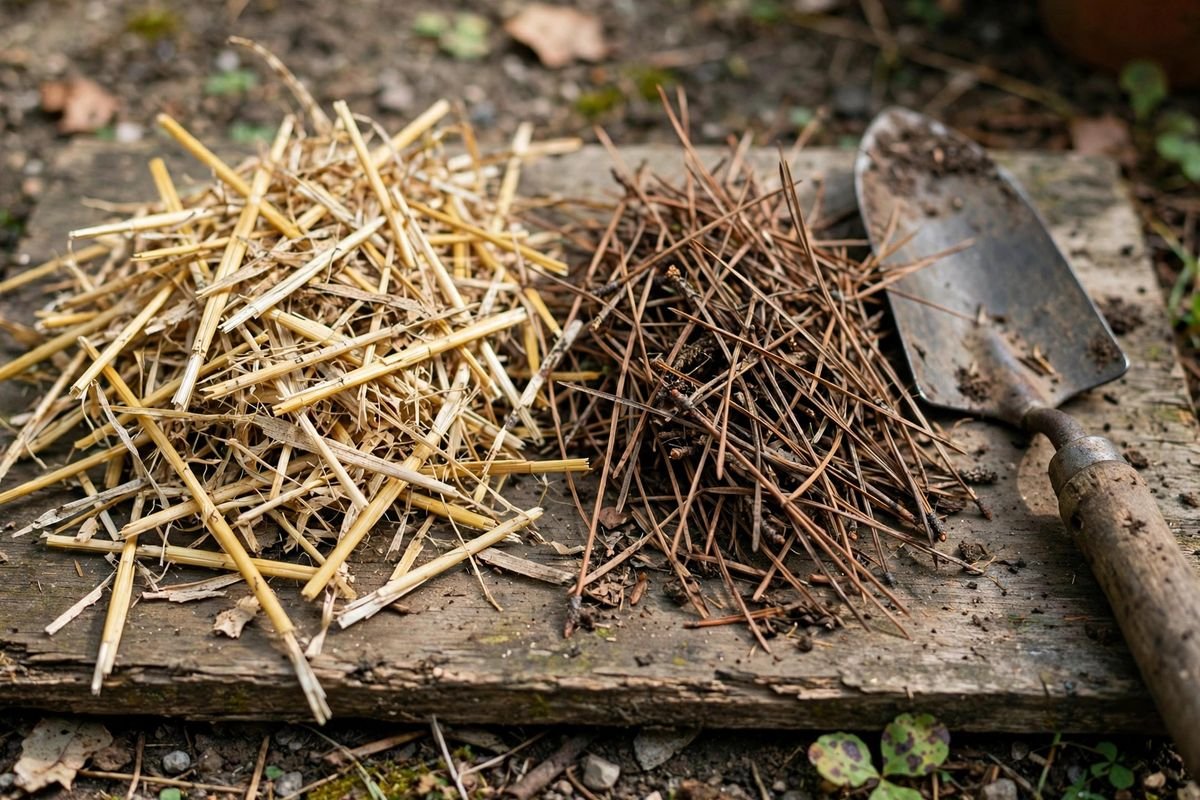
Winter mulch does three jobs: it keeps the soil from freezing and thawing in cycles, it holds moisture in the ground, and it keeps weeds down until spring. Straw and pine needles both do those jobs, and both are cheap, but they behave very differently once they are on the bed. Straw is light, fluffy, and easy to spread, and it breaks down fast. Pine needles are dense, acidic, and slow to rot, and they knit into a mat that sheds water. The right pick depends on what you are mulching, how wet your winter is, and whether you want the mulch gone by spring or still there in June.
This guide compares the two side by side: insulation, weed control, water handling, soil effects, cost, and how each one behaves in spring. It ends with a worked cost example for a 4-by-8-foot bed and a clear verdict for each common situation. For the third common winter mulch, see our comparison of straw vs leaves as winter mulch.
Straw vs pine needles at a glance
| Straw | Pine needles | |
|---|---|---|
| What it is | Dried stalks of wheat, oats, or barley | Fallen needles from pine trees |
| Insulation | Good; fluffy layers trap air | Good; dense mat holds steady temperature |
| Weed control | Fair; weeds push through thin spots | Strong; dense mat blocks light |
| Water handling | Absorbs water, then dries out | Sheds water off the surface |
| Soil acidity | Near neutral as it breaks down | Slightly acidic while fresh; near neutral once composted |
| Breakdown speed | Fast; mostly gone by late spring | Slow; lasts a full year or more |
| Slug risk | Higher; damp straw shelters slugs | Lower; dry mat is less inviting |
| Cost for a 4-by-8 bed | About 8 to 12 dollars | About 0 to 10 dollars |
How straw works as winter mulch
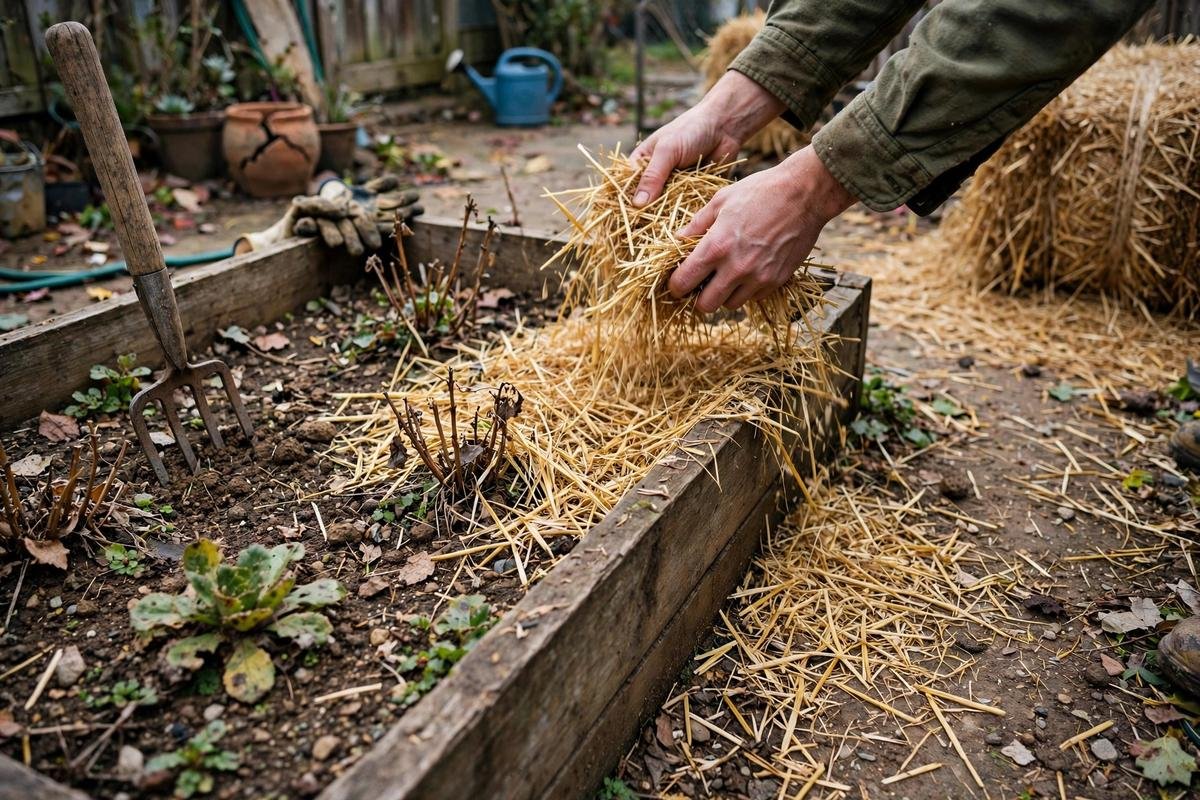
Straw is the hollow stalk of a grain crop, cut and dried after harvest. It is light, easy to carry, and easy to spread: a bale opens into loose handfuls that you can tuck around plants without bending stems. A 4-inch layer of straw traps a lot of still air, which is what insulates the soil, and it keeps the ground from freezing and thawing in cycles. That freeze-thaw cycle is what heaves shallow-rooted plants out of the ground, and a straw layer is one of the best cheap defenses against it.
Straw breaks down fast. By late spring, a straw layer put down in November is half rotted and easy to pull aside or dig in. That suits a vegetable bed you plan to plant early: the mulch is gone when you need the ground. It also suits a bed where you want the mulch to feed the soil: rotted straw adds organic matter and the soil life that comes with it.
The weakness of straw is water and weeds. Straw absorbs rain and stays damp for days, and damp straw is a good home for slugs, which hide under it by day and feed at night. Straw also carries weed seeds unless you buy seed-free straw, and a bale of ordinary straw can seed a bed with oats or wheat in spring. Buy straw labeled weed-free or seed-free, and check the bale before you spread it: a bale with green seed heads in it is not seed-free, whatever the label says.
How pine needles work as winter mulch
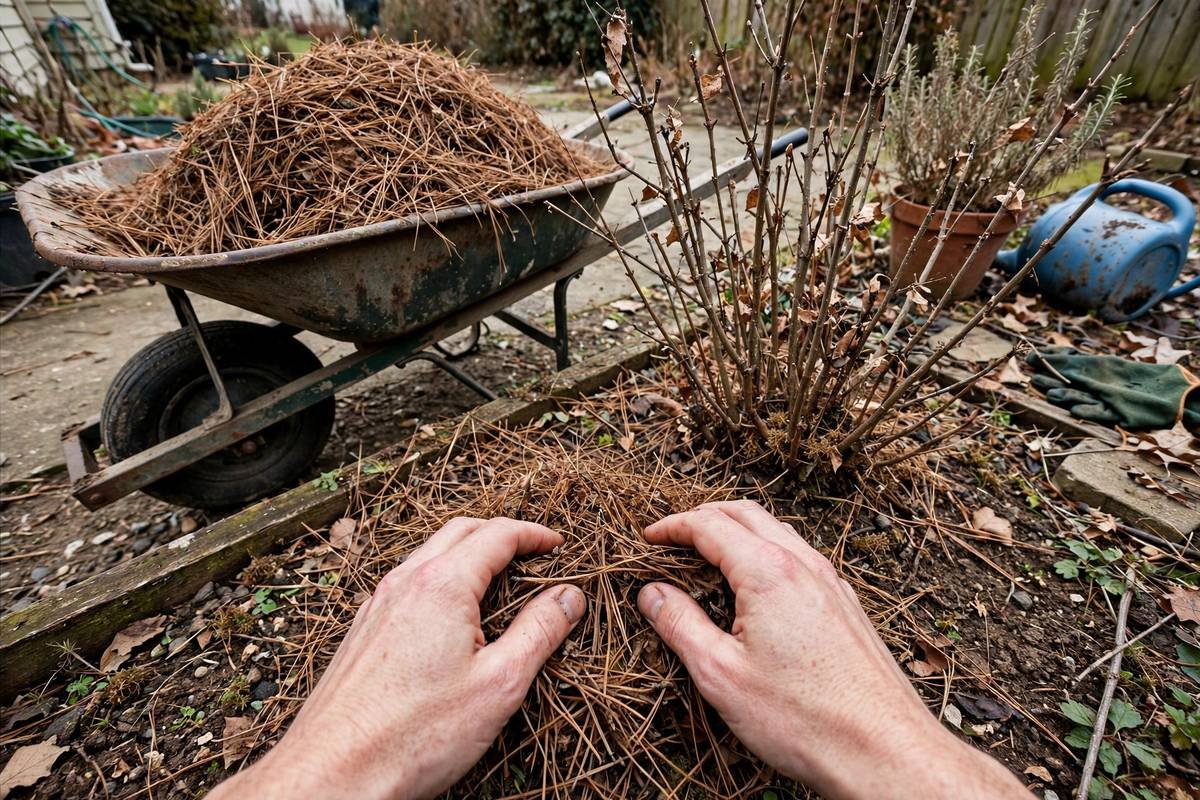
Pine needles, also called pine straw, are the fallen needles of pine trees, gathered and baled. They are long, thin, and slightly waxy, and they knit together into a dense mat that stays put in wind and rain. That mat is the reason pine needles are the better weed barrier: very little light reaches the soil through it, and weeds struggle to push through. The mat also sheds water off its surface instead of soaking it up, so the soil underneath stays moist but not soggy, and the surface dries fast after rain.
Pine needles break down slowly. A layer put down in November is still there the next November, which suits a perennial bed, a shrub border, or a path where you want a mulch that lasts. The needles are slightly acidic when fresh, which suits acid-loving plants like blueberries, azaleas, and rhododendrons. The acidity fades as the needles compost: a common garden worry is that pine needles will make the soil too acidic, but the effect is small and short-lived, and the soil under a pine needle mulch usually tests near neutral within a season.
The weakness of pine needles is availability and handling. They are free if you have a pine tree, but they are sold by the bale in some regions and hard to find in others. They are slower to spread than straw, since you have to lay them in handfuls rather than tossing them, and they can slide off a steep slope in heavy rain. They also mat down over time into a layer that sheds so much water that a light rain never reaches the soil at all, so check the soil under the mat in a dry winter and water if it is dust-dry.
Pros and cons
Straw: pros
- Easy to spread and easy to tuck around plants
- Insulates well and stops freeze-thaw heaving
- Breaks down fast and feeds the soil by spring
- Cheap and widely sold by the bale
Straw: cons
- Stays damp and shelters slugs
- Can carry weed seeds unless it is seed-free
- Blows around in wind until it settles
- Needs topping up midwinter as it settles and rots
Pine needles: pros
- Strong weed barrier; dense mat blocks light
- Stays put in wind and rain
- Lasts a year or more without replacing
- Sheds water, so the surface dries fast and slugs avoid it
Pine needles: cons
- Harder to find in some regions and slower to spread
- Can shed so much water that light rain never reaches the soil
- Fresh needles are slightly acidic, which suits some plants and not others
- Mat can become so dense it is hard to push aside in spring
Our worked example: mulching a 4-by-8-foot bed
Here is the cost math for a standard 4-by-8-foot raised bed, mulched 4 inches deep for winter. These are our own computed numbers, with the assumptions stated so you can run the same figures for your own beds.
| Item | Assumption | Number |
|---|---|---|
| Bed area | 4 feet by 8 feet | 32 square feet |
| Mulch volume at 4 inches deep | 32 square feet times one third of a foot | About 10.7 cubic feet |
| Straw needed | One small bale covers about 40 square feet at 4 inches | About 1 bale |
| Straw cost | One bale, weed-free, at 8 to 12 dollars | About 8 to 12 dollars |
| Straw cost per season | Straw lasts one winter | About 8 to 12 dollars a season |
| Pine needles needed | One bale covers about 50 square feet at 4 inches | About 1 bale |
| Pine needle cost | Free if gathered; 8 to 10 dollars a bale if bought | About 0 to 10 dollars |
| Pine needle cost per season | Needles last two winters | About 0 to 5 dollars a season |
The math favors pine needles on cost per season, if you can get them: a bale that lasts two winters costs half as much per year as a bale of straw that lasts one. The volume is the same for both, about 11 cubic feet for a 4-by-8 bed at 4 inches deep, which is worth knowing before you buy: a single small bale of either material covers one bed, and two beds need two bales. For a larger bed, scale the volume by the area: an 8-by-8 bed needs about 21 cubic feet, or two bales.
Depth matters more than material. A 2-inch layer of either mulch insulates poorly and lets weeds through, while a 4-inch layer does the job. A 6-inch layer insulates a little better but stays wetter and shelters more slugs. Four inches is the depth to aim for, and the time to top it up is midwinter, when the first layer has settled to about 3 inches.
The verdict: choose straw if…
Choose straw if you mulch a vegetable bed you will plant in early spring. Straw breaks down by then, and you can pull the remains aside and plant straight into the soil. Choose it if you want the mulch to feed the soil: rotted straw adds organic matter fast. Choose it if you have no pine trees nearby and the garden center sells straw by the bale: it is the easiest winter mulch to buy and spread.
Choose pine needles if you mulch a perennial bed, a shrub border, or a bed of acid-loving plants like blueberries. Choose them if slugs are a problem in your garden: the dry mat is a poor home for them. Choose them if your winters are wet and windy: the mat stays put and sheds water where straw would soak and blow away. Choose them if you want to mulch once and not think about it again until next year.
Use both if your garden has both kinds of beds, which most gardens do. Straw on the vegetable beds, where it will be gone by planting time, and pine needles on the perennial borders and around the shrubs, where a lasting mulch is a help. There is no rule that one mulch must cover the whole garden, and the mixed approach is what most experienced growers do.
Putting either mulch down right
Put winter mulch down after the ground has cooled but before it freezes hard, usually after the first few frosts and before the first hard freeze. Mulching too early, while the soil is still warm, invites voles and mice to nest under it. Mulching after the ground freezes locks the cold in rather than keeping it out. The window is usually a few weeks in late fall, and the sign to look for is soil that is cold to the touch but not frozen solid.
Use your local frost dates and regional planting guidance — not your USDA hardiness zone alone — to choose planting dates.
Water the bed before you mulch. A dry bed under mulch stays dry all winter, because the mulch sheds rain. Soak the soil first, then lay the mulch 4 inches deep, keeping it a few inches away from the stems of shrubs and the crowns of perennials so damp mulch does not rot them. In spring, pull the mulch back from the crowns as the plants start growing, and leave the rest in place until you need the ground.
Frequently asked questions
Do pine needles really make soil acidic?
Only a little, and only while fresh. Pine needles test around pH 4.5 to 5 when fresh, but as they break down the acidity fades, and the soil underneath usually tests near neutral within a season. Blueberries and azaleas like the slight acidity; most vegetables do not mind it at all.
Will straw mulch bring weed seeds into my garden?
Ordinary straw can, because it is the stalk of a grain crop and may carry grain seeds. Buy straw labeled weed-free or seed-free, and check the bale for green seed heads before you spread it. Hay is worse than straw: it is cut with the seed heads on, and it seeds a bed heavily. Never use hay as mulch.
How deep should winter mulch be?
About 4 inches. Two inches insulates poorly and lets weeds through, and six inches stays wet and shelters slugs. Top the layer up midwinter if it has settled below 3 inches.
Should I remove winter mulch in spring?
Pull it back from the plant crowns as growth starts, but leave it on the bed until the soil warms up. Straw can be dug in or composted; pine needles can stay in place as a summer mulch, since they last a year or more.
Sources and further reading
- Clemson Cooperative Extension, Mulch
- Colorado State University Extension, Mulches for Home Grounds
Related reading: Straw vs Leaves as Winter Mulch, How to Winter-Sow Seeds Outdoors, Best Cover Crops for Winter Vegetable Gardens, Fall Garden Cleanup: 12 Things to Do Before Winter, How to Make Compost at Home
By the Pot and Plot Team