

This post may contain affiliate links. If you buy through links on this page, we may earn a commission at no extra cost to you.
As an Amazon Associate I earn from qualifying purchases.
Potatoes store well for months when they go into storage dry, cured, and cool. The same harvest rots in weeks when it goes into a warm, damp, or sunlit spot. The difference comes down to three steps: dig at the right time, let the skins toughen for a week or two, and keep the cured potatoes in the dark at a steady cool temperature. None of the steps needs special equipment, and a wooden crate with newspaper does the job.
This guide walks through the whole sequence, from digging to the monthly check, with a worked example for a 20-pound harvest. If you grew the potatoes yourself, our guide to growing potatoes covers planting, hilling, and harvest timing in the garden.
When to dig
Dig storage potatoes after the vines have died back and the skins have set. For most varieties, that means waiting two to three weeks after the tops turn yellow and fall over. The skin test tells you when they are ready: rub a potato with your thumb, and if the skin stays put instead of slipping off, the skin has set. Potatoes dug with tender skins bruise easily and lose moisture fast in storage.
Dig before the ground freezes, and pick a dry day if you can. Wet soil clings to the tubers and dries into a hard coat that holds moisture against the skin. Use a digging fork, not a shovel, and start about a foot out from the plant so the fork tines miss the tubers. Lift gently and let the potatoes sit on the soil surface for an hour or two so the skins dry in the air.
Use your local frost dates and regional planting guidance — not your USDA hardiness zone alone — to choose planting dates. The same local frost dates mark the end of the digging window: once hard frosts arrive, the ground cools fast and any potatoes left in it can freeze.
Sort before you store
Sort the harvest into three groups as you dig. The first group is clean, uncut potatoes with firm skins: those go into storage. The second group is nicked, cut, or bruised potatoes: eat those first, within a week or two, since a break in the skin is an open door for rot. The third group is green potatoes, soft potatoes, and any with a sour smell: those go to the compost pile, not the table and not the storage crate.
Green skin means the potato grew close to the surface and made solanine in sunlight. Peeling does not fix it, and the green parts taste bitter. Extension guidance from land-grant universities is consistent on this point: discard green potatoes rather than trying to salvage them. A potato with a soft spot or a dark, sunken patch is rotting already, and one rotten potato can spoil the crate around it.
Cure the potatoes first
Curing toughens the skin and heals small nicks, and it is the step that makes long storage possible. Spread the storage potatoes in a single layer on newspaper or cardboard in a dark place at 50 to 60 degrees Fahrenheit with good air flow, and leave them for 7 to 14 days. A garage, a shed, or a basement corner works, as long as the spot stays dark and the air can move around the tubers.
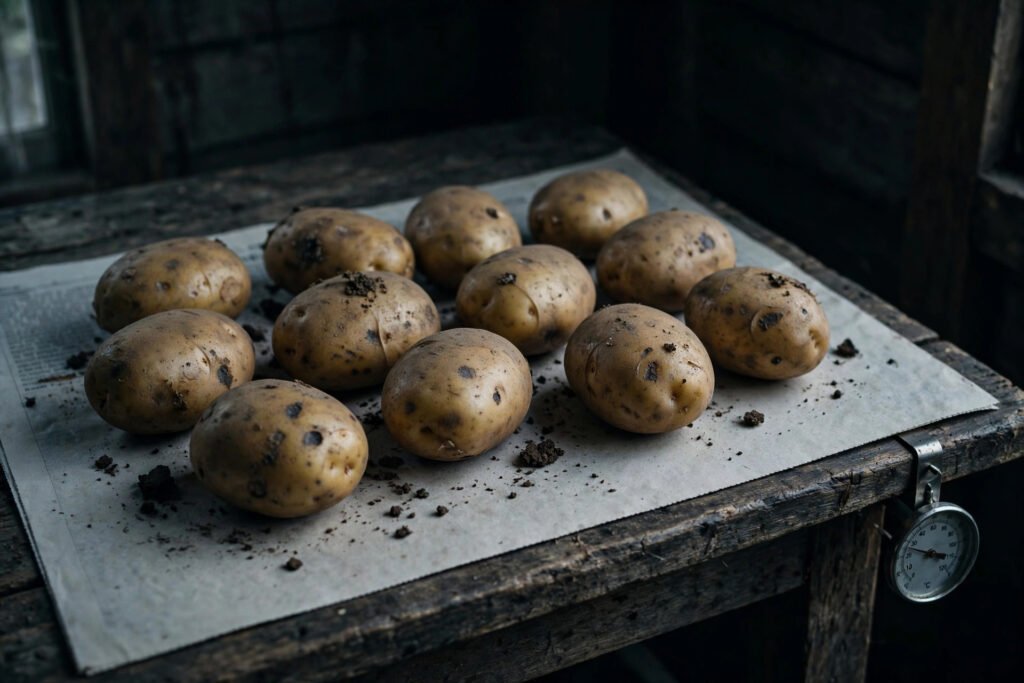
Do not wash the potatoes before curing. Brush off the loose soil with your hands or a soft brush, and leave the thin coat of dry soil on the skins. Washing adds moisture that feeds rot, and a damp potato cures slowly. If a potato is caked in mud, let the mud dry first, then brush it off. Check the layer after a few days and pull out any potato that turns soft or smells off.
Worked example: a 20-pound harvest
The numbers below are a worked example with the assumptions stated, so you can scale them to your own harvest. Take a 20-pound harvest of medium potatoes, about five potatoes to the pound, or roughly 100 potatoes. A medium potato covers about 3 by 2 inches on a table, or 6 square inches. One hundred potatoes in a single layer cover about 600 square inches, or 4.2 square feet. That means curing needs about 4 to 5 square feet of table or floor, roughly the top of a card table.
For storage volume, potatoes pack at roughly 40 pounds per cubic foot when loose in a crate. Twenty pounds takes about half a cubic foot. A standard wooden crate 18 by 12 by 12 inches holds 1.5 cubic feet, so one crate holds the whole harvest with room for air to move between the tubers. Pack the potatoes loosely, in layers separated by newspaper, and leave the top of the crate open to the air.
For losses, plan on 5 to 15 percent of the harvest going bad over four to six months in good storage, stated as an estimate. That means 1 to 3 pounds of a 20-pound harvest, mostly from potatoes that were nicked at digging or stored a little damp. Warm or damp storage pushes losses higher, and a single rotten potato left in the crate can raise the loss for the whole batch. The monthly check below is what keeps a small loss from becoming a large one.
Pack the cured potatoes for storage
Use a slatted wooden crate, a cardboard box with holes cut in the sides, or a paper sack. All three let air move while keeping light out. Do not use a sealed plastic bag or a lidded plastic bin, since trapped moisture condenses on the walls and drips back onto the potatoes. Line the crate with newspaper, add a layer of potatoes, add another sheet of newspaper, and repeat. The paper absorbs stray moisture and keeps the layers from pressing on each other.
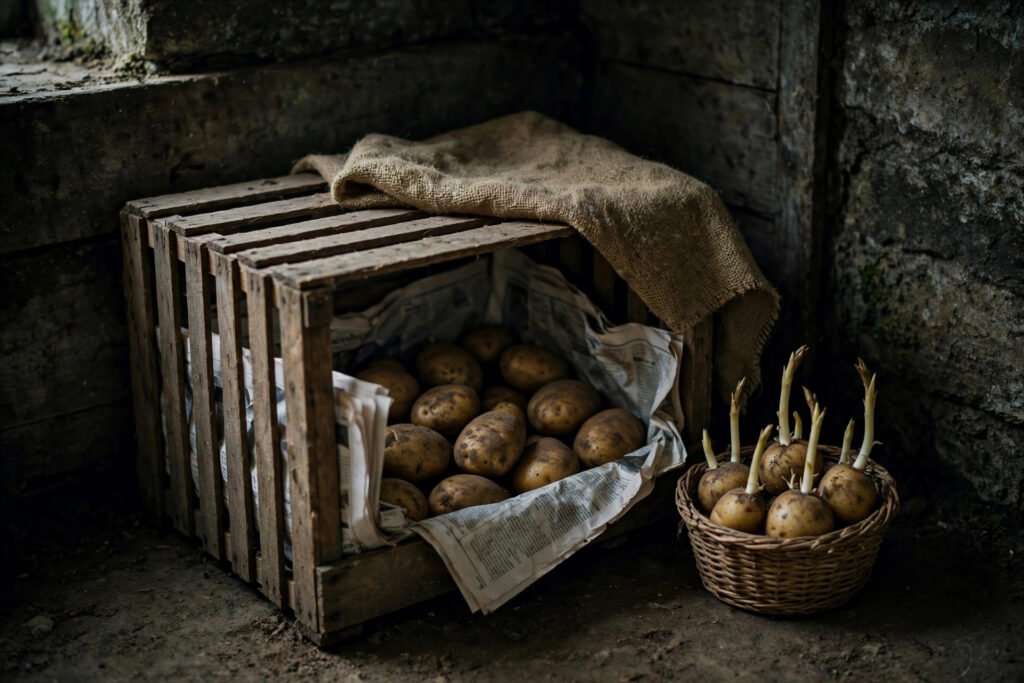
Cover the top of the crate with burlap or a few sheets of newspaper to block light. Light turns stored potatoes green and starts sprouting, so the cover matters as much as the crate. If you need sacks or crates and have none on hand, search for burlap sacks for potato storage or plain wooden crates, and pick the size that fits your harvest.
The right storage spot
The best storage spot is dark, cool, and humid, at 35 to 40 degrees Fahrenheit with humidity around 90 to 95 percent. A basement, a root cellar, or an unheated garage that stays above freezing works. A refrigerator is too cold and too dry for a large harvest, though it can hold a small bag for a few weeks. Temperatures below freezing turn the starch in a potato to sugar and ruin the texture, and temperatures above 50 degrees start sprouting within weeks.
Keep potatoes away from onions and apples. Both give off ethylene gas, which speeds sprouting in potatoes, and onions add moisture to the air around them. Store the two crops on different shelves, or in different corners of the same room. If your only cool spot is a garage that also holds onions, put the potatoes in a crate with a burlap cover on the far side of the room, and check both crops when you do the monthly check.
Check the crate every month
Open the crate once a month and look through the potatoes by hand. Pull out any that feel soft, smell sour, or show dark sunken patches, and compost them. Snap off sprouts longer than an inch, since long sprouts draw moisture and starch out of the tuber. A potato with short sprouts is still fine to eat once the sprouts are rubbed off, as long as the flesh is firm and the skin is not green.

Check the spot as well as the potatoes. If the floor under the crate is damp, move the crate to a drier shelf. If the potatoes feel damp, spread them out for a day in the dark to dry, then repack them with fresh newspaper. A storage spot that stays damp all winter will rot potatoes no matter how well they were cured, so a dry shelf is worth more than a perfect temperature.
What goes wrong, and how to stop it
Sprouting is the most common problem, and it starts when the spot is too warm or too bright. Move the crate to a cooler, darker place, and rub off the sprouts. Shriveled potatoes mean the air is too dry; a pan of water set near the crate raises the humidity a little, though it will not plump a potato that has already lost its moisture.
Rot spreads from one bad potato to its neighbors, so the monthly check is the fix. A potato that smells sweet and earthy is fine. A potato that smells sour or sharp is rotting, and it comes out at once. If several potatoes in one layer go soft, repack the rest in a clean crate with fresh newspaper, and wash the old crate before using it again. Our guide to storing seeds over winter uses the same dry, dark, cool logic, and our guide to keeping a compost pile working in winter covers what to do with the potatoes that do not make the cut.
Questions we hear often
Can we store potatoes in the refrigerator?
A small bag keeps for a few weeks in the refrigerator, but the cold turns starch to sugar and the dry air shrivels the skins. For a full harvest, a cool basement or garage at 35 to 40 degrees works far better than a refrigerator shelf.
How long do stored potatoes last?
Well-cured potatoes in a dark spot at 35 to 40 degrees last four to six months, and some varieties last longer. Thin-skinned new potatoes last only a few weeks, so eat those first and save the thick-skinned storage varieties for the long crate.
Do we need to wash potatoes before storing them?
No. Brush off the loose soil and leave the rest. Washing adds moisture that feeds rot, and a damp potato stores badly. Wash each potato just before cooking, not before storage.
Sources & further reading
University of Idaho Extension: guidance on curing and storing potatoes, including temperature and humidity ranges for home storage. Cornell Cooperative Extension: home vegetable storage guidance, including sorting, curing, and the ethylene problem with onions and apples. University of Minnesota Extension, Yard and Garden: harvest and storage advice for root crops grown in home gardens.